

Yoga at Any Age: Gentle Routines for Seniors
Why Gentle Yoga Opens New Doors for Active Living

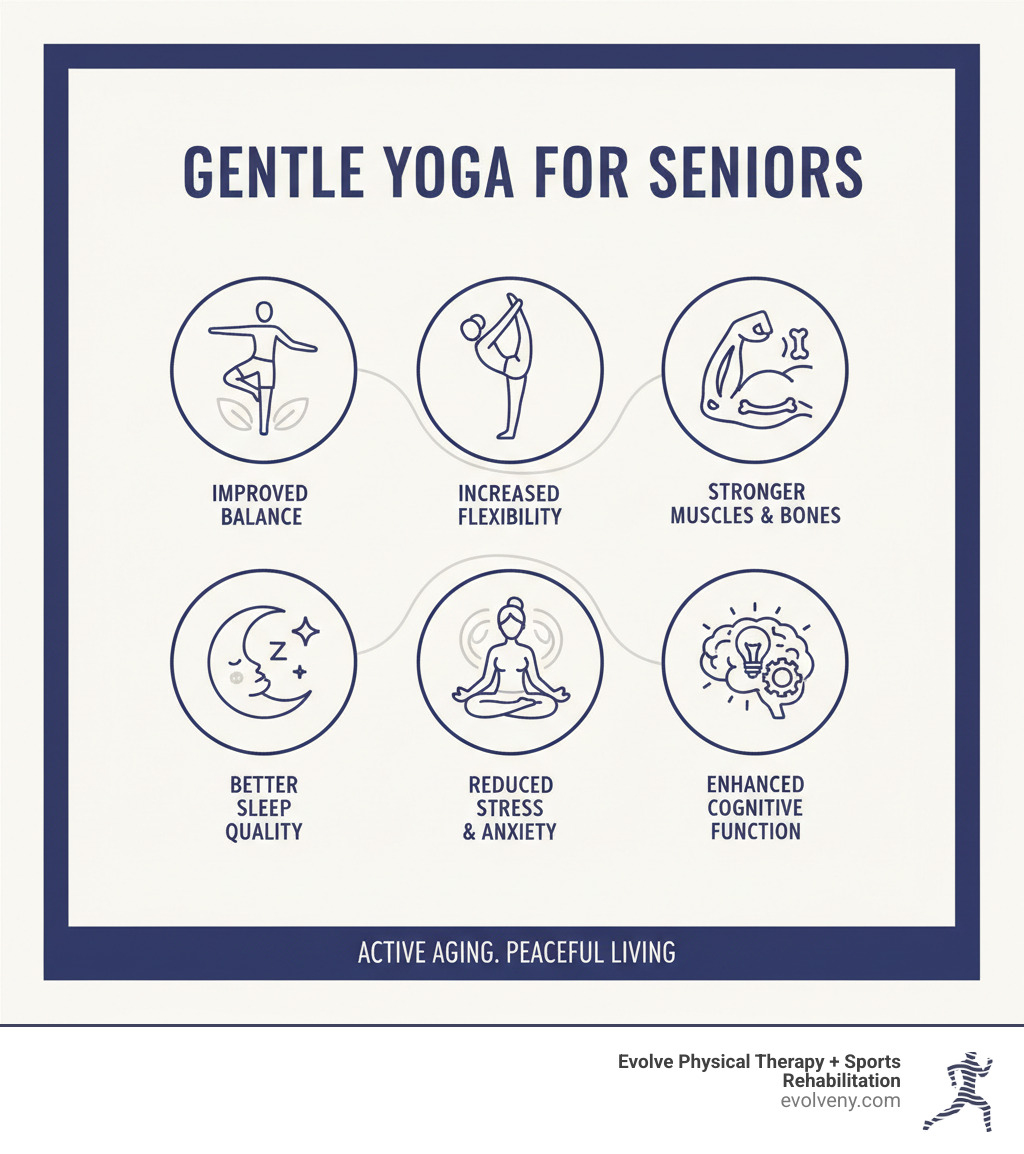
Gentle yoga for seniors is a safe, low-impact practice that helps older adults improve balance, flexibility, and strength while reducing stress. No prior experience or extreme flexibility is needed.
Key benefits of gentle yoga for seniors include:
- Improved balance and coordination to reduce fall risk
- Increased flexibility for easier daily movement
- Stronger muscles and bones to support independence
- Better sleep, reduced anxiety, and pain relief
- Improved mental clarity and mood
Studies show that one in three seniors falls each year. Yoga helps prevent this by strengthening stabilizing muscles and improving body awareness. Research also finds that seniors who practice yoga manage anxiety better and report higher overall well-being than those in standard exercise programs.
The beauty of gentle yoga is its adaptability. Poses can be modified for conditions like arthritis or osteoporosis and can be done standing, seated in a chair, or on a mat with props.
As Lou Ezrick, founder of Evolve Physical Therapy, I've seen how gentle yoga for seniors supports long-term wellness. Our approach emphasizes individualized care to build sustainable strength and flexibility within your unique physical limitations.
Why Yoga is a Golden Opportunity for Senior Wellness
Getting older means moving smarter. Unlike intense exercise, gentle yoga for seniors respects your body's current state while building strength, balance, and confidence. It's an investment in your independence, strengthening muscles for daily tasks like climbing stairs or walking steadily.
Falls are a major concern, with one out of every three seniors experiencing a fall each year. Yoga is a powerful tool for fall prevention, improving balance and coordination to reduce this risk. Beyond falls, it helps maintain bone density, keeps joints mobile, and can provide relief for chronic pain from conditions like arthritis. Research also shows yoga can help manage high blood pressure, supporting cardiovascular health. The mental benefits are just as significant, leading to better sleep, reduced stress, and sharper cognitive function.
The Physical Rewards: Strength, Balance, and Flexibility
As we age, we naturally lose some muscle mass and flexibility. Gentle yoga counteracts this with slow, controlled poses that build strength without straining joints. This is especially beneficial for managing osteoporosis, as gentle weight-bearing poses can support bone density. Each movement serves a purpose: standing poses build stability, twists maintain flexibility, and focused breathing improves lung capacity. The practice is adaptable, with modifications available for joint stiffness or chronic pain, helping to improve posture and reduce discomfort.
A Sharper Mind and Calmer Spirit
Yoga's mindful breathing and gentle movements calm the nervous system by helping to regulate the stress hormone cortisol. This leads to an improved mood and a sense of peace. Studies confirm that elderly adults who practiced yoga experienced greater improvements in managing feelings of anger and anxiety and report a higher sense of well-being compared to those in standard exercise groups. The focus required also sharpens cognitive function, while the physical and mental relaxation promotes better sleep.
How Yoga Helps with Fall Prevention
Falls often stem from a loss of confidence, which leads to less movement and more weakness. Yoga breaks this cycle by building proprioception—your body's awareness of its position in space. Slow, measured movements improve your sense of gravity. The practice strengthens your core, lower body, and the small stabilizing muscles crucial for balance. By building both physical strength and mental confidence, you learn to trust your body again, making yoga a highly effective tool for fall prevention.
Getting Started Safely with Gentle Yoga for Seniors
Safety comes first. Before starting, consult your doctor or a physical therapist to understand your body's unique needs and limitations.
The most important rule is to listen to your body. We follow a strict "no pain" rule in gentle yoga for seniors. If a movement hurts, stop. Yoga is about gentle exploration, not pushing through discomfort. Your breath is your guide, and props like chairs, blocks, and blankets are smart tools to make poses accessible and safe. Working with a movement specialist, like our team at Evolve Physical Therapy, can help you build a practice that truly serves you.
Before Your First Pose: Essential First Steps
Get medical clearance, especially if you have arthritis, osteoporosis, heart disease, or joint replacements. These conditions don't prevent you from doing yoga, but they require a thoughtful approach. A physical therapist can create a personalized plan, and starting with a beginner or senior-specific session ensures you learn proper alignment from day one, minimizing injury risk.
The Best Approaches to Gentle Yoga for Older Adults
Certain yoga styles are particularly well-suited for seniors.
Gentle mat-based yoga focuses on alignment and body awareness with support from props. Restorative movement uses props for full support in passive poses to promote deep relaxation. Supported yoga uses a chair, wall, and other props to make the practice accessible to nearly everyone, regardless of mobility.
| Yoga Approach | Intensity | Primary Focus | Common Props Used |
|---|---|---|---|
| Gentle Mat-Based | Low | Alignment, gentle stretching, body awareness | Yoga mat, blanket, block |
| Restorative Movement | Very Low | Relaxation, deep release, stress reduction | Bolsters, blankets, eye pillows, wall |
| Supported Yoga | Low | Accessibility, stability, comfort, modifications | Chair, wall, blocks, straps, blankets |
Key Principles for a Safe and Effective Practice
- Mindful breathing: Use slow, controlled breaths to anchor your practice. If you hold your breath, ease up.
- Slow and controlled movements: Move with intention and awareness to prevent injury and build strength effectively.
- Non-competitive: Your practice is your own. Focus on how your body feels, not on achieving a "perfect" pose.
- Consistency over intensity: Gentle, regular practice (e.g., 15 minutes, 3 times a week) creates more lasting change than infrequent, intense sessions.
- Use props: Blocks, blankets, straps, and chairs are intelligent aids that help you practice safely and get the full benefit of each pose.
- Never force a pose: Back off if you feel sharp pain. The goal is to feel a gentle stretch, not strain.
A 15-Minute Gentle Yoga Routine
This simple 15-minute routine can be done at home on a mat or with a chair for support.
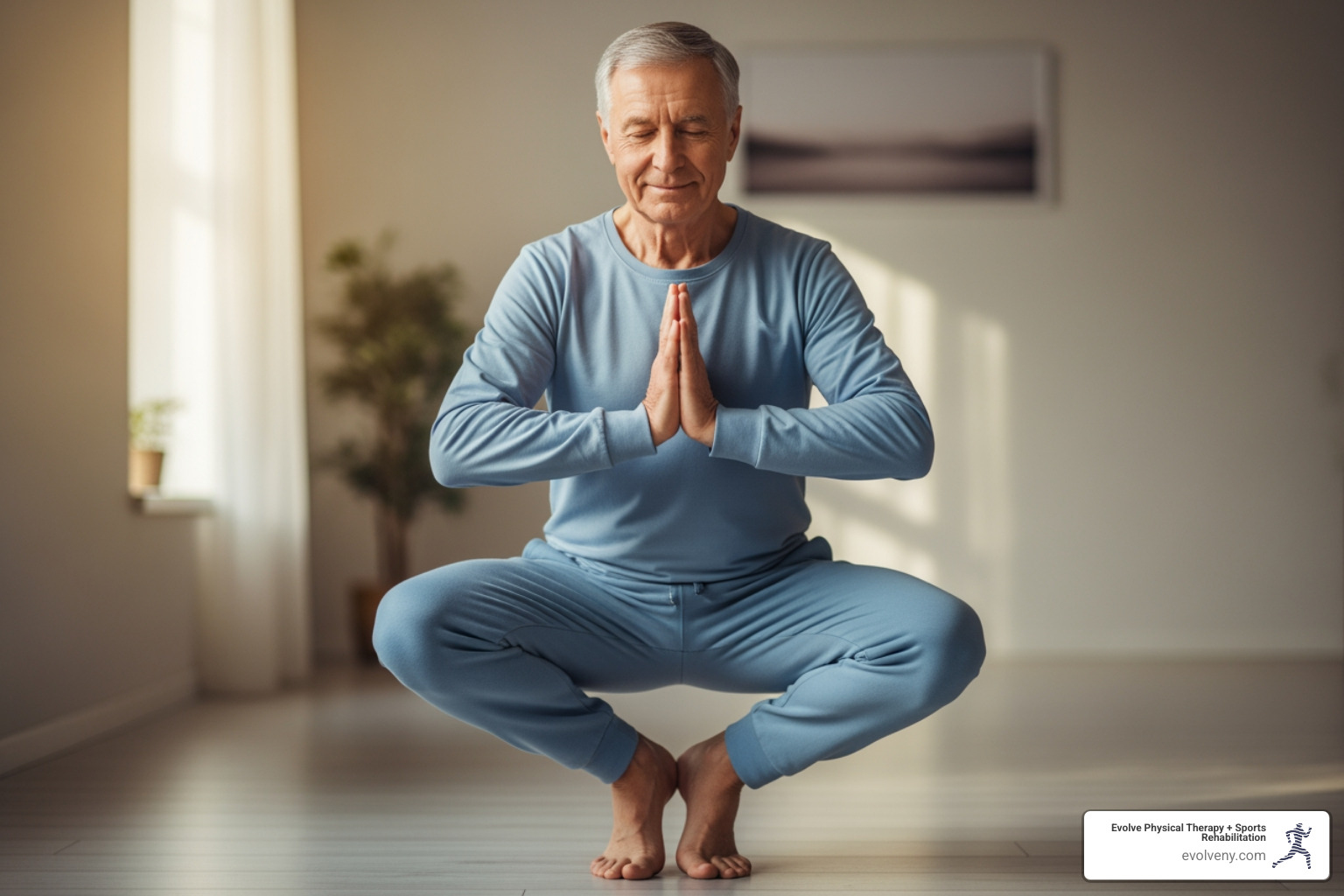
First, warm up with gentle neck rolls. Drop your chin to your chest, then slowly roll your right ear to your right shoulder, return to center, and roll your left ear to your left shoulder. Repeat a few times.
If you'd like visual guidance, you can follow along with this gentle routine for beginners and seniors.
Gentle Standing Poses to Build Balance and Strength
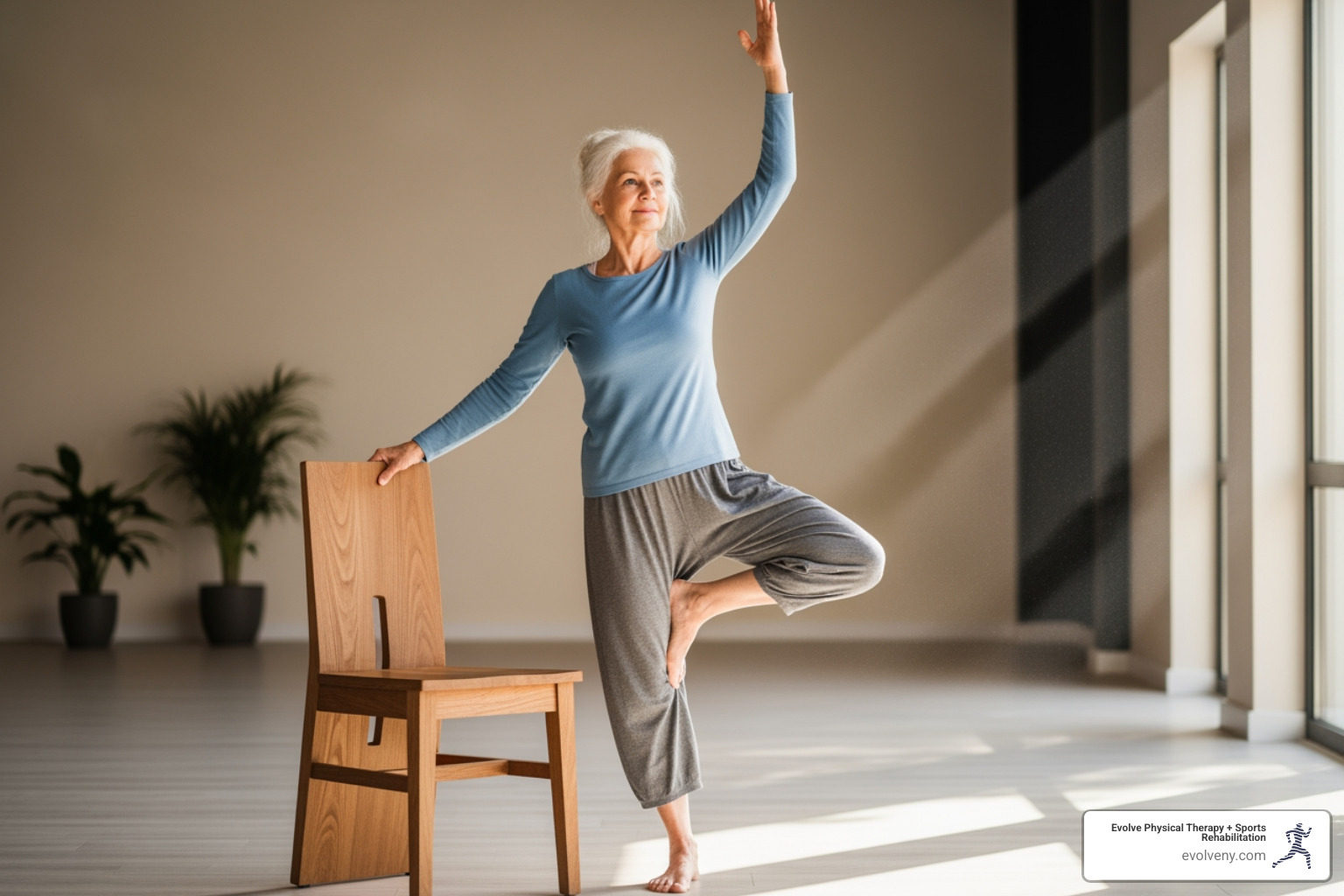
Practice near a wall or sturdy chair for support.
Mountain Pose (Tadasana): Stand with feet hip-width apart, weight balanced evenly. Lengthen your spine, relax your shoulders, and let your arms hang at your sides with palms forward. This pose builds good posture and body awareness.
Tree Pose (Vrikshasana): Shift your weight to your left foot, using a wall or chair for support. Place the sole of your right foot on your left ankle, calf, or inner thigh (avoid the knee). Gaze at a fixed point to help with balance. Hold for a few breaths, then switch sides.
Warrior II (Virabhadrasana II): Step your feet wide apart (a shorter stance is fine). Turn your right foot out and your left foot in slightly. Bend your right knee over your ankle. Extend your arms parallel to the floor and gaze over your right fingertips. Hold for a few breaths, then switch sides.
Gentle Floor Poses for Flexibility and Relaxation
These can be adapted to a chair if getting on the floor is difficult.
Cat-Cow Stretch: On hands and knees (or seated), inhale to drop your belly and lift your gaze (Cow). Exhale to round your spine and tuck your chin (Cat). Flow between the two poses with your breath 5-10 times to improve spinal mobility.
Sphinx Pose: Lie on your stomach with elbows under your shoulders. Press through your forearms to gently lift your chest, keeping your neck comfortable. This strengthens your back without strain. Hold for 3-5 breaths.
Bridge Pose: Lie on your back with knees bent and feet flat. Lift your hips and slide a yoga block or firm pillow under your sacrum (the flat bone at the base of your spine) for support. This creates a restorative backbend. Hold for 5-10 breaths.
Supine Spinal Twist: Lie on your back, hug your knees to your chest, then extend your left leg. Let your right knee fall to the left side, keeping your right shoulder on the floor. This releases the lower back. Hold for 5-10 breaths, then switch sides.
The Final Relaxation: Savasana (Corpse Pose)
Lie on your back, placing a bolster or rolled blanket under your knees for comfort. Let your arms rest by your sides, palms up. Close your eyes and allow your body to feel heavy. Let your breath be natural. Rest here for 5-10 minutes to allow your body to integrate the practice. To come out, wiggle your fingers and toes, roll to one side, and slowly press up to a seated position.
Find Supported and Seated Yoga: The Ultimate Accessible Practice
Many seniors believe yoga isn't for them due to balance concerns or difficulty getting on the floor. Supported and seated yoga is the solution. This practice adapts poses so they can be done while seated in a sturdy chair or using it for support. It's a complete practice delivering all the benefits of yoga—flexibility, strength, and stress reduction—in a safe, accessible way.
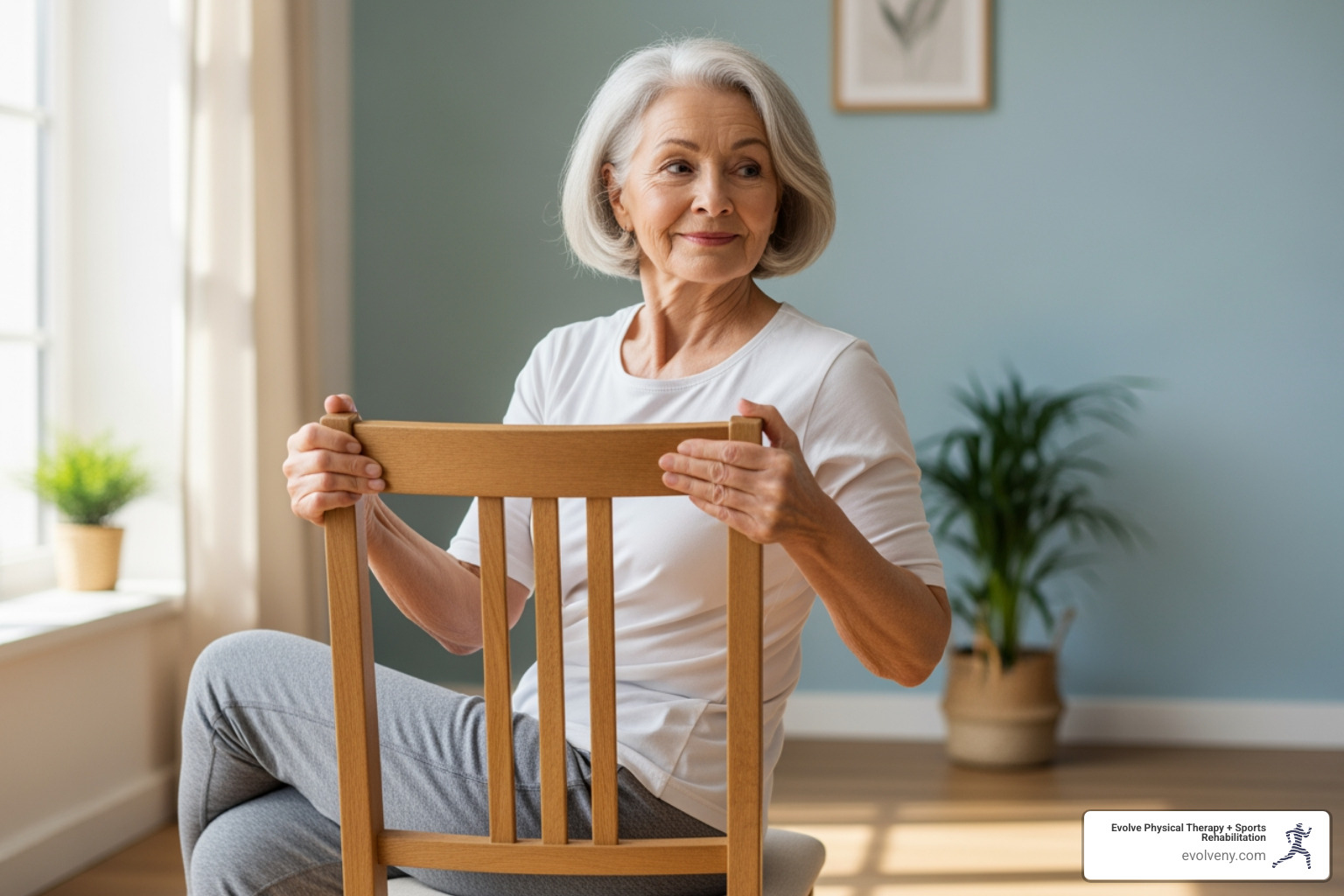
This approach is ideal for those with limited mobility, chronic conditions, or who are recovering from surgery. The chair provides a stable foundation, allowing you to explore movements with confidence. For your practice, choose a sturdy, armless chair that allows your feet to rest flat on the floor.
Why Supported and Seated Yoga is Perfect for Seniors
- Accessibility: Almost anyone can participate, regardless of mobility level.
- Safety: The chair provides stability, reducing fall risk and the fear of falling.
- Improved Circulation: Gentle movements encourage blood flow, which can reduce swelling in the legs and feet.
- Gentle on Joints: Ideal for managing arthritis or other joint conditions.
- Builds Strength: Effectively strengthens the core, legs, arms, and back, building confidence.
- Convenience: Can be practiced anywhere you have a chair.
A Simple Supported and Seated Yoga Sequence for a Gentle Yoga for Seniors Practice
Sit tall with your feet flat on the floor.
Seated Cat-Cow: With hands on your knees, inhale and arch your back, lifting your chest (Cow). Exhale and round your spine, tucking your chin (Cat). Repeat 5-10 times.
Seated Mountain Pose: Sit tall, hands on thighs. Lengthen your spine and relax your shoulders. This builds posture and body awareness.
Seated Sun Salutations (Modified): Inhale and sweep arms overhead. Exhale, fold forward over your legs. Inhale, lift halfway with a flat back. Exhale, fold again. Inhale, sweep arms back overhead. Exhale, hands to heart center. Repeat 3-5 times.
Seated Forward Bend: Hinge forward from your hips, letting your hands slide down your shins. Relax your head and neck. Hold for 5-10 breaths.
Seated Spinal Twist: Place your right hand on your left knee and your left hand on the chair. Gently twist to the left, keeping your spine long. Hold for 5 breaths, then switch sides.
Seated Figure-Four Stretch for Hips: Cross your right ankle over your left knee. For a deeper stretch, gently press on your right knee or lean forward. Hold for 5-10 breaths, then switch sides.
For visual guidance, you can watch a slow and gentle supported yoga class that demonstrates each movement clearly.
Modifications for Common Health Concerns in Gentle Yoga for Seniors
- Arthritis: Focus on gentle range of motion. Use extra padding and avoid holding poses that cause discomfort. Seated poses are often best.
- Osteoporosis: Avoid deep forward folds and extreme twists that round the spine. Emphasize poses that promote good posture and use a wall or chair for support in standing poses.
- Balance Issues: Always practice with support nearby (a wall or chair). Chair yoga is an excellent option to remove fall risk entirely.
Frequently Asked Questions about Gentle Yoga for Seniors
Here are answers to common questions we hear at Evolve Physical Therapy about gentle yoga for seniors.
How often should I practice yoga to see benefits?
Consistency is more important than duration. We recommend starting with 10-15 minutes, two to three times a week. This allows your body to adapt. Even short, daily sessions can be highly beneficial. As you get stronger, you can gradually increase the length or frequency of your practice.
What if I can't get down on the floor?
This is not a barrier to practicing yoga. Supported and seated yoga (chair yoga) is designed for this exact situation. All poses are adapted to be done while seated or using a chair for support, providing the same benefits for flexibility, strength, and mindfulness without the worry of getting up and down from the floor.
Is it normal to feel sore after yoga?
Mild muscle fatigue the day after practice is normal, especially when you're new to it. This means your muscles are getting stronger. However, sharp, shooting, or joint pain is not normal. If you feel this type of pain, stop the pose immediately. If pain persists, consult your healthcare provider or a physical therapist. We can help you distinguish between beneficial muscle work and potential injury.
Conclusion: Accept Your Strength at Any Age
It's never too late to reconnect with your body's strength and potential. Gentle yoga for seniors is an adaptable practice that builds independence and vitality.
The benefits are clear: improved balance to prevent falls, increased flexibility for easier movement, stronger muscles and bones, and pain relief. Mentally, it offers reduced stress, sharper thinking, and better sleep. Yoga meets you where you are, whether you practice standing, seated, or on a mat. This mind-body connection is empowering, teaching you to move with intention and respect for your body.
At Evolve Physical Therapy, our specialists in Brooklyn help create safe, personalized movement plans that may include yoga principles. We are here to guide you, whether you're managing a chronic condition or simply want to stay active. Your wellness journey is always evolving.
Learn more about our physical therapy programs for seniors and find how we can support you in Brooklyn.
