

Connect and Thrive Discover Parkinson's Support Groups Near You
Why Finding the Right Parkinson's Support Group Matters
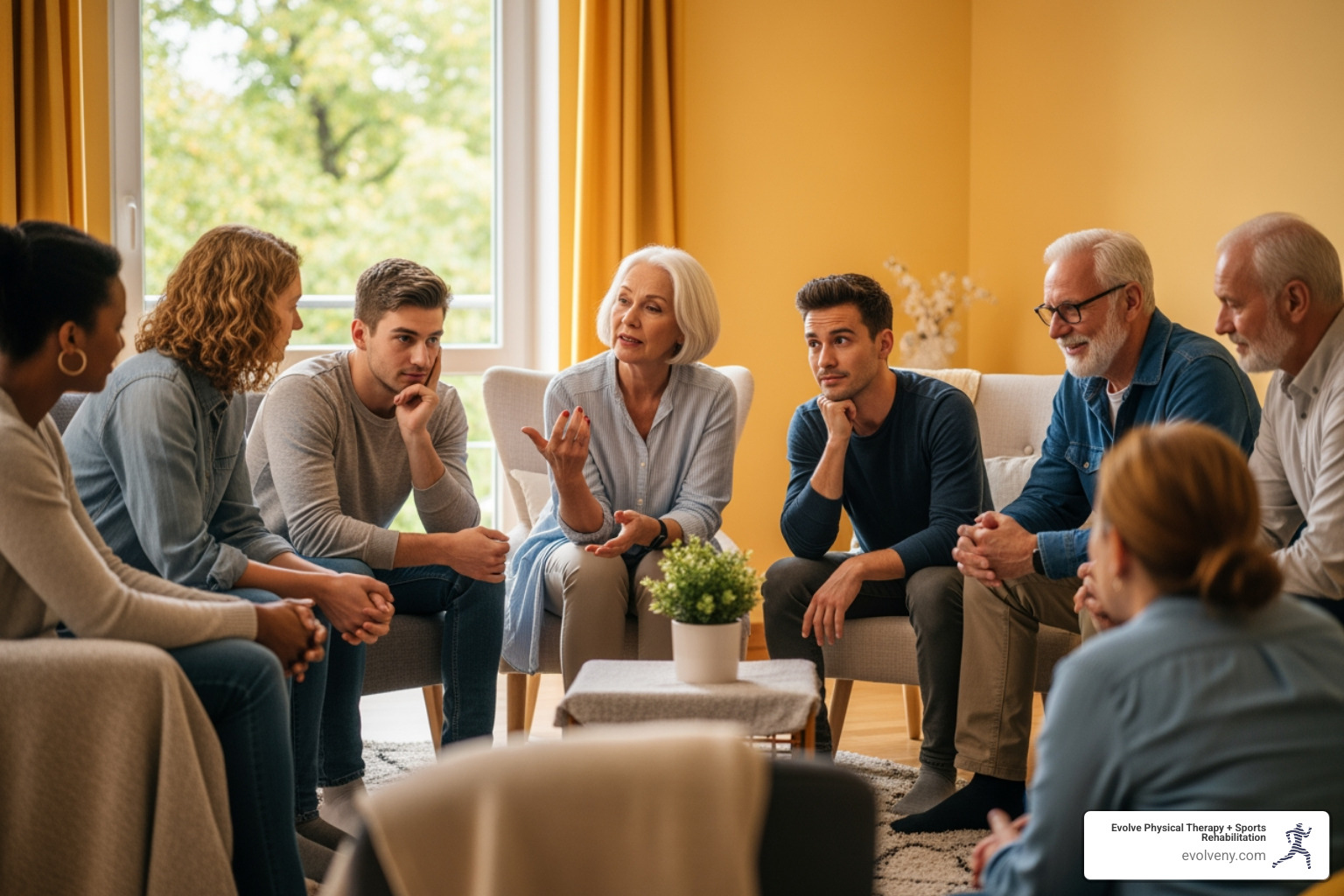
A Parkinson's support group connects you with people who understand your journey. These groups offer emotional support, practical advice, and a sense of community that can make living with Parkinson's disease (PD) less isolating.
Quick Guide to Finding a Parkinson's Support Group:
- Ask your healthcare team - Your neurologist, physical therapist, or local hospital can recommend groups
- Contact national organizations - Call the Parkinson's Foundation Helpline at 1-800-4PD-INFO (473-4636) or visit websites like the American Parkinson Disease Association
- Search online - Look for virtual support groups, forums, and community platforms
- Check local resources - Community centers, libraries, and hospitals often host in-person meetings
- Consider your specific needs - Groups exist for caregivers, young-onset PD, newly diagnosed, specific languages, and more
Many people find that support groups help them cope with the day-to-day realities of having Parkinson's disease. The opportunity to swap stories and share resources can be truly therapeutic. Whether you prefer in-person meetings or online forums, formal presentations or casual conversations, there's likely a group that fits your needs.
Support groups aren't just for people with PD. Care partners and family members also benefit from connecting with others who understand their challenges. Some groups welcome everyone affected by Parkinson's, while others focus on specific populations like women, veterans, or those living alone.
You might feel nervous about joining your first group. That's normal. If you don't like the first group you try, keep looking. The right fit makes all the difference.
I'm Lou Ezrick, founder of Evolve Physical Therapy in Brooklyn, and I've worked with many individuals and families navigating Parkinson's disease. I know how valuable Parkinson's support groups can be as part of a comprehensive care plan that includes physical therapy, medical treatment, and community connection.
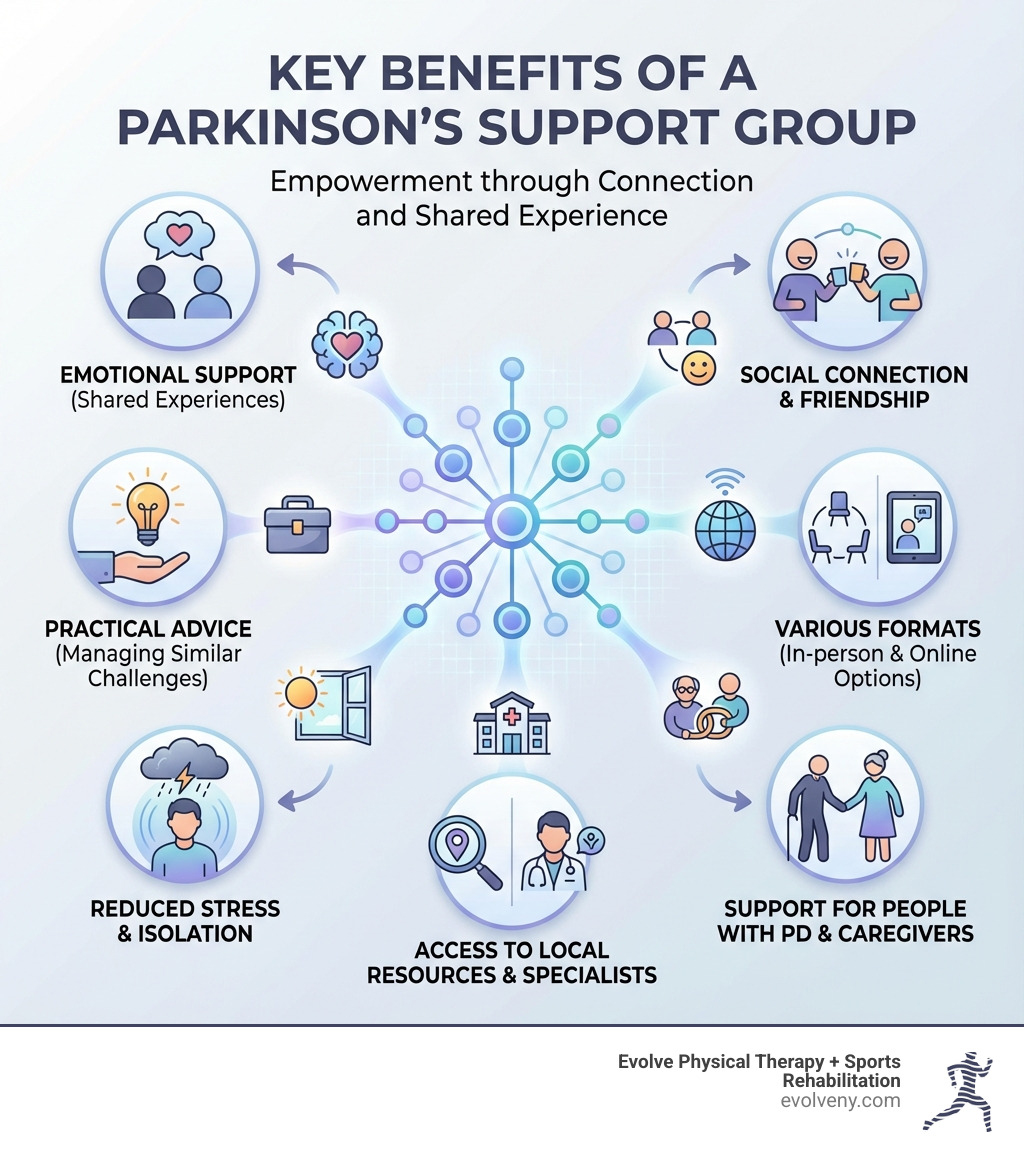
The Power of Connection: Why Join a Parkinson's Support Group?
Living with Parkinson's disease can present unique challenges, both physical and emotional. It's a journey that no one should have to walk alone. That's why Parkinson's support groups are so vital. They offer a unique blend of emotional well-being, practical advice, and a sense of belonging that can significantly improve quality of life for individuals with PD and their loved ones.
The opportunity to swap stories and share resources can be truly therapeutic. We've seen countless individuals experience reduced stress and a greater sense of connection simply by engaging with others who truly understand their experiences. This extends to care partners and family members, who also benefit immensely from sharing questions and concerns with like-minded others. Support groups help alleviate the feeling of isolation that can make life with Parkinson's more difficult, fostering an environment where understanding and empathy thrive.
Gaining Emotional and Mental Support
One of the most profound benefits of joining a Parkinson's support group is the emotional and mental reinforcement it provides. When you're navigating the complexities of PD, it's easy to feel frustrated or overwhelmed. Being part of a group means you're surrounded by individuals who "get it." This shared understanding is incredibly powerful, helping to alleviate the feeling of isolation that can often accompany a chronic illness.
In these groups, you can find a shoulder to cry on, share your worries, and express your frustrations without judgment. This peer-to-peer encouragement helps build resilience and fosters a sense of hope. You'll likely form new friendships with people who genuinely care about your well-being, creating a vital social network that supports your mental health. This connection reminds us that we are not alone in our struggles, and that there is strength in community.
Sharing Practical Knowledge and Resources
Beyond emotional support, Parkinson's support groups are a treasure trove of practical knowledge. Members often exchange invaluable tips for daily living, offering creative solutions for managing symptoms, navigating medication schedules, and adapting to new routines. Think of it as a living library of experience!
You can learn about different treatment experiences, compare notes on the effectiveness of various therapies, and find local specialists or resources that you might not have found otherwise. This collective wisdom helps individuals and care partners steer the often-complex healthcare system more effectively. From recommendations for adaptive equipment to insights on managing non-motor symptoms, the practical advice shared in these groups can be a game-changer. For more detailed information on available resources, we encourage you to explore More info about what support is available for Parkinson's disease.
Finding Your Fit: Types of Parkinson's Support Groups Available
Just like Parkinson's disease affects each person differently, the ideal support group experience can vary widely. Fortunately, there's a diverse array of Parkinson's support groups designed to meet different preferences and needs. Whether you're looking for face-to-face interaction, the convenience of online forums, or a group custom to specific demographics, options are available.

In-Person vs. Online Groups
The choice between in-person and online groups often comes down to personal preference, location, and accessibility.
In-person meetings offer direct, face-to-face interaction. These local gatherings provide a strong sense of connection, allowing for nuanced communication and shared activities. For those in Brooklyn and surrounding areas like Marine Park, Gravesend, Midwood, Park Slope, and Mill Basin, local chapters of national organizations or community centers often host such meetings.
Online groups provide incredible flexibility and accessibility. They include virtual video calls for real-time communication and online forums where you can post and read messages at your own pace. They are great for those with busy schedules, in remote areas, or who prefer anonymity.
Here are some popular online support platforms:
- Parkinson's Buddy Network: From the Michael J. Fox Foundation, this network helps you connect with others, find resources, and build relationships, with software to match members by interests.
- Mayo Clinic Parkinson's Disease forum: A moderated forum with over 2,000 members where Mayo Clinic staff help answer questions.
- PD Conversations: Moderated groups from the Parkinson's Foundation on various topics, including options in Spanish. Helpline staff answer questions.
- HealthOpen uped (Cure Parkinson's community): An unmoderated community with over 21,000 members, run with Parkinson's Movement (UK) and the EPDA, covering many PD topics.
- Parkinson's UK Forum: A moderated forum with sections for daily life, treatments, caregivers, and more.
- PatientsLikeMe Forum: An unmoderated forum with over 20,000 PD members where posts can be tagged and searched.
- Smart Patients Parkinson's Disease Community: A moderated community run in partnership with the American Parkinson Disease Association (APDA).
- NeuroTalk and Caring.com: Both host robust Parkinson's disease communities.
- Facebook groups: A popular option for conversation. Ask your doctor for recommendations or search for groups to join.
A Parkinson's Support Group for Every Need
The beauty of the Parkinson's support group landscape is its diversity. Groups cater to a wide array of specific needs and demographics, ensuring that nearly everyone can find a community where they feel truly understood.
- Caregiver groups: These are crucial for spouses, partners, adult children, and friends who provide care. We know that caregiving can be incredibly demanding, and these groups offer a space to share challenges, coping strategies, and prevent burnout. There are groups for caregivers of those in early to mid-stage PD, as well as those caring for individuals in advanced stages, or even bereavement groups for care partners dealing with loss and grief. We offer more resources for caregivers, including Parkinson's Caregivers Support Groups.
- Young-Onset PD (YOPD) groups: For individuals diagnosed with Parkinson's before age 50, YOPD presents unique challenges. These groups connect younger individuals who may be balancing careers, raising families, and navigating symptoms that differ from later-onset PD. Groups like "YOPD Connections" or "YOPN Monthly Member Community Gathering" offer vital peer support.
- Women-only and men-only groups: Some individuals prefer to connect with others of the same gender to discuss experiences that might be gender-specific. Virtual Women's Parkinson's Support Groups and Men with Parkinson's groups provide these custom environments.
- Newly diagnosed groups: Receiving a PD diagnosis can be overwhelming. These groups offer a safe space for individuals to process their emotions, ask basic questions, and connect with others who are just beginning their journey.
- Advanced stages groups: As PD progresses, new challenges arise. Groups for advanced stages provide support and information relevant to more complex symptoms and care needs.
- Ethnic-specific and language-specific groups: Recognizing the importance of cultural and linguistic comfort, some organizations offer groups custom to specific ethnic backgrounds, or in languages such as Spanish, French, Cantonese, and Mandarin. This ensures that support is accessible to diverse communities.
- Specialized groups: You can also find groups for specific situations, such as:
- DBS recipients: For those who have undergone Deep Brain Stimulation surgery, these groups offer a forum to discuss post-surgical experiences and adjustments.
- "Flying Solo" or "Living Solo" groups: For individuals with PD who are single, divorced, or living alone, offering camaraderie and practical advice.
- Adult children caregivers: Dedicated spaces for adult children whose parents have PD or another movement disorder, recognizing their unique role and challenges.
- Grief support: Groups like "PRO Grief Group" or "Bereavement Support Group for Carepartners" help individuals process loss related to PD.
- Teen support: "Just for Teens" or "Teen Talk" groups offer a safe space for teenagers whose parents or family members have YOPD.
Moderated vs. Unmoderated Online Communities
When exploring online Parkinson's support groups, you'll encounter both moderated and unmoderated communities. Understanding the difference is key to finding the right fit.
- Moderated forums are overseen by administrators or trained volunteers. Posts are reviewed to ensure they are respectful and adhere to community guidelines, and that information is generally reliable. Examples include the forums from the Mayo Clinic and the Parkinson's Foundation. These groups are more structured, provide a safer environment, and are excellent for getting reliable information.
- Unmoderated forums allow members to post freely without review, fostering open discussion. Platforms like HealthOpen uped and PatientsLikeMe are examples. While this allows for a rich exchange of personal stories, the information shared may not be medically accurate. Always consult your healthcare professional about any medical advice found in these groups.
When choosing between the two, consider your priorities: Do you prefer a highly structured, professionally guided environment with vetted information, or do you value a more free-flowing, peer-driven discussion? For reliable information, moderated groups are generally preferable. For broad, diverse personal experiences, unmoderated groups can be valuable, but always cross-reference critical information with your medical team.
How to Find a Parkinson's Support Group
Finding the right Parkinson's support group is a crucial step towards building a robust support network. Whether you're seeking local in-person meetings or online connections, there are several avenues to explore.

Using National and Local Resources
National organizations are often the first and best place to start your search. They typically have vast networks and comprehensive directories:
- The Parkinson's Foundation: This organization provides people with PD and caregivers access to local resources and services through its Chapter network. They offer a toll-free Helpline at 1-800-4PD-INFO (473-4636) for information and referrals. You can search their website by state to find local support groups, health and wellness classes, and education programs.
- The American Parkinson Disease Association (APDA): APDA works tirelessly to support and empower anyone impacted by PD. Their nationwide network provides connection and community, along with information, referrals, education, support programs, and health and wellness activities. Their website also allows you to find local resources by entering your state or zip code. For those in New York City, APDA specifically lists local support groups.
- The Michael J. Fox Foundation: While primarily focused on research, they also offer the Parkinson's Buddy Network, an online community for connection and support.
Beyond these national bodies, don't overlook local community resources in areas like Brooklyn, Marine Park, Gravesend, Midwood, Park Slope, and Mill Basin:
- Community Centers and Libraries: Check their calendars or bulletin boards for local support group listings.
- Local Hospitals: Many hospitals offer community outreach programs or host support groups for various conditions, including Parkinson's.
- Online Search Directories: Websites of national or local Parkinson's disease organizations often have online support group resources.
For support resources specifically custom to our community, please visit Find Support Resources | Evolve Physical Therapy.
Asking Your Healthcare Team
Your healthcare team is an invaluable resource for finding a suitable Parkinson's support group. They often have direct knowledge of local groups and can provide recommendations based on your specific needs and situation.
- Neurologist Recommendations: Your neurologist is typically well-connected with the local Parkinson's community and can often recommend specific groups they know to be beneficial. They might even be guest speakers at some of these groups.
- Physical Therapist Suggestions: As physical therapists, we work closely with individuals with PD and their families. We understand the physical and emotional challenges you face and can suggest groups that align with your therapeutic goals and personality. At Evolve Physical Therapy, we are deeply involved in the Brooklyn Parkinson's community and can guide you toward relevant local resources. For more information on how we support individuals with PD, check out More info about physical therapy for Parkinson's.
- Hospital Outreach Programs: Many hospitals have social workers or patient navigators who can connect you with support groups and other community services.
- Social Worker Referrals: Social workers specializing in chronic illness are excellent resources for identifying support networks.
Don't hesitate to ask your doctors, therapists, or other healthcare providers. They are often your best local guides.
Starting Your Own Support Group
What if you've searched diligently and still can't find a Parkinson's support group that perfectly fits your needs in your area, or perhaps you feel a specific demographic is underserved? Don't despair! You're likely not alone, and starting your own group can be an incredibly rewarding endeavor. We've seen the power of community, and sometimes, it just needs a spark.
Here are some tips for starting a new support group:
- Identify a Need and Target Audience: Consider who you want to serve. Is it people with PD, their care partners, young-onset PD individuals, or perhaps a group focused on a specific challenge? Defining your audience will help attract the right members.
- Find a Suitable Location: Choose a private, accessible space. Community centers, local libraries, churches, or even private rooms in medical facilities are often good options. Avoid overly public spaces like coffee shops where privacy might be an issue. In Brooklyn, there are many community venues that could host such a group.
- Determine Meeting Time and Frequency: Decide how often and when your group will meet. Consider what days and times might work best for your target audience (e.g., weekday mornings for retirees, evenings for working care partners).
- Set a Format: Will it be an informal chat, a facilitated discussion with rotating hosts, or will you invite guest speakers? Many groups find a mix works well, allowing for open discussion alongside informative presentations.
- Invite Guest Speakers: Enlisting healthcare professionals can add immense value. Think about inviting neurologists, physical therapists (like us!), occupational therapists, speech-language pathologists, or even exercise group leaders to share their expertise.
- Promote the Group: Spread the word! Create simple flyers and post them in doctor's offices, hospitals, libraries, community centers, and senior centers in Brooklyn and surrounding neighborhoods. Use online platforms like local Facebook groups or create a basic website to announce meetings and communicate with members.
- Share Resources: At each meeting, consider having takeaway resources such as handouts, lists of helpful websites, or contact information for local services.
- Consider Inviting Care Partners: Even if the primary focus is on individuals with PD, inviting care partners and family members can broaden the support network and provide a holistic approach.
Starting a group might seem daunting, but the impact you can have on your community is immense. For more in-depth guidance, explore More info about how to form a support group for Parkinson's.
Frequently Asked Questions about Parkinson's Support Groups
We understand you might have more questions about joining a Parkinson's support group. Here are some common inquiries we hear, along with our insights.
Are Parkinson's support groups free to join?
Generally, most Parkinson's support groups are free to join. Many are volunteer-led and operate on a community-driven model, aiming to provide accessible support to everyone in need. National organizations like the Parkinson's Foundation and the American Parkinson Disease Association (APDA) typically offer their group listings and helpline services without charge.
However, there can be exceptions:
- Donation-based groups: Some groups might accept voluntary donations to cover operational costs, such as room rentals or refreshments.
- Professionally facilitated groups: If a group is led by a paid professional, such as a social worker, therapist, or specialized healthcare provider, there might be a fee per session or a membership cost. For example, some specialized mindfulness groups might charge a small fee. Always check with the specific group organizer regarding any associated costs.
- Online platforms: While reading posts on many online forums is free, some platforms may require membership to actively post questions or comments.
Our advice is always to confirm with the group organizer or check their website if you're unsure about any fees.
What happens at a typical support group meeting?
The structure of a Parkinson's support group meeting can vary, but most share common elements designed to foster connection and provide value.
- Introductions and Check-ins: Meetings often begin with members introducing themselves (if new) and briefly sharing how they're doing or any recent experiences they wish to highlight.
- Sharing Personal Experiences: This is often the core of the meeting. Members take turns sharing their challenges, successes, and insights related to living with PD or being a care partner. This open discussion allows for mutual support and validation.
- Open Discussion: Topics can arise organically from members' shares, or a facilitator might introduce a theme for discussion. This could range from managing specific symptoms to navigating social situations or dealing with emotional impacts.
- Guest Speakers: Many groups regularly invite guest speakers. These might be neurologists, physical therapists (like us at Evolve Physical Therapy), occupational therapists, speech-language pathologists, dietitians, or other allied healthcare professionals. They provide educational presentations on topics relevant to PD management, research updates, or coping strategies.
- Educational Presentations: Sometimes, meetings might involve watching an informative video or discussing articles related to Parkinson's.
- Social Activities: Beyond formal discussions, many groups incorporate social time, allowing members to chat informally, build friendships, and enjoy a sense of community. Some local groups even organize social events and activities outside of regular meetings.
For instance, some groups might start with a lighthearted activity, like a clean comedian to get everyone laughing, followed by an informative video and then open discussion and Q&A. Regardless of the specific format, the goal is always to create a supportive and informative environment.
How do I know if a support group is right for me?
Finding the right Parkinson's support group is a personal journey, and it's perfectly normal if the first one you try isn't the perfect fit. Here's how you can determine if a group is right for you:
- Try a Few Different Groups: Don't feel obligated to stick with the first group you attend. We recommend trying a few different options – perhaps an in-person meeting, an online video call, and an online forum – to see which format and dynamic resonate most with you.
- Consider the Format: Do you prefer a formal, structured meeting with a clear agenda and guest speakers, or a more informal, free-flowing conversation? Some groups are professionally facilitated, while others are peer-led. Think about what kind of interaction makes you feel most comfortable and engaged.
- Group Size and Demographics: Some individuals thrive in larger groups, while others prefer a more intimate setting. Also, consider the group's specific focus – if you're a care partner, a group specifically for caregivers might be more beneficial than a general PD group. Similarly, if you have Young-Onset PD, connecting with peers facing similar life stages can be invaluable.
- Observe the Atmosphere: Does the group feel welcoming and empathetic? Do members listen to each other respectfully? Is there a balance between sharing challenges and offering constructive support or hope? A supportive and safe environment is paramount.
- Your Personal Comfort Level: The right group is one where you feel understood, respected, and comfortable sharing your experiences. If you feel heard and supported, and leave feeling more positive or informed, you're likely in a good place.
There's no pressure to force it if a group doesn't appeal to you. The goal is to find a community that genuinely improves your well-being.
Conclusion: Take the Next Step in Your Support Journey
Navigating life with Parkinson's disease, whether you have a diagnosis or are a dedicated care partner, is a journey best shared. Parkinson's support groups offer an unparalleled opportunity for connection, understanding, and empowerment. From gaining vital emotional support to sharing practical knowledge and finding a community that truly "gets it," these groups are an indispensable part of a holistic care plan.
We, at Evolve Physical Therapy, believe firmly in the power of a comprehensive approach to managing Parkinson's. This includes not just expert physical therapy, but also robust community engagement and physical activity. Our Rock Steady Boxing program, for instance, which has been featured on NBC News, is a fantastic example of how we combine dynamic physical exercise with the camaraderie and support of a group setting right here in Brooklyn. It’s about fighting back against PD in every way possible.
Don't underestimate the profound impact that connecting with others can have on your well-being. Take that next step today. Explore the various types of Parkinson's support groups available, whether in-person in Brooklyn, Marine Park, Gravesend, Midwood, Park Slope, or Mill Basin, or through the many online communities. Ask your healthcare team for recommendations, or even consider starting a group if you see a need in your community.
We are here to support you in every way we can. For more information on how our specialized physical therapy services can complement your Parkinson's care plan, please visit More info about Parkinson's physical therapy in Brooklyn. Your journey is unique, but you don't have to walk it alone. Connect, share, and thrive!
