

Playful Paths to Progress: Expert Physical Therapy for Children
Introduction: The First Steps to a Brighter Future
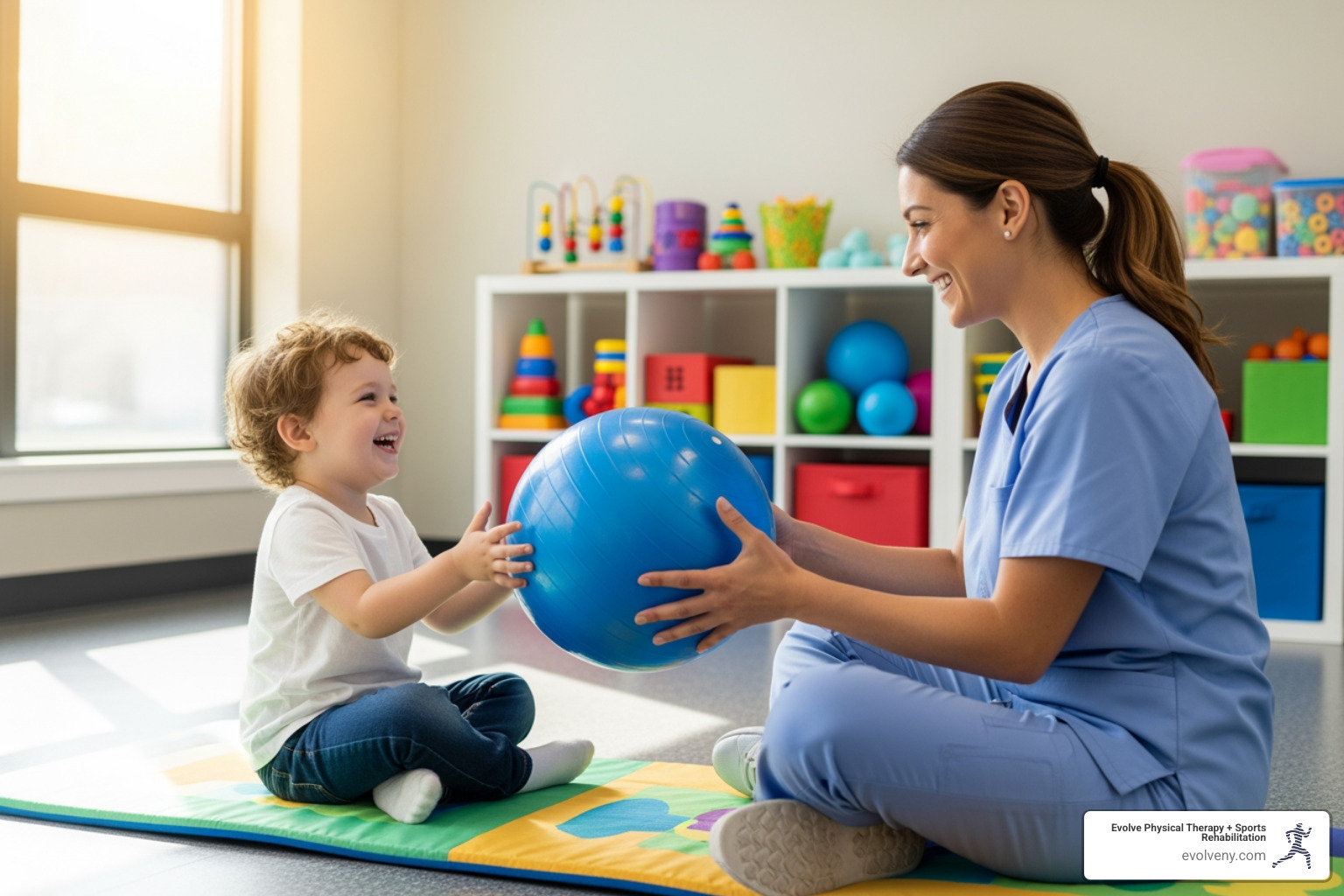
Physical therapy for kids helps children develop or regain the skills they need to move their bodies, build strength, improve coordination, and participate fully in daily activities at home, school, and in their communities.
Quick Overview: What Physical Therapy for Kids Offers
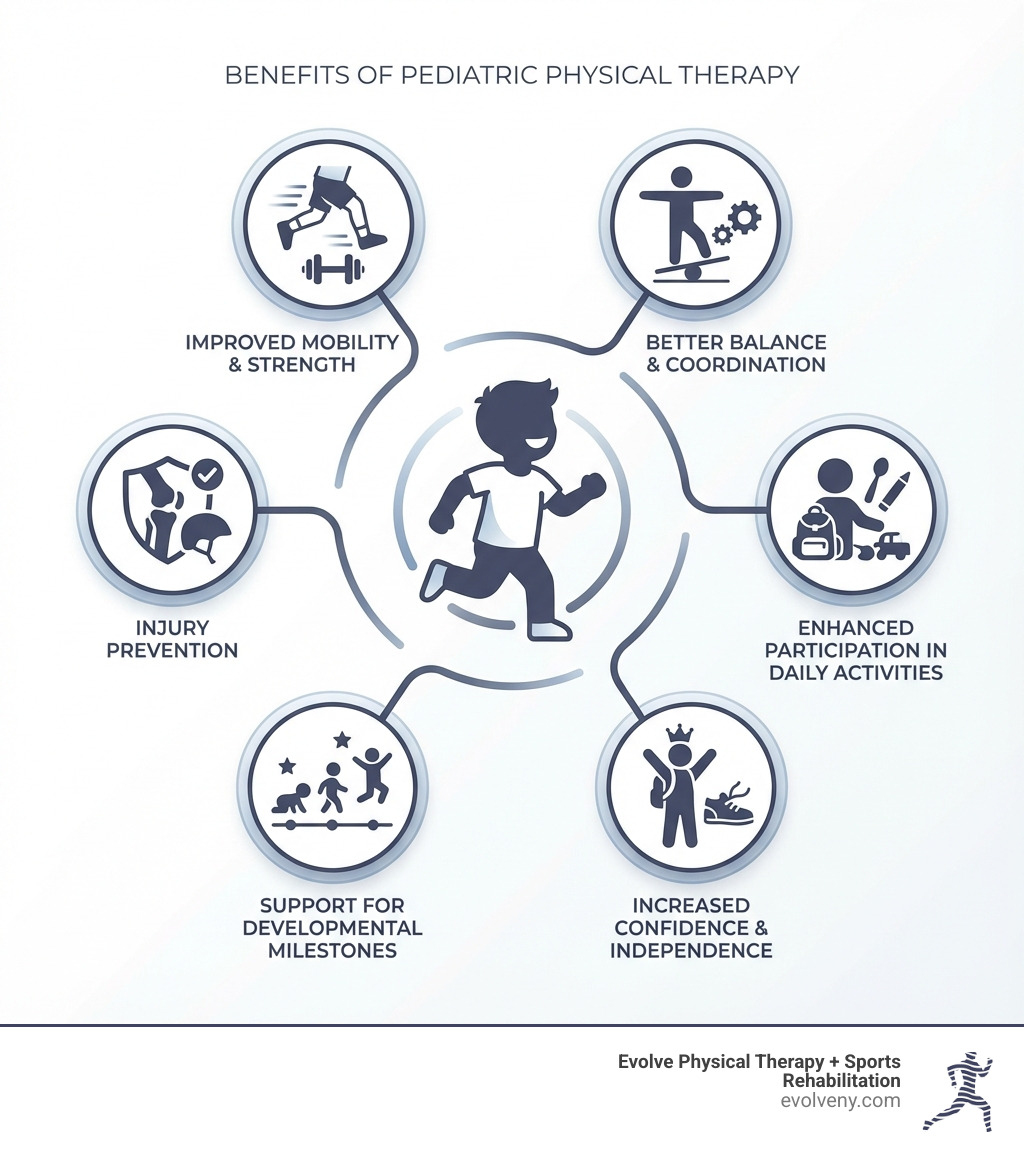
- Improves Mobility: Helps children crawl, walk, run, and move with confidence
- Builds Strength: Develops muscle strength and endurance through play-based exercises
- Improves Coordination: Addresses balance, motor planning, and body awareness
- Supports Development: Assists children in reaching age-appropriate milestones
- Boosts Confidence: Empowers kids to participate in activities they enjoy
- Prevents Injury: Teaches safe movement patterns and proper body mechanics
Children are not just small adults. They require specialized therapeutic intervention within the context of their development. Whether your child has experienced an injury, is managing a developmental delay, or lives with a physical condition like cerebral palsy or torticollis, the right therapy program can make a world of difference.
Pediatric physical therapy uses play, exercise, and hands-on techniques to help children reach their full potential. Therapists work with conditions ranging from torticollis in infants (ideally starting before 3 months of age for best results) to sports injuries in teens and developmental coordination disorder in school-aged children.
More than 180,000 children and youth with special needs receive these services every year. The goal is always the same: to equip children and families with the knowledge and skills to manage daily challenges and thrive independently.
As Lou Ezrick, founder of Evolve Physical Therapy, I've dedicated nearly two decades to helping patients overcome movement challenges. My team and I use specialized, hands-on approaches to address each child's unique developmental needs, because we believe every child deserves to move with joy and confidence.
Why is pediatric physical therapy for kids so important?
Movement is more than just play for children; it's fundamental to their development, confidence, and independence. In our Brooklyn clinics, we see how physical therapy for kids helps children develop strength, balance, and coordination. It improves posture and mobility, prevents injury, and manages chronic conditions.
At Evolve Physical Therapy, we know children thrive when they can move freely. Our pediatric physical therapists are experts in movement and motor development, assessing a child's flexibility, strength, and gait compared to their peers. This specialized care is essential, as movement problems can limit a child's ability to learn, play, and interact with the world.
The benefits extend beyond physical improvements:
- Gross Motor Skills: We help children master the large muscle movements needed for activities like crawling, walking, running, and jumping.
- Developmental Milestones: We guide infants and children through age-appropriate milestones, helping them build foundational skills for future learning and independence.
- Injury Prevention: For active kids and young athletes in Brooklyn, we teach safe movement patterns and proper body mechanics to help prevent future injuries.
- Functional Independence: Our goal is to empower children to perform daily tasks as independently as possible, from dressing themselves to navigating their school environment.
- Quality of Life: By improving physical function and confidence, we can significantly improve a child's overall quality of life.
We work alongside families, other healthcare professionals, and school personnel to ensure a comprehensive approach. Our aim is to provide children and their families with the knowledge and skills they need to manage challenges and achieve their maximum potential.
Learn About Pediatric Physical Therapy at Evolve Physical Therapy
Signs Your Child Might Need Physical Therapy & Conditions We Address
While an injury is a clear sign a child needs help with movement, other indicators can be more subtle. As a parent, you're often the first to notice if your child is struggling. Here are common signs your child might benefit from physical therapy for kids:
- Developmental Delays: If your child is falling behind on milestones like rolling, sitting up, crawling, or walking.
- Not Meeting Milestones: Every child develops at their own pace, but significant delays in physical milestones should be assessed.
- Clumsiness or Poor Balance: Frequent tripping, falling, or difficulty with coordination, especially for school-aged children, can be a sign of Developmental Coordination Disorder (DCD). This neurodevelopmental disorder affects about 5-6% of school-aged children and is more common in boys. Children with DCD might struggle with activities like riding a bike, handwriting, or participating in sports.
- Posture Issues: Concerns about your child's posture, such as a persistent head tilt or uneven shoulders.
- Injury Recovery: If your child has sustained a sports injury, orthopedic injury, or acute trauma.
- Post-Surgical Rehabilitation: Physical therapy can be important for regaining strength and movement after surgery.
Pediatric physical therapy is proactive, not just reactive. Early intervention can make a significant difference in a child's long-term outcomes.
How Pediatric Sports Physical Therapy Helps Kids Succeed
Common Pediatric Conditions
At Evolve Physical Therapy in Brooklyn, we address a wide range of pediatric conditions, helping children from infancy through adolescence.
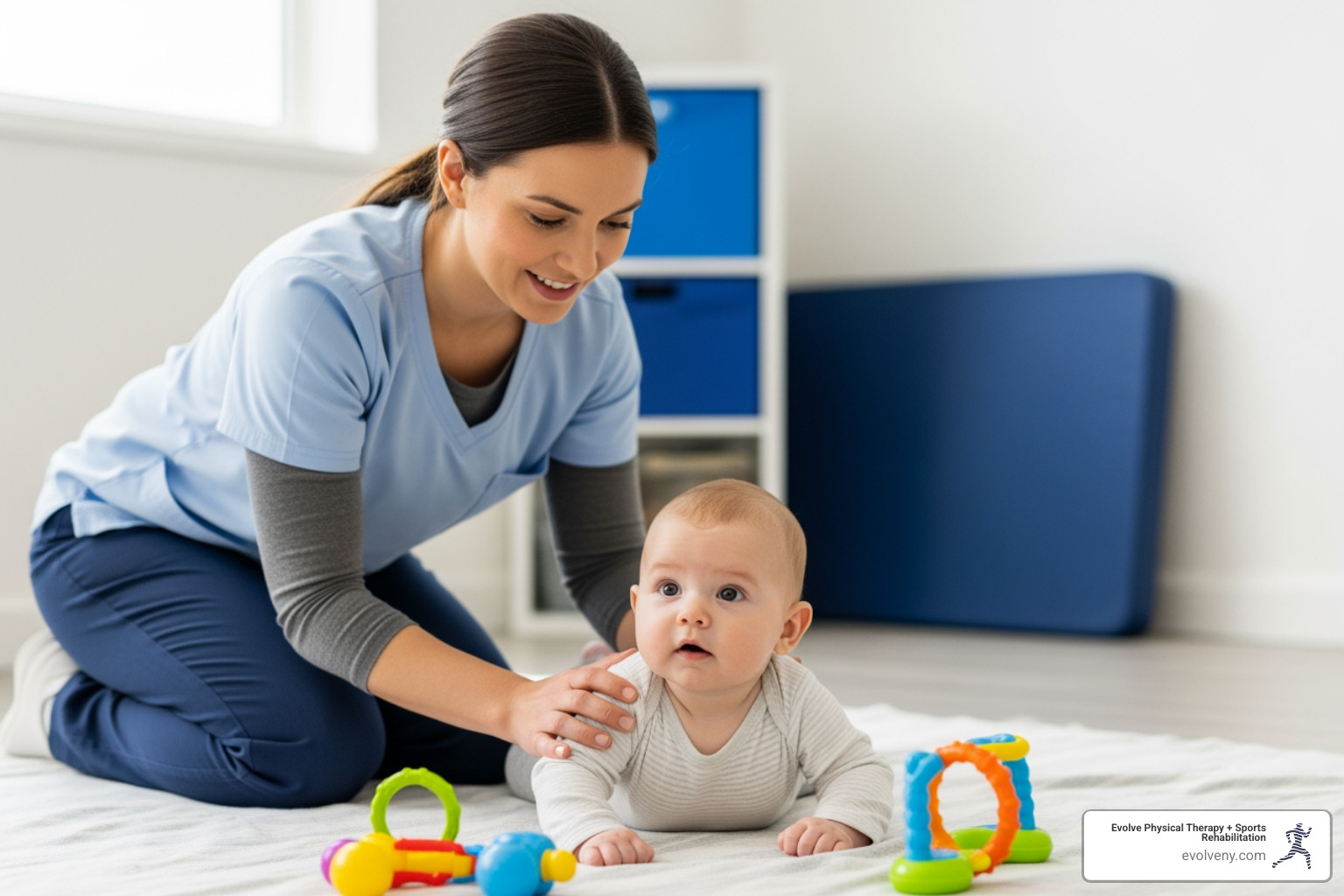
- Torticollis & Plagiocephaly (Flat Head Syndrome): Torticollis is a condition where an infant's neck muscles cause their head to tilt persistently to one side. This can often lead to plagiocephaly, or a flat spot on the head, due to sustained positioning. Early intervention for torticollis, ideally before 3 months of age, can lead to better results and fewer therapy sessions. Our therapists help improve neck muscle symmetry and strength, guiding infants to achieve developmental milestones on time.
- Cerebral Palsy: This neurological disorder affects movement and muscle coordination. We work with children with cerebral palsy to improve mobility, strength, and functional independence, sometimes utilizing advanced techniques like gait training.
- Developmental Coordination Disorder (DCD): As mentioned, DCD affects many school-aged children, causing difficulties with motor skills, coordination, and balance. Our therapy focuses on improving motor performance and participation.
- Autism Spectrum Disorder: Children with Autism may experience mobility issues or unique movement patterns. Our therapists provide custom interventions to address these challenges.
- Genetic Disorders (e.g., Down Syndrome): Many genetic conditions can impact a child's physical development. We provide supportive therapy to help children with genetic disorders participate more fully in life.
- Musculoskeletal Injuries: From sprains and strains to fractures, children can experience a variety of musculoskeletal injuries. Our physical therapy helps restore strength, range of motion, and function.
- Sports Injuries: Young athletes, especially in active communities like Brooklyn, are susceptible to sports-related injuries. We provide specialized therapy for recovery, injury prevention, and safe return-to-sport protocols. This can include addressing issues like concussions (through vestibular therapy) and other acute traumas that may affect balance and coordination.
- Effects of Prenatal Drug/Alcohol Exposure: Children affected by prenatal exposure to drugs or alcohol may experience developmental delays that can benefit from early physical therapy intervention.
We also address conditions such as idiopathic toe walking and various heart and lung conditions where physiotherapy can improve cardiorespiratory endurance. Our goal is to provide comprehensive, individualized care for each child's unique needs.
The Pediatric Physical Therapy Journey: From Referral to Results
Starting physical therapy for kids can feel like a big step, but at Evolve Physical Therapy in Brooklyn, we make the process as smooth and supportive as possible. We're here to guide you and your child every step of the way, from the initial consultation to celebrating their progress.
Referral Process and Direct Access in New York
One common question we hear is about referrals. In New York State, you have what's known as "direct access" to physical therapy services. This means that in many cases, you don't need a physician's referral to begin physical therapy. Licensed physical therapists with at least three years of experience can treat patients for up to 30 days or 10 appointments without a referral.
However, some specialized pediatric programs or certain insurance plans may still require a physician's referral. If you have any questions about whether your child needs a referral, we encourage you to contact us directly. If, after 30 days, your child hasn't made significant improvement, we'll recommend a consultation with their physician to ensure they receive the most appropriate care.
Initial Evaluation: Understanding Your Child's Unique Needs
The journey begins with an initial evaluation. During this visit, we will:
- Discuss Medical History: We'll talk about your child's developmental milestones, any previous injuries or conditions, and their overall health.
- Assess Strength and Flexibility: Our therapists will carefully measure your child's muscle strength, range of motion, and flexibility.
- Perform Gait Analysis: We'll observe how your child walks and runs to identify any patterns or imbalances that might be affecting their movement.
- Conduct Motor Tests: We use specialized tests to assess your child's motor skills, balance, and coordination.
- Listen to Your Concerns: Your input as a parent is invaluable. We want to understand your primary concerns, your child's daily activities, and what you hope to achieve through therapy.
Goal Setting and Family Collaboration
A key part of the initial evaluation is collaborative goal setting. We believe that therapy is most effective when it's child-centered and family-driven. We'll work with you and your child to set short-term and long-term functional goals that are meaningful to your family.
Parents and families play the primary role in their child's development. Our pediatric physical therapists collaborate closely with you to promote development and implement an individualized intervention program. We support families through education, hands-on instruction, and coordination of services, recognizing you as advocates and decision-makers in your child's care.
Pediatric Physical Therapy at Evolve Physical Therapy
What to expect during a physical therapy for kids session
Once the evaluation is complete and goals are set, your child will begin their regular therapy sessions. At Evolve Physical Therapy, we pride ourselves on a one-on-one approach, ensuring your child receives our therapist's attention and expertise.
- One-on-One Sessions: You will be evaluated and treated by a licensed physical therapist, ensuring continuity of care throughout your child's journey with us.
- Play-Based Activities: We know that for kids, movement is best learned through play. Our sessions are designed to be fun and engaging, incorporating games, creativity, and positive reinforcement.
- Typical Session Length: Most of our physical therapy for kids sessions typically last around an hour, though this can vary slightly depending on your child's needs.
- Regular Progress Reviews: Your child's progress will be reviewed regularly, often every three months, to ensure we're on track to meet their goals. We'll adjust the treatment plan as needed.
- Home Exercise Programs: We'll provide you with a customized home exercise program, with suggestions for integrating exercises into your child's daily routine.
- Therapy Settings: While our primary services are provided in our Brooklyn clinics, some children may also receive therapy in natural learning environments like schools or at home. We also offer virtual telehealth options for certain situations.
Making Movement Fun: Common Approaches in Physical Therapy for Kids
The magic of physical therapy for kids lies in changing therapeutic exercises into exciting adventures. We leverage a variety of approaches to keep children engaged, motivated, and making progress toward their goals.
- Therapeutic Play: This is at the heart of our approach. We use play activities to build strength, improve balance and coordination, and develop motor skills.
- Task-Oriented Intervention: This approach focuses on practicing specific functional tasks that are challenging for your child. If the goal is to ride a bike, we'll break down the task into smaller steps and practice each one.
- Strength Training: Building strong muscles is crucial for stability and movement. We incorporate age-appropriate strength exercises, often disguised as games or "superhero training" using resistance bands or light weights.
- Balance and Coordination Activities: From walking on a low balance beam to navigating obstacle courses, we design activities that challenge your child's balance and coordination.
- Gait Training: For children with difficulties in walking or running, we focus on gait training to improve their walking pattern, efficiency, and safety.
- Adaptive Equipment: Sometimes, children benefit from adaptive equipment to support their movement or participation. This might include orthotics, specialized seating, or mobility aids, which we can assess and help coordinate.
Pediatric Physical Therapy Resources
List of Fun and Effective Exercises
Here are some examples of the playful exercises we use in our clinics to help children develop strength, coordination, and confidence:
- Animal Walks: Kids love pretending to be animals, and these exercises are useful for building full-body strength, coordination, and flexibility.
- Obstacle Courses: We turn our therapy space into an adventure zone with crawling, hopping, and climbing activities.
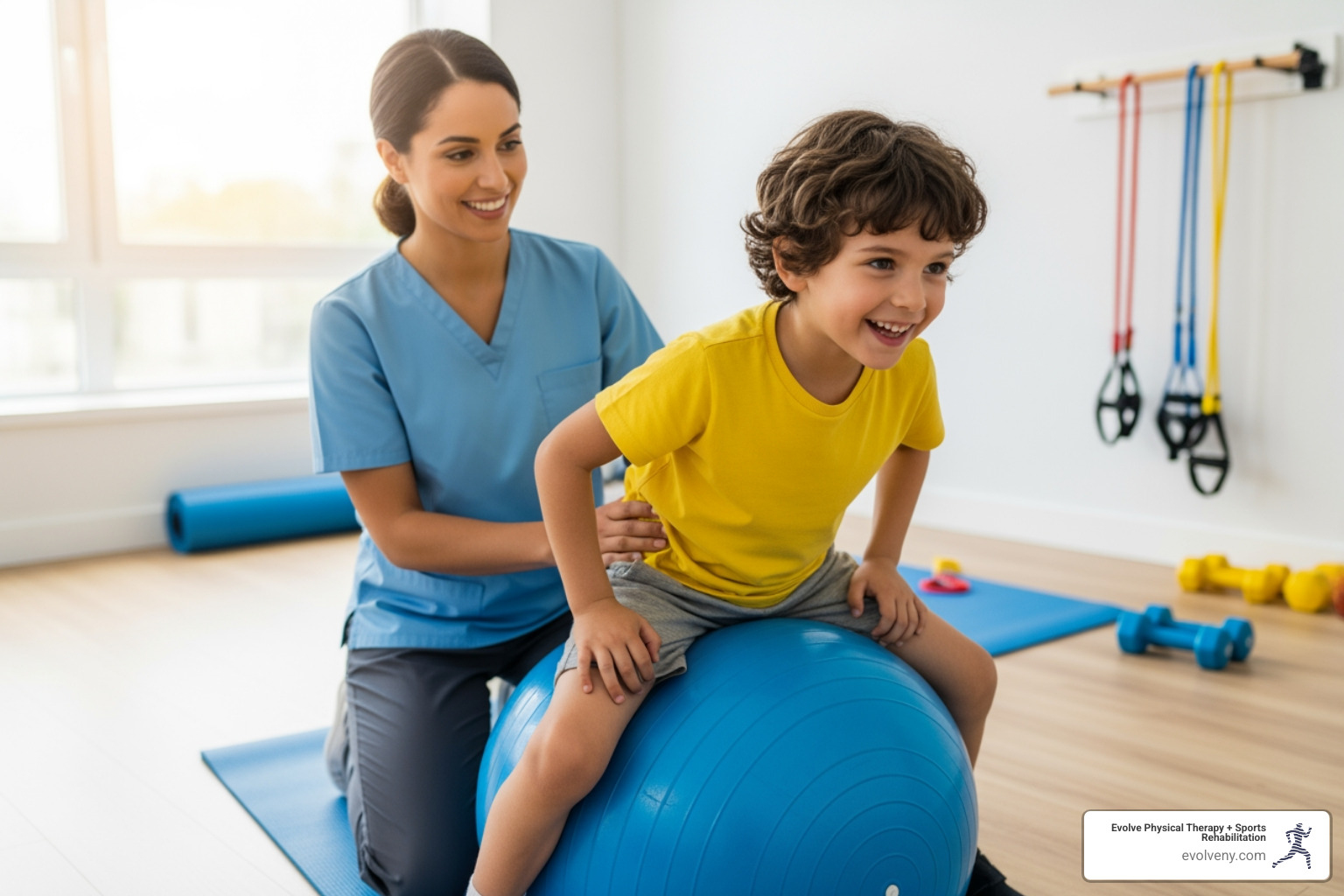
- Therapy Ball Exercises: Large therapy balls are versatile for improving core strength and postural control.
- Yoga Poses for Kids: Simple yoga poses like "Tree Pose" or "Downward Dog" help build flexibility, balance, focus, and strength.
- Resistance Band Games: We make strengthening fun with resistance bands, using playful arm and leg exercises.
- Balance Beam Walking: Whether it's a low balance beam or a line taped on the floor, walking heel-to-toe helps children improve their balance and body awareness.
Your Role as a Partner in Progress: Supporting Therapy at Home
At Evolve Physical Therapy, we firmly believe in a family-centered approach. Your involvement as a parent or caregiver is important to your child's success in physical therapy for kids. You are your child's primary advocate and decision-maker, and we consider you a vital part of our team.
- Family-Centered Care: We prioritize your family's values, routines, and goals. Our therapists work collaboratively with you to ensure the therapy plan fits into your family's life in Brooklyn.
- Home Exercise Program Consistency: The progress your child makes in our clinic sessions is significantly boosted by consistent practice at home. We'll provide you with a clear, easy-to-follow home exercise program. Integrate exercises into playtime or daily routines to make them feel natural.
- Adapting Toys and Activities: We can show you simple ways to adapt your child's favorite toys and activities to support their therapeutic goals.
- Creating a Supportive Environment: A supportive home environment encourages movement, exploration, and safety. We can offer guidance on setting up your home to facilitate your child's independence.
- Communication with Your Therapist: Please share any observations about your child's progress, challenges, or discomfort during exercises. This feedback helps us adjust the treatment plan.
- Collaboration with Schools (IEPs): For school-aged children, we can collaborate with school personnel, especially regarding Individual Education Plans (IEPs). This supports their participation and success in school.
- Coordination with Other Healthcare Professionals: We often work as part of a larger interprofessional team, coordinating care with your child's pediatrician and other specialists.
By actively participating in your child's therapy journey, you help them overcome challenges and build skills that can last a lifetime.
Frequently Asked Questions about Pediatric Physical Therapy
We understand that parents often have many questions when considering physical therapy for kids. Here are some of the most common inquiries we receive at Evolve Physical Therapy:
How long will my child need physical therapy?
The duration of physical therapy for kids is highly individualized and depends on several factors, including your child's specific diagnosis, the severity of their condition, their medical history, and their response to treatment.
- Short-Term Goals: Therapy programs are designed with short-term, clearly identified functional goals. Once these are met, the need for continued therapy is re-evaluated.
- Varies by Condition: A child recovering from a sports injury might need therapy for a few weeks or months, while a child with a chronic condition like cerebral palsy might benefit from ongoing, periodic support.
- Regular Re-assessment: We regularly assess your child's progress, typically every three months, to determine if they are meeting their goals and if continued therapy is necessary.
- Intensive vs. Periodic Therapy: Therapy frequency can vary. Some children with acute needs might benefit from "intensive therapy" (three visits weekly). Others may require fewer visits to learn new exercises and establish a home program.
- Focus on Functional Independence: Our ultimate goal is to provide your child with the knowledge and skills to manage daily challenges as independently as possible, even after formal therapy ends.
What is the difference between physical therapy (PT) and occupational therapy (OT)?
While both physical therapy and occupational therapy are important for a child's development and often work collaboratively, they focus on different aspects of function:
- Physical Therapy (PT) Focus: Our pediatric physical therapists at Evolve Physical Therapy primarily focus on a child's gross motor skills, mobility, strength, balance, and coordination. We work to restore, maintain, and optimize how a child moves their body.
- Occupational Therapy (OT) Focus: Occupational therapists help children improve their participation in day-to-day activities. Their focus is often on fine motor skills, visual motor skills, sensory processing, self-regulation, and activities of daily living (ADLs) such as dressing, feeding, and hygiene.
Often, children benefit from a collaborative approach where a PT and OT work together, supporting both gross motor development and functional independence in daily life.
How do I find a qualified pediatric physical therapist?
Finding the right pediatric physical therapist is important for your child's success. Here are some steps you can take:
- Doctor Recommendations: Start by asking your child's pediatrician or family doctor for recommendations.
- Insurance Provider Lists: Contact your medical insurance provider for a list of physical therapists covered under your plan in Brooklyn.
- Specialized Training and Board-Certified Specialists: Look for therapists with specialized training or certifications in pediatric physical therapy. The American Physical Therapy Association (APTA) offers board certification in pediatrics, indicating advanced knowledge and skills.
- Online Directories: You can search online directories such as The American Physical Therapy Association's Find a PT tool to find qualified physical therapists in your area.
- Ask About Our Expertise: At Evolve Physical Therapy, we welcome your questions about our therapists' qualifications, experience, and approach to physical therapy for kids.
Find a Pediatric Physical Therapist at Evolve Physical Therapy
Conclusion: Empowering Your Child to Thrive
The journey of physical therapy for kids is one filled with dedication and joy. Pediatric physical therapy is not just about fixing problems; it's about opening up potential, building confidence, and empowering children to participate more fully in their lives. From helping infants achieve early developmental milestones to guiding young athletes back to their sport, the benefits can be far-reaching.
We believe that every child deserves the opportunity to move with joy and confidence. Our playful, family-centered approach aims to make therapy both effective and engaging for your child. By collaborating closely with you, we help your child build skills that support independence and a love for movement.
At Evolve Physical Therapy in Brooklyn, we are committed to providing expert, compassionate care that sees your child not just as a patient, but as a unique individual ready to thrive. If you've noticed your child struggling with movement, coordination, or developmental milestones, don't hesitate to reach out.
Take the next step in your child's development journey with our expert physical therapy services.
