

An Essential Guide to Physical Therapy for Herniated Discs
Your Path to Relief: Understanding Physical Therapy for Herniated Discs
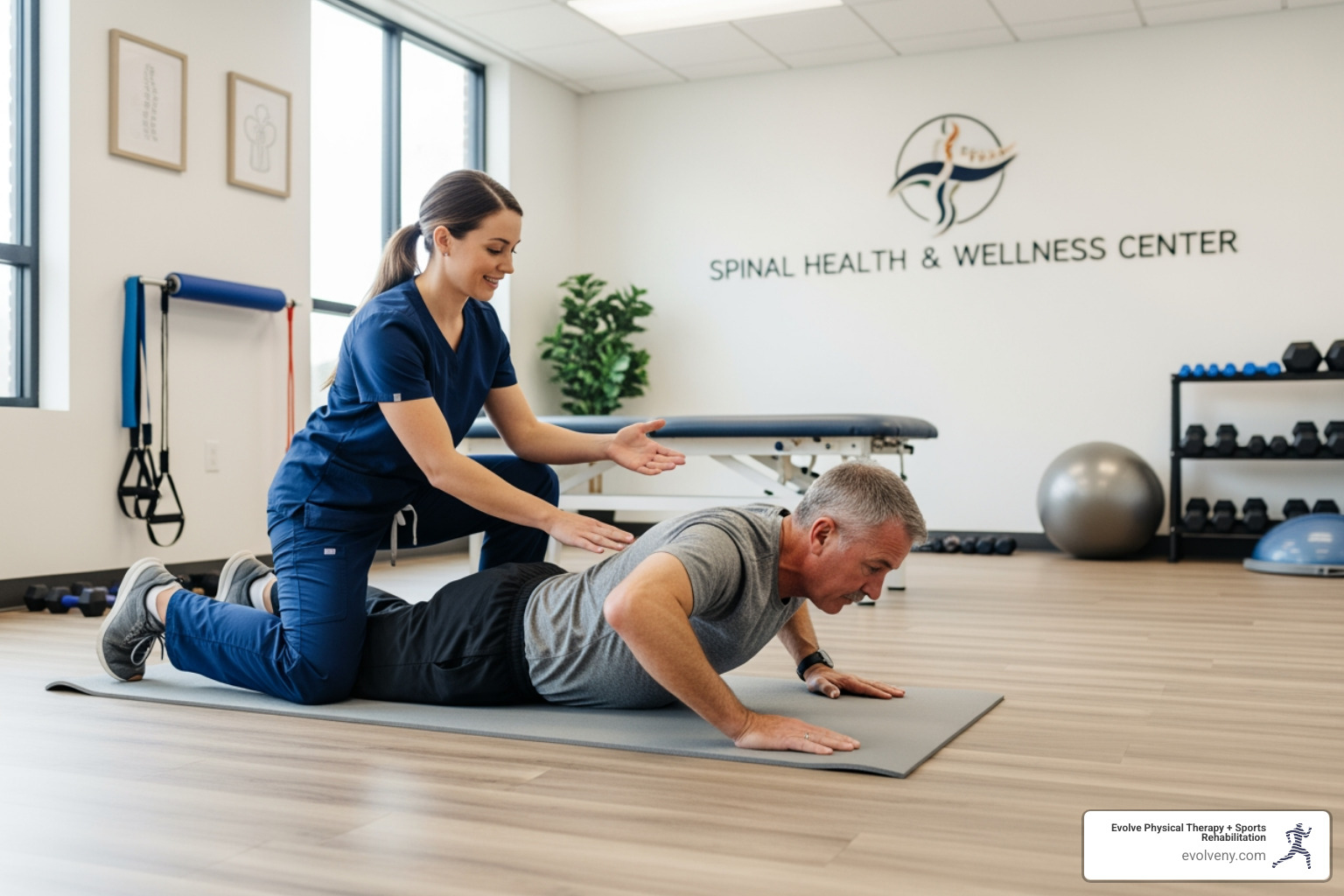
If you're dealing with back or neck pain, you might be searching for effective solutions. Physical therapy for herniated discs is often the most recommended first step. It's a non-surgical approach focused on healing and strengthening your spine.
Here’s what physical therapy for a herniated disc aims to do:
- Reduce nerve pressure: Easing pain and discomfort.
- Build strength: Targeting muscles that support your spine.
- Improve flexibility: Restoring natural movement and range of motion.
- Encourage natural healing: Helping your body recover.
- Educate you: Teaching you how to prevent future issues.
Living with a herniated disc can feel like a constant burden. The pain isn't just physical; it brings frustration and worry about long-term limitations. You might wonder if surgery is your only option. However, what some call a "slipped disc" is more accurately a herniated disc. The good news is that many people find relief without surgery. In fact, research shows that 70-90% of patients recover significantly with physical therapy alone. This guide will walk you through how physical therapy can be your path to recovery and a pain-free life.
Louis Ezrick, founder of Evolve Physical Therapy, has nearly two decades of experience helping patients with physical therapy for herniated discs and other complex musculoskeletal conditions. His expertise in manual therapy and holistic movement optimization has guided countless individuals toward pain relief and improved function.
Understanding Herniated Discs: Causes, Symptoms, and Diagnosis
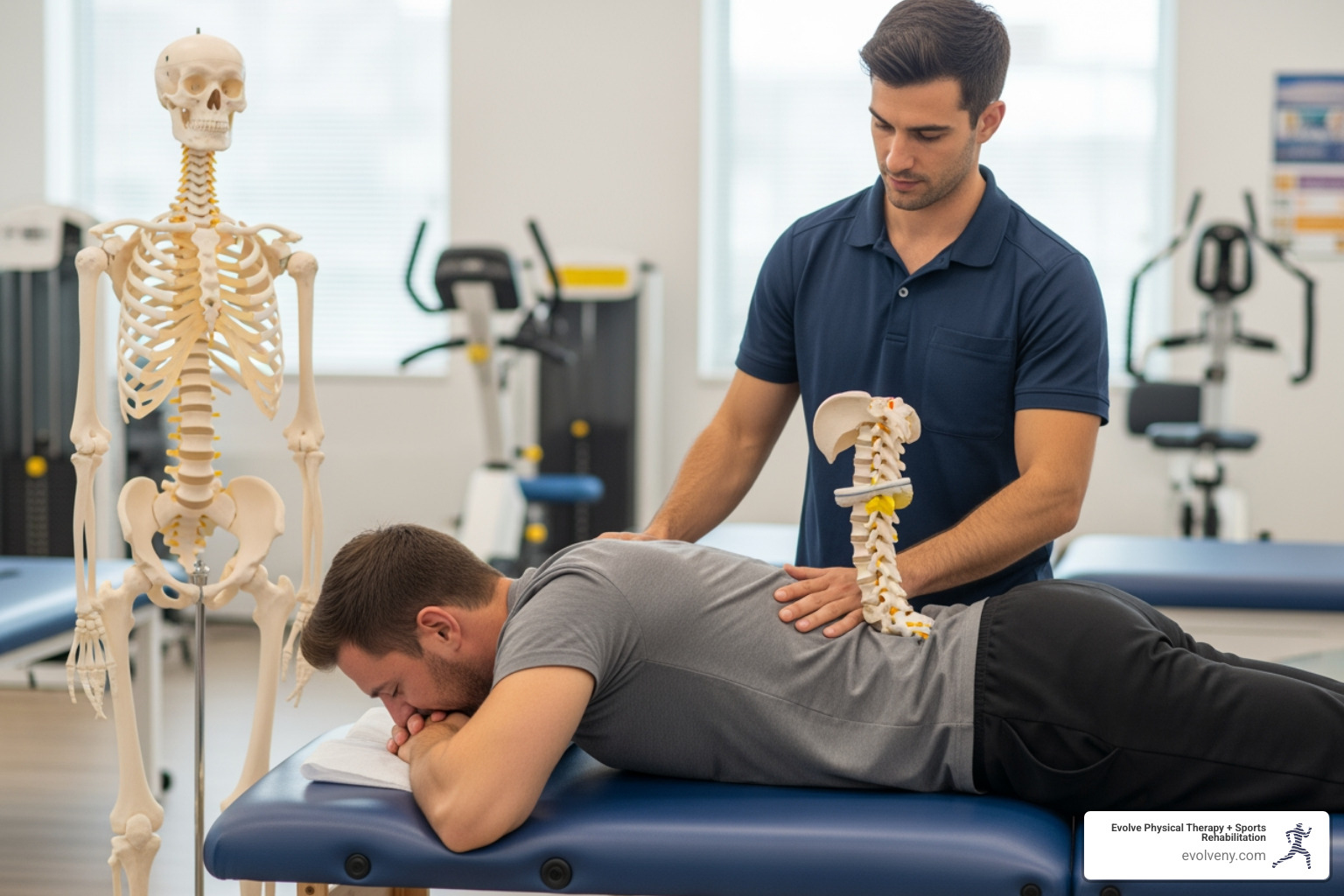
Let's get to know your spine a little better! It's an amazing structure, filled with bones, nerves, and soft tissues that let you move, bend, and twist through life. Tucked between your vertebrae (those bony blocks that make up your spine) are special cushions called intervertebral discs. Think of these discs like little shock absorbers. Each one has two main parts: a tough, outer ring, which we call the annulus fibrosus, and a soft, gel-like center, known as the nucleus pulposus. Imagine a jelly donut – the annulus is the bread, and the nucleus is the delicious jelly inside!
A herniated disc happens when that soft, jelly-like center pushes out through a tear or weak spot in the tougher outer ring. When this happens, it can press on nearby nerves or even the spinal cord, leading to a whole host of uncomfortable symptoms like pain, numbness, or weakness. It's a pretty common issue, and while it can affect any part of your spine, it most often shows up in your lower back (lumbar spine) or your neck (cervical spine). Knowing what's going on is the first step toward feeling better!
What Causes a Disc to Herniate?
Have you ever wondered why a disc might decide to herniate? It often feels like it comes out of nowhere, but usually, it's the result of several things adding up over time. One of the biggest players is simply aging – a natural process where our discs can lose some of their water content and flexibility, making them a bit more prone to wear and tear. This is often called degenerative changes.
But age isn't the only factor! Improper lifting techniques, like bending from your waist instead of your knees, can put immense stress on your lower back. Sudden twisting or pressure from quick, unexpected movements can also cause the disc's outer layer to tear. Activities that involve repetitive strain or high-impact sports can gradually wear down your discs. Even something as common as poor posture, whether you're sitting or standing, can slowly stretch and weaken the discs over time. And don't forget obesity; carrying extra weight, especially around your tummy, adds more stress to your spinal discs, which can speed up that wear and tear. Research into the mechanical aspects of disc injury further shows us how different forces and movements contribute to disc damage, underscoring the importance of proper body mechanics.
Recognizing the Symptoms
The tricky thing about herniated disc symptoms is how much they can change from person to person. It all depends on where the disc is affected and if it's pressing on a nerve. Some folks are even lucky enough to have a herniated disc and not feel a thing! But for many, the signs are clear and can really impact their daily life.
If your herniated disc is in your lower back (lumbar spine), you might experience:
- Sciatica: This is a classic one! It's when the disc irritates the sciatic nerve, causing radiating pain, numbness, tingling, or weakness that travels from your lower back, through your buttocks, and all the way down one leg. It can feel like a sharp, burning, or electrical sensation.
- Leg pain: This discomfort can sometimes extend right into your foot.
- Numbness and tingling: You might feel "pins and needles" or a loss of sensation in your leg or foot.
- Muscle weakness: You might notice difficulty lifting your foot (sometimes called "foot drop") or general weakness in your leg muscles.
When the herniated disc is in your neck (cervical spine), the symptoms often show up differently:
- Neck pain: You might feel a dull ache or sharp pain right in your neck.
- Arm pain: This pain can travel from your neck, through your shoulder, and down one arm, sometimes even reaching your hand and fingers. It can feel like a shooting pain.
- Numbness and tingling: Similar to the leg, you might get these sensations in your arm, hand, or fingers.
- Muscle weakness: You could find it harder to grip objects or notice weakness in your arm muscles.
Important Red Flag Symptoms – When to Seek Immediate Medical Attention: While most herniated discs respond well to physical therapy for herniated discs and other conservative care, there are some serious "red flag" symptoms that need urgent medical attention. These include:
- Cauda Equina Syndrome: This is rare but serious. It means the nerves at the very end of your spinal cord are being compressed. Watch out for new or worsening loss of bowel or bladder control, numbness in your inner thighs, buttocks, or genital area (this is called "saddle anesthesia"), and severe weakness in both legs. If you notice any of these, please seek emergency medical help right away.
- Progressive weakness: Any rapidly worsening muscle weakness in your arms or legs is also a cause for immediate concern.
If you're ever unsure about your symptoms, or if they feel severe, it's always best to chat with a healthcare professional. For more detailed information on nerve-related symptoms, you can also check out resources like When to see a doctor for a pinched nerve.
How a Herniated Disc Is Diagnosed
When you come to see us at Evolve Physical Therapy in Brooklyn, our first step is always to truly understand your unique situation. Diagnosing a herniated disc is a careful process, and it typically starts with a thorough evaluation, not just a quick glance. Here's what that usually involves:
- Patient History: We'll have a good chat! We'll ask you all about your symptoms – when they started, what makes them better or worse, and how they're affecting your daily life. We'll also cover your general health, lifestyle, and any medications you might be taking.
- Physical Examination: Our expert physical therapists will gently check your back or neck for tenderness, observe your posture, and assess how well you can move. We might ask you to perform certain movements to see how your body responds.
- Neurological Tests: This is a key part! We'll check your reflexes and strength testing, along with sensation in the areas where you're feeling symptoms. This helps us look for any signs that a nerve might be compressed or irritated.
- Range of Motion Assessment: We'll measure how far you can comfortably move your neck or back in different directions.
- Special Tests: Sometimes, we use specific tests, like the Straight Leg Raise for lower back issues, to help pinpoint nerve irritation.
- Imaging Studies: While our detailed physical exam and your medical history often give us a clear picture, sometimes imaging is needed. If your symptoms are severe or persistent, we might recommend working with your physician to get an MRI. An MRI is considered the gold standard because it gives us a clear view of your discs and any nerves that might be affected. X-rays can be helpful to rule out other bone problems, but they don't actually show the discs themselves.
Our goal is to get to the bottom of your pain so we can create the best possible plan for your recovery!
The Core of Recovery: The Role of Physical Therapy for Herniated Discs
When you're dealing with a herniated disc, it can feel like your body is working against you. But here at Evolve Physical Therapy, we believe in empowering your body's natural healing powers. That's exactly where physical therapy for herniated discs truly shines! It's not just a "try it first" option; it's often the first-line treatment recommended by top spine specialists and rehabilitation experts. Why? Because it works, and it's built around your body's ability to recover.
The success rate for conservative treatments like physical therapy is truly impressive. Many studies show that nearly 90% of patients with lumbar disc herniation improve within six weeks using physical therapy. Even better, 70-90% see meaningful recovery without surgery at all. This isn't just about quick fixes; the long-term outcomes for physical therapy and surgery are often quite similar when you look at them one to two years down the road.
Our approach centers on helping you in several key ways:
- Pain Centralization: We work to reduce nerve pressure. This often means encouraging your pain to move away from your arms or legs and back towards your spine. This process, called centralization, is a great sign of recovery!
- Reducing Nerve Pressure: Through specific exercises and gentle techniques, we aim to create more space around those irritated nerves, which helps ease your discomfort.
- Improving Mobility: We help you regain your natural range of motion. This allows you to move more freely and comfortably in your daily life.
- Patient Education: This is a big one! We teach you how to move safely, maintain good posture, and manage any symptoms at home. This empowers you to actively participate in your recovery and learn how to prevent future issues.
For most people, physical therapy for herniated discs is a safer, lower-cost starting point compared to surgery. It comes with minimal risks and gives your body the best chance to heal itself. Many patients start with physical therapy and never need to consider surgery at all!
How a Physical Therapist Creates Your Treatment Plan
When you come to Evolve Physical Therapy, your journey begins with a thorough initial evaluation. We don't believe in one-size-fits-all solutions. Our expert physical therapists will listen carefully to your story, understand your pain, and assess how it affects your life.
Based on this, we'll work with you to set clear, personalized goal settings. Maybe you want to walk without pain, lift your grandchild, or get back to your favorite sport. We'll build a plan to get you there. Your treatment plan will likely include strategies for pain and inflammation control, using gentle methods to calm down irritated tissues. We'll also use manual therapy techniques—think hands-on care like massage, mobilization, or gentle stretches—to improve how your joints and muscles move. Then, we'll carefully design a therapeutic exercise prescription just for you. Finally, we'll provide crucial posture and body mechanics education. Learning how to move correctly can be a game-changer for protecting your spine in the long run.
Finding the right physical therapist is key to your success. If you're ever looking for a qualified professional, resources like Finding a qualified physical therapist can help.
Key Components of Physical Therapy for Herniated Discs
Your physical therapy program will involve a mix of techniques designed to heal and strengthen. We often start with passive treatments to help manage pain and inflammation. This might include applying ice to reduce swelling, heat to relax muscles, or using a TENS unit (Transcutaneous Electrical Nerve Stimulation) for pain relief.
Once pain is better controlled, we move to active treatments. These are exercises you perform yourself, and they're crucial for long-term recovery. We'll focus on core stabilization exercises to build a strong foundation for your spine, as well as flexibility exercises to restore movement. You might learn Directional preference exercises, often part of the McKenzie Method, which involves specific movements that help centralize your pain. Motor Control Exercises help you learn to use your muscles more effectively, and we'll also focus on strengthening supporting muscles around your spine to provide better stability and protection.
Comparing PT to Surgery and Other Options
It's natural to wonder about all your options when facing a herniated disc. As we mentioned, studies have shown that the long-term outcomes of physical therapy versus surgery are often similar at the 1-2 year mark. This is powerful information, suggesting that a less invasive approach can be just as effective for many.
So, when is surgery necessary? Surgery is typically considered when conservative care, like physical therapy, hasn't provided sufficient relief after a reasonable period (usually 6-12 weeks), or if you experience those "red flag" symptoms we discussed earlier, such as rapidly worsening muscle weakness or loss of bowel/bladder control. For most other cases, physical therapy is the recommended first step.
You might also discuss the role of medications and injections with your doctor. These can be helpful tools to manage pain and inflammation in the short term, allowing you to participate more effectively in physical therapy. However, they typically don't address the underlying mechanical issues in the same way that physical therapy does. For more insights on conservative treatment approaches, the WFNS spine committee recommendations on conservative treatment offer valuable guidelines.
