

The Ultimate List of Mobility Movements for a Flexible You
Why Mobility Movements Are Essential for Your Body
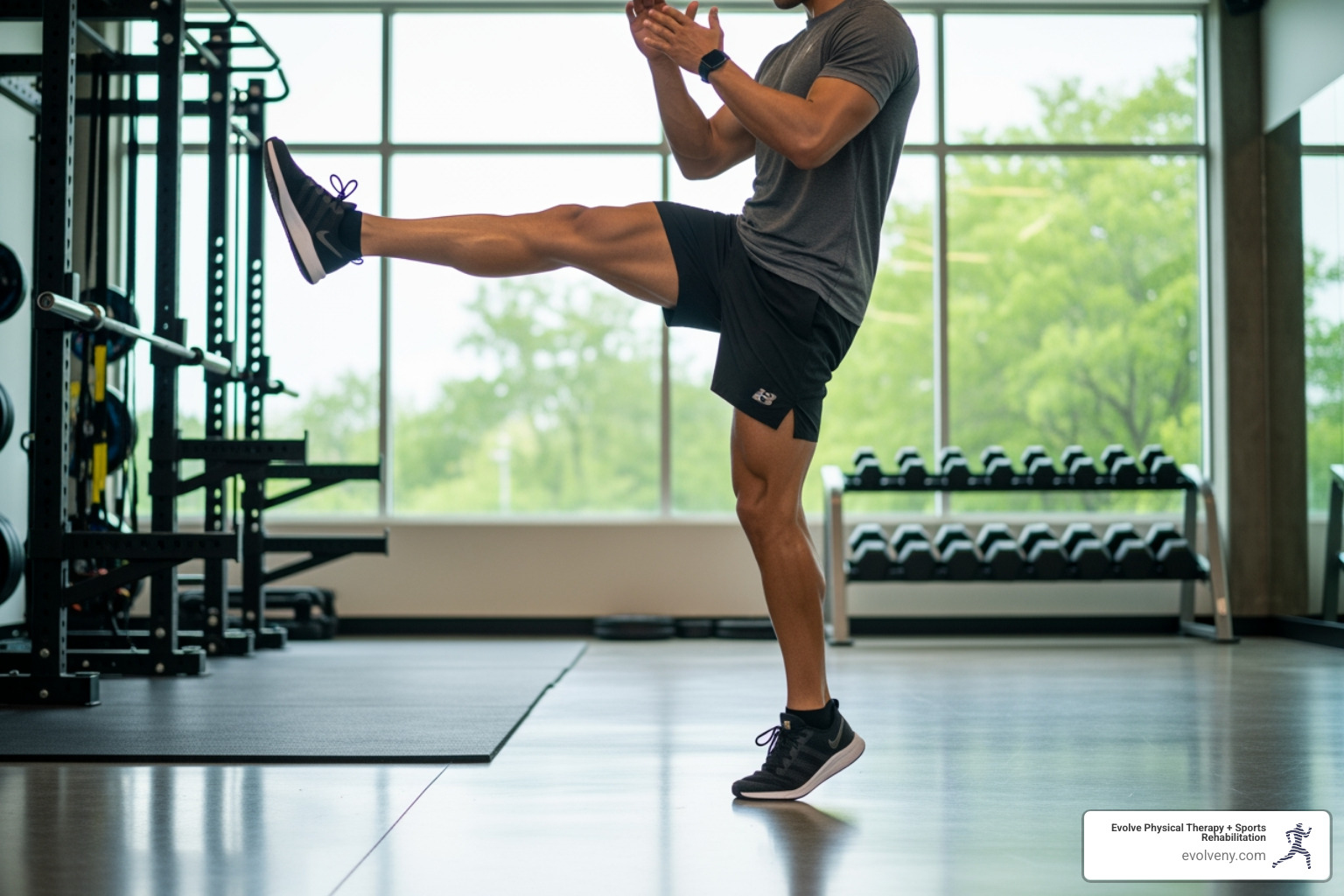
Mobility movements are exercises that help your joints move freely through their full range of motion with control and strength. They are your foundation for reducing stiffness, preventing injuries, and moving better in daily life.
Quick Answer: What Are Mobility Movements?
Mobility movements are dynamic exercises that improve:
- Joint range of motion - How far your joints can move in all directions
- Motor control - Your ability to actively control movement through that range
- Functional movement quality - How well you perform everyday activities
- Injury prevention - By addressing restrictions before they cause problems
- Pain reduction - Especially in areas like hips, shoulders, and spine
Think of mobility as the difference between being able to reach your toes (flexibility) versus being able to control your body as you squat down to pick something up (mobility). While stretching helps muscles lengthen passively, mobility work trains your joints and muscles to move actively with strength and stability through their full range.
Research shows the impact is real: subjects who scored higher on a mobility screening test were six times less likely to get injured. As we age, maintaining mobility is critical. Joints can become less lubricated, cartilage may thin, and tendons less elastic, all leading to stiffness and reduced movement quality.
Whether you wake up stiff, want to improve athletic performance, or maintain independence as you age, mobility training offers a solution. It's not just about touching your toes—it's about moving through life with freedom, confidence, and less pain.
I'm Lou Ezrick, founder of Evolve Physical Therapy + Sports Rehabilitation, and over nearly two decades, I've helped thousands of patients improve their quality of life through targeted mobility movements and manual therapy techniques. From treating chronic pain to optimizing athletic performance, I've seen how the right mobility work transforms how people move and feel.
What is Mobility and Why Does It Matter?
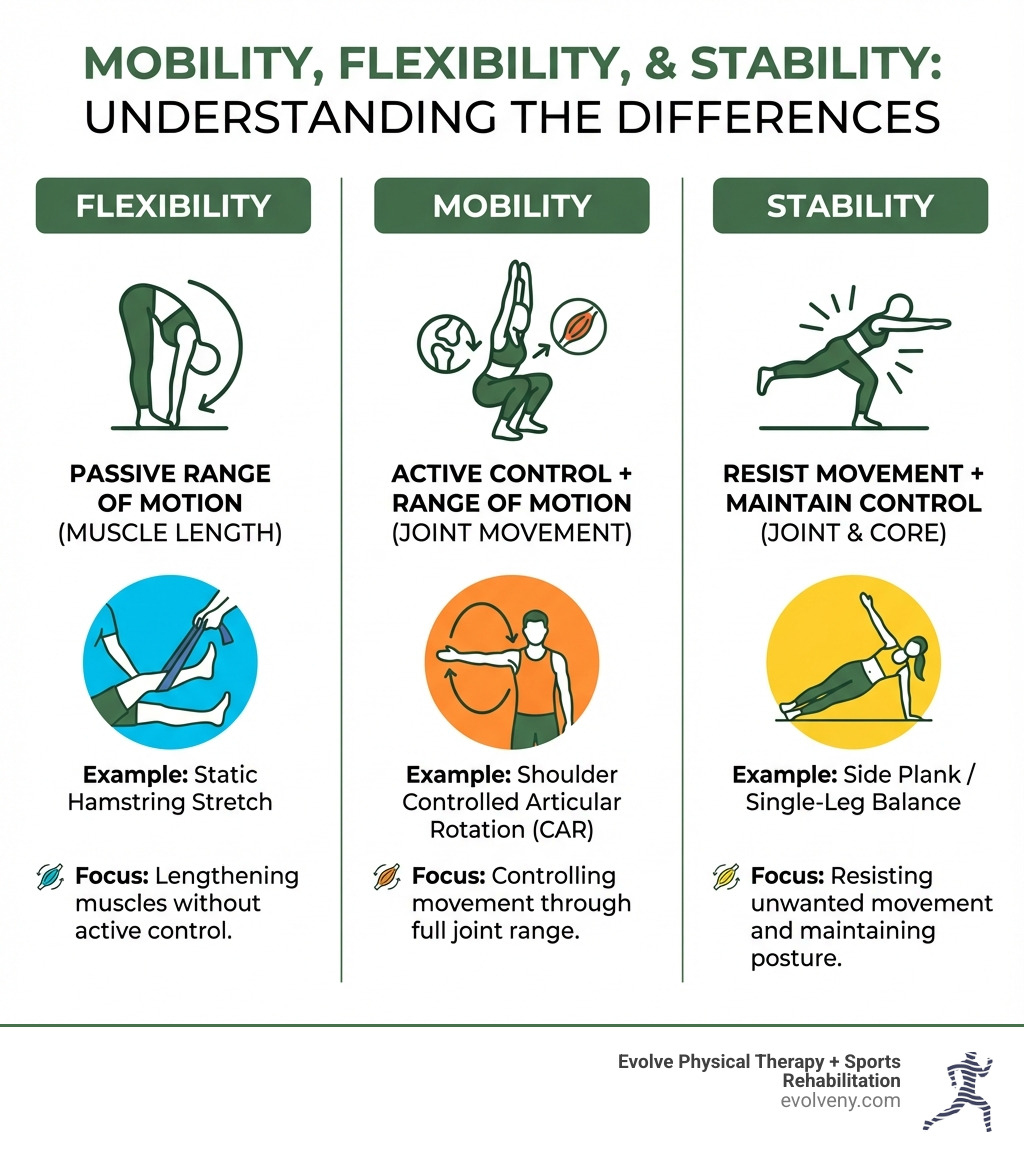
At Evolve Physical Therapy + Sports Rehabilitation, we often clarify the terms mobility, flexibility, and stretching. While related, understanding their distinct meanings is crucial for effective training and health.
Mobility vs. Flexibility: The Key Difference
Mobility is your body's ability to move a joint actively through its full range of motion with control and strength. It's about how much usable movement you have at a joint. Think of it as having the keys to open up your full movement potential.
Flexibility, on the other hand, is the passive ability of your muscles and connective tissues to lengthen. It's how far a joint can move when an external force (like gravity, another person, or a strap) is applied. You might be flexible enough to touch your toes, but without the strength and control, you won't have the mobility to squat deeply with proper form. As a Yale Medicine primary care sports medicine specialist, Samantha Smith, MD, explains, "Mobility exercises... are designed to increase the range of motion of a joint. The joints are the points of motion in our body. So, any time we move, we don’t want a limitation because of..." a lack of mobility.
For example, someone with excellent hip flexibility might have their leg pushed very high but lack the hip mobility to actively lift it to that height without help. Mobility requires both tissue extensibility and the strength and motor control to command the movement. This is why we focus on mobility movements that incorporate active effort and stability.
The distinction is important because while stretching focuses on lengthening muscles, mobility training focuses on improving the dynamic function of the entire joint system. Mobility is a dynamic movement with a strength component, challenging your body to maintain control through a full range of motion.
Active vs. Passive Range of Motion
- Active Range of Motion (AROM): The range of movement a joint can achieve by itself, using only the muscles that act on that joint. This is what mobility movements primarily target.
- Passive Range of Motion (PROM): The range of movement a joint can achieve when assisted by an external force. This is often what flexibility exercises, like static stretching, aim to improve.
True mobility encompasses the health of your joint capsule, the strength of surrounding muscles, and your brain's ability to control the movement (motor control). Without adequate mobility, other muscles might compensate, leading to imbalances and increased injury risk.
Here's a quick comparison:
| Feature | Mobility | Flexibility | Stretching |
|---|---|---|---|
| Definition | Active, controlled movement through a joint's full range of motion. | Passive range of motion of a joint or muscle. | Act of lengthening muscles and connective tissues. |
| Focus | Joint health, motor control, strength, stability. | Muscle length, tissue extensibility. | Increasing muscle length, relieving tension. |
| Goal | Usable range of movement with control. | Ability to achieve certain positions. | Temporary increase in range, relaxation. |
| Type | Dynamic, active. | Passive. | Can be static (held) or dynamic (moving). |
| Benefit | Injury prevention, performance, functional movement. | Improved posture, reduced muscle soreness. | Temporary relief, increased reach. |
To dig deeper into how these concepts intertwine with your overall physical movement, we encourage you to explore our article on the Difference Between Mobility and Movement.
The Science-Backed Benefits of Mobility Training
Incorporating mobility movements into your routine isn't just a trend; it's a fundamental aspect of physical health backed by science. We've seen the transformative effects on our patients at Evolve Physical Therapy + Sports Rehabilitation.
- Injury Prevention: Limited range of motion often leads to compensatory patterns that increase injury risk. For example, poor ankle mobility can strain your lower back during a squat. Improving it allows for a more natural squat, avoiding injury. A study in PeerJ found that subjects with higher mobility scores were six times less likely to get injured. Mobility work reduces injury risk, improves joint health, lessens muscle soreness, and speeds recovery.
- Improved Athletic Performance: For any athlete, better mobility translates to better performance. When joints move through their full range with control, your body generates more power and efficiency. For instance, improved hip mobility allows for a deeper squat with better muscle engagement. Mobility training improves range of motion, blood flow, and neuromuscular control, all contributing to peak performance.
- Reduced Joint Pain: Regular mobility movements can alleviate chronic joint pain and stiffness, especially for those with arthritis. As we age, joints can become less lubricated and tissues less elastic. Mobility training helps counteract these changes, keeping tissues healthy and preventing overuse injuries.
- Healthy Aging: Moving freely is paramount to maintaining independence as we age. The National Institutes of Health emphasizes that maintaining mobility is critical to staying independent as you age. While age-related stiffness is common, it's not inevitable. Consistent mobility movements can lessen its impact, helping you perform daily activities with ease.
- Improved Strength: Mobility and strength are two sides of the same coin. Good mobility lets you access positions for greater muscle activation and force production. This means you can build strength more effectively and safely.
The Ultimate List of Essential Mobility Movements
Now that we understand the profound benefits, let's dive into some of the most effective mobility movements you can incorporate into your routine. These exercises are designed to target key areas of your body, helping you open up better movement and feel fantastic. For even more insights, check out our curated list of the Best Mobility Movements.
Essential Hip Mobility Movements
Our hips are the powerhouses of our lower body, crucial for everything from walking and running to sitting and standing. Restricted hip mobility can impact your lower back, knees, and even your posture. These mobility movements are designed to improve hip internal and external rotation, flexion, and extension.
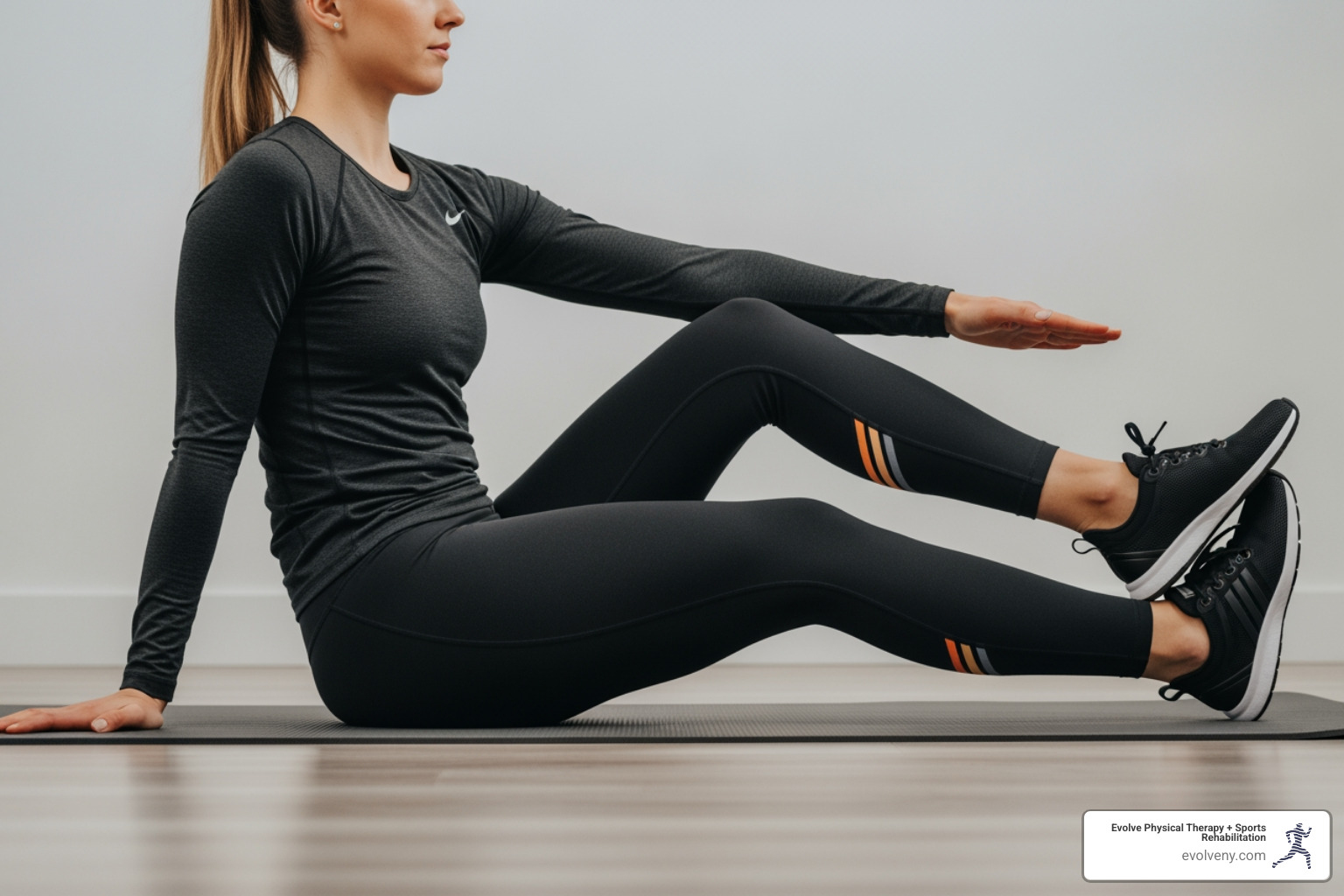
90/90 Hip Switch
- How to perform: Start seated on the floor with both knees bent at 90 degrees. One leg should be internally rotated in front of you, and the other externally rotated out to the side. Keeping your chest up, slowly lift your knees and switch sides, rotating your hips to bring the opposite leg to the front. Aim for smooth, controlled transitions.
- Targets: Hip internal and external rotation, hip capsule health.
- Why it's beneficial: This move addresses common hip rotation restrictions, improving squat depth, reducing hip pain, and enhancing lower body function.
Frog Stretch
- How to perform: Start on your hands and knees. Slowly widen your knees as far as comfortable, keeping your ankles in line with your knees and your feet flexed. You can lower onto your forearms for a deeper stretch. Gently rock forward and backward to explore the range.
- Targets: Hip adductors (inner thighs), hip external rotation.
- Why it's beneficial: Opens up the hips and inner thighs, which often get tight from prolonged sitting.
Spider-Man Lunge with Thoracic Rotation
- How to perform: Start in a push-up position. Step one foot outside your hand, keeping your back leg straight. From here, take the hand on the same side as your front foot, and rotate your torso, reaching that hand towards the ceiling. Return to the start and switch sides.
- Targets: Hip flexors, hip adductors, thoracic spine rotation, shoulder mobility.
- Why it's beneficial: This compound move improves hip and thoracic spine mobility, essential for good posture and overhead movements.
Hip CARs (Controlled Articular Rotations)
- How to perform: Stand tall or kneel on all fours. Slowly and deliberately move one hip through its largest possible pain-free range of motion in all directions, as if drawing a large circle with your knee. Focus on isolating the movement to the hip joint.
- Targets: All ranges of motion within the hip joint.
- Why it's beneficial: These are fundamental for hip joint health, actively working the joint capsule and surrounding muscles through their full range.
Fire Hydrants
- How to perform: Start on all fours, wrists under shoulders, knees under hips. Keeping your knee bent at 90 degrees, lift one leg out to the side like a dog at a fire hydrant, without letting your hips tilt. Lower with control.
- Targets: Gluteus medius and minimus, hip abductors.
- Why it's beneficial: Strengthens key hip muscles, improving stability and helping prevent knee issues.
For more exercises that focus on improving your movement capabilities, take a look at our guide to Mobility and Movement Exercises.
Spine and Lower Back Mobility Movements
A healthy spine is the foundation of all movement. These mobility movements will help improve the articulation of your vertebrae and reduce stiffness in your lower back and mid-back (thoracic spine). A mobile spine allows for better posture and reduced pain.
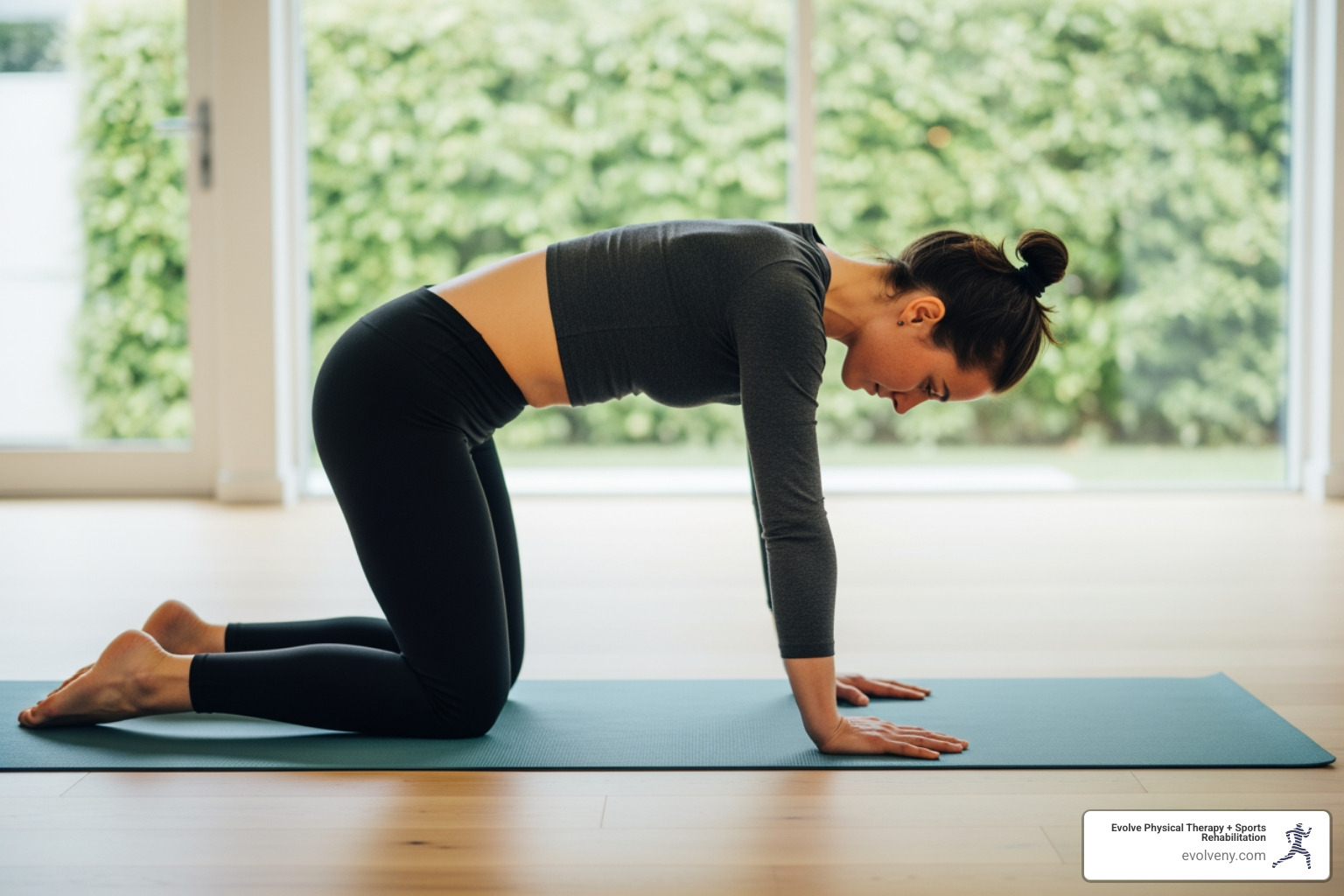
Cat-Cow
- How to perform: Start on your hands and knees. As you inhale, drop your belly towards the floor, lift your chest and tailbone (Cow pose). As you exhale, round your spine towards the ceiling, tucking your chin and tailbone (Cat pose). Repeat for 5-10 repetitions, focusing on smooth, flowing movement.
- Targets: Spinal flexion and extension, core engagement.
- Why it's beneficial: This gentle movement mobilizes the spine, reducing stiffness, especially for those who sit for long periods.
Thoracic Spine Windmills
- How to perform: Lie on your side with both knees bent at 90 degrees and stacked. Extend your arms straight out in front of you, hands together. Keeping your bottom arm on the floor, slowly lift your top arm and rotate your torso, opening your chest towards the ceiling until your top shoulder blade touches the floor. Follow your hand with your gaze. Return slowly.
- Targets: Thoracic spine rotation, shoulder mobility.
- Why it's beneficial: Improves mid-back rotation, which is often stiff, enhancing posture and reducing strain on the lower back and shoulders.
Lumbar Rotations (Windshield Wipers)
- How to perform: Lie on your back with knees bent and feet flat on the floor, hip-width apart. Let both knees gently fall to one side, keeping your shoulders on the ground. Hold briefly, then bring them back to center and let them fall to the other side, like windshield wipers.
- Targets: Lumbar spine rotation, lower back extensibility.
- Why it's beneficial: Gently mobilizes the lower back, relieving stiffness and promoting relaxation.
Segmental Cat-Cow
- How to perform: Similar to the regular Cat-Cow, but instead of moving the entire spine at once, focus on articulating one segment at a time. Start from your tailbone, then mid-back, then neck for flexion, and reverse for extension.
- Targets: Individual spinal segment mobility, body awareness.
- Why it's beneficial: This advanced variation improves control over each vertebra for a more resilient spine.
To integrate these into a broader movement practice, explore our insights on Ultimate Primal Movement Mobility.
Upper Body and Shoulder Mobility Movements
Our shoulders are incredibly mobile joints, but they are also prone to stiffness and injury due to overuse or lack of movement through their full range. These mobility movements focus on improving shoulder girdle mechanics, thoracic extension, and scapular control.
Shoulder CARs (Controlled Articular Rotations)
- How to perform: Stand tall with good posture. Keep your core tight and try to isolate the movement to just your shoulder joint. Slowly lift your arm forward and up, externally rotate it at the top, then continue bringing it back and down in a full circle, internally rotating as you lower. Reverse the movement.
- Targets: All ranges of motion within the shoulder joint.
- Why it's beneficial: Training your shoulder CARs safeguards this key joint by actively working it through its largest pain-free range, improving joint health and control.
Wall Angels
- How to perform: Stand with your back against a wall, feet about six inches away. Press your lower back, head, and arms (bent at 90 degrees, elbows and wrists against the wall) against the wall. Slowly slide your arms up the wall, keeping everything in contact, until they are overhead. Lower with control.
- Targets: Thoracic extension, shoulder flexion, scapular control.
- Why it's beneficial: Improves posture and overhead mobility, especially for those with a rounded upper back from sitting.
Thread the Needle
- How to perform: Start on all fours. Lift one hand, and "thread" it under your opposite armpit, palm facing up, lowering your shoulder and head to the floor. Reach the opposite arm forward for a deeper stretch.
- Targets: Thoracic spine rotation, shoulder mobility, upper back extensibility.
- Why it's beneficial: Opens the upper back and shoulders, relieving tension and improving rotational capacity.
Scapular Push-ups
- How to perform: Start in a plank position, hands directly under shoulders. Keeping your elbows straight, allow your shoulder blades to come together (depress your chest towards the floor), then push up, spreading your shoulder blades apart (pushing your upper back towards the ceiling).
- Targets: Scapular protraction and retraction, shoulder stability.
- Why it's beneficial: Strengthens the muscles that stabilize your shoulder blades, which is crucial for preventing shoulder injuries and improving upper body mechanics.
Dead Hangs
- How to perform: Hang from a pull-up bar with an overhand grip, allowing your body to relax and your shoulders to fully decompress. Keep your core gently engaged to prevent excessive arching in the lower back.
- Targets: Shoulder mobility, grip strength, spinal decompression.
- Why it's beneficial: As movement expert Bo Babenko notes, "Accumulating time in a hanging position has all sorts of benefits." Dead hangs improve shoulder mobility and decompress the spine, countering compressive forces.
For those interested in bodyweight training, our article on Calisthenic Movement Mobility offers additional insights.
How to Build Your Own Mobility Routine
Implementing mobility movements effectively requires a thoughtful approach. Here's how we guide our patients at Evolve Physical Therapy + Sports Rehabilitation to build a routine that truly works.
Assessing Your Mobility Levels
Before you can improve, you need to know where you stand. Use these simple self-assessment techniques to identify areas of restriction:
- Deep Squat Test: Can you perform a deep squat with your heels flat, chest up, and knees tracking over your toes? Restrictions here can point to ankle, hip, or thoracic spine mobility issues.
- Overhead Arm Raise: Can you raise both arms directly overhead, keeping your lower back flat against a wall? Limitations might indicate tight lats, limited shoulder flexion, or poor thoracic extension.
- Hip Internal/External Rotation: While seated, can you internally and externally rotate your hips without your torso compensating excessively? This can reveal hip capsule restrictions.
You can also film yourself to track progress, keep a workout journal, or work with one of our physical therapists for a personalized assessment.
Common Mistakes to Avoid
- Pushing into Pain: Mobility work should not be painful. While discomfort is okay, sharp pain means you're pushing too hard. Listen to your body and back off.
- Prioritizing Range Over Form: It's better to use a smaller range of motion correctly than a larger one incorrectly. As we always emphasize, prioritize control and form over all else. Your range will naturally increase as you improve.
- Holding Your Breath: Breathe deeply and rhythmically throughout your mobility movements. Your breath helps relax muscles and facilitate movement.
- Inconsistency: Mobility work requires consistency to show results. The more you do it, the better the results. Improving mobility is a gradual process, so keep your expectations realistic.
- Ignoring Weakness: Sometimes, a mobility issue is actually a stability or strength deficit. Our physical therapists can help distinguish between these and create a comprehensive plan.
Understanding the best primal movements for improving mobility can also guide your routine. Our blog post What is the best primal movement for improving mobility offers further reading.
Integrating Mobility into Your Day
Mobility movements are versatile and can be woven into your day for continuous benefits.
- As a Warm-Up: Dynamic mobility movements are a perfect pre-workout warm-up. They boost circulation and prepare your body for activity. Unlike static stretching, which can reduce power, dynamic mobility primes your nervous system.
- During a Cool-Down: After a workout, your muscles are warm, making it an ideal time for gentle mobility work. Breathe into the stretches to lengthen the muscles you've just worked.
- Active Recovery on Rest Days: Use rest days for dedicated mobility sessions. This promotes blood flow, reduces soreness, and helps maintain your gains.
- "Movement Snacks" Throughout the Day: If you have a sedentary job, break up long periods of sitting with short bursts of mobility movements. Even 5-10 minutes a day can make a significant difference.
- Recommendations for Athletes: For runners, hip and ankle mobility can prevent common issues like runner's knee. Targeted exercises like sciatic nerve flossing can help improve hamstring flexibility and neural mobility.
- Recommendations for Seniors: For seniors, gentle mobility movements help counteract joint stiffness, improve balance, and improve coordination, making daily tasks easier and safer.
- Exercises for Individuals with Arthritis: Gentle mobility movements are beneficial for alleviating arthritis pain and stiffness. For those with arthritis, daily stretching is more effective than less frequent sessions. Consult a physical therapist before starting a new program, but gentle, pain-free movements are generally encouraged. You can find more targeted advice in our recommended resource on Exercises for those with arthritis.
Frequently Asked Questions about Mobility Movements
We often get questions about mobility movements from our patients in Brooklyn. Here are some of the most common ones we address:
How is mobility different from flexibility?
Mobility is your ability to actively move a joint through its full range of motion with control. Flexibility is the passive ability of your muscles to lengthen. Mobility requires strength and stability, whereas flexibility does not. You can be flexible (able to touch your toes) but lack the mobility for a deep, controlled squat.
How often should I do mobility exercises?
For best results, aim for 5-15 minutes of mobility movements daily or before every workout. Consistency is more important than duration; even a few minutes a day is beneficial. If you're new, start with two to three sessions a week and build up. The most effective frequency is what you can consistently manage.
Can mobility training help with joint pain?
Yes. Regular mobility movements can significantly alleviate joint pain and stiffness. They improve joint lubrication, strengthen supporting muscles, and correct movement patterns that cause strain. This is particularly helpful for conditions like arthritis, where gentle movement can reduce discomfort and maintain function.
Move Better, Feel Better
We've explored mobility movements, from their difference from flexibility to their science-backed benefits for injury prevention, performance, pain reduction, and healthy aging. We've also provided a list of essential mobility movements for your hips, spine, and shoulders, with practical advice on integrating them into your daily life.
The key takeaways are consistency, prioritizing proper form over range, and listening to your body. Improving your mobility is a journey of gradual progress. Every step you take towards better movement contributes to a more capable, resilient, and pain-free you.
At Evolve Physical Therapy + Sports Rehabilitation, we believe that movement is medicine. If you're struggling with stiffness, pain, or simply want to open up your full movement potential, our expert physical therapists in Brooklyn are here to help. We offer personalized assessments and hands-on treatment plans designed to address your unique needs and guide you towards a more flexible, functional life.
