

Don't Be Awkward: A Guide to Recognizing Poor Posture
Why Your Body Position Matters More Than You Think
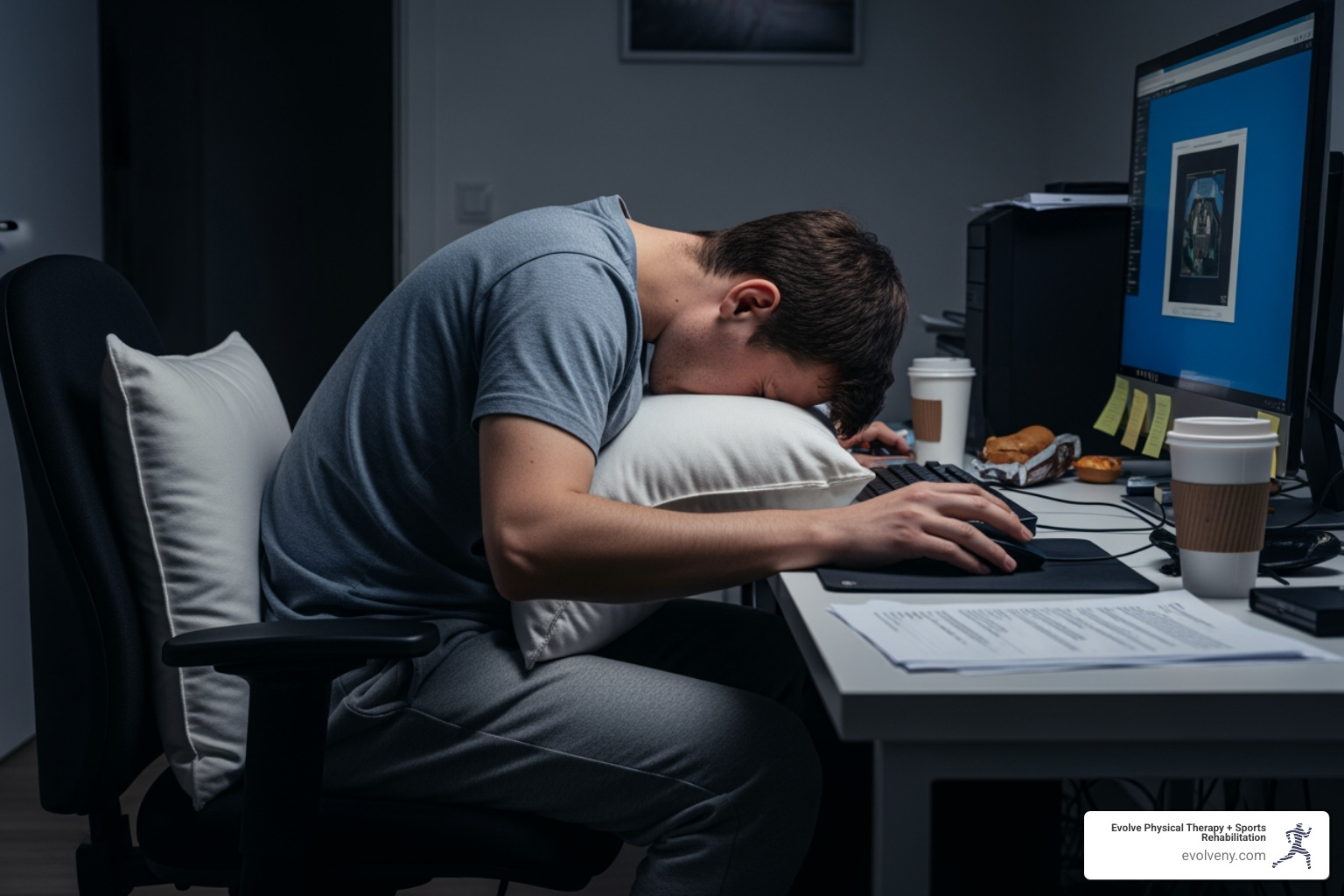
Awkward body posture refers to positions where your body deviates from its neutral alignment while performing work or daily activities. Instead of your joints resting in their natural, comfortable mid-range, awkward postures force your body into bent, twisted, or extended positions that require extra effort and strain.
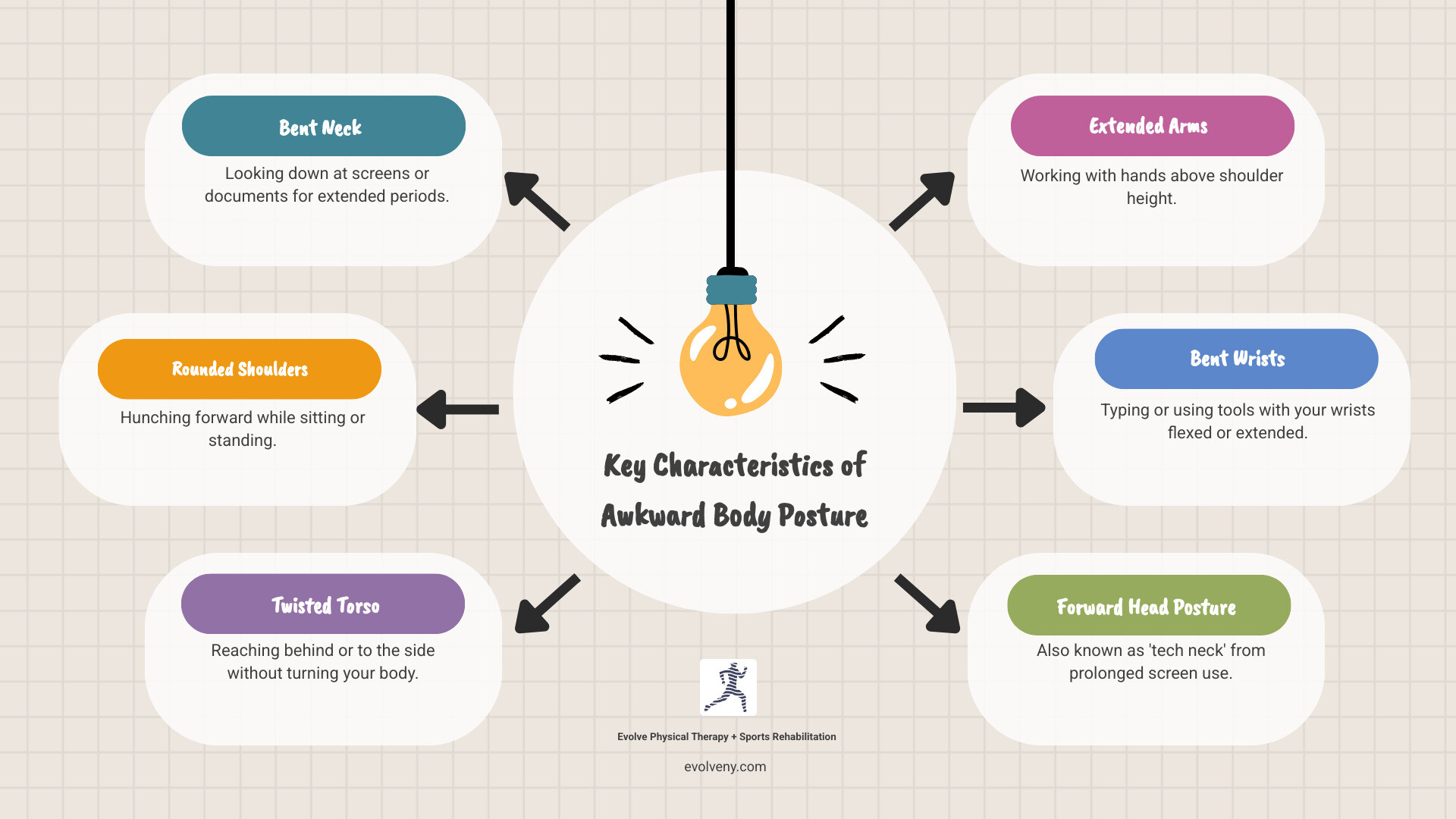
Key Characteristics of Awkward Body Posture:
- Bent neck – Looking down at screens or documents for extended periods
- Rounded shoulders – Hunching forward while sitting or standing
- Twisted torso – Reaching behind or to the side without turning your body
- Extended arms – Working with hands above shoulder height
- Bent wrists – Typing or using tools with your wrists flexed or extended
- Forward head position – Also known as "tech neck"
Why It Matters:
When you hold awkward postures, your muscles work less efficiently and require more force to complete tasks. This leads to faster fatigue, increased strain on joints and tendons, and compressed nerves and blood vessels. The statistics are striking: more than half of all workers deal with neck problems, 30% suffer from shoulder tension, and 26% experience wrist and arm pain.
The further your body deviates from neutral alignment, the more your muscles must work to maintain that position. Static awkward postures – where you hold the same position for long periods – are particularly problematic because they restrict blood flow and prevent muscles from recovering.
What is Neutral Posture?
Neutral posture is your body's natural resting position where joints are at their mid-range of motion. In this position, your ears align over your shoulders, shoulders over hips, with minimal muscle tension required to maintain balance. It's the position where your body can produce maximum force with minimum effort.
I'm Lou Ezrick, founder of Evolve Physical Therapy + Sports Rehabilitation, and over nearly two decades I've helped thousands of patients address pain and dysfunction caused by awkward body posture. My work began in Tel Aviv treating complex injuries, and today I specialize in helping active professionals and athletes restore proper movement patterns and eliminate chronic pain at its source.
What is the Difference Between Awkward and Neutral Posture?
At Evolve Physical Therapy + Sports Rehabilitation, we often start by helping our patients understand the fundamental difference between neutral and awkward body posture. Think of neutral posture as your body's happy place – a state of balance and ease. It's when your body parts are positioned at their natural, mid-range of motion with minimal strain. In this alignment, your muscles are at their resting length, joints are aligned, and no conscious effort is needed to hold the position. This allows your muscles to work with maximum efficiency, making tasks feel lighter and less taxing. For a deeper dive into proper spinal alignment, consider exploring resources on proper alignment of the spine.
Conversely, awkward body posture is any deviation from this ideal neutral alignment. When your body is bent, twisted, or extended away from its natural curves, your muscles have to work harder to maintain that position. This increased effort leads to greater fatigue and strain, making you more susceptible to injury. Imagine trying to lift a heavy box while twisting your back versus lifting it with a straight spine and engaged core. The latter is far more efficient and safer. Understanding this distinction is the first step toward preventing pain and improving overall well-being, especially when considering your Ideal Desk Posture.
The Hidden Dangers of Awkward Body Posture
Prolonged exposure to awkward body posture isn't just uncomfortable; it's a significant contributor to serious health issues, primarily musculoskeletal disorders (MSDs). These conditions affect your muscles, nerves, tendons, joints, cartilage, and spinal discs. When your body is forced into unnatural positions, muscles operate less efficiently, requiring more force to complete tasks. This increased exertion leads to fatigue, which, if unaddressed, can cause chronic pain and injury.
Beyond muscle fatigue, awkward postures can compress nerves and reduce blood flow, leading to numbness, tingling, and even conditions like carpal tunnel syndrome. The continuous strain can cause fatigue failure in the spine, resulting in chronic pain and degeneration. This is why addressing awkward postures is crucial for the reduction of musculoskeletal disorders. Research consistently shows that good posture is key to reducing these debilitating conditions. In many workplaces, MSDs are a leading cause of sick leave and absenteeism, impacting both individual well-being and productivity.
Key Risk Factors for Injury
Not all awkward body posture carries the same risk. Several factors determine how likely an awkward posture is to lead to injury:
- Duration: How long are you maintaining the awkward position? The longer you hold a position that deviates from neutral, the greater the strain on your body. Static postures, where muscles are tensed without movement for extended periods, are particularly problematic as they restrict blood flow and nutrient delivery.
- Frequency: How often do you repeat the awkward posture? Even if a posture is held for a short duration, frequent repetition can lead to cumulative trauma over time.
- Degree of Deviation: How far does your body part deviate from its neutral, mid-range position? The more extreme the bend, twist, or reach, the more force your muscles need to exert, and the less efficiently they can perform. For example, working with your back bent more than 30 degrees without support significantly increases risk.
- Static Loading: Holding a position without movement, such as standing or sitting in the same spot for hours, can lead to muscle fatigue, reduced blood flow, and increased pressure on spinal discs.
- Repetitive Motions: Performing the same movements repeatedly, especially if they involve awkward joint angles, can lead to overuse injuries in tendons and muscles.
- Forceful Exertions: Combining awkward postures with tasks that require significant force (e.g., lifting heavy objects, gripping tools tightly) dramatically amplifies the risk of injury. Muscles working at awkward angles are weaker and more prone to strain when exerting force.
These factors often combine, creating a synergistic effect that accelerates the development of MSDs.
The Path to Chronic Pain: The Three Stages of Injury
The development of musculoskeletal injuries from awkward body posture is often a gradual process, not a sudden event. It typically unfolds in three distinct stages, each signaling increasing severity:
Stage 1: Early Discomfort (Pain During Work) In this initial stage, you might experience pain, stiffness, or fatigue during working hours. This discomfort usually subsides or disappears completely after work, during your evening rest, or overnight. It's your body's subtle way of telling you that something isn't quite right. At this point, the damage is often minor and reversible with simple changes and rest.
Stage 2: Persistent Symptoms (Pain After Work) If Stage 1 signals are ignored, the discomfort progresses. Pain and fatigue may begin to persist even after you've stopped working. You might find it affects your sleep, making it harder to get a good night's rest. Your work capacity might diminish, and you may notice a decrease in performance or an increased need for breaks. Intervention in this stage, through ergonomic changes and Physical Therapy for Posture Training, can still prevent chronic pain.
Stage 3: Chronic and Debilitating Pain (Pain at Rest) This is the most severe stage, where pain becomes chronic and debilitating. Symptoms persist even during rest periods, making it difficult to perform basic daily tasks, impacting your quality of life significantly. At this point, the injury has become more ingrained, potentially involving structural damage to tissues. While recovery is still possible, it often requires more intensive and prolonged treatment.
The progression through these stages in the development of injuries isn't inevitable. Listening to your body's early signals – those subtle aches and pains – is invaluable. Ignoring them can lead to a long and challenging road to recovery.
Identifying Awkward Postures in Your Daily Life
Recognizing awkward body posture is the first step toward correcting it. Often, we unconsciously adopt poor postures, especially during repetitive tasks or when we're focused on work. That's why self-awareness and careful observation are key. We encourage our patients in Brooklyn to develop a keen sense of their body's alignment throughout the day.
Look for signs of strain, tension, or discomfort. If a position requires conscious effort to maintain or leaves you feeling sore and stiff, it's likely awkward. Pay attention to how your body feels at the end of the day or after specific tasks. Is your neck aching from looking down at your phone? Are your shoulders tense from typing? These are all cues your body is giving you. For more insights on recognizing problems, the identify ergonomic problems resource can be very helpful.
Common Examples of Awkward Body Posture at Work
In our diverse community, from busy offices in Park Slope to workshops in Marine Park, we see common patterns of awkward body posture:
- Working Overhead: Whether you're reaching for tools on a high shelf, painting a ceiling, or simply putting away supplies, keeping your arms above your head or elbows above your shoulders for extended periods strains your neck, shoulders, and upper back.
- Bending Forward: This is one of the most common culprits. Bending your back forward more than 30 degrees without adequate support, especially when lifting or working at low surfaces, places immense pressure on your spinal discs and lower back muscles. Think of mechanics working under a car or someone constantly picking items off the floor.
- Reaching and Over-reaching: Constantly reaching far in front, to the side, or behind your body, even for lightweight items, forces your spine and shoulders into extended, unsupported positions. This increases the moment arm, requiring more muscular effort and increasing strain.
- Twisting the Torso: Twisting your back while lifting, carrying, or even sitting and reaching for something behind you can lead to significant spinal strain. It's often combined with bending, creating a particularly risky combination.
- Kneeling and Squatting: While sometimes necessary, prolonged kneeling or squatting puts considerable pressure on your knees, hips, and ankles. Without proper support or breaks, this can lead to joint pain and muscle fatigue.
- Forward Head Posture (Tech Neck): A ubiquitous issue today, this occurs when your head juts forward, often from looking down at phones, tablets, or computer screens. For every inch your head moves forward, it adds about 10 pounds of pressure on your neck and upper back. This can lead to chronic neck pain, headaches, and rounded shoulders.
- Bent Wrists: Typing, using a mouse, or operating tools with your wrists flexed, extended, or deviated (bent sideways) places stress on tendons and nerves in the wrist and forearm, contributing to conditions like carpal tunnel syndrome or tendonitis.
These postures, when sustained or repeated, are recipes for discomfort and potential injury. Many of these issues are exacerbated by Bad Office Posture.
The Science of Prevention: Ergonomic Strategies and Solutions
The good news is that awkward body posture is largely preventable through thoughtful ergonomic design and practices. At Evolve Physical Therapy + Sports Rehabilitation, we advocate for a proactive approach, following the hierarchy of controls—a systematic way to eliminate or reduce hazards.
- Elimination: The most effective control is to eliminate the need for the awkward posture entirely. Can the task be done differently to avoid the posture?
- Substitution: If elimination isn't possible, can you substitute the task or equipment to reduce the awkwardness? For example, using a lifting device instead of manual lifting.
- Engineering Controls: These involve modifying the workstation, tools, or equipment to support neutral postures. This is often the most impactful long-term solution.
- Administrative Controls: These are changes to work practices, such as job rotation, mandatory breaks, or training on proper body mechanics.
- Personal Protective Equipment (PPE): While less effective for posture, things like knee pads for kneeling can reduce direct impact but don't correct the underlying awkward posture.
Our goal is always to move as high up this hierarchy as possible to create safer, more efficient work environments.

