

Mulligan's Manual: The Essential Guide to MWM Techniques
Understanding the Mulligan Concept Manual: What You Need to Know

The manual of mulligan concept is a comprehensive guide for physical therapists on using pain-free, hands-on techniques to restore movement and reduce pain.
Quick Answer: What is the Manual of Mulligan Concept?
The Manual of Mulligan Concept refers to the textbook "The Mulligan Concept of Manual Therapy: Textbook of Techniques," which covers:
- 250+ specific techniques for treating joint restrictions.
- Step-by-step instructions with annotated photos for hand placement and positioning.
- Evidence-based applications organized by body region.
- Clinical reasoning frameworks to guide technique selection.
- Home exercises and taping methods to support lasting results.
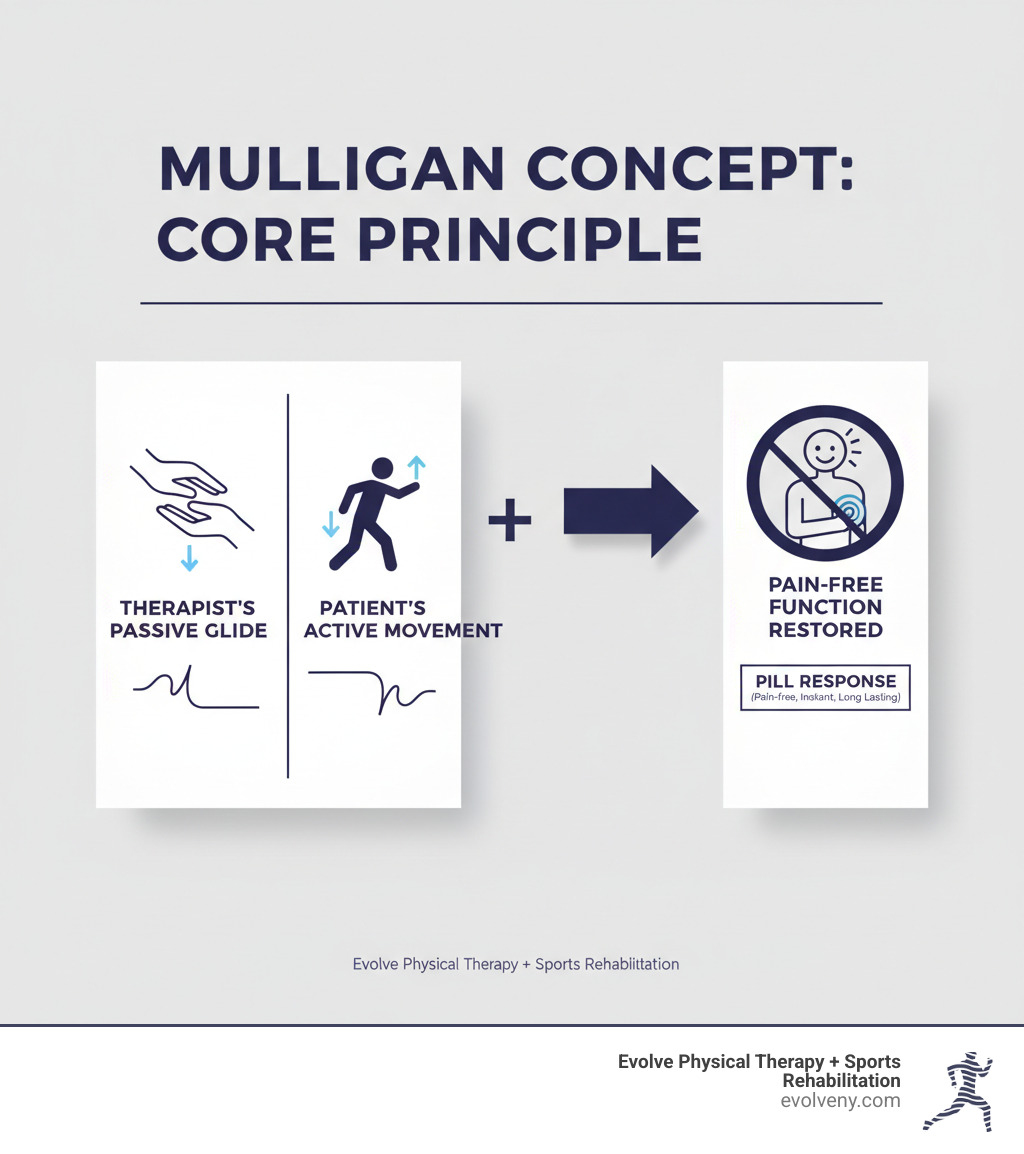
The core principle is simple: a therapist applies a gentle, sustained glide to a joint while the patient actively moves it. This combination often produces an immediate, pain-free improvement known as the "PILL response" (Pain-free, Instant, Long Lasting).
Who Developed It? New Zealand physiotherapist Brian Mulligan created this approach in 1983. It is now used worldwide to treat conditions like frozen shoulder, tennis elbow, and cervicogenic headaches.
The Mulligan Concept stands apart from traditional manual therapy by requiring active patient participation. Instead of passive manipulation, you are actively involved in your recovery, performing functional movements while the therapist guides your joints into better alignment.
I'm Lou Ezrick, founder of Evolve Physical Therapy in Brooklyn, and I've used techniques from the manual of mulligan concept for nearly two decades. This patient-active approach aligns perfectly with our philosophy of addressing root causes, not just symptoms.
Core Principles and Foundations of the Mulligan Method
The Mulligan Concept is a philosophy of joint function that places you, the patient, at the center of your healing. Unlike passive treatments, it requires your active participation, providing instant feedback on what works.
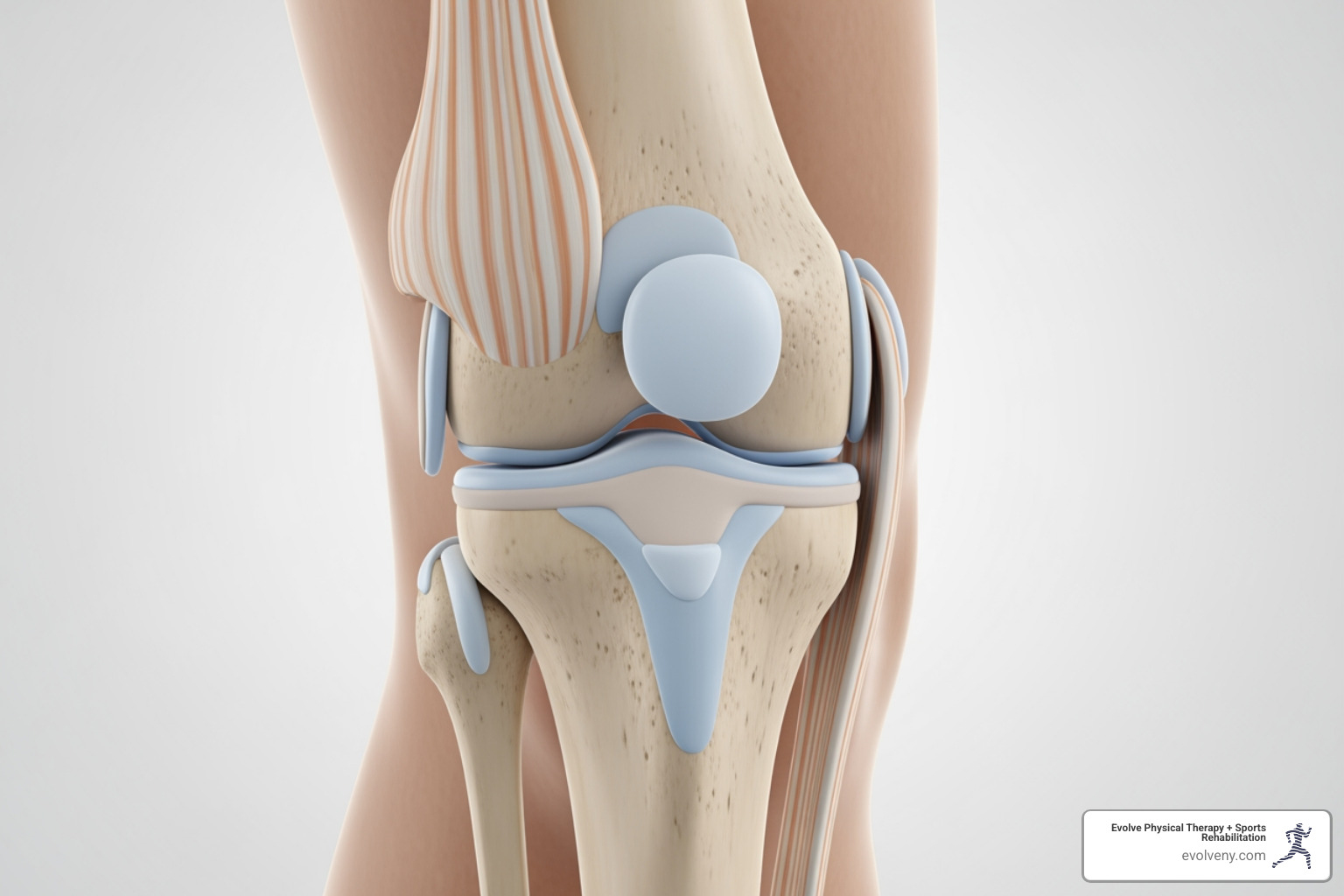
At its core, the manual of mulligan concept addresses what Brian Mulligan called "positional faults." These are minor joint misalignments, often resulting from injury or repetitive strain, that disrupt normal movement. While often invisible on X-rays, these subtle tracking errors can cause significant pain and restricted motion. The goal of a Mulligan technique is to correct this fault.
At Evolve Physical Therapy, our benchmark for success is the PILL response: Pain-free, Instant, and Long Lasting. If a technique doesn't yield immediate, pain-free improvement, we adjust our approach. This instant feedback ensures your treatment is always on the right track. To ensure safety and effectiveness, practitioners also follow the CROCKS mnemonic: a checklist for Contra-indications, Repetitions, Overpressure, Communication, Knowledge, and Sustained mobilization.
How Mulligan Differs from Other Manual Therapies
The biggest difference is active patient participation. With traditional methods, you might lie passively while a therapist performs oscillations or stretches. With the Mulligan approach, you actively perform the very movement that causes pain while we apply a sustained, corrective glide to the joint. This concurrent application of a passive glide with your active movement is what produces the pain-free result.
We focus on restoring functional movements—the specific actions that are painful in your daily life. This makes the treatment immediately relevant. Because you feel the biomechanical change in real-time, you're not just getting a joint moved; you're retraining your brain and body to accept pain-free motion, which helps make the results last. For more background on how hands-on therapy works, you can find more info about manual therapy techniques on our blog.
Key Techniques: NAGs, SNAGs, and MWMs Explained
The manual of mulligan concept details a toolkit of powerful, pain-free methods. At Evolve Physical Therapy + Sports Rehabilitation, we use these to help our Brooklyn patients achieve immediate improvements in movement. The three core techniques are NAGs, SNAGs, and MWMs, each designed for different body regions but sharing the same goal of pain-free function.
Beyond these, the approach includes Spinal Mobilization with Limb Movement (SMWLMs) and the Pain Release Phenomenon (PRP), which can produce rapid pain relief. The beauty of these methods is their versatility and focus on getting you back to doing what you love. For a deeper understanding, you can Learn more about the Mulligan Concept through additional educational resources.
NAGs (Natural Apophyseal Glides)
NAGs are gentle, rhythmic mobilizations used on the cervical (neck) and upper thoracic (upper back) spine. A therapist applies these passive, oscillating glides to the small facet joints to restore their natural movement. NAGs are ideal for highly irritable or severely restricted spinal conditions, as they are pain-free and help ease the spine into movement without causing aggravation.
SNAGs (Sustained Natural Apophyseal Glides)
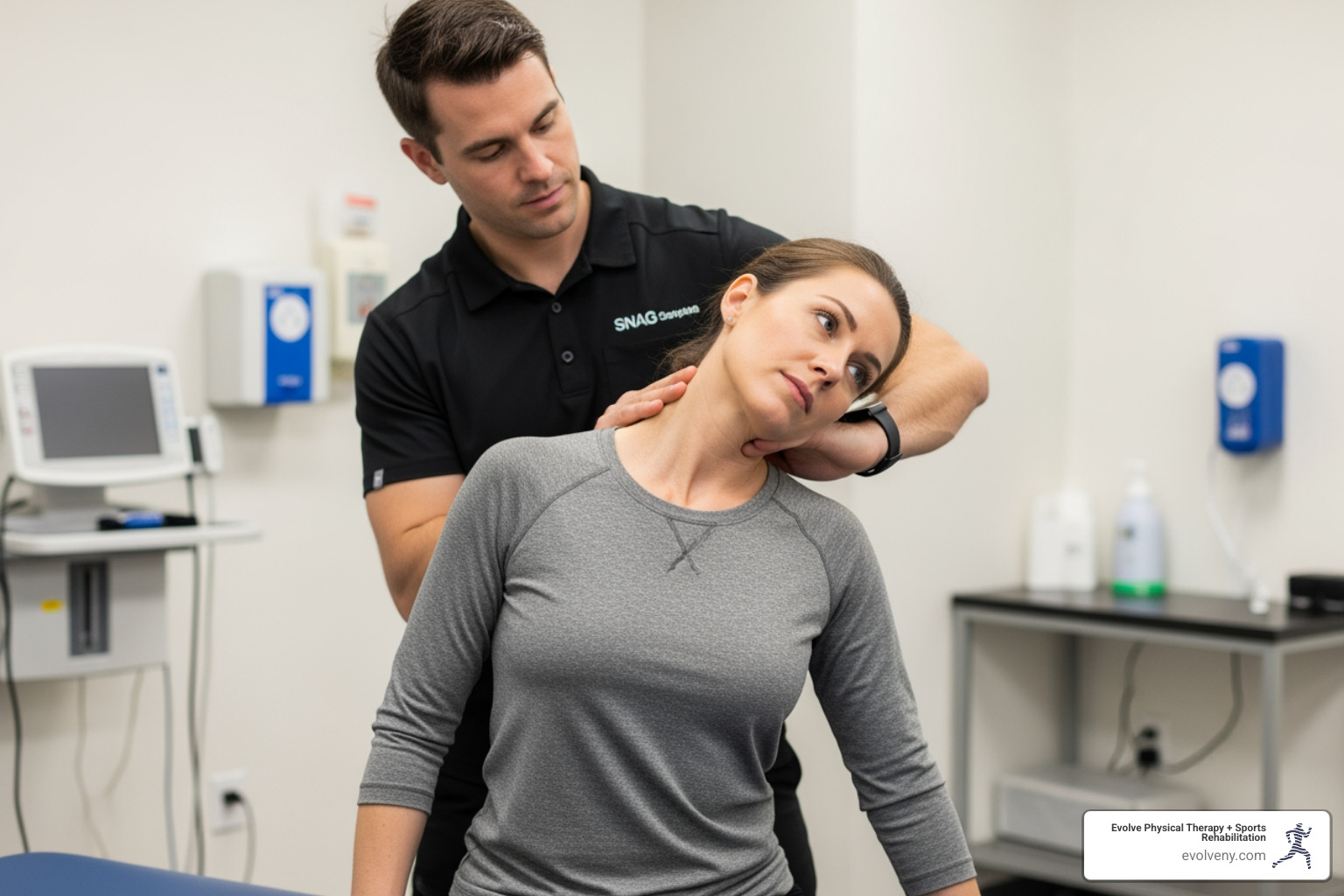
SNAGs are applied to the spine, rib cage, and sacroiliac joint and require your active participation. While you perform a painful or restricted movement (like turning your head), the therapist applies a sustained glide to the joint, rendering the movement pain-free. A common example is the Headache SNAG, which provides immediate relief for cervicogenic headaches by applying a glide to the upper neck during head rotation. Repetitions are typically 6-10 but are adjusted for highly sensitive conditions.
MWMs (Mobilisation with Movement)
MWMs are the cornerstone of the Mulligan Concept, used for peripheral joints like the shoulder, elbow, knee, and ankle. The process involves the therapist applying a sustained accessory glide to a joint while you actively perform the painful or limited movement. The key is that the movement must become instantly pain-free. For example, with a painful shoulder, a therapist might apply a glide as you lift your arm, resulting in a sudden, pain-free increase in motion. Gentle overpressure may be added at the end of the movement to further improve range. Your immediate feedback guides the therapist to find the precise glide needed, making MWMs a truly patient-driven technique.
Understanding the Manual of Mulligan Concept Textbook
The primary resource for practitioners is "The Mulligan Concept of Manual Therapy: Textbook of Techniques," often referred to as the manual of mulligan concept. Authored by Brian Mulligan with experts like Wayne Hing and Toby Hall, this textbook is the definitive guide to the philosophy and application of these techniques. At Evolve Physical Therapy + Sports Rehabilitation, we use it to ensure our hands-on treatments are current and effective.
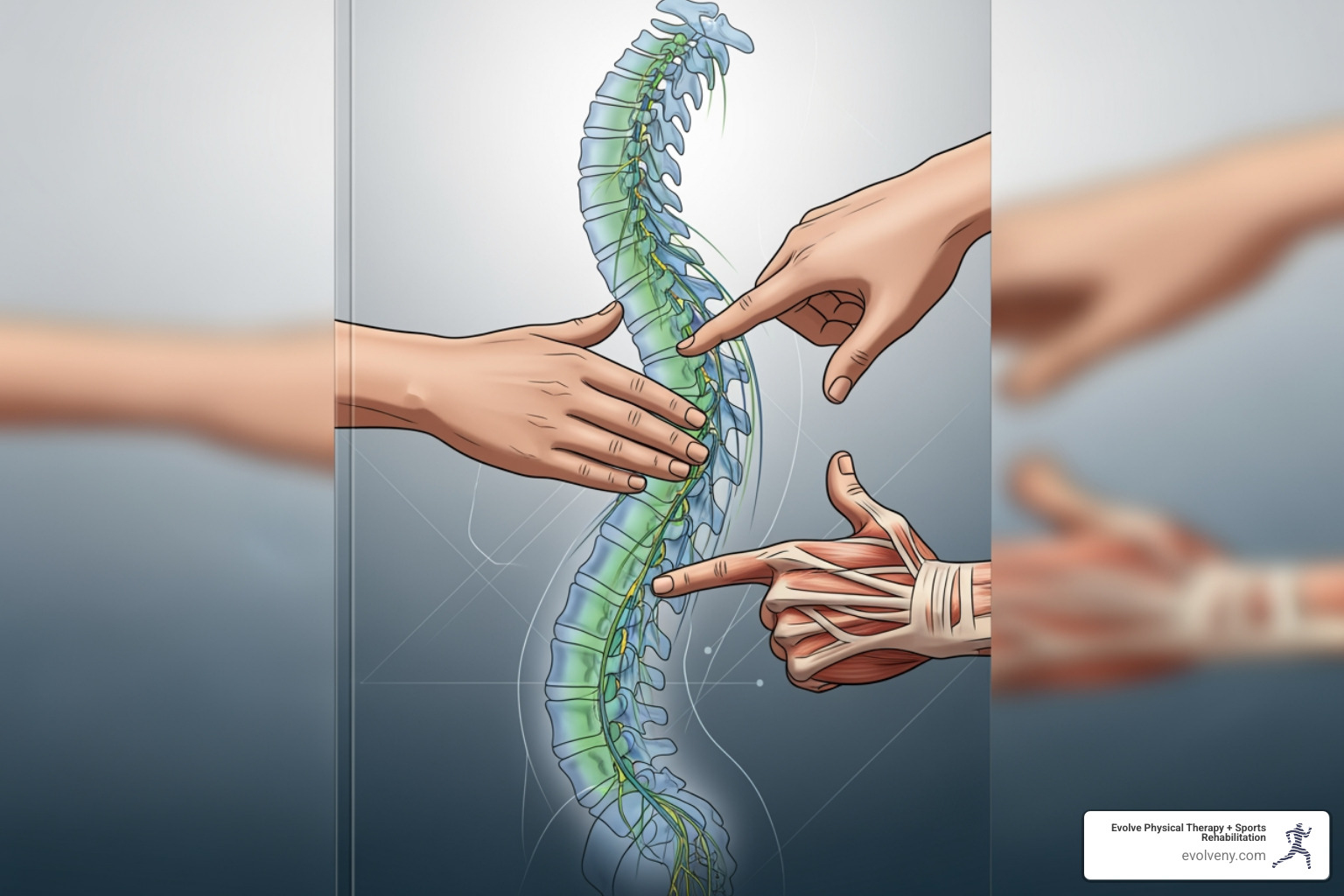
This guide recognizes that healing doesn't stop when you leave our clinic, which is why it includes detailed home exercises and taping techniques. This aligns with our belief at Evolve that you should be an active participant in your healing journey.
Key Features of the Manual of Mulligan Concept
The manual of mulligan concept is a highly practical guide for therapists. Its key features include:
- Over 250 techniques for treating joint issues throughout the body.
- Step-by-step instructions with annotated photographs showing precise hand placement, patient positioning, and mobilization direction.
- Clear organization by body region (spine, shoulder, knee, etc.), allowing for quick reference.
- A strong focus on clinical reasoning and assessment to help therapists choose the right technique for each patient.
- Guidance on home exercises and taping strategies to support and maintain progress between sessions.
This framework ensures the treatment you receive is thoughtfully selected and expertly applied. For a broader look at how we integrate various hands-on approaches into your care, you can explore More info about manual physical therapy on our site.
Who Should Read the Manual of Mulligan Concept?
The manual of mulligan concept is an essential resource for a range of healthcare professionals. Its primary audience includes:
- Physical therapists, especially those specializing in manual therapy.
- Osteopaths and chiropractors, as the techniques complement their focus on alignment and joint mechanics.
- Students of physiotherapy, osteopathy, and chiropractic, bridging the gap between theory and practice.
Any clinician who uses a hands-on, patient-active approach to treat movement restrictions and pain will find this manual invaluable. At Evolve Physical Therapy, our use of these evidence-based techniques demonstrates our commitment to providing the highest standard of care.
Conditions, Benefits, and Contraindications
At Evolve Physical Therapy + Sports Rehabilitation in Brooklyn, we use techniques from the manual of mulligan concept to treat a wide range of musculoskeletal issues. This versatile approach is effective for many conditions, including:
- Cervicogenic headaches and dizziness (originating from the neck)
- Lateral elbow pain (Tennis Elbow)
- Adhesive capsulitis (frozen shoulder)
- Chronic ankle sprains and stiffness
- Lumbar spine pain and sacroiliac joint dysfunction
- Pain and restricted mobility in the hip, knee, wrist, and hand
If you have pain with a specific movement or a joint that feels stuck, the Mulligan Concept may offer a solution.
Benefits and Indications
The primary benefit of the Mulligan Concept is the immediate, tangible difference patients feel. Key advantages include:
- Instant and Lasting Results: The PILL response (Pain-free, Instant, Long Lasting) is the goal. You should feel immediate pain reduction and improved movement during the session.
- Non-Invasive and Gentle: Techniques are performed without pain. If a movement hurts, the technique is adjusted or stopped. This makes treatment comfortable yet highly effective.
- Functional Restoration: We focus on restoring real-world movements that are important to you, like reaching, bending, or walking, ensuring clinic improvements translate to daily life.
- Patient Empowerment: By actively participating in your treatment, you gain confidence and a better understanding of your body, which is a powerful motivator for recovery.
Contraindications and Limitations
While highly effective, the Mulligan Concept is not appropriate for everyone. Your safety is our priority, and we adhere to strict guidelines. The main limitation is the PILL response itself: if a technique does not produce immediate, pain-free results, we stop and reassess. We proceed with caution for highly irritable conditions.
Absolute contraindications, where manual therapy is not used, include:
- Malignancy (cancer in the treatment area)
- Acute fractures
- Systemic inflammatory diseases (e.g., rheumatoid arthritis flare-up)
- Severe bone pathologies (e.g., severe osteoporosis)
- Significant ligamentous instability or vascular issues
A thorough evaluation is always performed first to ensure the Mulligan Concept is a safe and appropriate choice for your care.
Frequently Asked Questions about the Mulligan Concept
Here are answers to some of the most common inquiries we receive about the Mulligan Concept at Evolve Physical Therapy + Sports Rehabilitation.
What is the evidence base for the Mulligan Concept?
The Mulligan Concept is supported by a growing body of scientific evidence. It originated from clinical reasoning and the observation of immediate patient improvement (the PILL response). Since its development, numerous randomized controlled trials (RCTs), case studies, and systematic reviews have validated its effectiveness.
Strong evidence supports the use of Mulligan techniques for conditions affecting the cervical spine, shoulder, elbow, and lumbar spine. It is particularly well-regarded for treating cervicogenic headaches and dizziness. Research suggests the techniques work by providing altered mechanoreceptive input to the brain, essentially 'resetting' the nervous system's perception of a joint and breaking the pain-movement cycle. This combination of clinical results and scientific backing gives us confidence in using this approach.
What is the PILL response?
The PILL response is the defining principle of the Mulligan Concept. It's an acronym for Pain-free, Instant, and Long Lasting.
- Pain-free: The previously painful movement must become completely pain-free during the technique.
- Instant: The improvement in pain and motion occurs immediately.
- Long Lasting: The positive effects should persist after the treatment.
The PILL response serves as a diagnostic tool and a key indicator that the technique is being applied correctly. If there is no PILL response, the therapist immediately stops and reassesses, ensuring treatment is always safe and effective.
Where can I find training on the Mulligan Concept?
Practitioners seeking to master these techniques can find training through the Mulligan Concept Teachers Association (MCTA), the official global accrediting body. Training is offered in accredited courses, typically divided into Upper and Lower Quadrant seminars, which provide the essential hands-on instruction and clinical reasoning skills for safe and effective application. You can Find course information on official Mulligan Concept websites. At Evolve Physical Therapy, our commitment to continuous education in advanced techniques like the Mulligan Concept ensures our Brooklyn patients receive the highest quality of care.
Integrating the Mulligan Concept into Your Practice
The manual of mulligan concept provides a powerful, patient-centric approach to manual therapy that delivers immediate, pain-free results. By correcting subtle 'positional faults' with techniques like MWMs and SNAGs, therapists can restore function and empower patients in their own recovery.
At Evolve Physical Therapy + Sports Rehabilitation in Brooklyn, we have integrated these gentle yet profound techniques into our holistic treatment plans. Our philosophy is to actively involve you in your recovery, address root causes, and work together to achieve lasting outcomes. The instant relief and collaborative nature of the Mulligan Concept align perfectly with this goal.
Whether you're dealing with a frozen shoulder, tennis elbow, or cervicogenic headaches, the techniques from the manual of mulligan concept may be what you need. Combined with our other specialized services, we can create a comprehensive treatment plan custom to your goals.
For expert, hands-on care that incorporates advanced manual therapy techniques like the Mulligan Concept, the specialists at Evolve Physical Therapy are here to help you refind pain-free movement. Learn more about our manual physical therapy services in Brooklyn and start your journey to recovery.
