

Loosen Up! Easy Stretching Routines for Older Adults
Why Gentle Stretching Matters More Than You Think
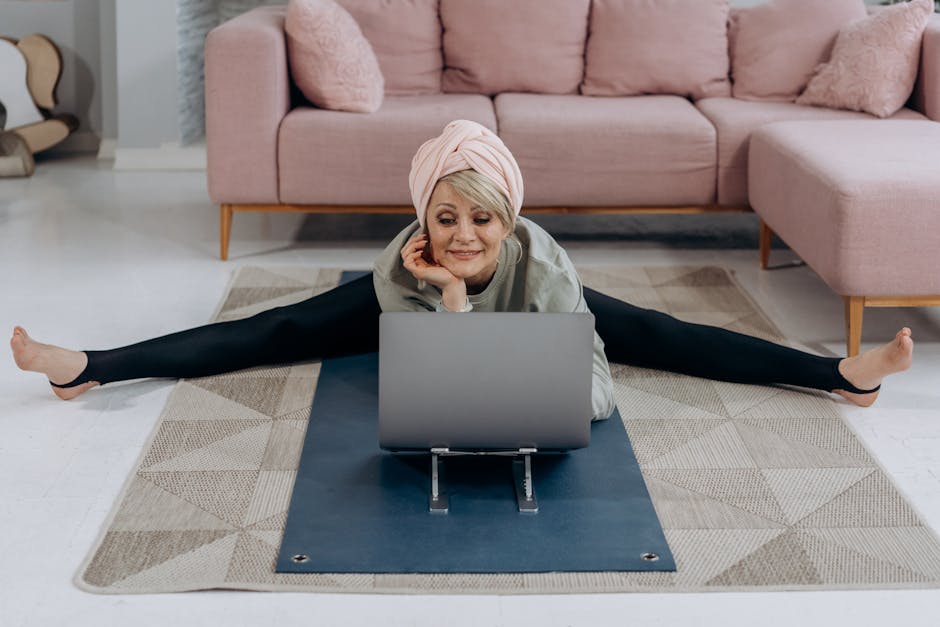
Gentle stretching for seniors is a powerful tool for maintaining independence and reducing discomfort—and you don't need special equipment to get started.
Quick Guide to Gentle Stretching for Seniors:
- Frequency: 10 minutes daily or 2-3 times per week
- Duration: Hold each stretch for 10-30 seconds
- Key Benefits: Improved flexibility, better balance, reduced pain, fall prevention
- Safety First: Always warm up for 5 minutes before stretching
- Listen to Your Body: Feel a gentle pull, never sharp pain
- Target Areas: Neck, shoulders, back, hips, legs, and ankles
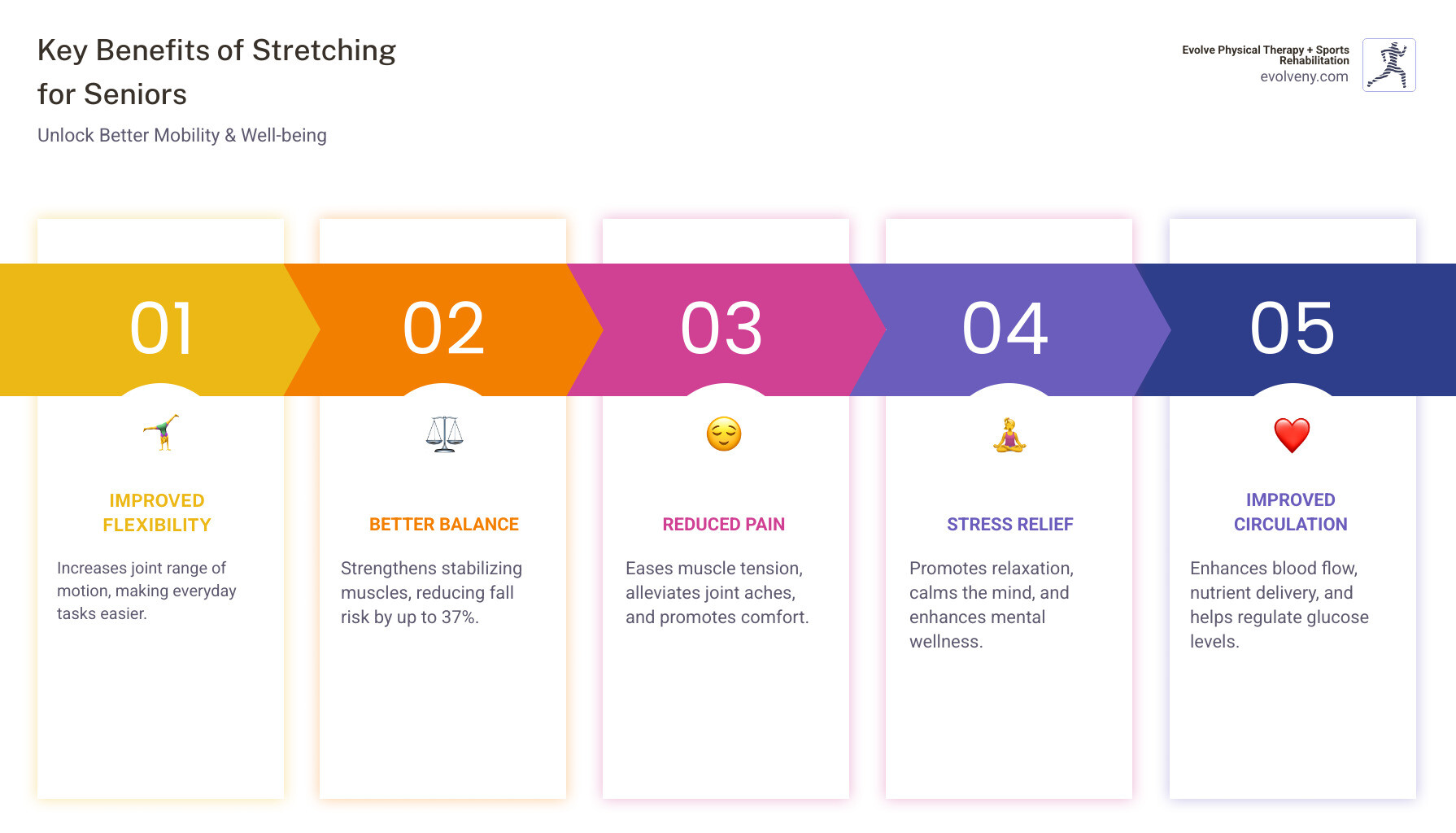
Many believe aches and stiffness are unavoidable parts of aging, but that's not the whole story. Research shows seniors who stretch just twice a week for 10 minutes see real improvements in flexibility.
Stretching helps with everyday movements like turning your head, reaching into a cupboard, or tying your shoes. It improves range of motion, eases joint pain, boosts circulation, and can even help regulate blood glucose and improve mental health.
The best part? You don't need to "feel the burn." The goal of gentle stretching is to help you move more freely. Whether you're dealing with a stiff back, tight hips, or just want to maintain mobility, a simple stretching routine can make a real difference.
I'm Lou Ezrick, founder of Evolve Physical Therapy. For nearly two decades, I've helped thousands of patients improve their mobility. My approach to gentle stretching for seniors emphasizes addressing the root cause of stiffness and pain, not just treating symptoms, helping older adults regain the freedom to do the activities they love.
Why Stretching is Key for Healthy Aging
As we age, our muscles can lose mass and stiffen, and ligaments become less elastic. This makes everyday tasks like reaching for a high shelf or bending down feel harder. But here's what I want you to remember: these changes don't have to dictate your quality of life. Regular, gentle stretching for seniors can counteract many of these effects.
Physical Benefits
The physical benefits of stretching are backed by science. Here's what a consistent routine can do for your body:
- Improved Flexibility and Range of Motion: Regular stretching loosens tight muscles and stiff joints, allowing you to bend, reach, and turn with less strain. As Harvard Health Publishing notes, stretching both the upper and lower body is crucial for daily living.
- Better Posture: Easing muscle tension through stretching promotes better posture. This distributes weight more evenly, taking unnecessary strain off your spine and joints.
- Pain and Stiffness Relief: By gently lengthening muscles and improving blood flow, stretching reduces the stubborn stiffness that can build up throughout the day.
- Fall Prevention: Stretching improves balance and coordination, giving you the stability and reaction time needed to prevent falls.
- Improved Circulation: Better blood flow delivers more oxygen to your muscles. This supports recovery and can even help regulate blood glucose levels.
- Injury Prevention: When your muscles are pliable and joints move freely, you're less likely to strain something during everyday activities.
Mental Wellness
The benefits of gentle stretching for seniors are mental and spiritual, too.
When you take a few minutes to stretch, you create a quiet moment to practice mindfulness. By focusing on your breathing as your muscles release, daily worries can fade into the background.
This simple practice offers real stress reduction, can lift your mood, and fosters a sense of well-being. It's an act of self-care that requires no special equipment or gym membership. Just a few minutes of gentle movement can make a meaningful difference in how you feel, both physically and mentally.
Getting Started: How to Stretch Safely
Before you begin, let's cover a few simple guidelines to ensure gentle stretching for seniors is a safe and enjoyable part of your routine.
- Listen to your body. A proper stretch should feel like a gentle pull or tension, never sharp, stabbing, or radiating pain. If you feel pain, ease back until the sensation is mild and you can breathe comfortably. The goal is to gently awaken muscles, not force them.
- Warm up first. Stretching cold muscles is a quick way to get hurt. Take 5-10 minutes for a simple warm-up like light walking, marching in place, or gentle arm swings to increase blood flow and prepare your muscles for movement. The best time to stretch is after exercise when your muscles are already warm.
- Breathe deeply. Holding your breath creates tension. Breathe deeply and consistently throughout each stretch to help your muscles relax. Try inhaling as you prepare and exhaling as you move into the stretch.
- Avoid bouncing. Move into each stretch slowly and smoothly, hold for 10-30 seconds, and then gently release. Bouncing can cause tiny tears in your muscles, leading to more stiffness.
- Protect your joints. Always keep your joints slightly bent—never locked. This applies especially to your knees and elbows. A "soft" knee or elbow takes the pressure off the joint. You can learn more about joint health and helpful equipment for stretching from trusted resources.
You don't need fancy equipment. A sturdy, non-slip chair is helpful for support, and a towel or resistance band can help you reach. Find a quiet, clutter-free, well-lit spot where you can move comfortably.
A Head-to-Toe Guide to Gentle Stretching for Seniors

This section provides step-by-step instructions for safe and effective stretches. Remember to move slowly, breathe deeply, and listen to your body. Each stretch should feel like a gentle release, never a strain.
Upper Body Stretches for Neck, Shoulder, and Back Relief
Tension in the neck, shoulders, and back is common, often caused by prolonged sitting, poor posture, or stress. These gentle stretches can help release that built-up tension.
- Neck Tilts: Sit or stand tall. Slowly tilt your right ear toward your right shoulder until you feel a gentle stretch. Hold for 15-30 seconds, then repeat on the left. You can also gently lower your chin to your chest to stretch the back of your neck.
- Shoulder Rolls: Sit or stand tall. Gently roll your shoulders up toward your ears, then back and down in a smooth circle. Repeat 5-10 times, then reverse direction.
- Chest Opener: Sit or stand tall and clasp your hands behind your back (or hold opposite elbows). Gently pull your shoulder blades together and down, lifting your chest. Hold for 20-30 seconds.
- Upper Back Stretch (Seated Cat-Cow): Sit in a chair with hands on your knees. Round your back and tuck your chin ("cat"), then arch your back and lift your chest ("cow"). Alternate between positions 5-10 times.
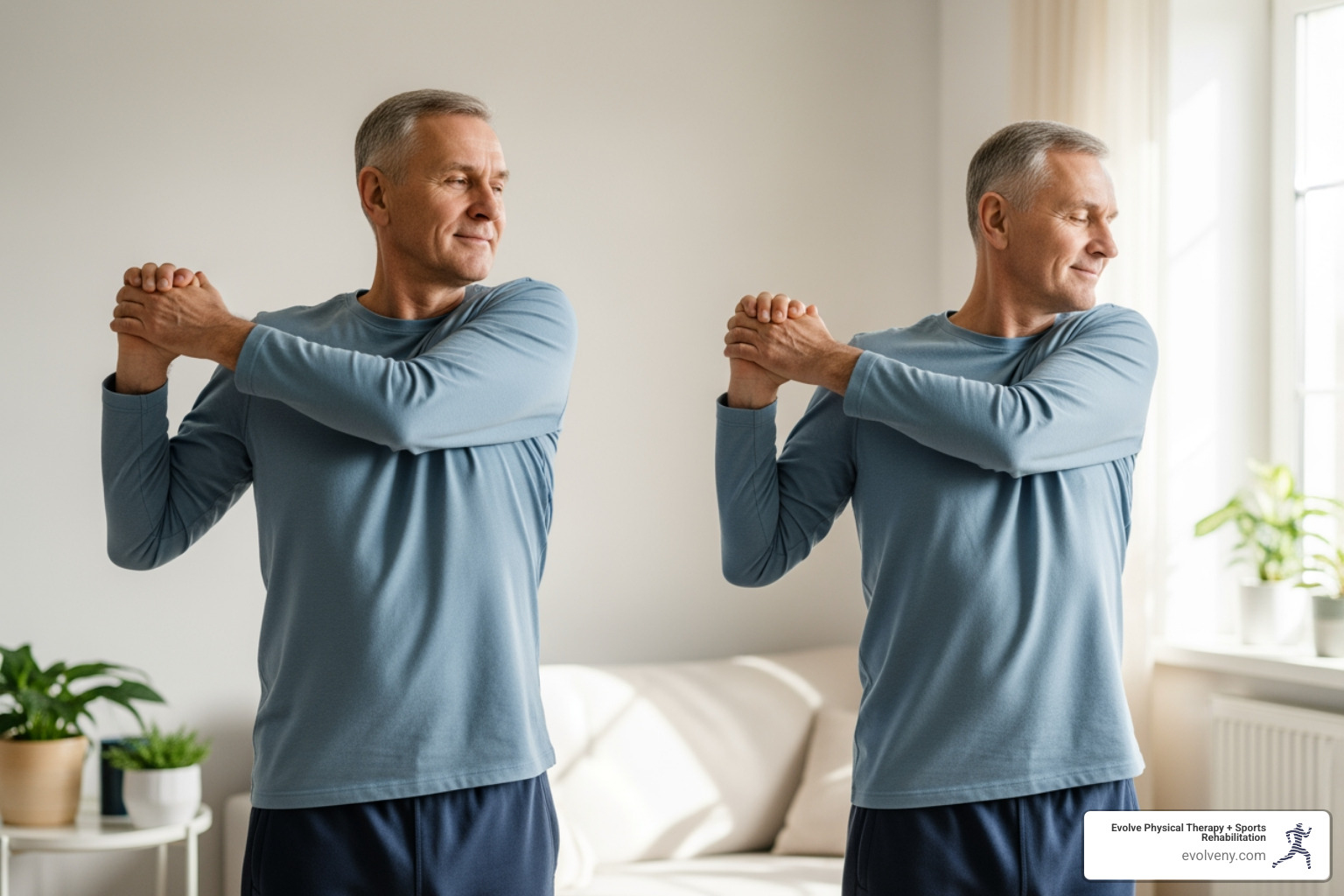
- Arm-Across-Chest Stretch: Bring your right arm across your chest. Use your left hand to gently pull your right upper arm closer to your body. Hold for 20-30 seconds, then switch arms.
Lower Body Stretches for Hips, Legs, and Ankles
When your lower body is tight, it affects balance and mobility. These gentle stretching for seniors exercises target the muscles that keep you steady.
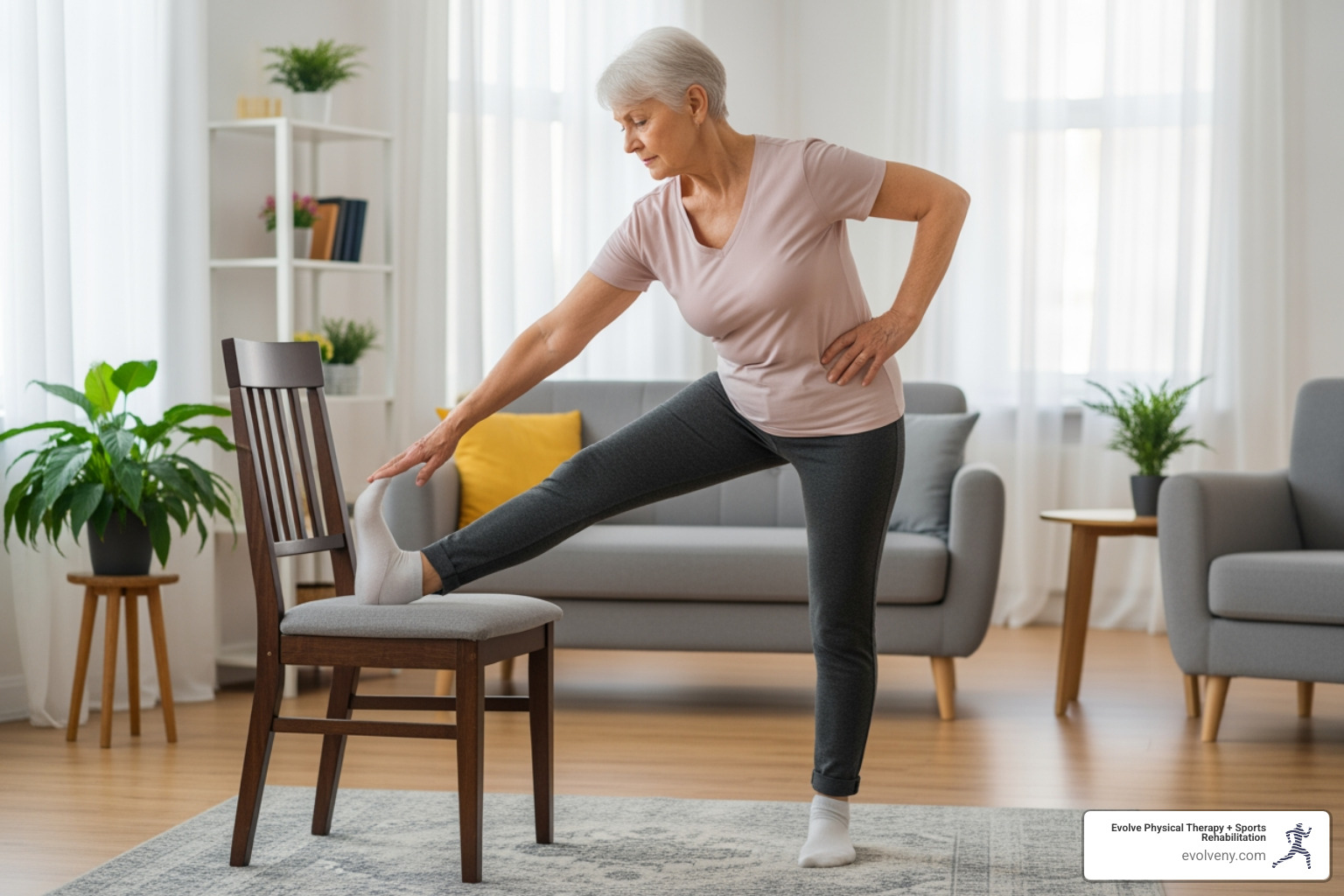
- Hamstring Stretch: Sit on the edge of a chair. Extend one leg straight with your heel on the floor. Keeping your back straight, hinge forward from your hips until you feel a stretch. Hold for 20-30 seconds, then switch legs.
- Quadriceps Stretch: Stand near a chair for support. Bend your right knee and grasp your right ankle, gently pulling your heel toward your glute. Keep your knees together. Hold for 20-30 seconds, then switch legs.
- Calf Stretch: Face a wall with hands on it for support. Step your right leg back, keeping it straight with your heel on the floor. Lean forward until you feel a stretch in your right calf. Hold for 20-30 seconds, then switch legs.
- Hip Flexor Stretch: Kneel on your right knee (use a cushion). Place your left foot flat on the floor in front of you. Gently shift your weight forward until you feel a stretch in your right hip. Hold for 20-30 seconds, then switch sides.
- Ankle Circles: Sit and extend one leg. Slowly rotate your ankle in a circle 10-15 times clockwise, then counter-clockwise.
- Seated Figure-Four Stretch: Sit tall in a chair. Cross your right ankle over your left knee. Gently lean forward from your hips until you feel a stretch in your outer right hip. Hold for 20-30 seconds, then switch sides.
The Ultimate Guide to Seated Gentle Stretching for Seniors
Chair-based stretches are a game-changer for those with limited mobility or balance concerns. They provide stability while delivering all the benefits of stretching.
- Seated Spine Twist: Sit tall in a chair. Place your left hand on your right knee and gently twist your torso to the right. Hold for 15-30 seconds, then repeat on the other side.
- Seated Knee-to-Chest Stretch: Sit tall and grasp your right knee. Gently pull it toward your chest while keeping your back straight. Hold for 15-30 seconds, then switch legs.
For a guided experience, consider following a guided seated relaxation routine to connect your breath with movement.
Building a Consistent Stretching Habit
The secret to open uping the full benefits of gentle stretching for seniors is not intensity, but consistency. Small, steady efforts will always beat sporadic ones.
Finding Your Rhythm
Research shows stretching just twice a week for 10 minutes improves flexibility. While a daily 10-minute routine is even better, the key is finding a frequency you can stick with. At Evolve Physical Therapy, we emphasize consistency over intensity. Short, frequent sessions are more effective than one long, exhausting one.
When Should You Stretch?
The best time to stretch is the time you'll actually do it.
- Morning Routine: Ease into the day and loosen up stiff joints.
- Post-Walk Cooldown: Stretch when your muscles are already warm and pliable.
- Evening Wind-Down: Release the day's tension and prepare for restful sleep.
Celebrating Your Progress
Instead of focusing on a timeline, pay attention to small improvements in your daily life.
- Journal Small Wins: Note how long you can hold a stretch or simply how you feel before and after. Did you sleep better? Do you feel less stiff?
- Notice Real-World Victories: Is it easier to tie your shoes? Can you reach a high shelf with less strain? Does getting out of a chair feel less strenuous? These are the true measures of success.
Making It Stick
- Stretch with a Partner: A friend or family member can provide encouragement and accountability, turning your routine into a pleasant social activity.
- Link to an Existing Habit: Attach your new stretching routine to something you already do every day, like while your coffee brews or during TV commercials.
- Set Up Your Environment: Keep a mat or towel visible, or set out your sturdy chair the night before. These small cues make it easier to follow through.
Frequently Asked Questions about Senior Stretching
How do I know if I'm stretching too hard?
A proper stretch should feel like a gentle tension or pull, never sharp, stabbing, or radiating pain. If you feel pain, you've gone too far. Ease back until the sensation is mild and you can breathe comfortably. The "no pain, no gain" rule does not apply to gentle stretching for seniors. If you're grimacing or can't breathe easily, you're pushing too hard.
Do I really need to warm up before I stretch?
Yes, this step is essential for safety and effectiveness. Stretching "cold" muscles increases the risk of strain. A simple five-minute warm-up, like marching in place or a slow walk, increases blood flow and prepares your muscles for movement, allowing for a better, safer stretch.
When should I see a professional for stretching?
While home stretching is beneficial, professional guidance is invaluable at times. Consult a doctor or physical therapist before starting if you have a chronic condition (like arthritis), a recent injury or surgery, or balance issues. Professional guidance is also recommended if you have persistent pain or want a personalized routine. A physical therapist can create a safe, effective program for your unique needs.
Medicare often covers medically necessary physical therapy services, which can include stretching guidance. At Evolve Physical Therapy + Sports Rehabilitation, we create customized programs to help older adults regain mobility and confidence safely.
Take the First Step Towards Better Mobility
Aches, pains, and stiffness don't have to be your new normal. Gentle stretching for seniors is a simple, accessible way to reclaim mobility, reduce discomfort, and improve your quality of life. You can start right now.
Think of stretching as daily self-care. The benefits—improved flexibility, balance, pain relief, and circulation—translate into real-world improvements, like tying your shoes without wincing or reaching for a high shelf with confidence.
The secret is simple: small daily habits lead to big results. Just 10 minutes a day, done consistently, can transform how you feel. Listen to your body, move gently, and be patient. Every stretch is a step toward greater independence.
While home stretching is wonderful, professional guidance is valuable, especially when starting out. For a personalized assessment to ensure you are stretching safely and effectively, consider seeking professional help. At Evolve Physical Therapy + Sports Rehabilitation in Brooklyn, we address the root causes of stiffness and pain, creating customized programs that fit your goals.
If you're in Marine Park, Gravesend, Midwood, Park Slope, or Mill Basin, we're here to support you. Our hands-on approach means you'll receive expert guidance every step of the way. To see how our programs can help you move with more confidence and less pain, learn more about physical therapy for seniors. Take that first step today.
