

Manual Therapy Techniques 101
Understanding Manual Therapy: A Hands-On Path to Pain Relief
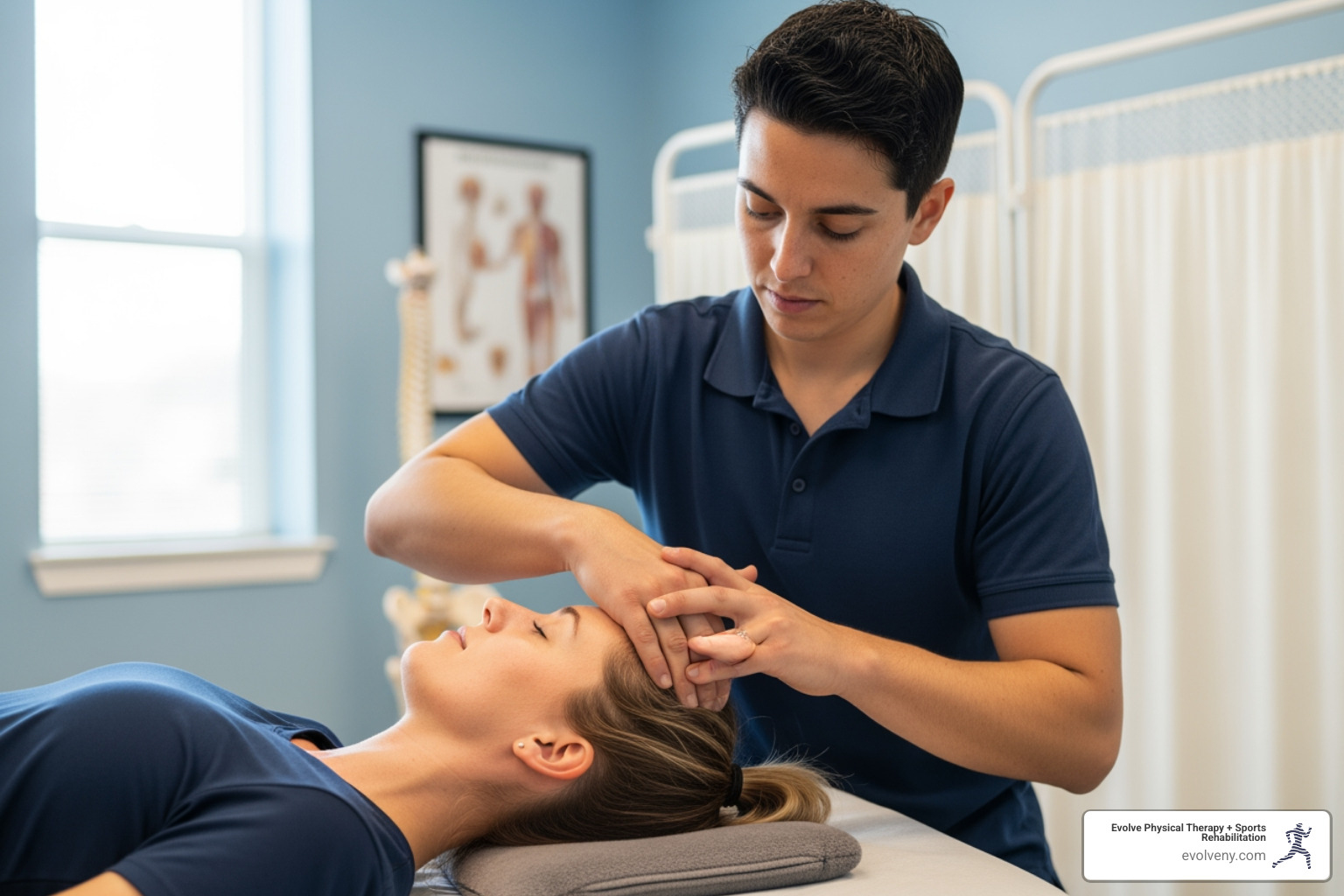
Manual therapy techniques are specialized, hands-on treatments performed by physical therapists and other healthcare professionals to treat pain and improve movement. Here's what you need to know:
What Manual Therapy Techniques Include:
- Joint Mobilization - Gentle, controlled movements to improve joint mobility
- Joint Manipulation - Quick, targeted thrusts to restore joint function
- Myofascial Release - Sustained pressure to release tension in connective tissue
- Trigger Point Therapy - Direct pressure on painful muscle knots
- Soft Tissue Mobilization - Hands-on stretching and manipulation of muscles and ligaments
- Strain-Counterstrain - Gentle positioning to relieve muscle spasm
Primary Benefits:
- Reduce pain without medication
- Improve range of motion
- Decrease muscle tension and inflammation
- Speed recovery from injury
- Restore normal movement patterns
If you're dealing with recurring pain, you're not alone. Approximately 50 million adults in the U.S. are living with chronic pain, and many find relief through manual therapy. Unlike treatments that rely on machines, manual therapy involves a skilled practitioner using their hands to assess and treat your body's soft tissues and joints.
The roots of manual therapy date back to 400 BCE, but today's techniques are refined by modern science. Research shows they work through three main pathways: biomechanical (moving tissues), neurophysiological (changing pain signals), and psychological (the healing power of touch).
While both involve hands-on treatment, manual therapy is a clinical approach focused on diagnosing and treating specific musculoskeletal problems. Unlike a relaxation massage, it aims to identify and address the root cause of dysfunction. Physical therapists combine these techniques with exercise and education to create a comprehensive treatment plan.
I'm Lou Ezrick, founder of Evolve Physical Therapy, and I've spent nearly two decades specializing in manual therapy techniques for complex pain conditions and sports injuries. My approach combines advanced training in osteopathic manipulation with evidence-based physical therapy to help active individuals like you overcome pain and return to peak performance.
The Goals and Transformative Benefits of Manual Therapy
When you walk into Evolve Physical Therapy, our mission is simple: help you get back to doing what you love, without pain holding you back. Manual therapy techniques offer a powerful way to achieve this, and the results often surprise people who've been struggling for months or even years.
Pain relief is usually what brings patients through our door—and it's where manual therapy truly shines. Whether you're dealing with a nagging ache or sharp pain, these hands-on techniques work to calm muscle spasms, release tension, and restore normal joint function. We address the root cause of your discomfort, not just cover it up temporarily.
Many people living with chronic pain have found relief through manual therapy when other approaches fell short. The skilled, caring touch is also deeply therapeutic. Most patients find the sessions incredibly relaxing, which helps reduce pain by calming the nervous system.
Improved range of motion is another game-changer. When joints get stiff and muscles tighten, daily activities become harder. Through targeted manual therapy and passive stretching, we increase tissue extensibility—helping your muscles lengthen and joints glide smoothly again. This restored flexibility is crucial for everything from reaching a high shelf to training for your next race.
We also focus on reducing inflammation and tissue restriction. While inflammation is part of healing, chronic inflammation gets in the way. Manual therapy helps move excess fluid, decrease swelling, and break down scar tissue or adhesions. By restoring normal tissue texture, we help your body heal itself more effectively.
All of these benefits work together to create faster recovery and a real increase in your day-to-day function. When we combine hands-on manual work with therapeutic exercise and education, patients often see quicker improvements than they expected. This integrated approach can mean fewer treatment sessions, less reliance on pain medications, and in some cases, avoiding surgery.
The bottom line? We're here to empower your body's natural healing abilities and guide you back to a more comfortable, active life.
More info about our approach to Manual Therapy
A Deep Dive into Common Manual Therapy Techniques
When we use manual therapy techniques at Evolve Physical Therapy, we're tapping into something far more sophisticated than simply "rubbing where it hurts." Every technique creates a ripple effect through your body to help you feel better and move more freely.
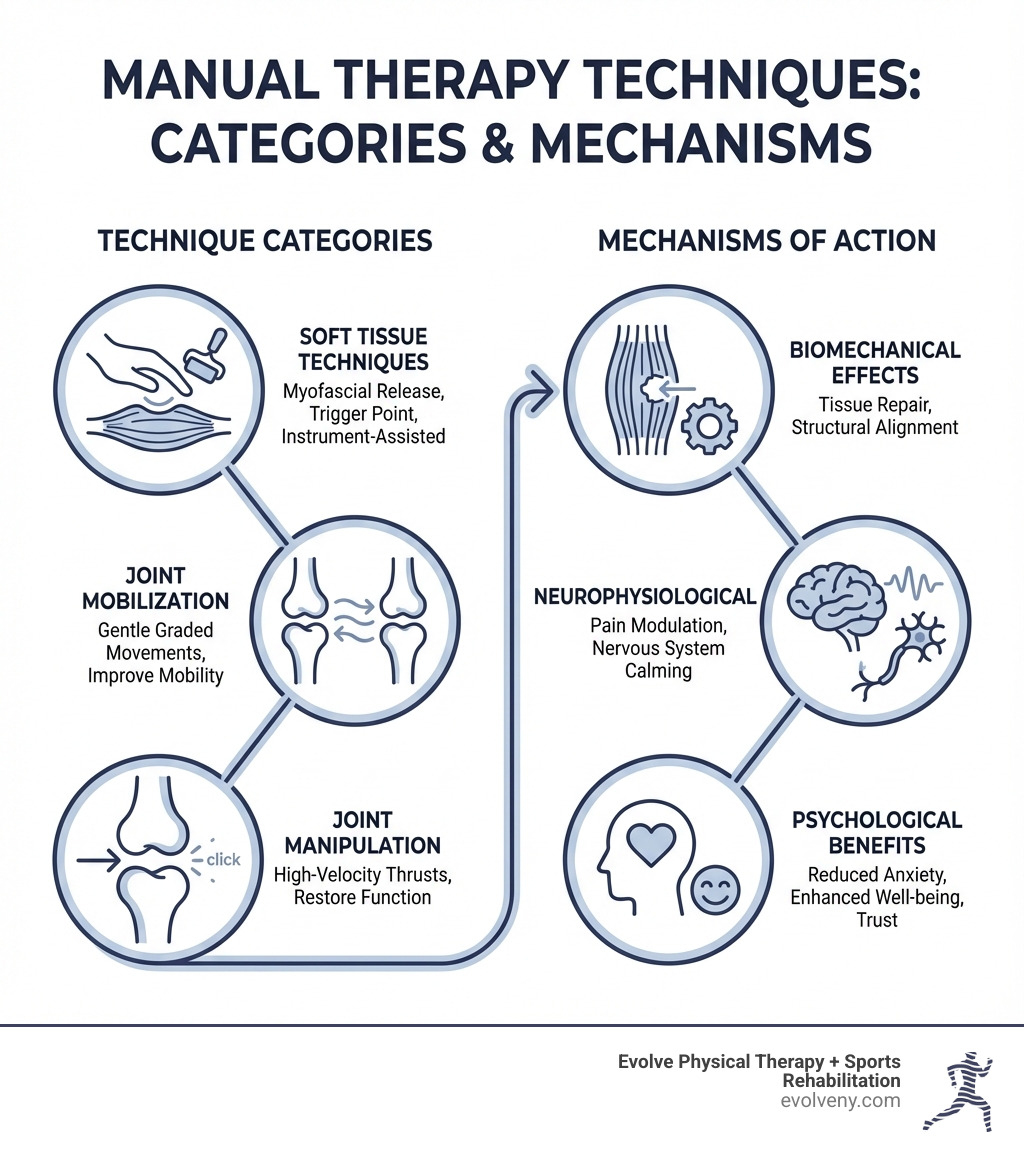
When we apply manual therapy, three things happen. First, the biomechanical effect: our hands physically move your joints and tissues to improve mobility. Second, the neurophysiological effect: the techniques alter pain messages sent from your nerves to your brain, based on the Gate Control Theory of pain, providing immediate relief. Third, the psychological effect: therapeutic touch can reduce anxiety, promote relaxation, and change your perception of pain, increasing confidence in your recovery.
What ties all of this together is our patient-centered approach. Your body, injury history, and goals are unique. We tailor every technique to what you need for your recovery.
Soft Tissue Manual Therapy Techniques
Most pain and stiffness comes from your soft tissues—muscles, tendons, ligaments, and fascia. When these tissues get tight or develop adhesions, movement becomes a struggle. That's where soft tissue manual therapy techniques come in.
Myofascial Release (MFR) is a favorite for immediate relief. With MFR, we apply gentle, sustained pressure to restricted fascial areas, slowly stretching and lengthening the tissue until it releases.
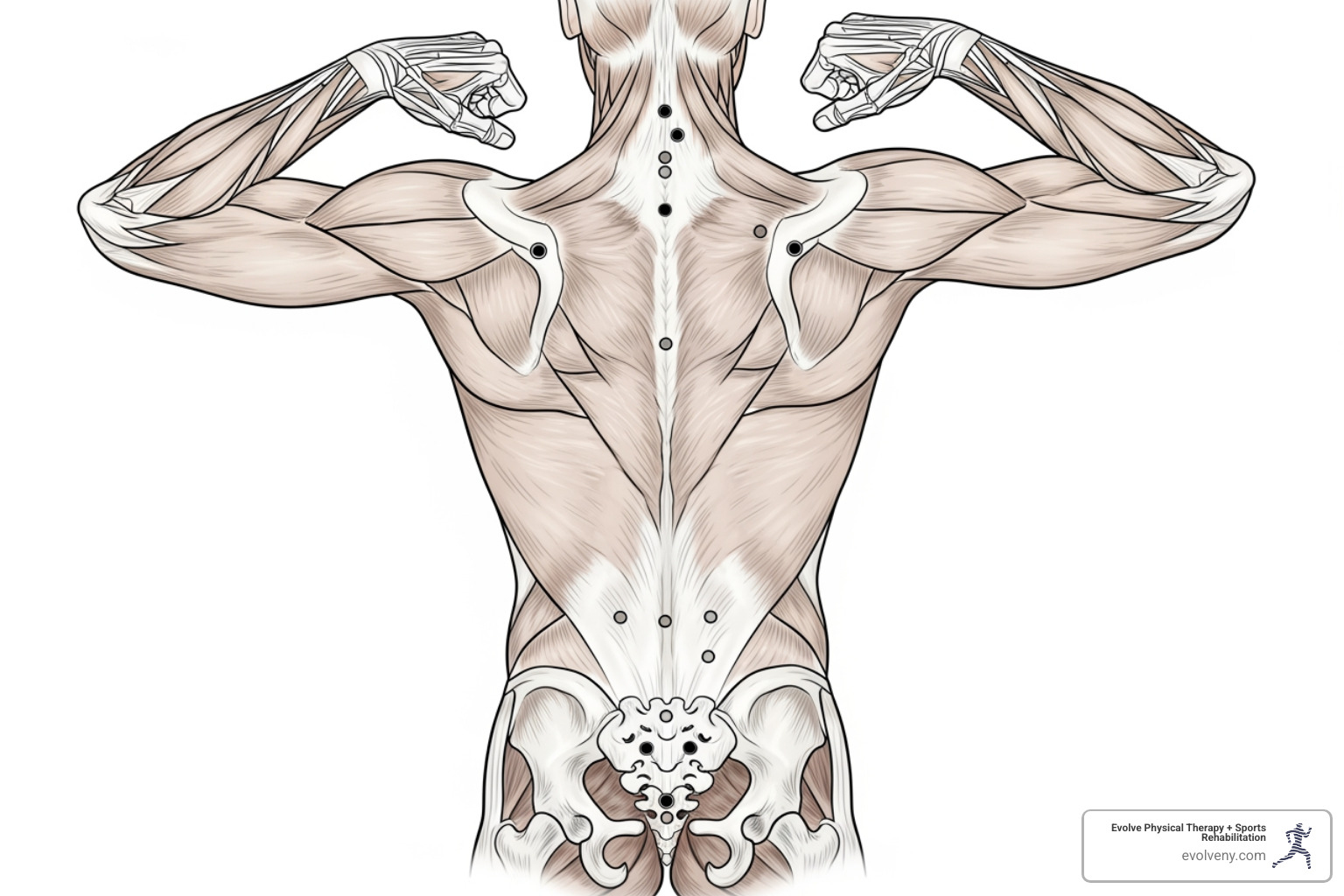
Trigger Point Therapy addresses those infamous "knots" in your muscles. We apply direct, sustained pressure to these hyperirritable spots, or trigger points, to release the muscle contraction and stop both local and referred pain.
For muscle spasms, Strain-Counterstrain offers a gentle solution. Instead of stretching a tight muscle, we position your body to shorten it. Holding this comfortable position for about 90 seconds "resets" the muscle's stretch reflex, often eliminating the spasm.
Instrument-Assisted Soft Tissue Mobilization (IASTM) uses specialized stainless steel tools to detect and treat fascial restrictions our hands might miss. The tools apply focused pressure to break down scar tissue and promote organized healing by increasing blood flow.
Cross-Friction Massage works across your muscle fibers with firm, transverse pressure. This is powerful for chronic tendon issues, as it helps realign collagen, reduce scar tissue, and bring fresh blood flow to the area.
Active Release Techniques (ART) combines your movement with our precise pressure. As you move the affected body part, we apply targeted pressure to lengthen and release adhesions (scar tissue), often producing rapid improvements in mobility and pain.
Overview of soft tissue techniques used in physical therapy
Joint-Based Manual Therapy Techniques
When a joint becomes stiff or restricted, it throws off your body's mechanics. Joint-based manual therapy techniques target these articulations to restore proper movement.
Joint Mobilization involves skilled, controlled movements applied to joints at varying speeds and depths. We gently oscillate or sustain movements within your joint's available range to improve the subtle gliding and rolling motions necessary for pain-free function. The goal is to gradually coax the joint into moving more freely.
Joint Manipulation, sometimes called a thrust technique, involves a quick, precise thrust applied to a joint to restore motion and reduce pain. The "popping" sound (joint cavitation) is from gas bubbles releasing in the joint fluid and isn't essential for success. The key difference from mobilization is the high speed; once a manipulation begins, it cannot be stopped.
Here's a quick comparison:
| Feature | Joint Mobilization | Joint Manipulation (Thrust) |
|---|---|---|
| Speed | Slower, controlled | High-velocity, rapid |
| Amplitude | Varying, often larger | Low, precise |
| Force | Graded, gentle to moderate | High, targeted |
| Audible "Pop" | Rare | Common, but not essential for effectiveness |
| Control | Can be stopped mid-procedure | Cannot be stopped once initiated |
| Primary Goal | Improve joint play, reduce stiffness, increase ROM | Restore optimal motion, reduce pain, "open up" joint |
Both techniques aim to improve your joint mobility. The choice between them depends on your specific condition, our assessment, and your comfort level.
The American Physical Therapy Association defines manual therapy techniques as "skilled hand movements and skilled passive movements of joints and soft tissue"—and that hands-on expertise is what we bring to every session.
The APTA defines manual therapy techniques
Conditions Treated and What to Expect During a Session
When you step into Evolve Physical Therapy, you’re not just getting a treatment; you’re starting on a personalized journey to recovery. Our approach to manual therapy techniques begins with a thorough understanding of you.
Initial Assessment and Personalized Plan
We start with a comprehensive initial assessment. This full-body evaluation of your muscles, bones, nerves, and movement patterns, combined with your medical history and lifestyle, helps us uncover the root cause of your issue. Based on this, we create a personalized treatment plan outlining the specific manual therapy techniques we'll use, along with therapeutic exercise and education.
What to Expect During a Session
During a session, expect a hands-on experience. We use our skilled hands to apply pressure, stretch tissues, and move your joints. You might feel firm but tolerable pressure during soft tissue work or gentle, measured movements during joint mobilization. Communication is key, and we'll constantly check on your comfort level. Many patients find the experience surprisingly relaxing.
Beyond hands-on treatment, we empower you with knowledge. You'll receive home exercise programs to complement your manual therapy, helping you maintain gains and accelerate recovery. These exercises are crucial for long-term success.
Common Conditions Addressed
Manual therapy techniques are incredibly versatile and effective for a wide array of musculoskeletal conditions. We commonly use them to treat:
- Back and neck pain: Whether it's chronic discomfort or acute stiffness, manual therapy can significantly reduce pain and improve mobility in your spine.
- Headaches: Tension headaches and cervicogenic headaches (originating from the neck) often respond well to manual techniques that address muscle tension and joint restrictions in the neck and upper back.
- Sports injuries: From sprains and strains to tendinitis (like tennis elbow or patellar tendinitis), manual therapy helps facilitate tissue repair, reduce inflammation, and restore athletic function.
- Arthritis: While manual therapy can't cure arthritis, it can greatly alleviate pain, improve joint mobility, and reduce stiffness, enhancing your quality of life.
- Post-surgical recovery: After surgery, manual therapy helps to reduce swelling, break down scar tissue, restore range of motion, and facilitate a smoother, faster rehabilitation process.
- Carpal tunnel syndrome: Manual techniques can help decompress the median nerve, reduce inflammation, and improve the mobility of the wrist and hand.
- Shoulder pain (including frozen shoulder): We use manual therapy to improve range of motion, reduce stiffness, and alleviate pain in the shoulder joint and surrounding tissues.
- Joint stiffness: Any joint that feels "stuck" or restricted can benefit from mobilization and manipulation to restore its natural movement patterns.
These are just a few examples. If you're experiencing pain or limited movement in Brooklyn, including our locations in Marine Park, Gravesend, Midwood, Park Slope, and Mill Basin, manual therapy might be the solution you've been looking for.
Understanding Manual Therapy Frameworks and Application
How do physical therapists decide which manual therapy techniques to use? The answer lies in clinical reasoning—a thoughtful, systematic approach that guides our every decision.
At Evolve Physical Therapy, we don't use a one-size-fits-all protocol. Instead, we draw from various schools of thought, giving us a rich toolkit to address your individual needs.
Our approach uses a biopsychosocial framework, meaning we look at the whole picture. We consider not just your physical injury, but also how psychological and social factors (like stress or fear of movement) affect your recovery. Addressing you as a whole person is key to true healing.
This comprehensive perspective aligns with Orthopaedic Manual Physical Therapy (OMPT), an advanced specialty defined by the American Academy of Orthopaedic Manual Physical Therapists as "an advanced specialty area of physical therapy practice that is based on manual examination and treatment techniques integrated with exercise and patient education." In short, it's about combining skilled hands-on work with movement and knowledge.
More about advanced OMPT practice
How Practitioners Apply and Grade Techniques
Several influential concepts shape how we work. Think of these as different languages we speak when communicating with your body.
The Maitland Concept emphasizes continuous assessment and clinical reasoning. We constantly adjust our approach based on your body's response, carefully grading mobilization intensity to meet your needs.
The McKenzie Method, or Mechanical Diagnosis and Therapy (MDT), uses repeated movements to find a "directional preference"—a specific motion that decreases or centralizes your pain. It empowers you to manage symptoms with targeted home exercises.
The Mulligan Concept combines your active movement with our gentle, corrective force on a joint. These "Mobilizations with Movement" (MWMs) often allow for pain-free motion where it was previously uncomfortable.
When we apply mobilizations, we use the Maitland Joint Mobilisation Grading Scale to apply the right amount of force. Grades I-II are gentle oscillations for pain relief. Grades III-IV push further into the joint's range to address stiffness. Grade V is a high-velocity thrust manipulation.
By carefully considering the force, amplitude, speed, and direction, we can target exactly what needs attention—whether that's calming pain or increasing your range of motion. Our training helps us make these decisions instinctively.
Research continues to support the effectiveness of these approaches. Studies show that manual therapy techniques, when applied with sound clinical reasoning, can significantly reduce pain and improve function.
A deeper look at manual therapy for pain
Integrating Manual Therapy for a Full Recovery
Manual therapy techniques work best when they're part of something bigger. At Evolve Physical Therapy, we take a holistic treatment philosophy that weaves hands-on work together with other essential elements of healing.
Manual therapy prepares your body for recovery. By reducing pain and loosening tissues, we create a window of opportunity. The crucial next step is teaching your body how to maintain that newfound freedom of movement.
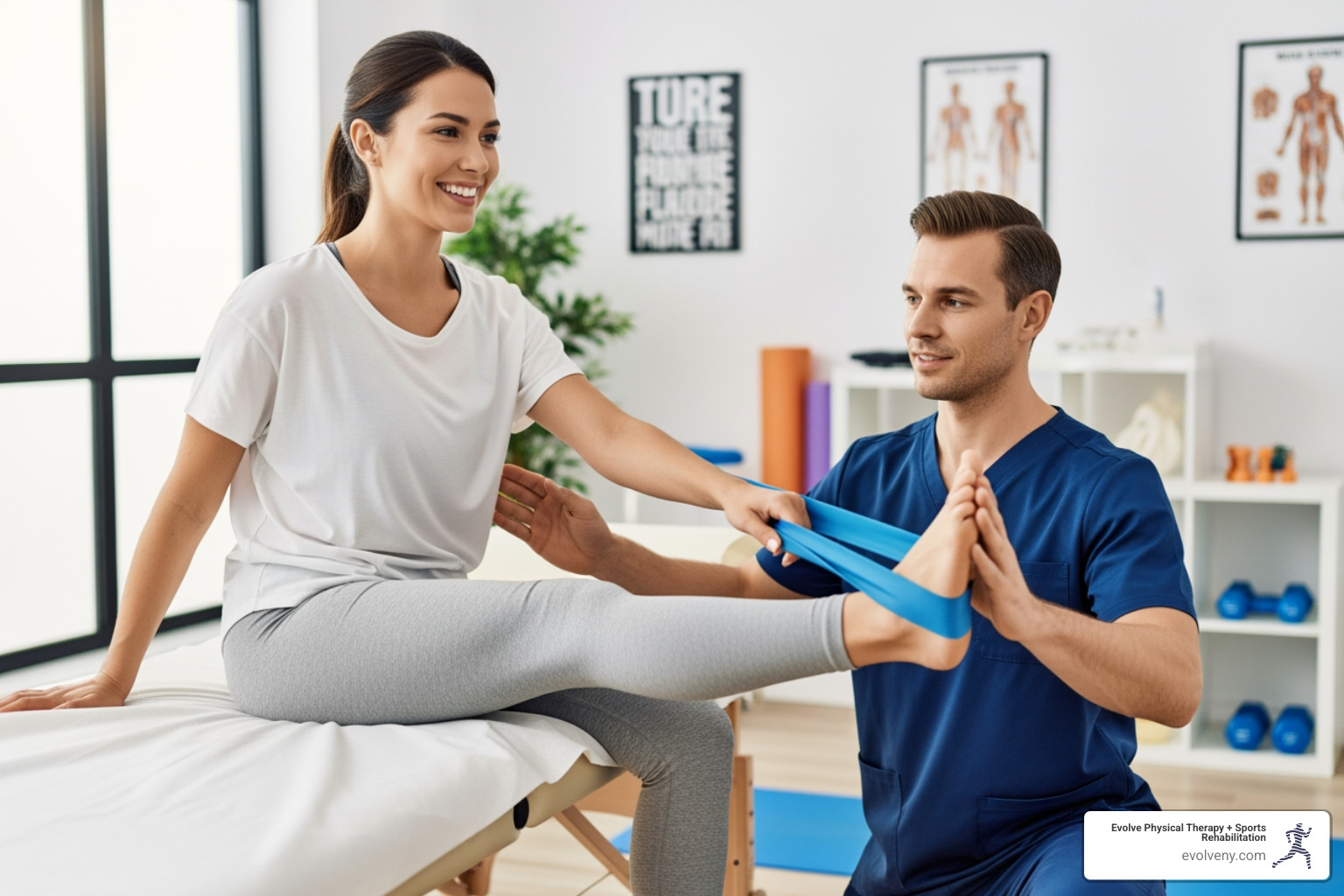
That's where therapeutic exercise comes in. These are carefully selected movements designed to strengthen supporting muscles, improve coordination, and retrain your body to move correctly. We're not just fixing the problem—we're giving you the tools to keep it fixed.
Patient education is equally vital. We believe you deserve to understand what's happening in your body, why a certain treatment helps, and how to modify daily activities to avoid re-injury. When you understand the "why," you become an active participant in your healing.
We also address postural correction. Poor habits, like hunching over a computer, can undermine progress. We help you identify these patterns and develop better alignment to support your body.
Research consistently shows that combining hands-on work with exercise and education produces significantly better results than any single approach alone. This integrated strategy can speed up recovery and help you reduce or avoid the need for medications or surgery.
While manual therapy is remarkably safe, it's not without potential risks. You might experience temporary soreness, similar to after a workout. More serious complications are extremely rare.
That's why we start with a thorough initial assessment. We carefully screen for contraindications like active infections, severe osteoporosis, certain cancers, or recent fractures. Your safety is the foundation of everything we do.
This comprehensive, integrated approach is what truly sets Evolve Physical Therapy apart. We're not just treating your symptoms; we're partnering with you to build a stronger, more resilient body.
Manual Therapy as a Physical Therapy Technique
Conclusion: Take the Next Step Towards a Pain-Free Life
As we've explored, manual therapy techniques are a time-tested, scientifically-backed path to healing. These hands-on approaches work on physical, neurological, and psychological levels to relieve pain and restore function.
Whether it's myofascial release for fascial restrictions, trigger point therapy for muscle knots, or joint mobilization for range of motion, each technique serves a specific purpose. The benefits—pain reduction, improved mobility, and faster healing—create lasting change when combined with exercise and education.
Living with chronic pain or injury can feel isolating. You don't have to figure it out alone. At Evolve Physical Therapy, our commitment goes beyond simply applying techniques. We take the time to understand your story and goals, serving our Brooklyn communities in Marine Park, Gravesend, Midwood, Park Slope, and Mill Basin with a hands-on approach that puts your needs first.
The importance of working with a skilled practitioner cannot be overstated. In the right hands, these techniques are powerful tools for change. Our team has the training and experience to assess your condition accurately and apply the right techniques safely and effectively.
Your recovery journey is yours. You deserve to take control of it and work with people who genuinely care about getting you back to the life you love. If you're ready to experience what manual therapy techniques can do for you, we're here and ready to help.
