

Beyond the Blade: Your Timeline for Hand Surgery Physical Therapy
Understanding Your Recovery Journey After Hand Surgery

How long is physical therapy after hand surgery depends largely on the type of procedure you've had. Here's what you can typically expect:
| Surgery Type | PT Duration | Examples |
|---|---|---|
| Minor Procedures | 4-6 weeks | Carpal tunnel release, trigger finger release, ganglion cyst removal |
| Moderate Procedures | 6-12 weeks | Tendon repairs, ligament repairs |
| Complex Procedures | 8 weeks - 6+ months | Fracture fixation, joint replacement, severe nerve damage |
Hand surgery is the first step in your recovery, but the real work begins afterward. Recovery time varies based on the surgery's complexity, your overall health, and your commitment to therapy. While some patients heal in weeks, others may need months of rehabilitation to regain full function.
The rehabilitation process can range from several weeks to several months, with therapy sessions and home exercises being crucial. Most people can return to work within 6 to 14 weeks, but full recovery can take over a year for complex procedures.
As Lou Ezrick, founder of Evolve Physical Therapy, I've spent nearly two decades guiding patients through this process. My approach focuses on addressing the root cause of dysfunction with hands-on, customized treatment plans and realistic timelines.
The "Why" Behind Hand Therapy: Goals and Foundations
Your hands are essential for connecting with the world. When surgery for carpal tunnel, a fracture, or tendon damage makes everyday activities impossible, physical therapy is crucial for getting your life back. At Evolve Physical Therapy + Sports Rehabilitation, our central goal is to help you regain optimal function and return to the activities you love.
Understanding how long is physical therapy after hand surgery begins with knowing the goals of rehabilitation:
- Pain and Swelling Management: Immediately after surgery, our priority is to control discomfort and swelling. We use techniques like proper ice application, elevation, compression, and gentle movements that reduce pain and move fluid out of your hand, speeding up the healing process.
- Restoring Range of Motion: To prevent stiffness and permanent limitations from scar tissue, we start with careful exercises. This often begins with passive motion (where the therapist moves your hand) and progresses to active motion as you heal, protecting the surgical repair.
- Regaining Strength: A hand that can move but lacks strength isn't functional. We introduce progressive resistance exercises, starting with light movements and gradually building up to prepare your hand for real-world demands.
- Scar Tissue Management: Excessive or poorly managed scar tissue can restrict movement. We use specialized techniques like scar massage and tissue mobilization to soften scars and prevent adhesions, improving long-term function.
- Functional Recovery: All therapy serves to restore your ability to perform daily tasks. We tailor exercises to mimic your real-life activities, from writing and dressing to using tools at work.
Hand therapy is a highly specialized field requiring advanced training in the complex anatomy of the hand, wrist, and forearm. Our therapists, including Certified Hand Therapists (CHTs), have this expertise. Unlike general PT, hand therapy provides precise, nuanced care that addresses the delicate structures in your hand. At Evolve, we integrate perspectives from both Occupational and Physical Therapy to ensure a comprehensive recovery that addresses mobility, strength, and functional tasks.
Key Factors That Determine Your Recovery Timeline
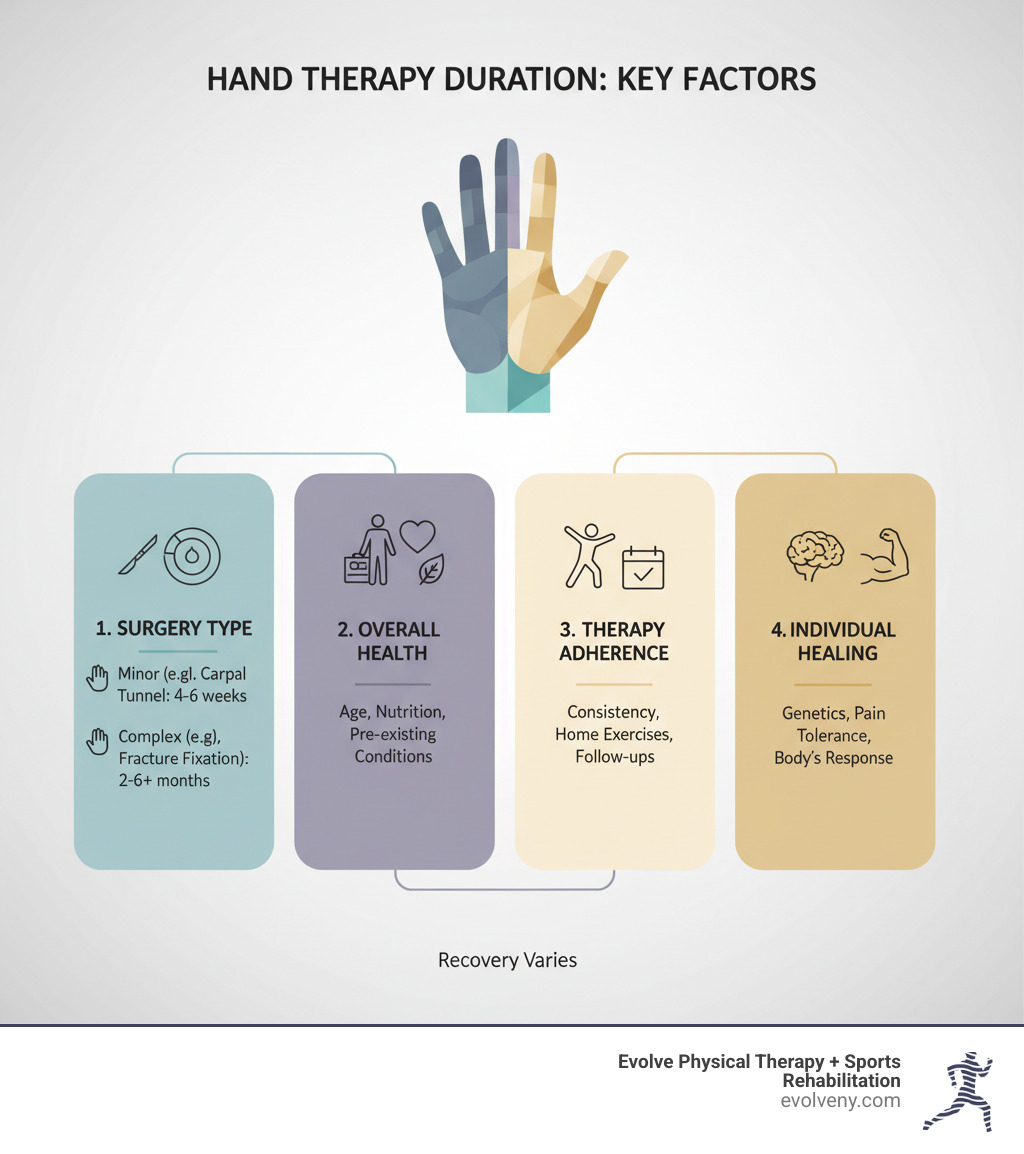
Your recovery timeline is as individual as your fingerprint, but we can create a personalized rehabilitation plan by looking at several key variables. How long physical therapy after hand surgery will take depends on these factors:
- Type and Complexity of Surgery: A simple carpal tunnel release has a much shorter recovery than a complex joint replacement. Each procedure affects different tissues—bones, tendons, nerves—that heal at different rates. More intricate surgeries with extensive hardware naturally require a more cautious and lengthy rehabilitation.
- Severity of the Original Injury: A clean break heals faster than a shattered bone with significant soft tissue trauma. The more damage your body needs to repair, the longer your recovery will be.
- Overall Health and Age: Conditions like diabetes or vascular disease can slow healing. Conversely, good general health provides a strong foundation for recovery. While younger patients often heal faster, dedicated older patients can also achieve excellent results.
- Lifestyle Habits: Your habits can support or sabotage recovery. Smoking is a major offender, as it restricts blood flow and slows healing. A nutritious diet, adequate rest, and stress management all contribute to better outcomes.
- Patient Compliance: This is often the deciding factor. Following your home exercise program, respecting activity restrictions, and attending all appointments are crucial. Patients who are committed to their therapy consistently have faster, more successful recoveries.
- Surgeon's Protocol: Every surgeon has specific post-operative guidelines. At Evolve Physical Therapy + Sports Rehabilitation, we work closely with your surgeon to ensure your therapy plan aligns perfectly with their recommendations, creating a unified team approach to your recovery.
How Long is Physical Therapy After Hand Surgery? A Timeline Guide
While every recovery is unique, how long is physical therapy after hand surgery generally falls into predictable timelines based on your procedure. At Evolve Physical Therapy + Sports Rehabilitation in Brooklyn, we've guided hundreds of patients through these journeys.
How Long is Physical Therapy After Hand Surgery for Minor Procedures?
These procedures involve less invasive techniques and offer a relatively quick recovery.
- Carpal Tunnel Release: Therapy typically lasts 4-6 weeks. We focus on reducing swelling, restoring motion, managing the scar, and rebuilding grip strength.
- Trigger Finger Release: Recovery is often speedy, requiring just 2-4 weeks of therapy to get the finger moving smoothly without catching.
- Ganglion Cyst Removal: A similar 2-4 week timeline is common. We work on wound healing, reducing swelling, and restoring normal joint movement.
Most patients can return to daily activities within a month or two after these minor procedures.
Timelines for Moderate Procedures (Tendon & Ligament Repair)
These repairs are more involved and require more patience, as tendons and ligaments need careful protection while they heal.
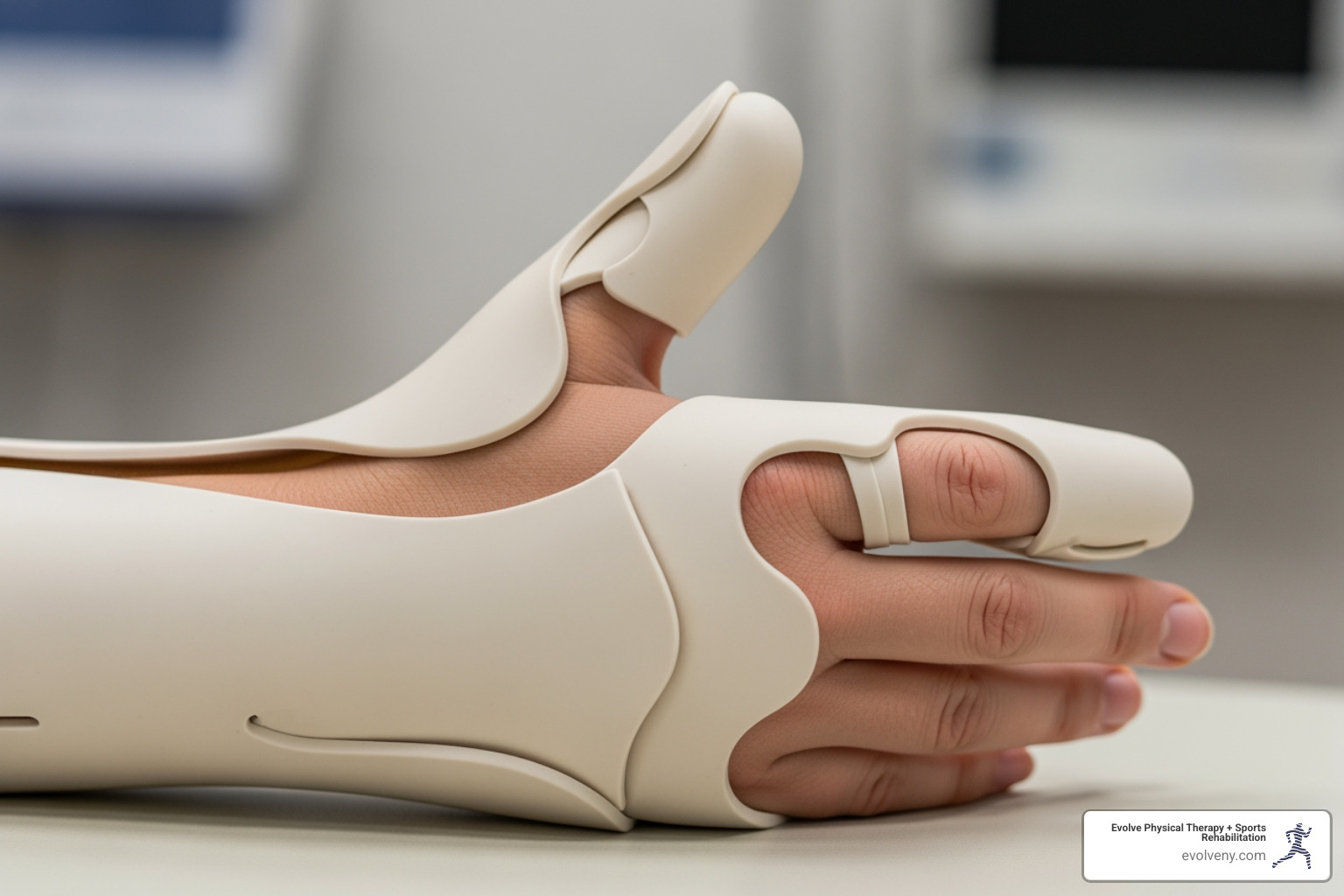
- Flexor and Extensor Tendon Repairs: This is a challenging recovery, often requiring 6-12 weeks of therapy. Tendons are prone to forming adhesions (internal scar tissue), so we follow a strict, phased approach. This starts with a protection phase in a splint, followed by supervised passive motion within days of surgery to prevent stiffness. Around the 4-week mark, you'll begin active motion, with lifting restrictions that may last up to 3 months. This detailed flexor tendon repair protocol offers a comprehensive look.
- Ligament Repairs: Therapy typically requires 4-8 weeks. The approach is similar: protect the repair, then gradually restore motion and build stability.
The key is respecting biology. Pushing too hard, too soon can undo the surgical work.
Recovery Duration for Complex Procedures (Fractures, Joint Replacement)
These surgeries involve extensive reconstruction and the longest rehabilitation commitment.
- Fracture Fixation: Expect 8-12 weeks of physical therapy. While the bone heals (a process that takes 8-12 weeks), we protect the fracture site while keeping other joints mobile. Once the bone is stable, we work aggressively to restore full motion and strength.
- Joint Replacement Surgery: Therapy for a finger or wrist joint replacement typically spans 3-6 months. We focus on restoring smooth, pain-free movement and functional strength.
- Severe Nerve Damage: This requires the most patience, with therapy lasting 6 months or longer. Nerves regenerate very slowly. Therapy focuses on nerve gliding, sensory re-education, and maintaining joint mobility while the nerve regrows.
These recoveries follow distinct biological healing phases, which guide the intensity of your exercises. You can learn more from this overview of post-operative treatment phases. The journey is long, but significant improvement is achievable with consistent effort.
Your Road to Recovery: What to Expect in Therapy
Recovery isn't just about healing an incision; it's about restoring movement, strength, and confidence. At Evolve Physical Therapy + Sports Rehabilitation in Brooklyn, our programs guide you through each stage of healing.
The Initial Phase (Weeks 1-3): Protection and Early Movement
The first few weeks are critical for protecting your surgeon's work while encouraging healing.
- Splinting and Protection: Your hand will likely be immobilized in a splint or cast to allow the surgical site to heal without disruption.
- Swelling and Pain Management: We'll teach you to manage swelling with elevation, ice, and compression. Gentle therapeutic techniques will help control discomfort.
- Wound Care: Keeping your incision clean and dry is vital to prevent infection and support the body's natural healing process.
- Early Gentle Motion: Depending on your surgery, we may begin passive range of motion exercises (where the therapist moves your hand) within days. This controlled movement is crucial for preventing stiffness.
The Repair Phase (Weeks 4-8): Regaining Motion and Function
Now, we shift to helping you actively reclaim your hand's movement.
- Weaning Off the Splint: You'll gradually transition from full-time splinting to more freedom of movement.
- Active Range of Motion: You'll begin moving your hand yourself with specific exercises to prevent permanent stiffness.
- Scar Massage: We'll teach you how to massage your scar to prevent adhesions and improve mobility.
- Light Functional Use: You'll start reintroducing your hand into very light daily activities, with gradual lifting restrictions (e.g., 2-4 pounds) introduced as you progress.
The Strengthening Phase (Weeks 9-12+): Building Back Strength

This phase focuses on building robust strength and preparing you for a full return to your life.
- Progressive Resistance: We'll use therapy putty, grip strengtheners, and light weights to rebuild muscle strength and endurance.
- Fine Motor Skills: Exercises like picking up small objects will help restore dexterity.
- Return to Work and Hobbies: We create a realistic plan for returning to your job, sports, or hobbies, often involving activity-specific drills. Most people can return to work within 6 to 14 weeks, though demanding jobs require more time.
Challenges That Can Affect Your Timeline
While we aim for a smooth recovery, challenges can arise and extend your therapy timeline.
- Infection: A risk with any surgery that delays healing. Contact your doctor for fever, worsening pain, or drainage.
- Complex Regional Pain Syndrome (CRPS): A rare but serious condition of chronic, disproportionate pain that requires specialized treatment.
- Excessive Scar Tissue or Stiffness: Sometimes, despite best efforts, stiffness or scar tissue can restrict movement and may require more intensive therapy or even a second procedure.
- Delayed Healing: This can result from poor nutrition, smoking, or chronic health conditions.
Your active participation is paramount. Patients who consistently perform their home exercises and follow restrictions have the best outcomes. You are the most important member of your recovery team.
Conclusion: Partnering for a Successful Recovery
Recovering from hand surgery is a process with a unique timeline for every patient. While we've explored how long physical therapy after hand surgery typically takes, what matters most is your patience, commitment, and partnership with the right therapy team. Each session and exercise brings you closer to regaining independence and returning to the activities you love.
At Evolve Physical Therapy + Sports Rehabilitation in Brooklyn, we are your partners in this journey. Our specialized therapists use a hands-on approach, creating customized programs for the intricate needs of hand recovery. We guide you from your initial evaluation to your final strengthening session, adjusting your plan and celebrating every milestone.
The most powerful tool in your recovery is you. Your dedication to home exercises and adherence to activity restrictions make all the difference. We've seen patients exceed expectations simply by trusting the process and putting in the daily effort. We are here to guide you, but your participation drives the healing.
If you are preparing for hand surgery or are currently in recovery, our team has the specialized knowledge and compassionate care to help you move forward with confidence. Your hand is remarkable, and with the right rehabilitation, we can help you open up its potential once again. Learn more about our post-operative physical therapy programs in Brooklyn and take the first step toward reclaiming the function you deserve.
