

Move Better, Live Better: Physical Therapy for Movement Disorders
Why Movement Disorder Physical Therapy is Essential for Better Living
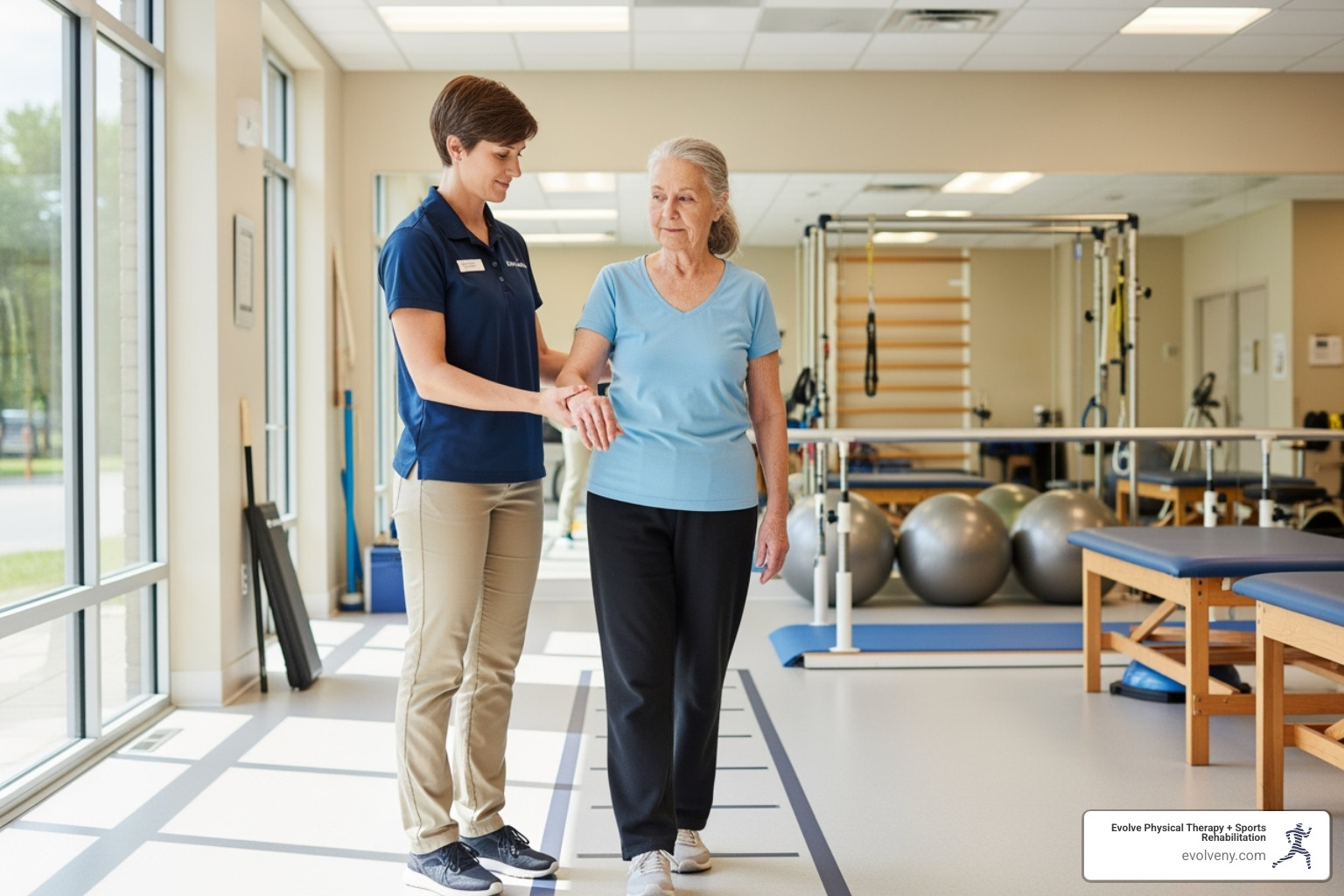
Movement disorder physical therapy is a specialized form of rehabilitation for people with neurological conditions that affect the brain's control of movement. It helps improve mobility, balance, and quality of life for those with symptoms like tremors, stiffness, or uncontrolled movements.
Quick Answer: What can movement disorder physical therapy do for you?
- Improve balance and coordination to reduce fall risk
- Increase strength and flexibility for better daily function
- Retrain movement patterns using specialized techniques
- Manage symptoms of conditions like Parkinson's, dystonia, and tremors
- Maintain independence longer through targeted exercises
- Reduce pain and stiffness associated with movement disorders
According to research, physical rehabilitation based on understanding of functional neurological disorders can result in symptom improvement in 60 to 70 percent of people. For Parkinson's disease, studies show that at least 2.5 hours of physical activity per week can slow symptom progression. The key is finding a specialized approach, as physical therapy for movement disorders isn't one-size-fits-all.
I'm Lou Ezrick, founder of Evolve Physical Therapy in Brooklyn. With nearly two decades of experience helping patients with complex neurological conditions, I know that effective movement disorder physical therapy requires both hands-on expertise and a deep understanding of the brain-body connection.
Understanding Movement Disorders
A movement disorder is a neurological condition that impairs the control and coordination of movement. The signals between the brain, nerves, and muscles don't flow smoothly, leading to movements that are either too much, too little, or abnormal.
Movement disorders are broadly categorized into two groups:
- Hypokinetic disorders: Characterized by slowness, stiffness, or loss of movement.
- Hyperkinetic disorders: Involve excessive, involuntary movements like tremors, tics, or jerks.
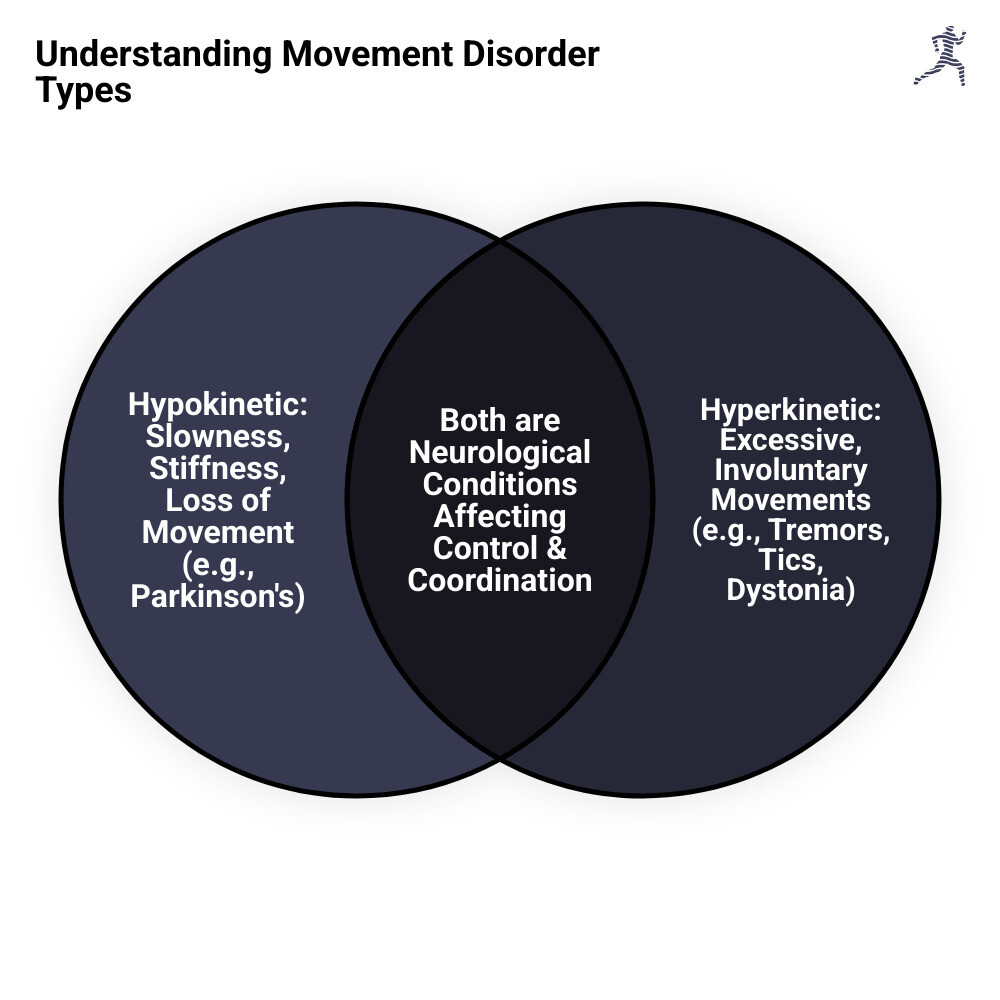
Understanding this distinction is crucial because it directly informs the type of movement disorder physical therapy interventions we use.
Main Types of Movement Disorders
A thorough neurological examination is key to diagnosing these conditions. Some of the more common types include:
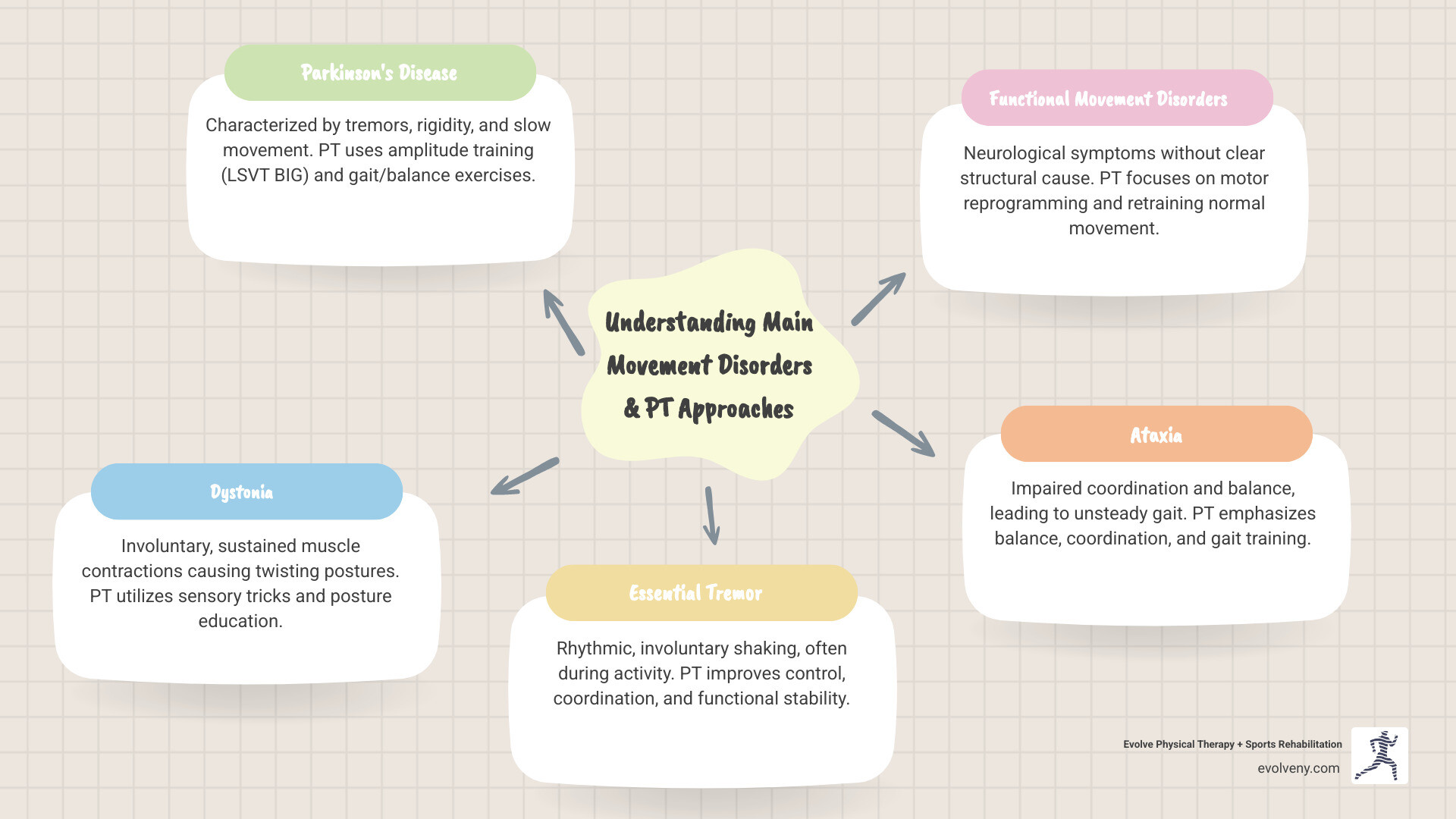
- Parkinson's Disease (PD): A well-known hypokinetic disorder, Parkinson's is characterized by tremors, bradykinesia (slow movement), rigidity, and postural instability. It is the second most common degenerative brain disorder in adults.
- Dystonia: This condition causes uncontrollable muscle contractions, leading to repetitive, twisting movements and painful postures. It can be localized or generalized.
- Essential Tremor: The most common movement disorder, it causes rhythmic, involuntary shaking, most often in the hands during voluntary movements like writing.
- Huntington's Disease (HD): A hereditary disorder combining cognitive issues, psychiatric disorders, and hyperkinetic movements such as chorea (involuntary jerking or writhing).
- Functional Movement Disorders (FMD): Also known as Functional Neurological Disorder (FND), FMD involves real symptoms like weakness or tremor that are not caused by structural damage but by a problem with how the nervous system functions. Specialized rehabilitation offers significant hope.
- Ataxia: This refers to a lack of muscle coordination during voluntary movements, resulting from damage to the cerebellum. It leads to an unsteady gait and difficulties with fine motor skills.
- Tics and Tourette Syndrome: Tics are sudden, repetitive movements or vocalizations. Tourette Syndrome is characterized by multiple motor tics and at least one vocal tic.
Understanding these conditions is the first step in providing effective movement disorder physical therapy. For a more general overview, you can find more information about What are movement disorders?.
The Crucial Role of Movement Disorder Physical Therapy
For those with a movement disorder, movement disorder physical therapy is a central part of regaining control and improving daily life. At Evolve Physical Therapy, our science-based approach focuses on preventing further issues, treating symptoms, and rebuilding physical abilities to maximize your independence and quality of life.
Our work is guided by neuroplasticity—the brain's ability to rewire itself. Through specific, repeated exercises, we help your brain improve movement control. This pairs with motor learning, where we help you refine physical skills through practice and feedback.
At Evolve Physical Therapy + Sports Rehabilitation, we create highly individualized treatment plans because there is no one-size-fits-all solution. To understand more about our general philosophy, visit our page on More info about Neurological Physical Therapy.
Goals of Movement Disorder Physical Therapy
We work with you to set clear, meaningful goals. Common objectives include:
- Improve balance and coordination to feel more stable and secure.
- Increase strength and flexibility to combat stiffness and weakness.
- Reduce fall risk by improving balance, gait, and reaction time.
- Maintain independence in daily activities and hobbies.
- Manage pain resulting from abnormal postures or muscle stiffness.
- Improve gait patterns for a safer, more efficient, and confident walk.
Our commitment to keeping you safe is a big part of what we do. For more details, check out our page on More info about Physical Therapy for Fall Prevention.
The Physical Therapy Evaluation Process
Your journey with movement disorder physical therapy at Evolve begins with a thorough evaluation to understand your unique challenges and strengths. This comprehensive first step includes:
- Initial Assessment: We discuss your medical history, current symptoms, and what you hope to achieve.
- Movement Analysis: Our expert therapists observe you performing activities like walking and reaching to pinpoint problematic movement patterns, whether they are hypokinetic (too slow) or hyperkinetic (involuntary).
- Strength and Balance Testing: We use objective tests to measure muscle strength and assess fall risk, identifying specific weaknesses or balance system issues.
- Flexibility and Range of Motion Assessment: We check your joints and muscles for stiffness that may limit movement and cause pain.
- Goal Setting: Based on all findings, we collaborate with you to create realistic and meaningful goals for your therapy.
- Functional Outcome Measures: We use standardized tests to track your progress over time, ensuring our treatments are effective and allowing us to adjust your plan as needed.
Common Physical Therapy Interventions and Techniques
After your evaluation, we develop a personalized treatment plan using evidence-based techniques. Our hands-on approach combines remediation (restoring normal movement) with compensation (teaching adaptive strategies) to maximize your function.

A core part of our methodology is task-specific training. We practice movements relevant to your daily life with high repetition and intensity, leveraging neuroplasticity to optimize recovery.
Interventions for Parkinson's Disease
We use specialized techniques to address the challenges of Parkinson's disease:
- Amplitude Training (LSVT BIG): This program uses large, exaggerated movements to retrain muscles and help the brain recalibrate its sense of normal movement size.
- Reciprocal Pattern Exercises: We use activities like cycling or focused walking to reinforce natural, reciprocal movements like arm swing.
- Gait and Balance Training: We focus on improving walking speed and stability, using cueing strategies to overcome freezing of gait and reduce fall risk.
- Flexibility and Stretching: Regular stretching is emphasized to counteract stiffness in key muscle groups and maintain range of motion.
- Strength Training: Resistance training is used to build strength and power, which can reduce the severity of motor symptoms.
We offer specialized programs like Rock Steady Boxing for Parkinson's, which uses intense, varied exercise to combat PD symptoms. Learn more about our approach to More info about Physical Therapy for Parkinson's Disease.
Interventions for Functional Movement Disorders (FMD)
Our movement disorder physical therapy for FMD focuses on "motor reprogramming" to help the brain unlearn abnormal patterns and relearn normal, automatic movement.
- Retraining Normal Movement: We use exercises that progress from simple to complex to re-establish typical movement patterns.
- Distraction Techniques: We use distraction during motor tasks to help bypass the conscious effort that can worsen symptoms.
- Positive Reinforcement: We focus on and celebrate therapy-related improvements to reinforce desired movement patterns.
- Avoiding Adaptive Equipment (when appropriate): To prevent deconditioning, we encourage independent movement, avoiding over-reliance on assistive devices.
Our approach aligns with Consensus Recommendations for FND Physiotherapy.
Interventions for Balance and Dystonia
These conditions require specific, targeted interventions:
- Vestibular Rehabilitation: For dizziness or vertigo, we use exercises to improve the inner ear system and gaze stabilization.
- Sensory Tricks (Alleviating Maneuvers): For dystonia, we teach gentle touches or positions that can temporarily alleviate involuntary muscle contractions.
- Posture Education: We work on retraining posture to improve alignment, reduce discomfort, and improve mobility.
- Prolonged Stretching and Splinting: For severe muscle overactivity, we may use prolonged stretching or splinting to increase flexibility.
For more details on how we address these issues, please visit our page: More info about Balance and Vertigo Physical Therapy.
Benefits, Evidence, and the Multidisciplinary Team
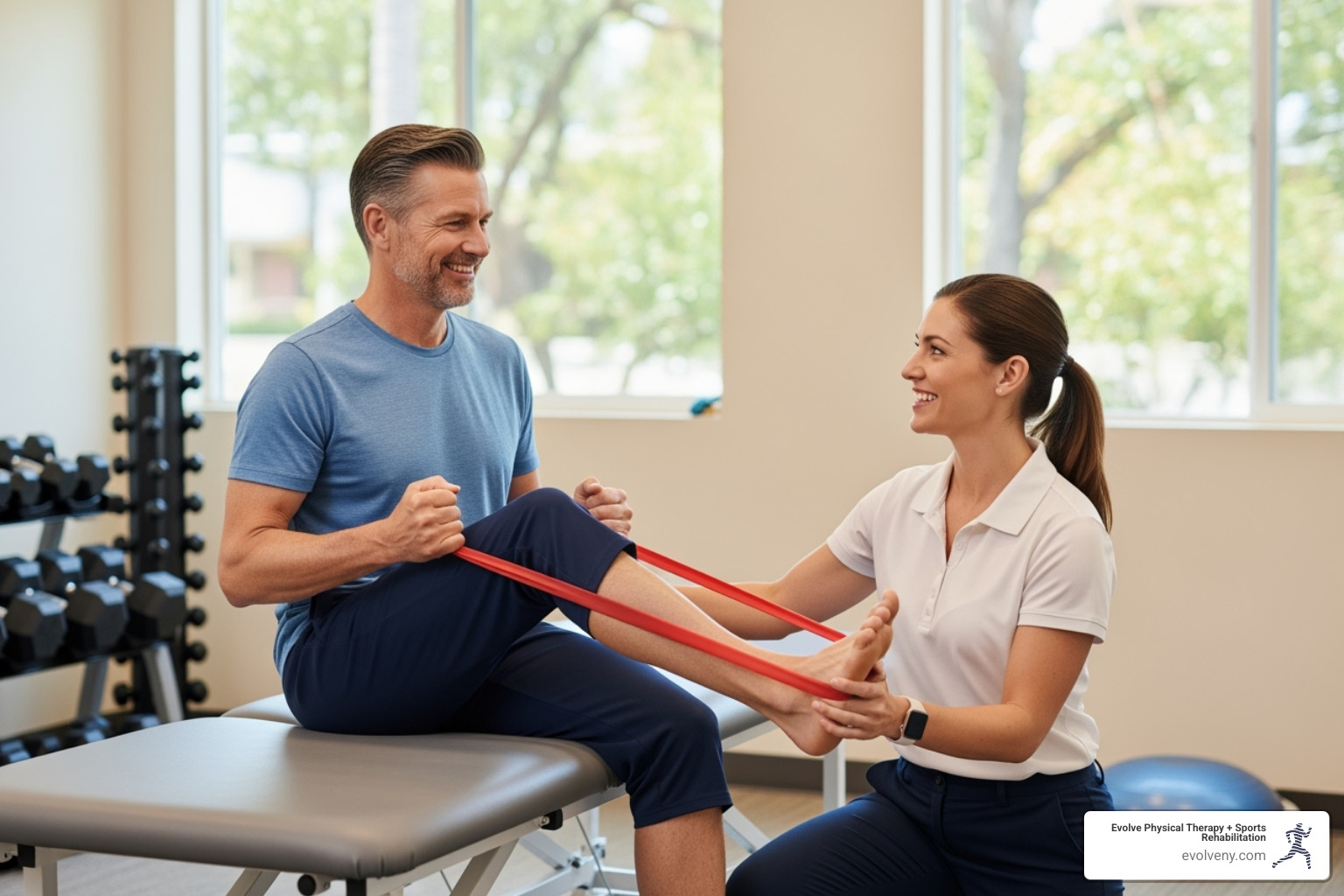
Starting movement disorder physical therapy opens the door to profound benefits that can touch every part of your life. The power of this therapy lies in improved mobility, improved safety, and increased confidence. As you become more independent, caregiver burden is often reduced. Our ultimate goal is to improve your quality of life and empower you with strategies for long-term management.
Evidence-Based Movement Disorder Physical Therapy for Specific Conditions
The effectiveness of movement disorder physical therapy is strongly supported by research. We rely on science to ensure you receive the best possible care.
For Functional Movement Disorders (FMD), studies show that specialized physical therapy can lead to symptom improvement for 60 to 70 percent of individuals. Intensive, goal-oriented programs have demonstrated significant, long-lasting success. One study found that after a one-week program, 73.5% of patients were "markedly improved," with 60.4% maintaining that improvement years later.
For Parkinson's Disease (PD), the evidence is just as compelling. High-intensity training is proven to improve walking and movement, and inpatient rehabilitation can slow the decline in motor function. The American Physical Therapy Association (APTA) provides evidence-based guidelines to ensure top-notch care. You can explore their recommendations here: APTA Clinical Practice Guideline for Parkinson Disease.
The Role of PT in a Multidisciplinary Team
Managing a movement disorder is a team effort. Movement disorder physical therapy is most effective when integrated with other healthcare professionals to provide holistic care. Our physical therapists work closely with:
- Neurologists: To align therapy with your medical plan, including medications or treatments like Deep Brain Stimulation.
- Occupational Therapists (OTs): To help with daily activities like dressing, cooking, and managing fatigue.
- Speech-Language Pathologists (SLPs): To address difficulties with speech and swallowing.
- Physiatrists: Rehabilitation doctors who often oversee the entire rehabilitation plan.
- Neuropsychologists: To help with the cognitive and emotional challenges of living with a movement disorder.
This integrated care approach leads to better results and a stronger support system, a model supported by research such as this Systematic review of integrated care in Parkinson's.
Finding a Therapist and Future Directions
Choosing the right physical therapist is a critical step. You need a specialist who understands the nuances of neurological conditions and can address both the physical and psychological impacts of a movement disorder.

How to Find a Specialist Physical Therapist
When looking for an expert in movement disorder physical therapy, we recommend the following:
- Get Recommendations: Ask your neurologist for referrals to physical therapists specializing in neurological conditions.
- Ask About Experience: Inquire about the therapist's specific experience and training with conditions like Parkinson's, dystonia, or FMD.
- Check for Credentials: Look for board-certified clinical specialists in neurologic physical therapy (NCS) or those with relevant residency/fellowship training.
- Use Online Directories: The APTA's "Find a PT" tool can help you locate qualified professionals. You can find their tool here: Find a PT Near You with APTA's tool.
- Communicate Your Goals: Discuss your concerns and goals during an initial consultation to ensure a good fit.
At Evolve Physical Therapy + Sports Rehabilitation, our team in Brooklyn (Marine Park, Gravesend, Midwood, Park Slope, Mill Basin) is experienced in treating complex neurological conditions.
Advancements in Neurorehabilitation
The field of neurorehabilitation is constantly evolving, bringing exciting new tools to movement disorder physical therapy:
- Wearable Technology: Smart sensors provide real-time feedback on movement for more precise, personalized interventions.
- Virtual Reality (VR): VR creates immersive, safe, and motivating environments for practicing complex movements and balance tasks.
- Noninvasive Brain Stimulation: Techniques like TMS and tDCS are being studied to improve motor learning and neuroplasticity alongside physical therapy.
- Telerehabilitation: Remote therapy sessions increase access to specialized care for those who have difficulty traveling to a clinic.
These advancements promise to improve the effectiveness and accessibility of therapy. For more information, you can refer to relevant Research on neurorehabilitation advancements.
Conclusion: Take Control of Your Movement
Living with a movement disorder is challenging, but you are not alone, and there is significant hope for improvement. Here at Evolve Physical Therapy + Sports Rehabilitation, we want you to know that you can feel better and move more freely.
Movement disorder physical therapy is a partnership. We provide the tools, strategies, and personalized guidance to empower you to take charge of your movement, manage your symptoms, and maintain your independence. Our unique approach to evaluation, healing, and strengthening is designed to help you move better, so you can live better.
Whether you're navigating Parkinson's disease, FMD, dystonia, or another condition, proactive, specialized physical therapy can make a huge difference. Our innovative programs, like our popular Rock Steady Boxing for Parkinson's patients, show our dedication to providing effective care.
Don't let your symptoms dictate your life. Take the first step toward feeling more in control and improving your well-being.
If you're in Brooklyn—including Marine Park, Gravesend, Midwood, Park Slope, or Mill Basin—we invite you to find how our specialized movement disorder physical therapy can help. Ready to start your journey? Learn more by visiting our page on Parkinson's Physical Therapy in Brooklyn. We're excited to help you evolve!
