

Is Pediatric PT Right for Your Child? A Comprehensive Guide
Why Understanding Pediatric PT Matters for Your Child's Development
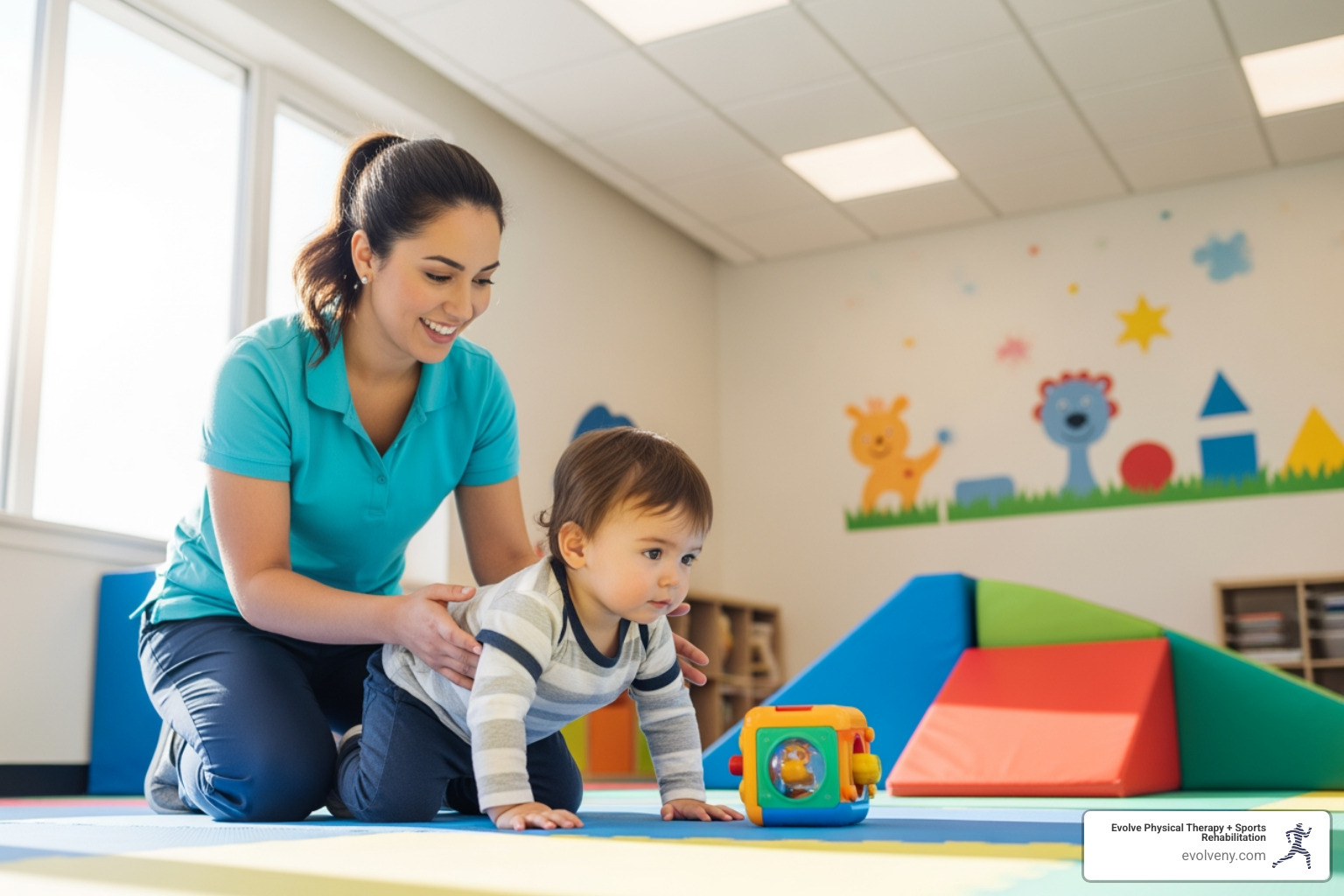
Pediatric pt (pediatric physical therapy) is a specialized service helping children from birth to 21 improve their movement, strength, and participation in daily activities. Whether a child has a developmental delay, an injury, or a diagnosed condition, a pediatric physical therapist works with the family to help them reach their maximum potential for independence.
Pediatric physical therapy addresses a wide range of challenges, including:
- Developmental delays (e.g., not rolling, sitting, or walking on time)
- Neurological and genetic conditions (e.g., cerebral palsy, Down syndrome)
- Orthopedic issues (e.g., sports injuries, torticollis, gait problems)
- Coordination and balance difficulties
As movement experts, pediatric physical therapists use hands-on care, play-based activities, and family education to improve a child's motor skills, strength, and endurance. The ultimate goal is to promote a child's ability to function independently and participate actively in home, school, and community life.
As the founder of Evolve Physical Therapy + Sports Rehabilitation, I've seen how pediatric pt helps children overcome physical challenges. Our patient-first approach supports families in understanding how physical therapy can make a meaningful difference in their child's development.
Understanding Pediatric Physical Therapy: Goals and Benefits
While many associate physical therapy with adult rehabilitation, pediatric pt is a specialized field focused on the unique needs of growing bodies. At Evolve Physical Therapy + Sports Rehabilitation, we see ourselves as movement experts for children, from newborns to young adults. Our therapists have specialized knowledge in motor development, body function, and strength, building a foundation for lifelong health.
This specialized care helps children improve range of motion, build strength, and refine movement patterns, making everyday activities easier. In some cases, it can even be an alternative to more invasive treatments. For more general information, you can find resources about pediatric physical therapy at ChoosePT.com.
The Primary Goals of Pediatric PT
The core goal of pediatric pt is to help children reach their maximum potential for independence and participation in life. This is achieved by focusing on several key areas:
- Improving mobility: We help children learn to roll, crawl, walk, and run, building the strength and coordination needed to explore their world.
- Restoring function: After an injury, illness, or surgery, we work to help children regain lost physical abilities.
- Alleviating discomfort: Using hands-on techniques and therapeutic exercises, we help manage pain from injuries or chronic conditions.
- Preventing disability: Early intervention can minimize the progression of disabilities and promote healthier long-term movement patterns.
- Reaching developmental milestones: We focus on fundamental gross motor skills like sitting, standing, and walking, which are the building blocks for all other physical activities.
- Increasing participation: We want children to fully engage in daily life, from playing with friends to keeping up in gym class.
At Evolve Physical Therapy + Sports Rehabilitation, we are committed to helping Brooklyn families achieve these goals. You can find more info about our pediatric physical therapy services on our website.
Long-Term Benefits for Children and Families
The impact of pediatric pt extends far beyond the therapy session, creating lasting positive changes.
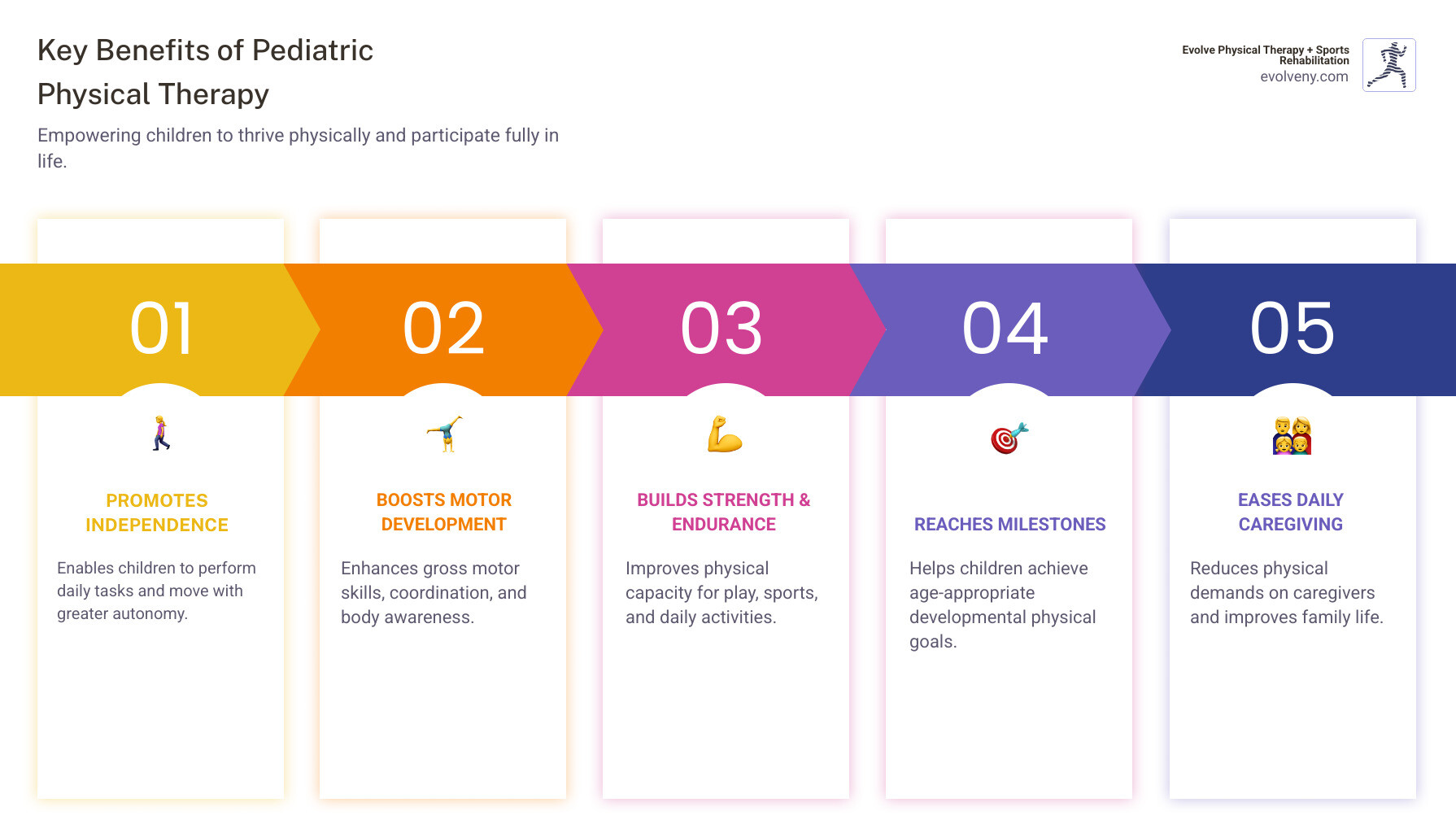
Promoting independence is a key benefit, as children gain the self-reliance and confidence to perform daily tasks on their own. This, in turn, leads to easier daily caregiving for families, reducing stress. As children improve their motor skills, they open up new learning opportunities and can better engage in social and academic settings.
Therapy builds strength and endurance, supporting sustained physical activity and preventing fatigue. As children overcome physical obstacles, their confidence soars, making them more willing to try new things. Perhaps most importantly, pediatric pt helps children develop a love for movement, fostering active lifestyles that promote long-term health and well-being.

Does Your Child Need a Pediatric PT? Key Signs and Conditions
As a parent, you are the expert on your child. If you notice they are struggling with movements that seem to come easily to their peers, it may be time to consider pediatric pt. This service is for children from birth to 21 who have developmental delays, injuries, or diagnosed disorders.
In New York, you can often seek a physical therapy evaluation without a physician referral, but it's wise to check your insurance policy's requirements. We offer initial consultations to discuss your concerns and determine if a full evaluation is needed.
Developmental Milestones and Red Flags
While every child develops at their own pace, there are general timelines for key physical skills. Not meeting these milestones can be a red flag.
- Key Milestones: Babies typically roll by 5 months, sit by 7 months, crawl by 8 months, pull to stand by 9 months, and walk independently around 12-15 months.
- When to Seek Help: Consider an evaluation if your child is more than two months behind on a milestone with no sign of attempting it.
Other red flags include:
- Asymmetry or weakness on one side of the body.
- Persistent toe walking after age two.
- Frequent falls or unusual clumsiness compared to peers.
- Difficulty with stairs, climbing, or keeping up during active play.
Trust your instincts. Early intervention can make a tremendous difference, so don't hesitate to ask questions.
Common Conditions Treated by a Pediatric PT
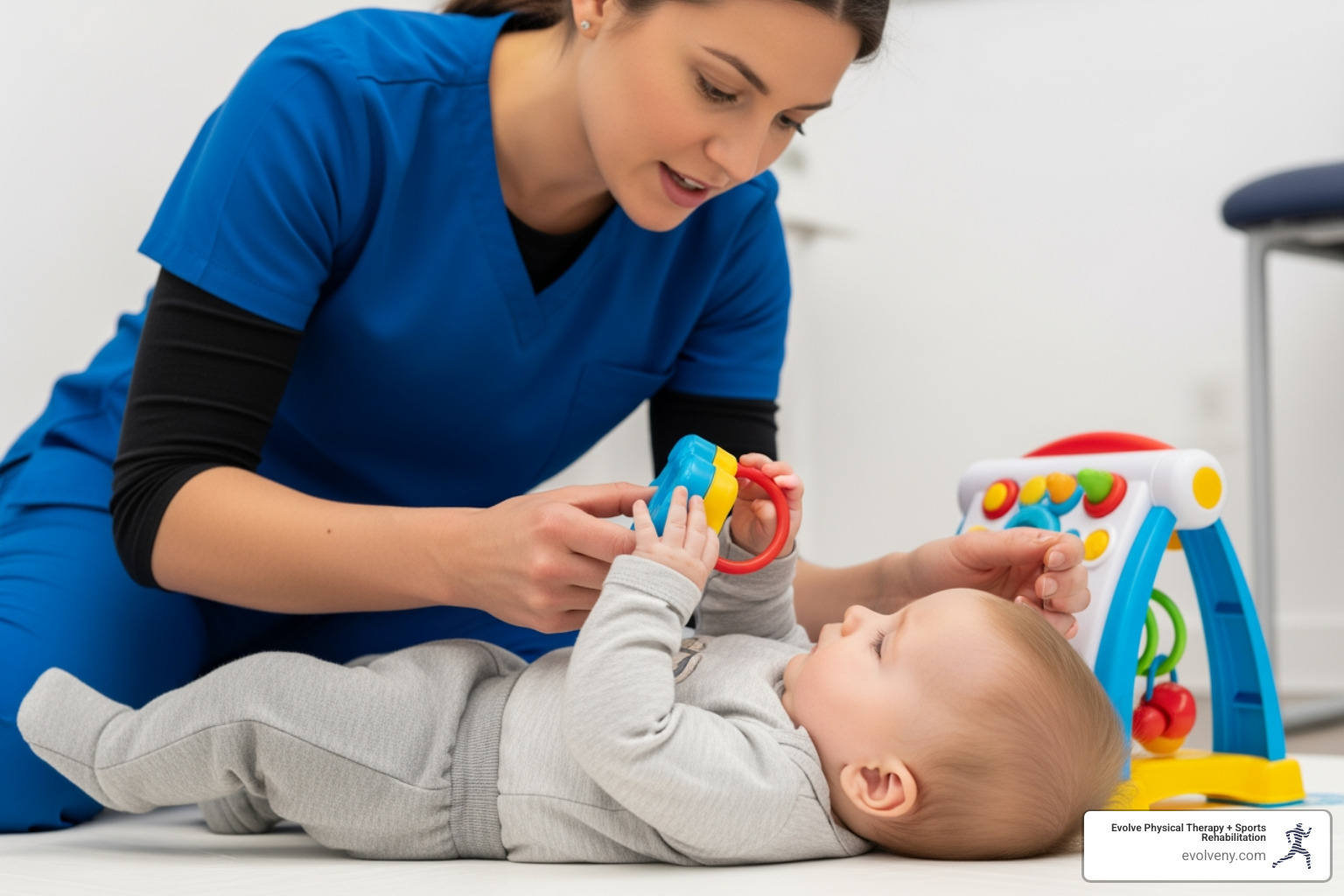
Our therapists in Brooklyn work with children facing a wide variety of physical challenges, tailoring our approach to each child's needs.
- Cerebral Palsy: We work to improve muscle control, improve movement, and prevent joint stiffening.
- Spina Bifida: Therapy focuses on improving mobility, strengthening muscles, and using assistive devices.
- Down Syndrome & Genetic Disorders: We help promote motor development and improve muscle tone.
- Muscular Dystrophy: PT helps maintain muscle function and manage symptoms to improve quality of life.
- Autism Spectrum Disorders: We help improve balance, coordination, and body awareness.
- Torticollis: Gentle stretches and exercises correct an infant's head tilt and prevent related developmental issues.
- Orthopedic Injuries: We help young athletes and active children recover from fractures, sprains, and other injuries. Learn about pediatric sports PT for more on this specialty.
- Developmental Coordination Disorder (DCD): We use task-oriented approaches to improve coordination and motor skills.
- Brain Injuries & Hydrocephalus: Therapy helps restore movement, balance, and coordination.
What to Expect: A Look Inside a Pediatric PT Session
Your first pediatric pt session at Evolve Physical Therapy + Sports Rehabilitation begins with a comprehensive evaluation. Our therapist will observe how your child moves, test their strength and flexibility, and assess their balance and coordination. We'll also discuss your child's health history and your family's specific goals.
Based on this assessment, we create an individualized treatment plan custom to your child. This plan outlines the therapeutic strategies, exercises, and timeline for progress. Our approach centers on hands-on care, where therapists physically guide your child's movements to help them learn new patterns and build strength.
Patient education is also a key component. We'll teach you activities to practice at home, turning daily routines into therapeutic opportunities. This helps ensure progress continues between sessions. For more information, APTA Pediatrics offers family resources that can help you prepare.
The Power of Play in Therapy
The best therapy doesn't feel like work, which is why play is our most powerful tool in pediatric pt. Our therapists are experts at disguising hard work as fun.
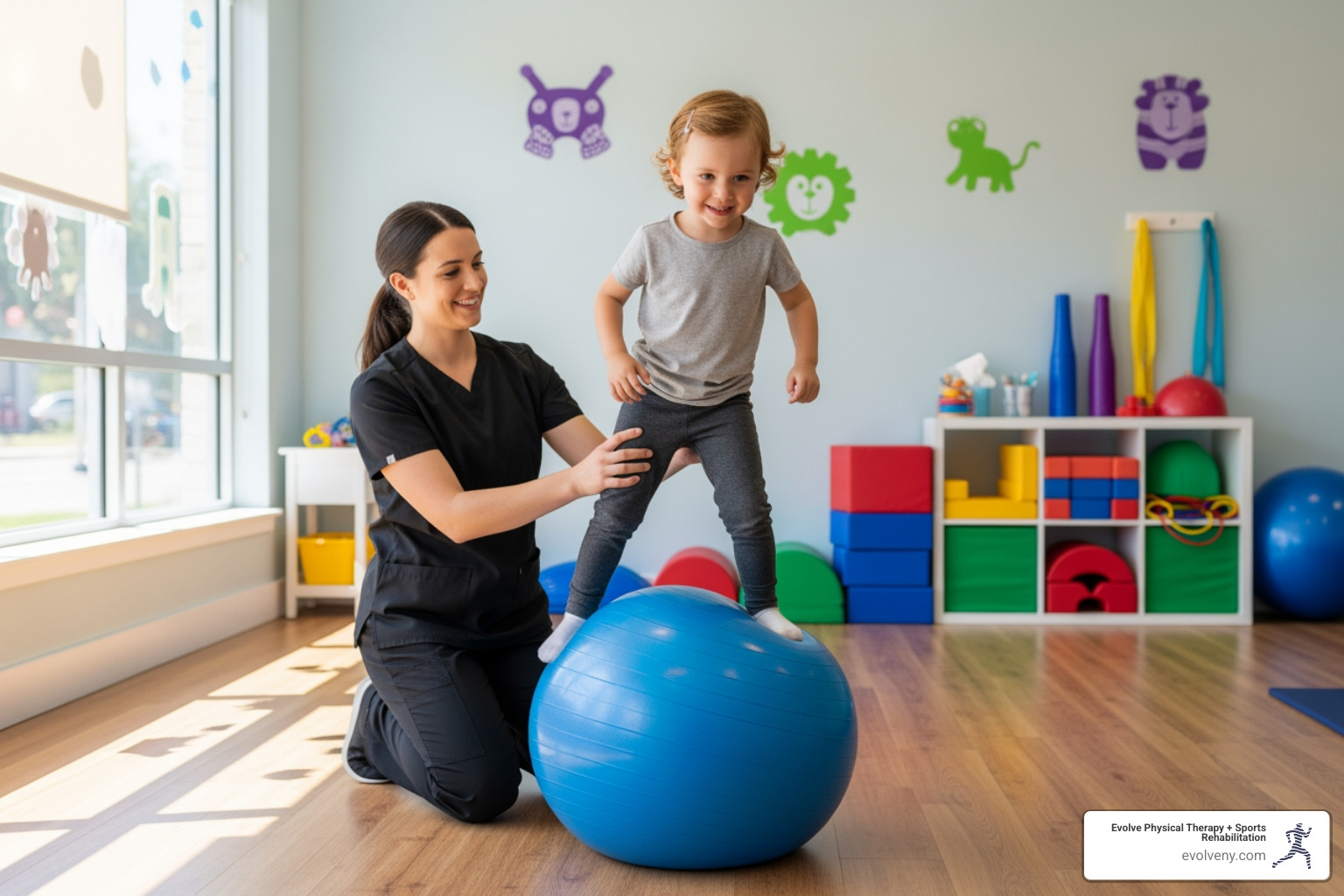
We design age-appropriate games that target specific goals. An exercise ball builds core strength, an obstacle course improves motor planning, and tossing bean bags refines hand-eye coordination. These play-based exercises keep children motivated and engaged. By tapping into a child's natural curiosity, we help them build coordination and balance while they are simply having a great time. The skills learned in our clinic, like balance and strength, transfer directly to the playground and home.
Where Does Therapy Happen? From Clinics to Classrooms
While many sessions take place in our welcoming Evolve Physical Therapy + Sports Rehabilitation clinics in Brooklyn—located in Marine Park, Gravesend, Midwood, Park Slope, and Mill Basin—pediatric pt is not limited to a clinical setting.
Effective therapy often happens in a child's natural learning environment. This can include:
- Home-based therapy: Especially valuable for infants and young children, allowing therapists to integrate activities into daily routines.
- Child care centers and preschools: Therapists can address needs within the child's educational and social setting.
- School-based services: Under the Individuals with Disabilities Education Act (IDEA), eligible children receive PT at school to help them access their education.
- Hospitals: Critical for children recovering from surgery, illness, or those with complex medical needs.
- Community settings: Therapy can occur in parks or recreational facilities to work on real-world skills.
This flexibility ensures that therapy is a natural part of a child's life, helping skills transfer seamlessly into their everyday world.
The Collaborative Care Model
Effective pediatric pt is a team effort. At Evolve Physical Therapy + Sports Rehabilitation, we use a collaborative care model that brings together families, therapists, and other professionals like pediatricians, teachers, and speech pathologists. This ensures your child receives consistent, coordinated support.
Family-centered care is the heart of our practice. We recognize that you know your child best and view parents as equal partners in the therapeutic process. Through shared decision-making, we develop treatment plans with you, ensuring the goals are meaningful and fit into your real life. Our therapists also serve as advocates, helping you steer healthcare and educational systems to ensure your child's needs are met.
How Therapists Work with Families and Caregivers
You are the most important member of your child's therapy team. We empower you by providing:
- A Home Exercise Program (HEP): We design fun, simple activities that fit naturally into your daily routine, turning playtime or daily tasks into therapeutic moments.
- Guidance on Adapting Toys and Routines: Simple adjustments to how your child sits or plays can significantly impact their development.
- Parent Education: We explain the why behind our methods so you can apply the principles throughout your child's day. We encourage questions and provide clear, jargon-free answers.
- Collaborative Goal-Setting: We work with you to set goals that address your family's priorities and improve your child's quality of life.
We also help coordinate services with other professionals to ensure everyone is on the same page. You can learn more about our approach to pediatric physiotherapy on our blog.
The Experts Behind the Care: Training and Licensing
Providing pediatric pt requires extensive education and specialized training. Every physical therapist holds a Doctor of Physical Therapy (DPT) degree, a three-year post-baccalaureate program. They must also pass a national exam and meet state licensure requirements to practice.
Many therapists pursue further specialization through clinical residencies in pediatrics. The highest level of specialization is becoming a Board-Certified Pediatric Clinical Specialist (PCS), a certification that signifies advanced knowledge and skill. All pediatric physical therapists also engage in ongoing education to stay current with the latest research and best practices. Our team at Evolve Physical Therapy + Sports Rehabilitation brings this expertise and a commitment to patient-first care to every child we see in Brooklyn.
Frequently Asked Questions about Pediatric PT
It's natural to have questions when considering pediatric pt for your child. Here are answers to some of the most common concerns we hear from families in Brooklyn.
What is the difference between pediatric PT and occupational therapy (OT)?
This is a very common question. While pediatric pt and occupational therapy (OT) often work together, they have different focuses.
- Pediatric PT focuses on gross motor skills—the large muscle movements for rolling, sitting, walking, running, and climbing. We work on whole-body movement, strength, balance, and mobility.
- Occupational Therapy (OT) focuses on fine motor skills (like holding a pencil or buttoning a shirt), sensory processing, and activities of daily living (ADLs) like dressing and feeding.
For a child with cerebral palsy, a PT might work on their walking pattern while an OT helps them learn to use utensils. At Evolve Physical Therapy + Sports Rehabilitation, our team coordinates with OTs to provide comprehensive care.
How long will my child need physical therapy?
The duration of pediatric pt is unique to each child. It depends on the condition being treated, its severity, the child's age, and consistency with therapy. A typical frequency is one to two times per week.
Some conditions, like torticollis or a minor sports injury, may only require a few months of therapy. Other children with chronic conditions like cerebral palsy or muscular dystrophy may benefit from ongoing therapy throughout their development to maintain function and adapt to growth.
We conduct regular re-evaluations to track progress and adjust the treatment plan. Consistency with sessions and home exercises is key to making faster progress.
Are pediatric PT services covered by insurance?
Yes, pediatric pt is covered by most private and public health insurance plans, but coverage details vary. It's important to check your specific plan for requirements like co-pays, deductibles, or session limits.
- Private Insurance: Most plans offer coverage, but may require a doctor's referral or pre-authorization. Our administrative team can help you verify your benefits.
- Public Programs: Medicaid and Child Health Plus in New York provide coverage for pediatric PT.
- Educational System: Under the Individuals with Disabilities Education Act (IDEA), eligible children from birth to 21 have a legal right to necessary PT services, often provided through early intervention or in schools at no direct cost to the family.
While New York allows direct access to physical therapy, your insurance plan might still require a physician's referral for reimbursement. We can help you steer these requirements to make care as accessible as possible.
Conclusion
At Evolve Physical Therapy + Sports Rehabilitation, we believe every child deserves to move freely and participate fully in life. Pediatric pt is about more than treating physical issues—it's about opening doors to independence, confidence, and new possibilities.
As we've discussed, skilled therapists use play-based care to help children overcome developmental delays, recover from injuries, and manage chronic conditions. The benefits are profound, building self-esteem, creating learning opportunities, and easing daily challenges for families.
Early intervention makes all the difference. If you've noticed potential red flags in your child's development, trust your instincts. Reaching out for an evaluation is a powerful first step toward helping your child thrive.
Our team at Evolve Physical Therapy + Sports Rehabilitation is dedicated to serving children across Brooklyn, with locations in Marine Park, Gravesend, Midwood, Park Slope, and Mill Basin. We are committed to helping your child reach their maximum potential, one milestone at a time.
Take the next step for your child's development with our pediatric physical therapy in Brooklyn
