

Strengthen and Restore: Effective Physical Therapy for Your Hands
Why Your Hands Deserve Specialized Care

Your hands perform thousands of precise movements daily. When pain, stiffness, or weakness makes simple tasks like opening a jar or typing a challenge, physical therapy for hands can help. This specialized care uses targeted exercises, manual techniques, and custom treatments to restore function and improve your quality of life.
Hand and wrist symptoms are common, with work-related issues accounting for nearly one-third of all missed work days. Hand therapy effectively treats a range of conditions, including:
- Arthritis: Reduces pain and can improve grip strength by up to 25%.
- Carpal Tunnel Syndrome: Relieves nerve compression and numbness.
- Post-Surgery Recovery: Guides healing and restores mobility.
- Fractures and Injuries: Rebuilds strength and movement.
- Stroke Recovery: Retrains coordination and movement patterns.
- Repetitive Strain Injuries: Addresses work-related disorders.
I'm Lou Ezrick, founder of Evolve Physical Therapy. For nearly two decades, I've helped patients restore hand function with personalized, evidence-based rehabilitation. My experience shows that a custom approach to physical therapy for hands is the key to regaining the strength and dexterity you need.
Understanding Hand Therapy and Who It Helps
Physical therapy for hands is a specialized field of rehabilitation focusing on the entire upper extremity—from your shoulder to your fingertips. It combines detailed evaluation with targeted treatment to help you return to the activities that matter most.
At Evolve Physical Therapy + Sports Rehabilitation, we see patients from Marine Park, Gravesend, and across Brooklyn with a wide range of challenges. Common conditions we treat include:
- Arthritis: Both osteoarthritis and rheumatoid arthritis cause pain and stiffness. Targeted exercises can improve grip strength by up to 25% and significantly reduce pain.
- Carpal Tunnel Syndrome: This condition causes numbness and weakness from nerve compression. Therapy can alleviate symptoms and strengthen wrist-supporting muscles.
- Post-Surgery Recovery: After procedures like tendon repair or fracture fixation, therapy is crucial for managing scar tissue and restoring movement.
- Fractures and Tendon Injuries: Specialized rehabilitation helps regain range of motion and strength after a bone has healed or a tendon is injured.
- Stroke Recovery: We work to retrain movement patterns and improve coordination, tapping into the brain's ability to relearn skills.
- Work-Related Disorders: Upper limb disorders are a leading cause of missed work, and government data shows they are among the most common work-related health issues. We address repetitive strain injuries and provide ergonomic guidance to prevent future problems.
What is a Certified Hand Therapist (CHT)?
A Certified Hand Therapist (CHT) is a physical or occupational therapist with advanced expertise in treating upper extremity conditions. Becoming a CHT is a demanding process that requires:
- At least three years of practice.
- A minimum of 4,000 hours of direct, hands-on treatment for hand and upper extremity disorders.
- Passing a comprehensive certification exam.
- Ongoing education to recertify every five years.
CHTs are uniquely qualified to evaluate and treat complex conditions, design custom interventions, and work closely with physicians to optimize your recovery.
The Benefits of Hand Therapy for Arthritis and Other Conditions
Specialized physical therapy for hands offers significant advantages that directly improve your function and quality of life.
- Pain Reduction: Targeted exercises and manual techniques decrease inflammation and alleviate discomfort.
- Improved Range of Motion: Stretching and mobilization exercises loosen stiff joints and increase flexibility.
- Increased Grip Strength: Strengthening programs are proven to build muscle, which can be transformative for daily tasks. For those with hand osteoarthritis, exercises can improve grip by up to 25%.
- Improved Dexterity: Therapy improves fine motor skills and coordination for intricate tasks.
- Joint Protection Education: Learning proper body mechanics helps manage chronic conditions like arthritis and prevent flare-ups.
- Injury Prevention: By strengthening muscles and improving movement patterns, hand therapy reduces the risk of future injuries.
The Core Components of Physical Therapy for Hands
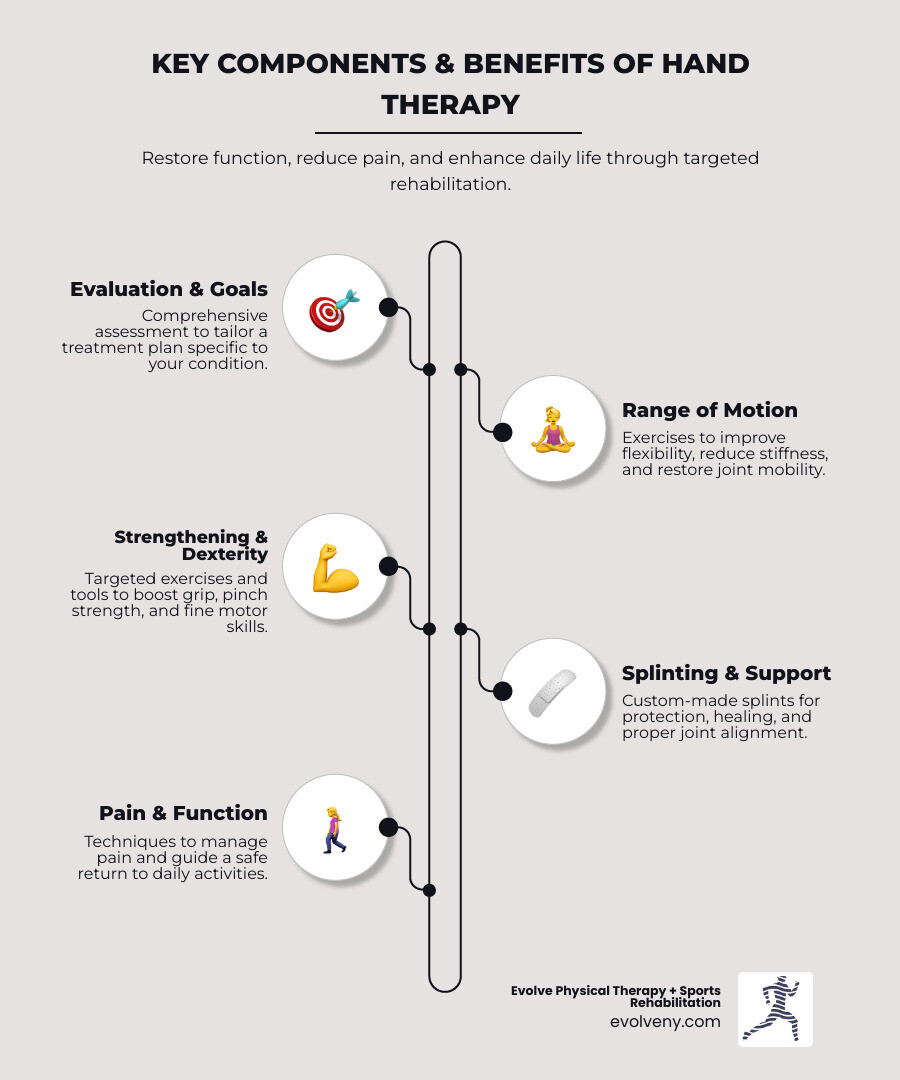
Your journey with physical therapy for hands at Evolve Physical Therapy is entirely personalized. We begin with a comprehensive evaluation to review your medical history, assess your physical condition, and understand your goals. We test your range of motion, strength, and sensation to identify specific limitations.
Based on this evaluation, we create a personalized treatment plan that may include:
- Manual Techniques: Skilled, hands-on therapy to mobilize stiff joints, massage tight tissues, and reduce swelling.
- Therapeutic Exercises: Carefully selected movements to rebuild strength, restore flexibility, and improve coordination.
- Modalities: Tools like heat, ice, or electrical stimulation to manage pain and promote healing.
Range of Motion and Stretching Exercises
Before you can build strength, your hand must move freely. Stretching improves flexibility, reduces stiffness, and ensures tendons glide smoothly.
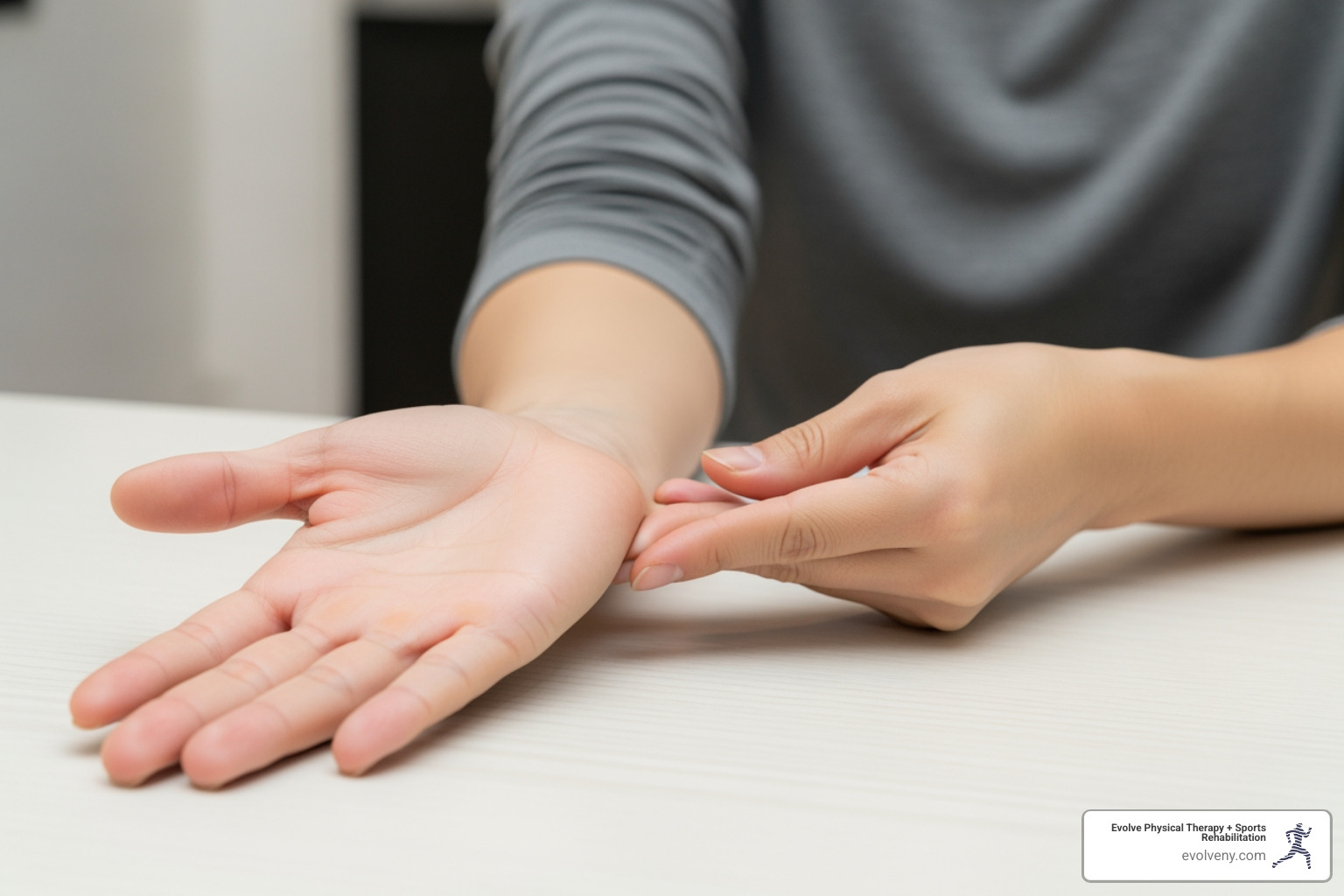
We guide you through gentle, effective movements. Examples include tendon gliding exercises to help tendons move freely, the prayer stretch to release wrist tension, and wrist bends to restore flexibility in all directions. The key is to move slowly and smoothly, without sharp pain.
Strengthening and Dexterity Exercises
Once your range of motion improves, we focus on building strength to improve your grip and pinch. For stroke survivors, these exercises also stimulate neuroplasticity—the brain's ability to rewire itself and relearn skills. We often use functional tasks like unscrewing caps or manipulating coins to make therapy directly applicable to your daily life.
Common tools we use in our Brooklyn clinic include:
- Therapy putty and stress balls for grip strength.
- Hand grippers and elastic bands for adjustable resistance.
- Household items like coins, clothespins, or beads to sharpen dexterity and coordination.
We carefully match the resistance to your ability, ensuring you are challenged but never overwhelmed.
The Role of Custom Splints and Orthotics
Sometimes, your hand needs extra support to heal or function correctly. Custom splints (orthotics) can provide protection after surgery, support weak joints, or reduce stress on painful areas, which is especially helpful for arthritis.
Unlike off-the-shelf braces, our Certified Hand Therapists fabricate custom orthotics in our Brooklyn clinics. We mold materials directly to your hand and arm, ensuring a comfortable and precise fit. This custom approach maximizes your recovery by holding your hand in the optimal position for healing and function, making it a vital tool in your rehabilitation.
Your At-Home Hand Exercise Program: Safety and Technique
An effective physical therapy for hands program continues at home. Consistency is key—regularly performing your exercises, even for a few minutes daily, yields better results than infrequent, long sessions.

Proper technique is just as important as consistency. Always warm up your hands first by soaking them in warm water or rubbing them together. As you exercise, remember the golden rule: if it causes sharp, shooting, or increasing pain, stop. A gentle stretch or mild muscle fatigue is normal, but pain is a warning sign.
Safe and Effective Physical Therapy for Hands at Home
To make your home program successful, follow these guidelines:
- Start slowly. Don't do more than your therapist recommends. Your tissues need time to adapt.
- Listen to your body. Differentiate between a productive stretch and harmful pain.
- Focus on smooth, controlled motions. Avoid jerky movements, which can cause injury.
- Exercise both hands. This helps maintain balance and can even help your injured hand recover faster through a process called cross-education.
Research shows that patients who stick to their home programs see significant improvements in hand function. You are an active participant in your recovery.
Sample Exercises for Common Hand Conditions
Your program will be customized, but here are some examples of the types of exercises we might recommend. Always follow your therapist's specific instructions.
- For Arthritis: Gentle exercises like fist making, finger lifts, and thumb stabilization help maintain flexibility and reduce stiffness.
- For Post-Stroke Recovery: Passive stretches (using your unaffected hand to move the affected one) prevent stiffness, while object manipulation tasks help retrain the brain.
- For Carpal Tunnel Syndrome: Tendon glides and wrist extensor stretches help nerves and tendons move more freely through the wrist.
When to Seek Professional Help for Hand Pain
While minor aches may resolve with rest, certain warning signs indicate it's time to see a professional. Early intervention often leads to a faster, more complete recovery.
Seek professional help if you experience:
- Persistent pain or stiffness that doesn't improve after a few days.
- Numbness or tingling, especially if it follows a pattern in your fingers.
- Noticeable weakness that makes it hard to grip objects or perform daily tasks.
- A significant injury or recent surgery on your hand or wrist.
- Interference with your daily life, work, or hobbies.
- No improvement from home exercises, or if they make your symptoms worse.
Our team at Evolve Physical Therapy in Brooklyn is here to help you reclaim your function and comfort.
What to Expect During Your First Hand Therapy Visit
Your first appointment is about understanding your unique situation and creating a clear path to recovery. We start with a comprehensive conversation about your medical history, symptoms, and goals.
Next is a physical assessment where our therapist examines your hand, wrist, arm, and even your shoulder. We will test your range of motion, measure your grip and pinch strength, and may check your sensation and coordination.
By the end of the visit, you will have a personalized treatment plan. We'll explain our findings, discuss realistic goals, and start you with your first exercises and education, ensuring you feel informed and empowered.
How a Therapist Adapts Physical Therapy for Hands
Professional hand therapy is not a one-size-fits-all solution. We customize every treatment plan to your specific diagnosis, ability level, and goals. A pianist with a tendon injury requires a different approach than a construction worker with arthritis. We adapt exercises for your limitations, such as severe stiffness or pain, and may recommend adaptive equipment to help you maintain independence. Most importantly, we provide hands-on guidance, correcting your form and ensuring you perform each movement safely and effectively for the best possible outcome.
Frequently Asked Questions about Hand Therapy
We understand you have questions about physical therapy for hands. Here are answers to some common concerns we hear at our Brooklyn clinics.
How long does hand therapy take to show results?
There is no single timeline. Recovery depends on your condition, its severity, and your consistency with treatment. A simple strain might improve in a few weeks, while post-surgical or stroke recovery can take several months. Patients who consistently attend sessions and perform their home exercises typically see better, faster results. Your therapist will set realistic goals and track your progress.
Can hand therapy help me avoid surgery?
In many cases, yes. For conditions like carpal tunnel syndrome, trigger finger, and mild to moderate arthritis, therapy is a powerful conservative treatment. By strengthening supporting muscles, improving movement patterns, and reducing inflammation, we address the root causes of your pain. Many of our patients have successfully avoided surgery, and even if it's eventually needed, pre-surgical therapy can improve your outcome.
Do I need a doctor's referral for hand therapy?
In New York, you have direct access to physical therapy, meaning you can schedule an evaluation with us without a doctor's referral. However, your insurance plan may have different rules and might require a physician's prescription to cover treatment. We recommend calling your insurance provider to confirm their requirements for physical therapy coverage before your first visit. Our team can help you steer this process.
Begin Your Path to Stronger, Healthier Hands
Your hands allow you to work, create, and connect with the world. When pain or weakness gets in the way, it can be frustrating and isolating.
As we've explored, physical therapy for hands offers a clear path toward relief and restored function. Through targeted exercises, manual therapy, and personalized guidance from a skilled therapist, you can regain strength, reduce pain, and improve your quality of life.
At Evolve Physical Therapy + Sports Rehabilitation, our specialists in Brooklyn create personalized programs to help you recover from injury, manage chronic conditions, and return to the activities you love. We serve patients throughout Marine Park, Gravesend, Midwood, Park Slope, and Mill Basin with a hands-on, evidence-based approach.
You don't have to live with hand pain. Take the first step toward stronger, healthier hands today.
