

Soft Moves, Big Benefits: Gentle Senior Exercises
Why Movement Matters More Than Ever
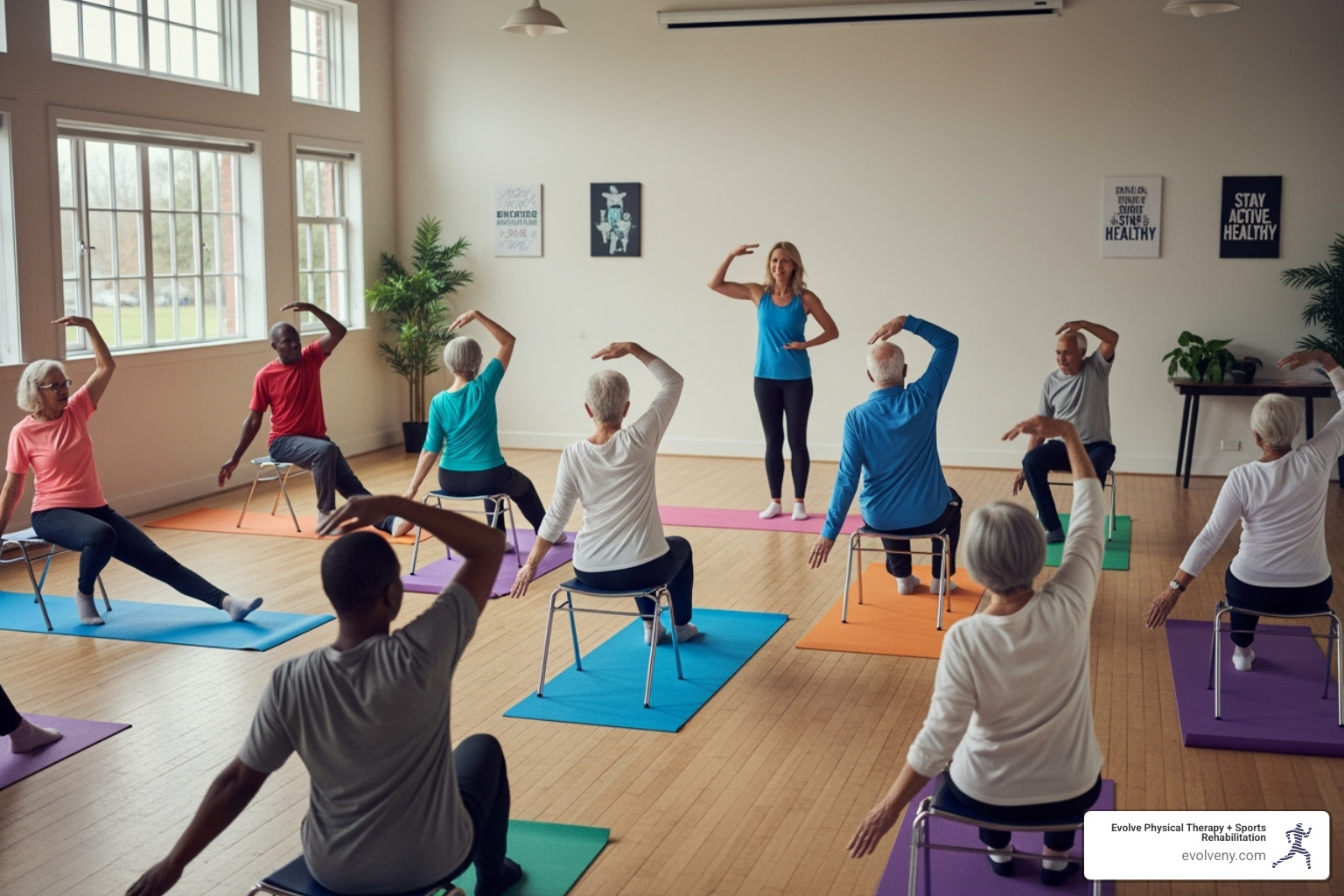
Gentle exercises for seniors are low-impact activities designed to improve strength, balance, and flexibility without straining joints. Effective types include:
- Seated exercises: Ankle rotations, seated marching, arm circles
- Standing exercises: Wall push-ups, chair squats, supported leg raises
- Walking and balance exercises: Heel-to-toe walking, single-leg stands
- Flexibility work: Gentle stretches for the neck, shoulders, and legs
Around a third of people over 65 experience a fall each year, and that number jumps to half for those over 80. Regular physical activity can significantly reduce fall risk while also lowering the chances of developing chronic diseases like heart disease, diabetes, and dementia.
Even light activity matters. Adults 65 and over should aim for daily physical activity. The official recommendation is at least 150 minutes of moderate activity per week, plus strength, balance, and flexibility work on at least two days. While many older adults don't meet these guidelines, starting small makes a real difference.
Lack of physical fitness may be responsible for about half of the physical decline associated with aging. The good news is that sedentary older adults have the most to gain from increasing their activity levels.
At Evolve Physical Therapy, we've spent nearly two decades helping older adults maintain their independence through targeted movement. We've seen how gentle exercises for seniors can transform quality of life by improving balance, preventing falls, managing chronic pain, and maintaining strength for daily activities.
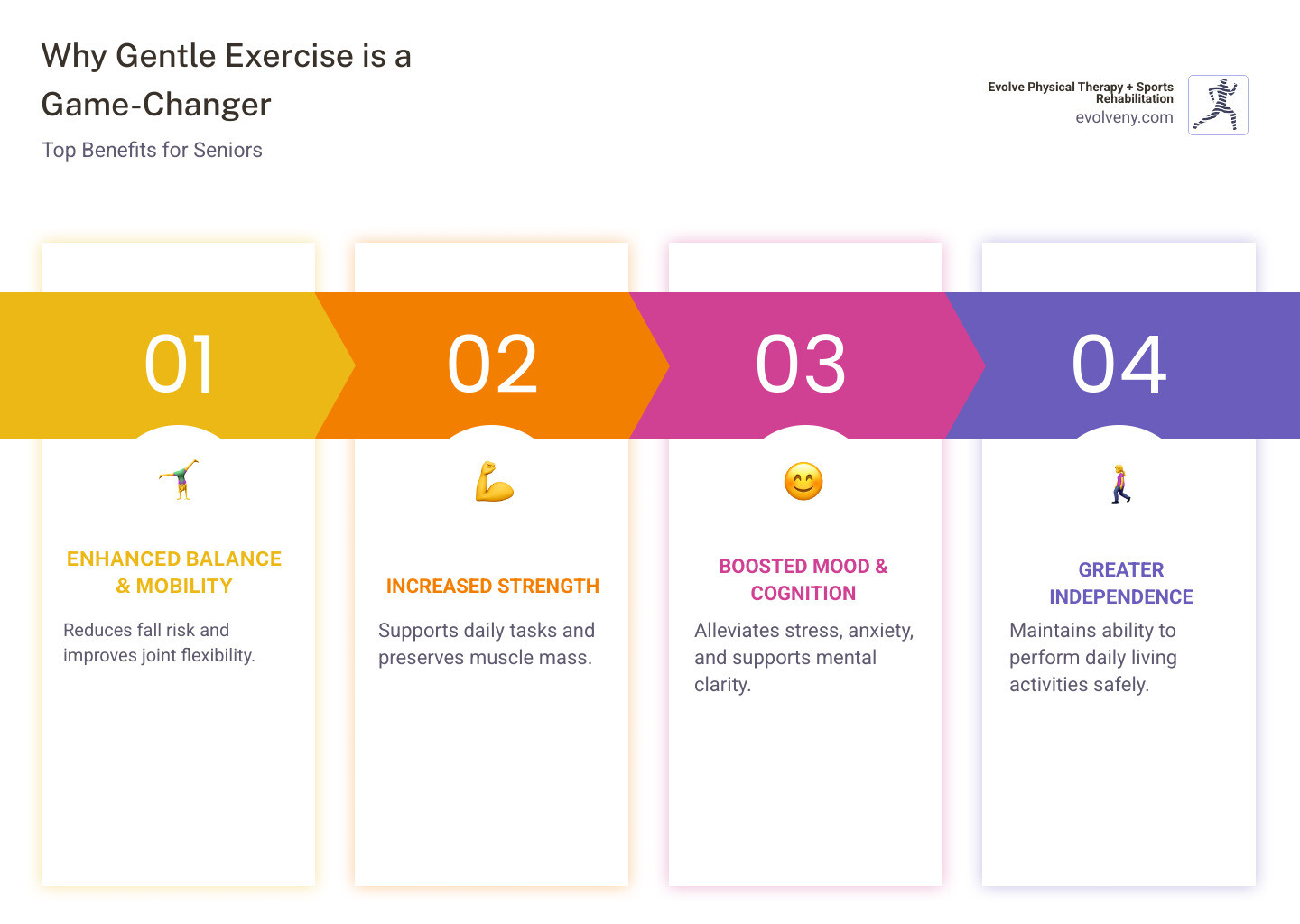
Why Gentle Exercise is a Game-Changer for Health and Independence
Staying active as we age isn't just about fitness; it's about holding onto the life you want to live with independence and confidence. The right kind of movement can slow or even reverse many changes we associate with aging. Even a single session of physical activity can offer health benefits like improved sleep and lower blood pressure.
A challenge is the natural loss of muscle and bone mass that increases with age. This decline can make everyday tasks harder, but gentle exercises for seniors actively combat this, helping you maintain the strength you need for daily life. The benefits are physical, mental, and emotional—a true game-changer.
The Physical Payoffs
Regular movement offers real, measurable benefits for your body.
- Stronger muscles make everything from getting out of a chair to carrying groceries easier, helping you live independently.
- Better balance is critical for preventing falls. Exercises that challenge your stability help you feel more confident on your feet. Our specialized Physical Therapy for Fall Prevention in Brooklyn program focuses on this because staying upright is that important.
- Increased flexibility means less stiffness and greater range of motion, making tasks like reaching for a high shelf or tying your shoes easier.
- Improved cardiovascular health from gentle aerobic activities like walking helps reduce the risk of heart disease, stroke, and type 2 diabetes.
- Stronger bones result from weight-bearing and strength exercises, which stimulate bone growth and density. For osteoporosis management, gentle movements strengthen supporting muscles and improve posture.
- Arthritis pain relief is another key benefit. Contrary to what some believe, gentle movement increases blood flow to joints and strengthens supporting muscles, leading to less pain. Our Physical Therapy for Arthritis programs can make a real difference.
The Mental and Emotional Boost
The mental and emotional changes from exercise are often the most surprising.
- Improved mood comes from the release of endorphins, your body's natural mood elevators, which can reduce symptoms of depression and anxiety.
- Better sleep quality is a common benefit, as physical activity helps regulate sleep cycles for more restorative rest.
- Reduced stress and anxiety can be achieved through mindful movements like yoga and Tai Chi. Yoga can reduce anxiety and chronic pain, helping you feel more centered.
- Increased self-confidence is a natural result of moving more freely and tackling daily tasks without fear.
- Cognitive function support is an exciting benefit, as studies show physical activity can improve memory, attention, and problem-solving skills.
Together, these benefits lead to a better quality of life and greater independence for years to come.
Getting Started Safely: Your Pre-Exercise Checklist
Before you begin a new exercise routine, a little preparation goes a long way in preventing injury. Think of this as your personal safety checklist.

Consult a healthcare professional. This is your most important first step. Before starting a new routine, especially with chronic conditions, talk to your doctor or a physical therapist. They can provide personalized recommendations. At Evolve Physical Therapy, we create safe and effective therapeutic exercise programs custom to your needs.
Listen to your body. It's essential to distinguish between normal muscle fatigue and sharp, stabbing, or persistent pain. Mild discomfort is a sign your muscles are working, but pain is a red flag. Stop if an exercise hurts.
Warm up and cool down. Always start with a 5-10 minute warm-up of gentle movements like marching in place or arm circles to increase blood flow and reduce injury risk. Afterward, a 5-10 minute cool-down with gentle stretches helps your body recover and improves flexibility.
Stay hydrated. Drink water before, during, and after your gentle exercises for seniors, even if you don't feel thirsty. Dehydration can cause fatigue, dizziness, and muscle cramps.
Focus on supportive nutrition. A balanced diet with lean protein, fruits, vegetables, and whole grains provides energy for exercise and nutrients for recovery. Protein is key for muscle repair, and vitamin D supports bone strength.
Choose a safe environment. Exercise in a well-lit, clutter-free space. Have a sturdy chair or counter nearby for support during standing exercises.
Wear proper footwear and clothing. Supportive shoes with good grip are crucial for preventing slips and falls. Avoid exercising in slippers or socks. Wear loose, breathable clothing for comfort and freedom of movement.
A Guide to the Best Gentle Exercises for Seniors
Here are some fantastic, low-impact gentle exercises for seniors that can be modified to your fitness level. Many can be done using a chair for support, and you can start with just your body weight. Consistency is more important than intensity when you're beginning.
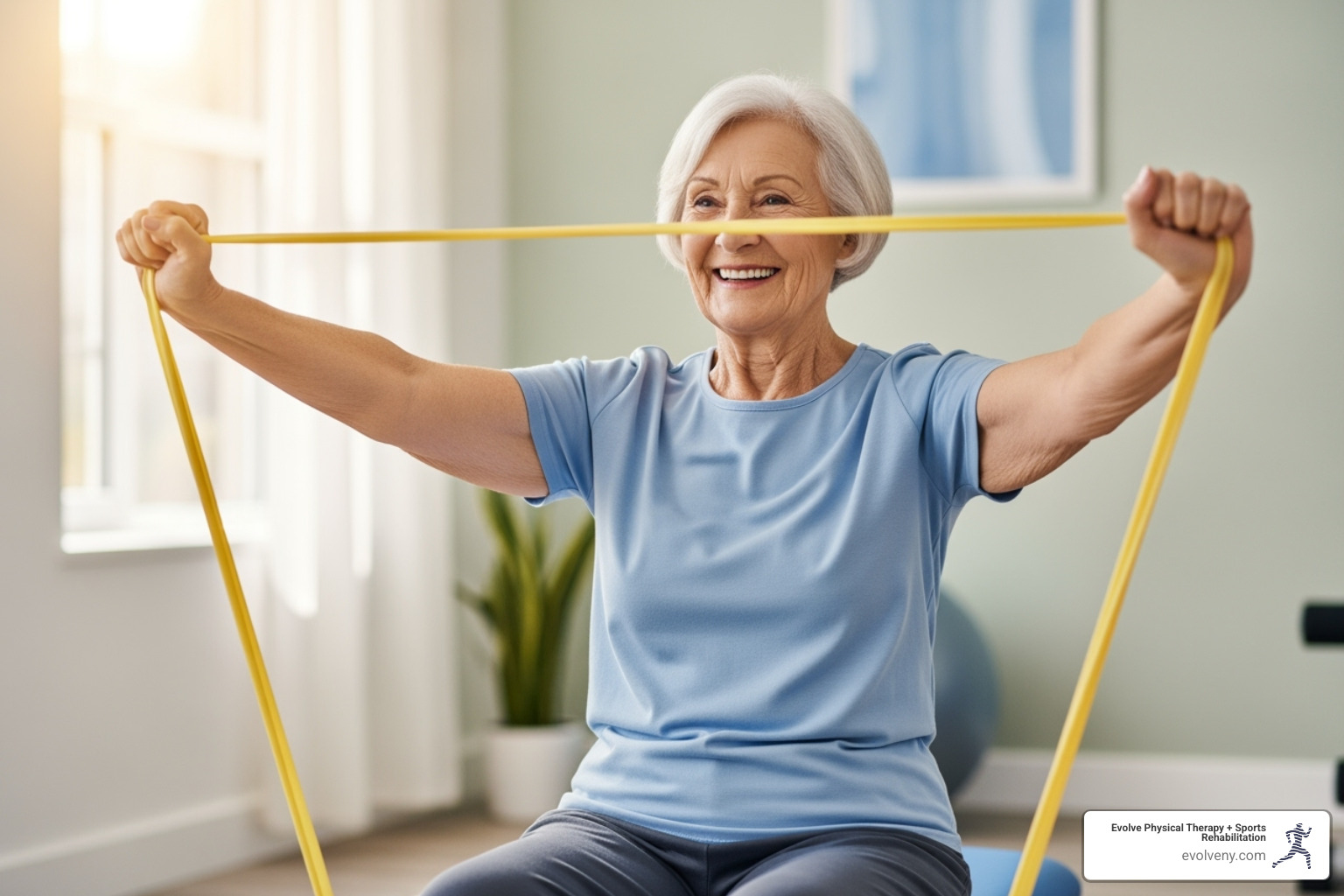
Seated Gentle Exercises for Seniors
Seated exercises are perfect for those with limited mobility or who are just starting out, providing stability and security. They are a cornerstone of programs in PT for Seniors - Elderly & Senior Living Facilities.
- Seated Marching: Sit tall and alternate lifting your knees. This improves circulation and strengthens hip flexors. Aim for 20-30 reps per leg.
- Ankle Rotations: Lift one foot and gently rotate your ankle clockwise and counter-clockwise to improve flexibility and balance. Do 5-7 rotations in each direction.
- Heel and Toe Raises: With feet flat on the floor, lift your heels, then lower them and lift your toes. This strengthens lower leg muscles. Aim for 10-15 reps.
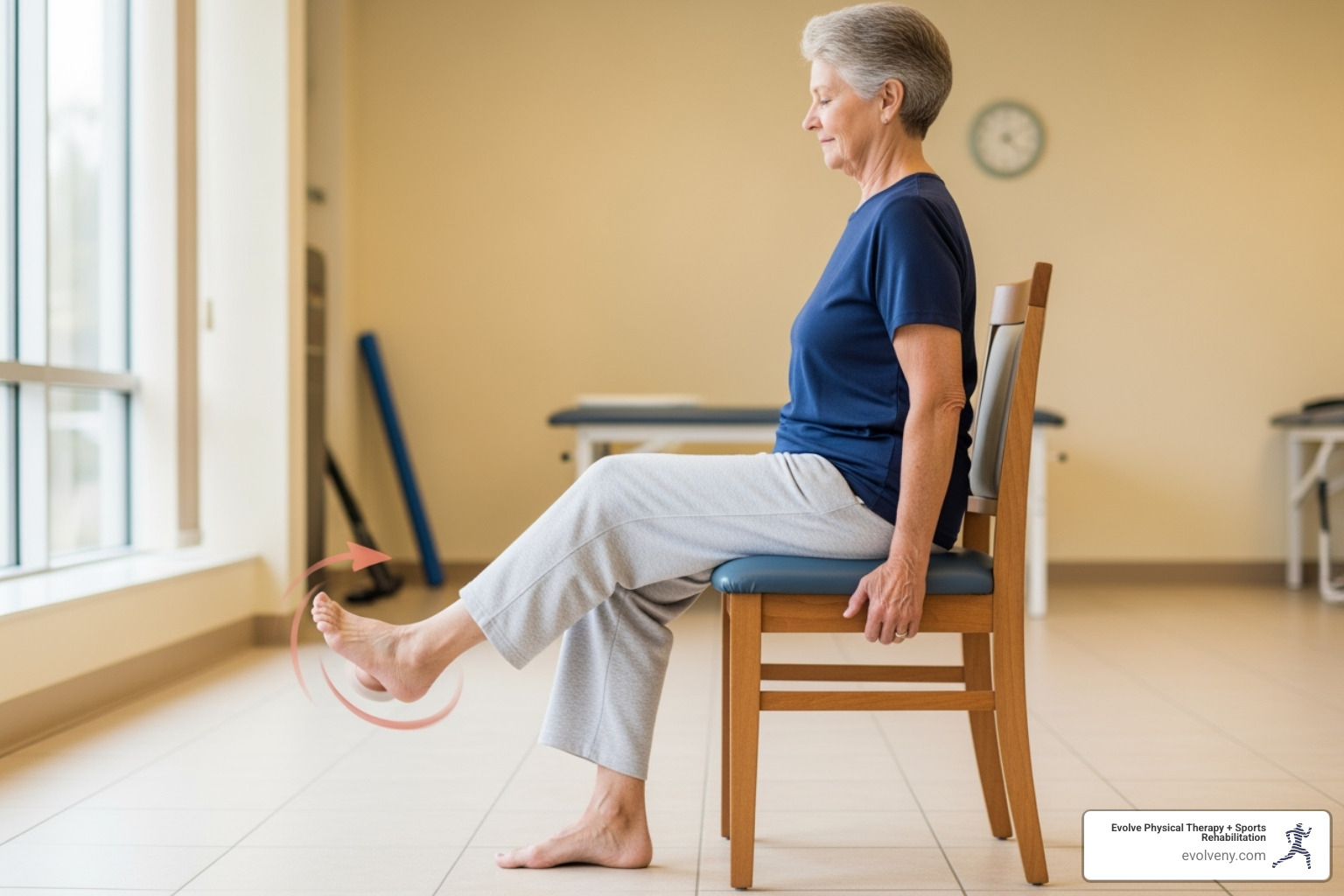
- Seated Leg Extensions: Extend one leg straight out, hold for a moment, then lower it. This builds thigh strength for walking and standing. Repeat 8-12 times per leg.
- Arm Circles: Extend arms to the sides and make small circles forward and backward to improve shoulder mobility. Do 10 circles in each direction.
- Shoulder Rolls: Shrug your shoulders up toward your ears, then roll them back and down to relieve tension. Repeat 8-10 times.
- Seated Torso Twists: Gently twist your upper body from side to side to improve spinal mobility. Do 5-8 twists per side.
Standing Gentle Exercises for Seniors
Use a chair or wall for support as you progress to these standing movements to build functional strength and balance.
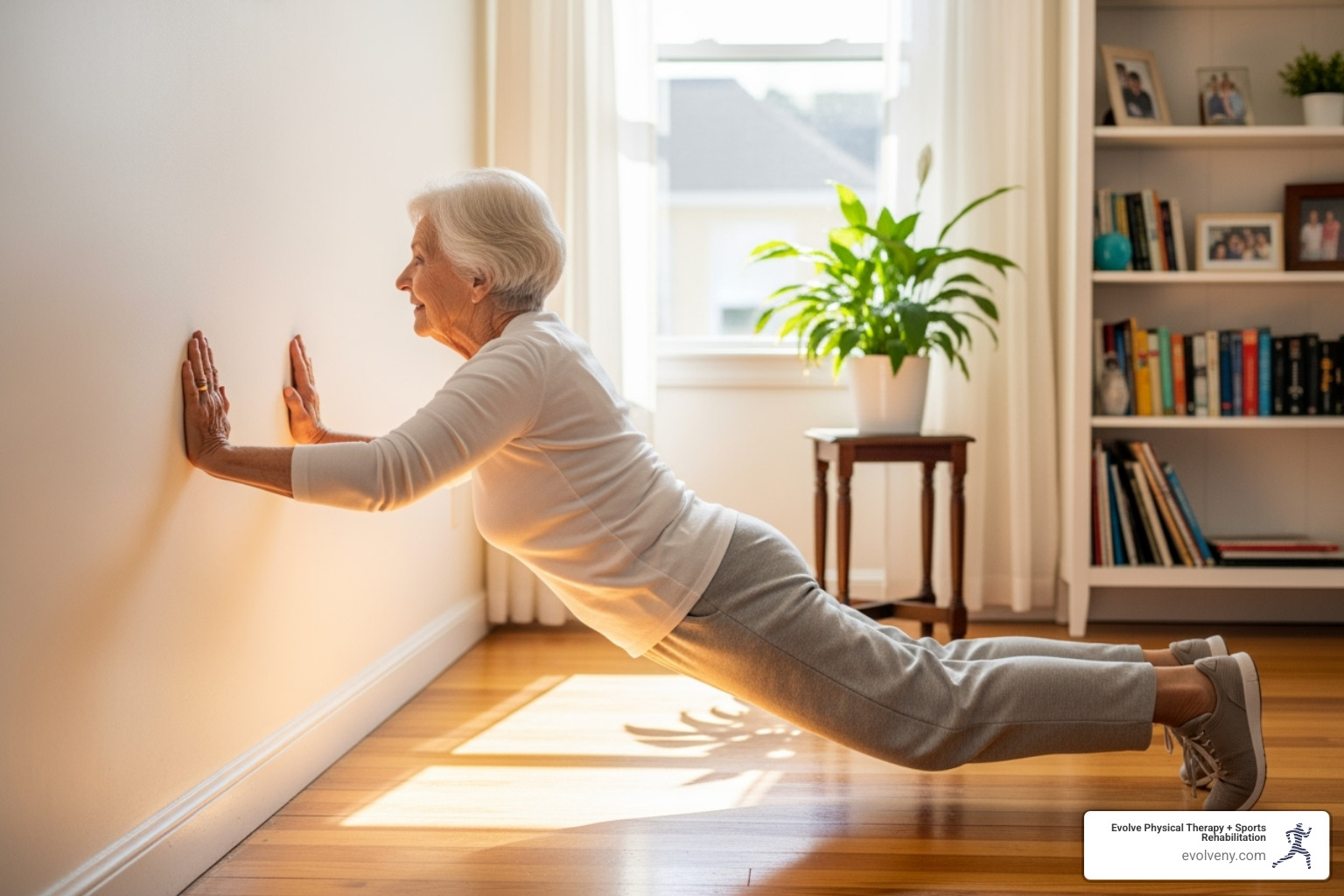
- Wall Push-ups: Stand an arm's length from a wall and place your palms on it. Bend your elbows to lean in, then push back. This strengthens the upper body. Try for 10-15 reps.
- Chair Squats: Stand before a sturdy chair and lower yourself as if to sit, then stand back up just before touching the seat. This strengthens legs and glutes. Aim for 8-12 reps.
- Standing Back Leg Raises: Holding a chair, lift one leg straight back without arching your back. This strengthens glutes and hamstrings. Do 8-12 reps per leg.
- Side Leg Raises: Holding a chair, lift one leg out to the side to improve hip stability. Do 8-12 reps per leg.
- Heel-to-Toe Walk: Walk by placing the heel of one foot directly in front of the toes of the other. Use a wall for support. This improves balance and coordination. We focus on this in our Balance Training for Seniors.
Flexibility and Mobility Stretches
Perform these stretches after your muscles are warm to maintain range of motion and prevent stiffness. Explore more options with our guide to Mobility and Movement Exercises.
- Neck Stretch: Gently tilt your head from side to side, holding for 15-20 seconds to relieve tension.
- Chest Stretch: Stand in a doorway with forearms on the frame. Step forward gently to feel a stretch across your chest. Hold for 20-30 seconds.
- Seated Hamstring Stretch: Sit on a chair's edge, extend one leg, and lean forward from your hips until you feel a stretch. Hold for 20-30 seconds per leg.
- Calf Stretch: Facing a wall for support, step one foot back, keeping the leg straight and heel down. Lean forward to feel a stretch. Hold for 20-30 seconds per leg.
Building a Consistent and Enjoyable Routine
Real change happens when movement becomes a natural part of your life. Building a routine with gentle exercises for seniors is about planning and finding what you enjoy.
- Make it a habit. Start with just 10-15 minutes at a time that fits your daily schedule. Consistency will make it feel automatic.
- Set realistic goals. Aim for achievable targets, like exercising three times a week for 15 minutes. Small wins build confidence and momentum.
- Find a partner. Exercising with a spouse or friend provides accountability and makes the time more enjoyable.
- Join a class. Senior fitness programs at community centers or our specialized programs at Evolve offer structure, expert guidance, and a sense of community.
- Incorporate activity into daily life. Every movement counts. Take the stairs, do calf raises while washing dishes, or march in place during TV commercials. These mini-movements add up.
- Track your progress. Keep a simple notebook to log your activities and celebrate how far you've come. Seeing your progress is a powerful motivator.
Beyond structured exercises, many enjoyable low-impact activities count as gentle exercises for seniors:
- Walking: It's free, accessible, and offers numerous health benefits, including improved circulation and stronger bones.
- Water aerobics: The water's buoyancy supports joints while providing resistance, making it ideal for those with arthritis.
- Tai Chi: These slow, flowing movements improve balance, flexibility, and mental focus.
- Dancing: A fun way to boost heart health and lift your spirits.
- Gardening: Digging, planting, and weeding engage multiple muscle groups while you enjoy the fresh air.
Specialized programs can also help you stay active. Our Rock Steady Boxing program in Brooklyn, for example, helps individuals with Parkinson's fight back through non-contact boxing, demonstrating how targeted movement can manage chronic conditions. The secret is finding activities you genuinely enjoy.
Frequently Asked Questions about Senior Fitness
Here are answers to some of the most common questions we hear from our senior clients at Evolve Physical Therapy about starting gentle exercises for seniors.
How much exercise should a senior do each week?
The official AHA recommendations for physical activity suggest at least 150 minutes of moderate-intensity aerobic activity per week, plus strength, balance, and flexibility work on at least two days.
If that sounds overwhelming, don't worry. The most important rule is that any movement is better than none. Start with 10-minute sessions and gradually increase as you feel stronger. Breaking up long periods of sitting with even a minute of movement also makes a big difference. Consistency is more important than hitting a specific number right away.
Can I still build strength if I have joint pain?
Yes! In fact, movement is often the best medicine for joint pain. The key is choosing the right kind of low-impact exercises that strengthen the muscles around your joints without causing irritation. Stronger muscles act as shock absorbers, taking pressure off the joints and reducing pain.
Water aerobics is an excellent choice, as the water's buoyancy reduces stress on your joints. Resistance bands and stationary cycling are also great low-impact options for building strength gently.
At Evolve Physical Therapy, we specialize in creating safe programs for individuals with joint pain, including those with degenerative joint disease. The right guidance is crucial, so always consult a professional. Learn more about our approach to Physical Therapy for Degenerative Joint Disease.
What are the most important types of exercise for seniors?
A balanced routine is key for overall health and independence. Your program should include a mix of the following:
- Strength Training: Combats age-related muscle loss (sarcopenia) and strengthens bones. This can be done with bodyweight exercises, resistance bands, or light weights.
- Balance Exercises: Crucial for preventing falls. Activities like Tai Chi, heel-to-toe walking, and single-leg stands improve stability and confidence.
- Flexibility and Mobility: Prevents stiffness and makes everyday movements easier. Gentle stretching, yoga, and mobility drills are excellent for maintaining range of motion.
- Aerobic Activity: Vital for heart health, endurance, and mood. Brisk walking, swimming, and dancing are great options.
Incorporating elements from all these categories throughout the week will provide the most benefit. For more details, MedlinePlus offers valuable info about exercise for older adults.
Accept a Stronger, More Active You
You've just found a wealth of information on how gentle exercises for seniors can genuinely transform your daily life. From strengthening muscles and improving balance to lifting your spirits, the benefits touch every corner of your well-being. We've seen it at our Brooklyn clinics: even light, consistent movement makes a world of difference.
While physical inactivity contributes to many health challenges, you have the power to change that starting today. Your journey begins not with a dramatic overhaul, but with a single, simple movement.
Empowerment through movement is a real feeling you'll experience as you grow stronger. Listen to your body, respect its signals, and celebrate every small victory. Consistency is key—not perfection. Some days will be easier than others, and that's okay.
Don't let age or physical limitations hold you back from living the vibrant, active life you deserve. Every person's journey is unique, and finding the right approach for your individual goals is what matters most.
We at Evolve Physical Therapy are passionate about helping seniors in Brooklyn—from Marine Park and Gravesend to Midwood, Park Slope, and Mill Basin—move with confidence and joy. Our expert physical therapists create personalized, safe exercise plans that meet you where you are and guide you toward where you want to be.
Start today. Your future self will thank you. For a personalized and safe exercise plan custom to your specific needs and goals, the experts at Evolve Physical Therapy can create a program designed just for you.
Learn more about our Physical Therapy for Seniors program and let us help you accept a stronger, more active you.
