

Before the Cut: A Guide to Pre-Surgical Physical Therapy
Why Pre-Surgery Physical Therapy Can Transform Your Recovery

Pre surgery physical therapy, also known as prehabilitation or "prehab," is a program of exercise and education designed to strengthen your body before an operation. Instead of waiting until after surgery to begin rehabilitation, you start building strength and mobility weeks ahead of time, giving your body a head start on recovery.
Quick Answer: What is Pre-Surgery Physical Therapy?
- What it is: A proactive physical therapy program completed before your scheduled surgery.
- What it includes: Customized exercises, strength training, mobility work, and patient education.
- Who benefits: Patients preparing for joint replacement, cardiac surgery, or any major operation.
- Key benefits: Faster recovery, shorter hospital stays, fewer complications, and improved surgical outcomes.
- When to start: Ideally 2-4 weeks before surgery, but even one week can help.
- Goal: To build physical and mental resilience so you enter surgery stronger and recover faster.
Surgery places significant stress on your body. Approaching it without preparation can lead to longer hospital stays, more complications, and a slower return to normal life. Prehabilitation is like training for a marathon—it prepares your body for the challenge ahead.
Research shows that patients who complete pre surgery physical therapy recover more quickly and experience a 29% reduction in post-acute care services. They often go home from the hospital sooner and have lower rates of opioid dependence. This preparation doesn't just strengthen your muscles; it reduces anxiety and gives you a sense of control over your recovery.
The concept is simple: the stronger you are going into surgery, the stronger you'll be coming out. Prehabilitation gives your body the best possible foundation for healing.
I'm Lou Ezrick, founder of Evolve Physical Therapy + Sports Rehabilitation in Brooklyn. With nearly two decades of experience, I've seen how pre surgery physical therapy transforms not just surgical outcomes, but patients' entire recovery experiences through hands-on, individualized care.
What is Prehabilitation and Why Does It Matter?
Traditional care is reactive: you wait until after surgery to start healing. Pre surgery physical therapy is proactive: you build strength, mobility, and resilience before you enter the operating room. This simple shift changes everything.
As the American College of Surgeons puts it, "Generally, the more fit and active you are going into a surgical procedure, the more likely you are to retain a higher level of function after." When you're stronger going in, you're stronger coming out.
Prehabilitation builds your physiological reserve—your body's capacity to handle the stress of surgery. An operation triggers inflammation and muscle breakdown. A larger reserve of strength and fitness helps your body absorb these stresses without declining as much. You start from a higher baseline, so even after the temporary setback of surgery, you're in better shape.
Research on prehabilitation for major surgery confirms this approach reduces the body's adverse stress response. By conditioning your body beforehand, you're training it to weather the storm more effectively.
Beyond the physical benefits, prehabilitation puts you back in control. Instead of feeling like surgery is something that happens to you, you become an active participant in your own recovery. At Evolve Physical Therapy + Sports Rehabilitation, we see how this sense of empowerment helps patients approach their surgery with more confidence and less fear.
The Proven Benefits of Pre-Surgery Physical Therapy
Investing time in pre surgery physical therapy sets you up for a smoother, faster recovery. The benefits touch every aspect of your surgical journey, from your hospital stay to your mental readiness.

Improved Physical Readiness and Strength
The primary benefit of prehab is that you'll be physically stronger. We focus on building up the muscles around the surgical site and improving your overall fitness, giving your body the resources it needs to heal.
- Increased Muscle Strength and Mobility: Before a joint replacement, we strengthen surrounding muscles and increase your range of motion. This directly impacts how well you'll move after surgery.
- Reduced Muscle Loss: Inactivity leads to muscle atrophy. Medical research shows this can happen quickly. Pre-surgical exercises help you maintain or even build muscle mass, so you can better resist the natural muscle loss that occurs post-op.
- Better Heart and Lung Function: Aerobic conditioning like walking or cycling boosts your cardiovascular fitness. As The American College of Surgeons emphasizes, higher fitness correlates with fewer postoperative complications.
Faster Recovery and Better Surgical Outcomes
The real payoff of pre surgery physical therapy appears in your recovery timeline. Patients who complete prehab programs often experience:
- Shorter Hospital Stays: Proper preparation can help patients go home sooner, sometimes even the same day, allowing them to recover in the comfort of their own home in Brooklyn.
- Reduced Need for Post-Operative Care: One study found that prehab led to a 29% decrease in post-acute care services. This means less time in rehabilitation facilities.
- Lower Risk of Complications: A stronger body handles surgical stress more efficiently. A comprehensive review of prehabilitation showed a clear trend toward fewer complications among patients who did prehab.
- Reduced Opioid Dependency: Patients who received physical therapy before knee replacement had a lower chance of long-term opioid use. Prehab helps you manage pain naturally through movement.
- Quicker Return to Daily Activities: Research shows that prehab patients recover their baseline function significantly faster, allowing them to get back to work, hobbies, and family life sooner.
Bolstering Your Mental and Emotional Health
Your mental state is crucial for a successful recovery. Prehab addresses this often-overlooked aspect of surgical preparation.
- Reduced Surgical Anxiety: Education about what to expect before, during, and after your procedure reduces fear of the unknown.
- Increased Patient Empowerment: Actively participating in your own care is powerful. You become a partner in your health journey, which can transform your entire surgical experience.
- Positive Mindset for Recovery: Taking action and building strength naturally improves your mood and outlook, creating genuine optimism based on real progress.
- Improved Pain Coping Skills: We teach you safe movement patterns and pain relief techniques, helping you develop better coping strategies for a more manageable recovery.
Your Prehabilitation Game Plan: What to Expect
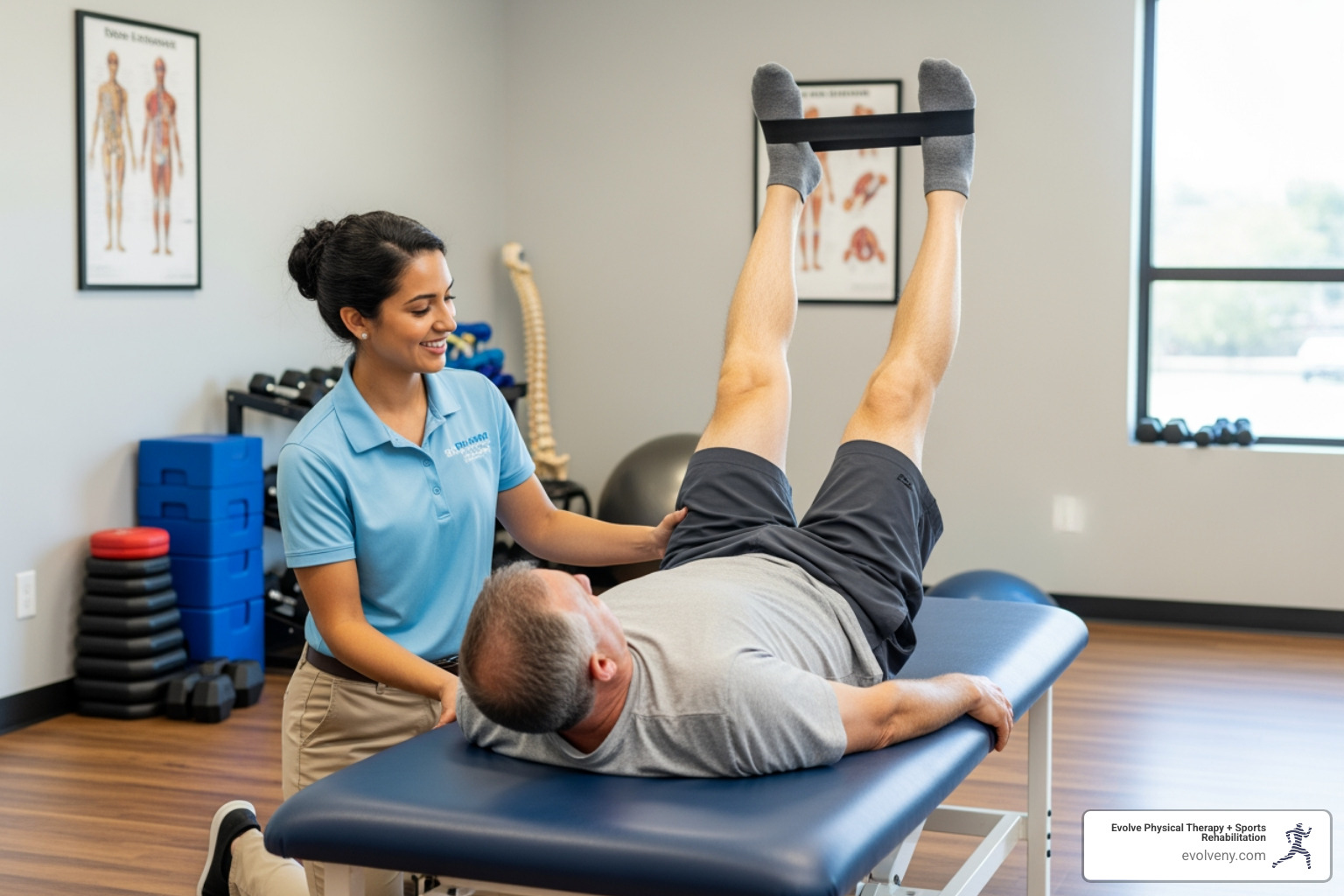
At Evolve Physical Therapy + Sports Rehabilitation, we build a comprehensive, personalized game plan that fits your body, surgery, and life. Our hands-on approach ensures you have support and guidance every step of the way.
Who is a Candidate for Pre-Surgery Physical Therapy?
Almost anyone facing surgery can benefit from prehab, but it's especially valuable for:
- Joint replacement patients (hip, knee, shoulder): Strengthening surrounding muscles can transform your recovery, helping you heal faster.
- Cardiac and abdominal surgery patients: Improving cardiovascular fitness and core strength helps your body handle the stress of the operation.
- Cancer surgery patients: Prehab addresses the deconditioning and muscle loss that can accompany cancer and its treatments, reducing complications and speeding recovery.
- Frail or deconditioned individuals: Building physiological reserves before surgery is crucial for this high-risk group, often making the difference between a smooth recovery and a difficult one.
- Athletes: For sports-related surgeries (ACL, rotator cuff), we work to maintain overall fitness and strengthen supporting muscles, setting the stage for an efficient return to sport.
Core Components of Your Personalized Plan
Your prehabilitation journey is custom to you and follows a clear path:
- Initial Evaluation: Our licensed physical therapists assess your current strength, stability, range of motion, and overall function. We discuss your medical history, your upcoming surgery, and your personal goals.
- Baseline Measurements: We use objective tests (like the 6-minute walk test) to establish your starting point. This allows us to track your progress and show you tangible proof of your hard work.
- Custom Exercise Program: We design a program specifically for your needs, including:
- Strength Training: Targeted exercises using resistance bands, light weights, or bodyweight to build up key muscles.
- Aerobic Conditioning: Activities like walking or cycling to improve your cardiovascular endurance.
- Balance and Flexibility Training: Exercises to reduce your risk of falls and improve mobility.
- Breathing Exercises: For abdominal or thoracic surgeries, inspiratory muscle training can significantly reduce pulmonary complications.
- Education: We teach you proper body mechanics, pain management strategies, and what to expect post-surgery. For joint replacement patients, this includes practicing with crutches or walkers and learning to steer daily activities safely.
For example, a pre-knee replacement program might include exercises like quad sets, straight leg raises, heel slides, ankle pumps, and gluteal sets.
The Role of Nutrition and Lifestyle
We take a holistic view of pre surgery physical therapy. Exercise is key, but nutrition and lifestyle choices are also critical for healing.
- Nutrition: Your body needs adequate protein (1.2-1.5g per kg of body weight) to repair and build muscle. We'll guide you on incorporating protein-rich foods. Hydration is also vital.
- Smoking and Alcohol: Quitting smoking at least 30 days before surgery can cut wound complication rates by 50%. Reducing alcohol intake also significantly lessens surgical risks. We can provide resources to help, like those from Kaiser Permanente on wellness.
- Stress Management: Chronic stress impacts healing. We encourage mindfulness, meditation, and relaxation techniques to reduce anxiety.
- Sleep: Prioritize quality sleep, as your body does much of its repair work while you rest.
- Chronic Conditions: Work with your physician to optimize conditions like diabetes or anemia before your operation.
Frequently Asked Questions about Pre-Surgical PT
Our patients in Brooklyn often have thoughtful questions about pre surgery physical therapy. Here are answers to the most common concerns.
Can Pre-Surgery Physical Therapy Help Me Avoid the Operation?
Sometimes, yes. For certain conditions like low back pain, knee osteoarthritis, or some meniscus tears, physical therapy is the recommended first line of treatment. We've helped many patients in our Brooklyn clinics improve their symptoms so significantly that surgery could be delayed or avoided entirely.
Whether this is possible depends on your specific diagnosis and its severity. However, even if you ultimately need surgery, the time spent in therapy is not wasted. Every bit of strength you gain becomes part of your prehabilitation, giving you a head start on recovery.
Are There Times When Prehabilitation Isn't Recommended?
While prehab is beneficial for most, your safety is our top priority. Prehabilitation is generally not recommended in a few situations:
- Emergency Surgery: There is simply no time for a prehab program in urgent, life-saving scenarios.
- Unstable Medical Conditions: Patients with severe cardiac instability, uncontrolled diabetes, or acute infections may need to stabilize their condition before starting an exercise program.
We always require your surgeon's approval before beginning a prehab program. We partner with your entire medical team to ensure the best possible outcome for you.
How is Pre-Hab Different from Post-Op Rehab?
This is a great question. While both aim to improve function, they are different in their timing and focus.
Prehab is proactive. It happens before surgery to build up your body's strength and endurance. Think of it as filling your tank before a long trip. We are building resilience to prepare your body for the stress ahead.
Rehab is reactive. It starts after surgery to restore function that was lost. Here, we are refilling the tank from a lower starting point, working to get you back to your baseline.
Prehab and rehab are two parts of a continuous journey. By entering surgery stronger, you experience less post-operative weakness and are primed to respond more quickly to post-op exercises. You start your recovery from a higher point, which makes the entire process smoother and faster.
Conclusion: Take Control of Your Surgical Outcome
Surgery doesn't have to be something that just happens to you. Pre surgery physical therapy gives you the power to actively shape your recovery, starting weeks before your operation.
By building a stronger, more resilient version of yourself, you fundamentally change how your body responds to surgery. Research shows that prehab leads to shorter hospital stays, fewer complications, and a faster return to the life you love. Most importantly, you enter surgery feeling confident and in control.
At Evolve Physical Therapy + Sports Rehabilitation, we've seen our hands-on prehabilitation programs transform surgical outcomes for countless Brooklyn residents. Our individualized approach ensures you get the preparation your body needs, whether you're in Marine Park, Gravesend, Midwood, Park Slope, or Mill Basin.
Remember the proven principle: the stronger you are going into surgery, the stronger you'll be coming out.
Your next step is simple. Talk to your surgeon about prehab. If they agree, reach out to us. We'll create a personalized plan to prepare your body and equip you with the confidence to steer your recovery successfully. Don't wait to start your recovery—be proactive and take control.
Appendix: Relevant Statistics
The research behind pre surgery physical therapy tells a compelling story of faster recovery and better outcomes. Here are some key statistics.
Recovery and Rehabilitation
- Preoperative physical therapy is linked to a 29% decrease in post-acute care services.
- Patients who had PT before and/or after knee replacement had a lower chance of long-term opioid use.
- For colorectal cancer patients, 80% who did prehab recovered baseline function by 8 weeks post-surgery, compared to only 40% in a control group.
Timeline and Hospital Stay
- The optimal prehab program duration is 4 to 8 weeks, but even shorter programs are beneficial.
- Prehabilitation is associated with shorter hospital stays, with some patients going home the same day.
Complication Reduction
- A meta-analysis showed a significant reduction in overall morbidity (OR 0.63) and pulmonary morbidity (OR 0.4) in prehab groups.
Lifestyle Factors
- Quitting smoking 30 days before and after surgery can decrease wound complications by 50%.
- Drinking more than 5 units of alcohol per day can triple the postoperative complication rate.
Nutrition and Medical Optimization
- Recommended preoperative protein intake is 1.2 to 1.5 g/kg/day (compared to 0.8 g/kg/day for healthy adults).
- Preoperative anemia management aims for hemoglobin levels above 13 g/dl.
Mental Health and Patient Satisfaction
- Cognitive prehabilitation programs have been shown to reduce delirium rates from 23% to 13.2%.
- 81.5% of patients would join a prehabilitation program if available, and 60% felt it helped them prepare mentally for surgery.
Muscle Loss
- It only takes a few weeks to lose muscle from inactivity, highlighting the urgency of building strength before surgery.
These statistics paint a clear picture: prehab is a proven strategy for a better surgical journey.
Disclaimer: This article is intended for informational purposes only and does not constitute medical advice. Always consult with a qualified healthcare professional for diagnosis and treatment of any medical condition.
