

Senior Strength Secrets: Functional Fitness Exercises You Need
Why Functional Fitness is Essential for Seniors' Independence and Quality of Life
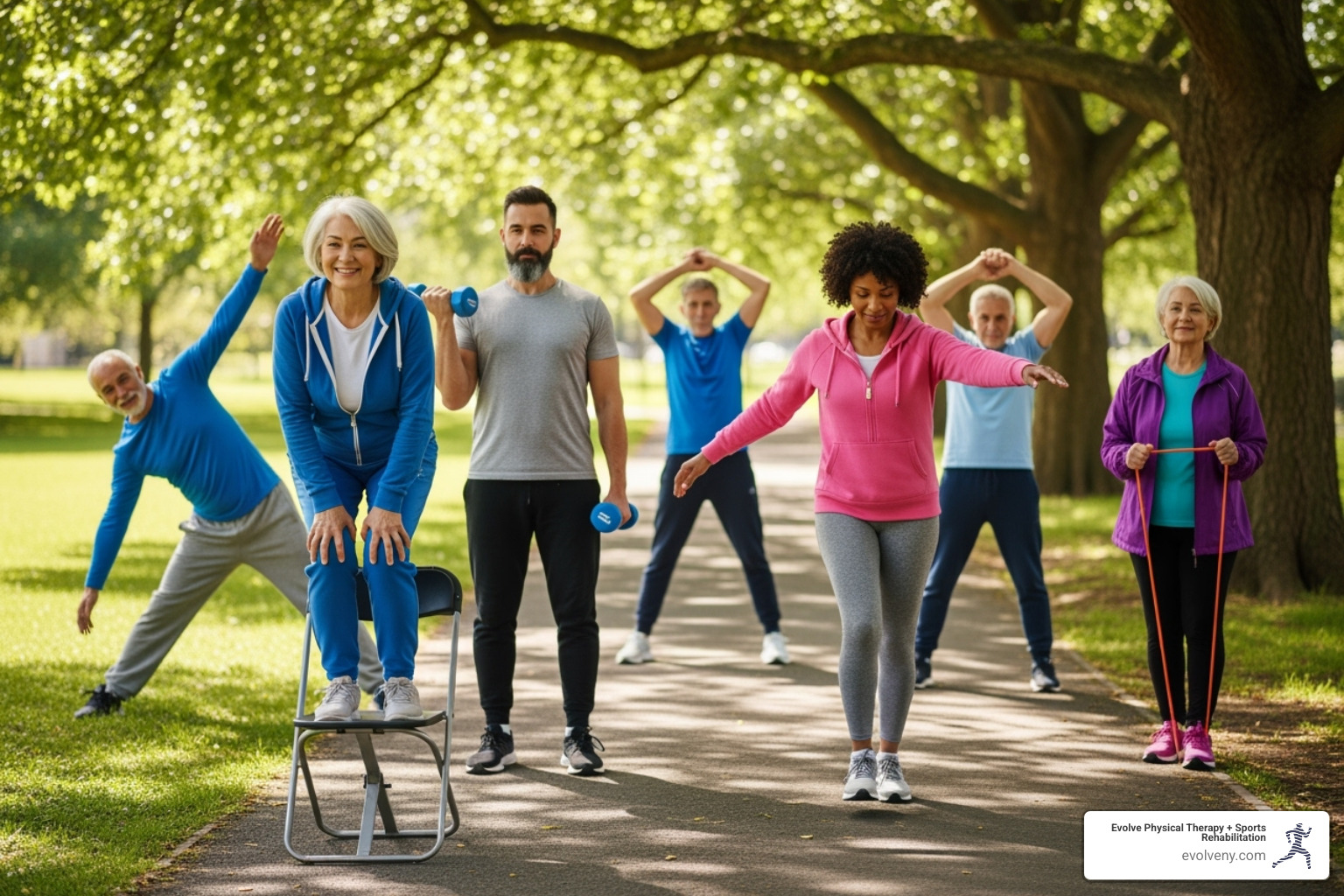
As we age, simple activities like getting up from a chair or carrying groceries can become challenging. The difference between maintaining independence and losing it often comes down to functional strength. Functional fitness seniors programs focus on exercises that mimic these everyday movements, training your body for life, not just for the gym.
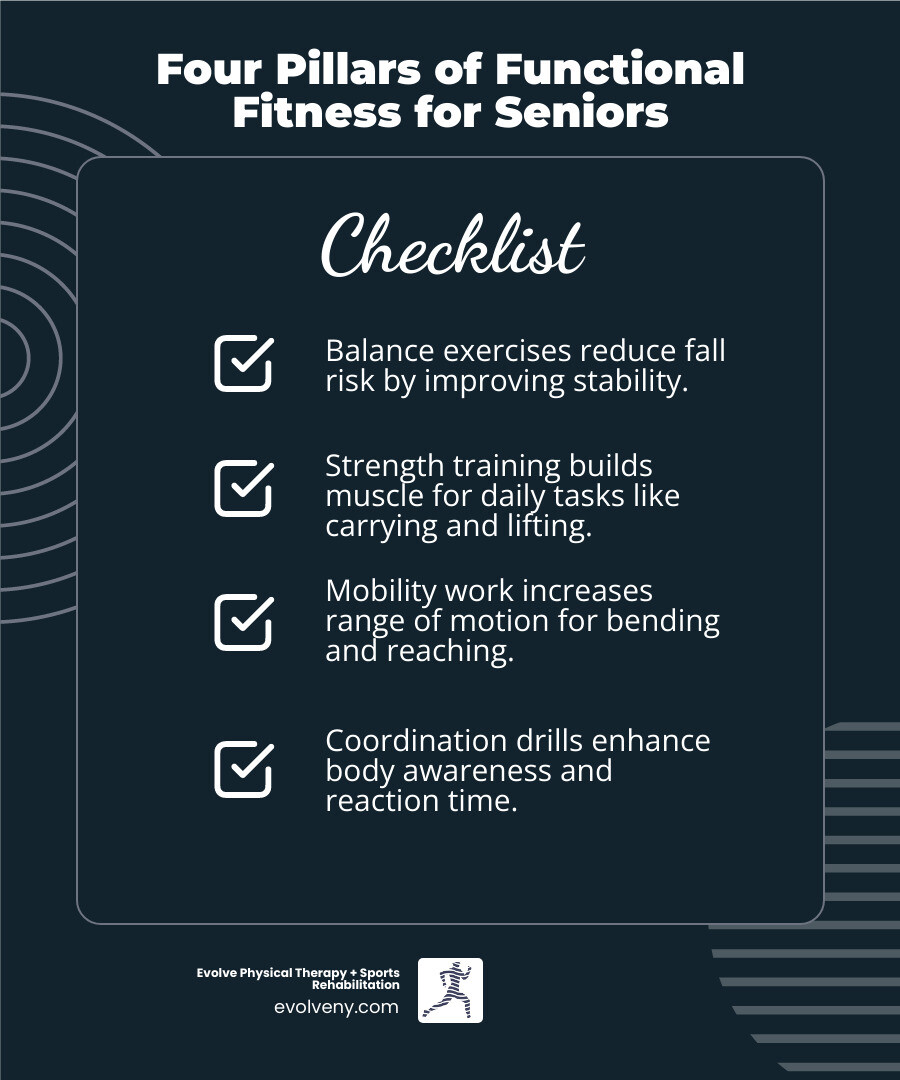
Core Benefits of Functional Fitness for Seniors:
- Improved Balance - Reduces fall risk through stability training
- Increased Strength - Builds muscle for daily tasks like lifting and carrying
- Better Mobility - Improves range of motion for bending and reaching
- Greater Independence - Maintains ability to perform activities of daily living safely
Key Functional Movements to Master:
- Squatting (sitting down and standing up)
- Pushing (opening doors, getting up from the floor)
- Pulling (carrying shopping bags, opening drawers)
- Lifting (picking up objects safely)
- Balancing (walking on uneven surfaces)
More than 25% of adults 65 or older have a fall each year. The good news is that research shows older adults who perform well on functional fitness tests have a significantly lower risk of falling. In as little as eight weeks, functional training can improve physical function and quality of life.
These practical exercises often use just your bodyweight, making them accessible without a gym. Whether you want to prevent falls or keep up with your grandchildren, functional fitness offers a proven path forward.
I'm Lou Ezrick, founder of Evolve Physical Therapy. I've spent nearly two decades helping older adults regain strength and confidence. My work with functional fitness seniors programs has shown me how the right exercises can transform someone's ability to live independently and pain-free.
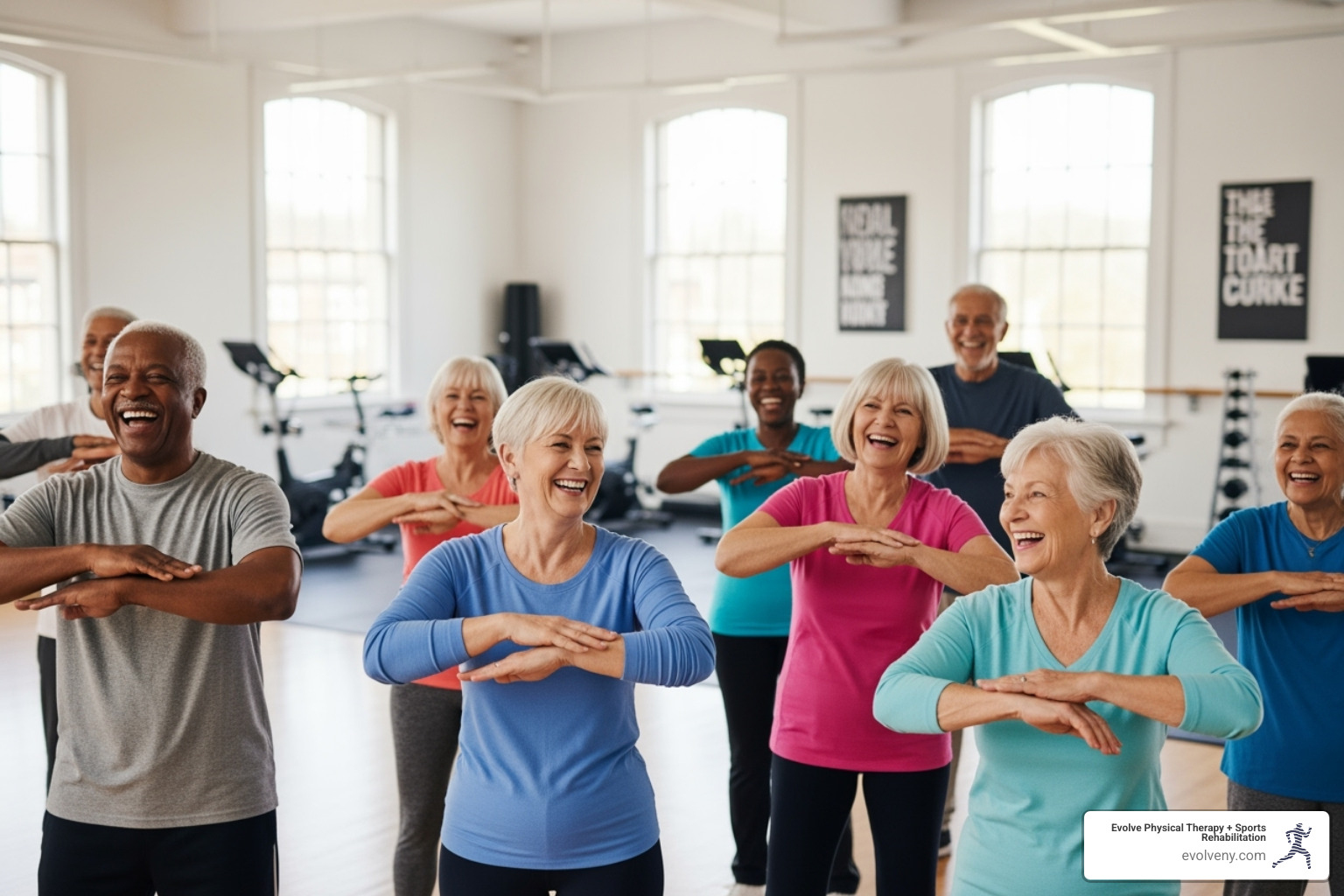
What is Functional Fitness and Why is it a Game-Changer for Seniors?
Functional fitness is exercise that prepares you for real life. Unlike traditional workouts that isolate one muscle (like a bicep curl), functional fitness trains muscles to work together as a team, mirroring how your body moves every day.
When you lift a bag of groceries, you use your arms, core, back, and legs. That's functional movement. For seniors, this approach is a game-changer. Functional fitness seniors programs strengthen the exact movement patterns you use most—sitting, standing, climbing stairs, and reaching. By training these real-world movements, you directly improve your ability to live independently and safely.
These exercises also improve the coordination between your brain and muscles, which helps you catch yourself if you stumble. This makes functional fitness highly effective for injury prevention. The CDC emphasizes that these exercises help seniors maintain independence by reducing fall risk and improving overall quality of life.
Here's how functional fitness stacks up against traditional exercise:
| Feature | Functional Fitness | Traditional Exercise |
|---|---|---|
| Movement Focus | Compound movements, multi-joint, whole-body | Isolated muscle groups, single-joint |
| Goal | Improve daily activities, prevent injury, independence | Build muscle mass, strength, aesthetics |
| Equipment | Bodyweight, resistance bands, light weights, household items | Machines, heavy free weights |
| Real-World Relevance | High (mimics daily tasks like lifting, squatting) | Lower (may not directly translate to daily tasks) |
| Balance & Coordination | Integral part of training | Often secondary or separate |
Unfortunately, adults over 60 are the least active age group, which contributes to a decline in the very abilities functional fitness preserves. The encouraging news is that it's never too late to start, and the results can be remarkable. Our Physical Therapy for Seniors programs prioritize this approach because we've seen how it transforms people's confidence and safety.
7 Essential Functional Fitness Exercises for Seniors
Here are seven essential exercises that mirror daily activities to help you move with greater ease and confidence. Proper form is crucial, so if you have any health concerns, consult a professional first. Our Therapeutic Exercise Brooklyn services can provide personalized guidance. Most of these movements require only your bodyweight and a sturdy chair.
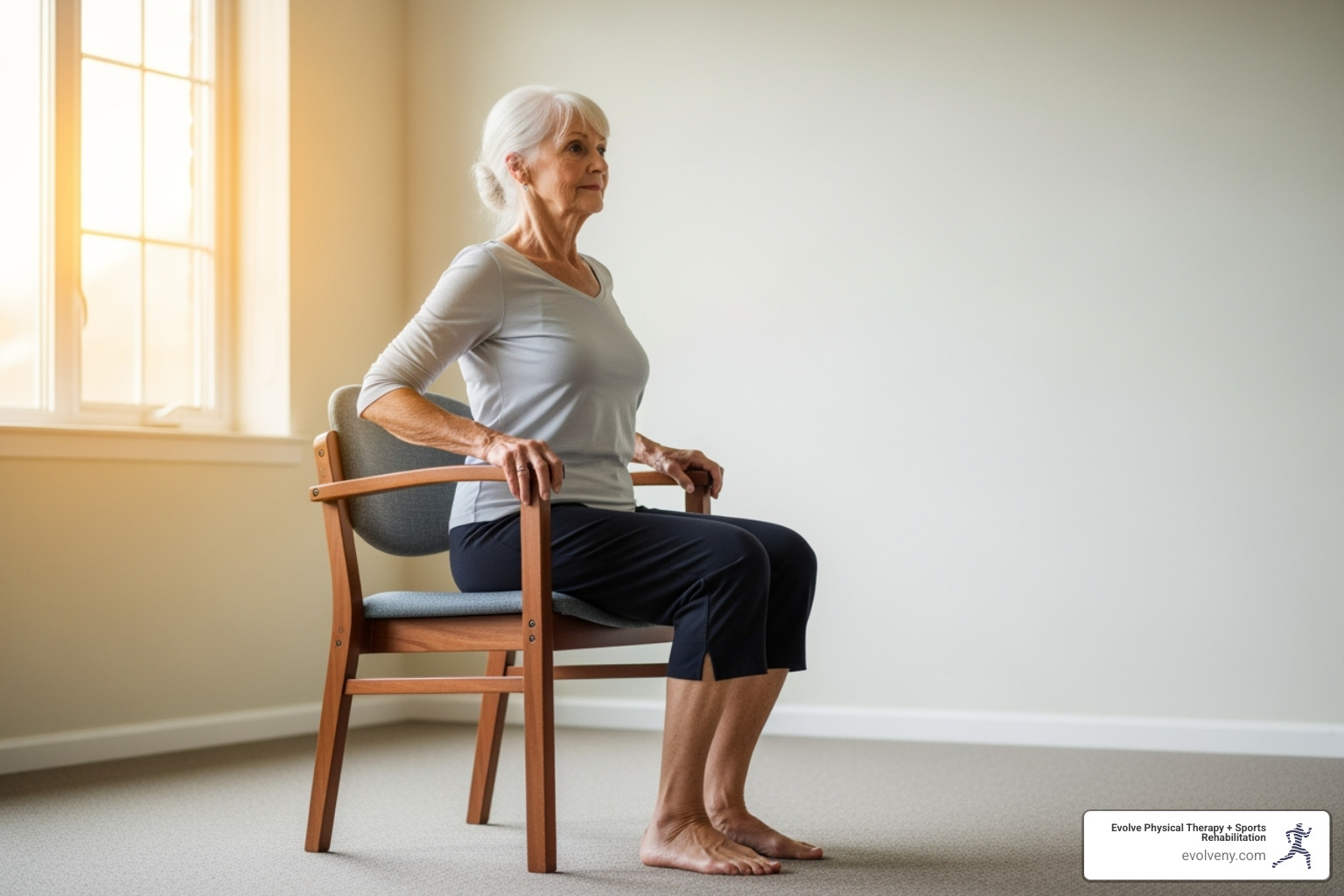
1. Sit-to-Stand (Chair Squat)
This is arguably the most important exercise for maintaining independence, building the strength needed to get out of chairs, beds, and cars.
Daily task it mimics: Getting in and out of a chair, sofa, or car.
Muscles worked: Glutes, quadriceps, hamstrings, and core.
Sit on the edge of a sturdy chair, feet hip-width apart. Lean your chest slightly forward with a straight back, then push through your heels to stand up without using your hands. Squeeze your glutes at the top. Slowly lower yourself back down with control. Aim for 10-15 repetitions for 2-3 sets. If needed, use your hands for assistance and gradually reduce reliance on them. This exercise is a key part of clinical assessments like the 30-second sit-to-stand test.
2. Step-Ups
Navigating stairs and curbs safely is crucial for independence. This exercise builds the necessary leg strength and balance.
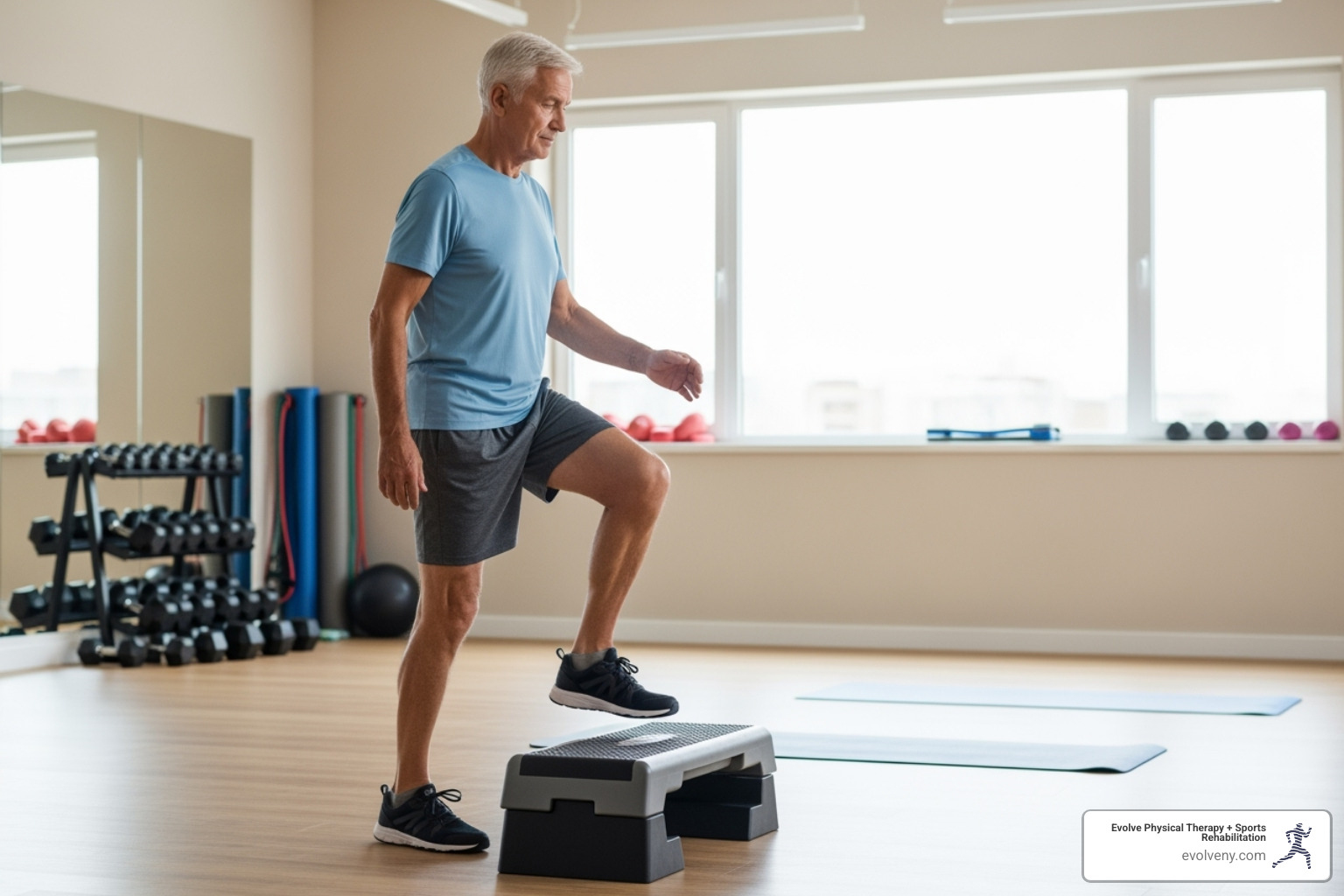
Daily task it mimics: Climbing stairs, stepping over curbs, and getting into vehicles.
Muscles worked: Quadriceps, hamstrings, glutes, and calves.
Use a sturdy, low step or platform. Place one entire foot on the step, then push through that heel to bring your other foot up. Stand tall at the top. Step back down with the first foot, then the second. Alternate leading legs or complete all reps on one side before switching. Aim for 10-12 repetitions per leg for 2-3 sets. Keep a wall or chair nearby for balance. This is a cornerstone of our Physical Therapy for Muscle Weakness programs.
3. Wall Push-Ups
This is a gentle, accessible way to build the upper body strength needed for daily pushing movements.
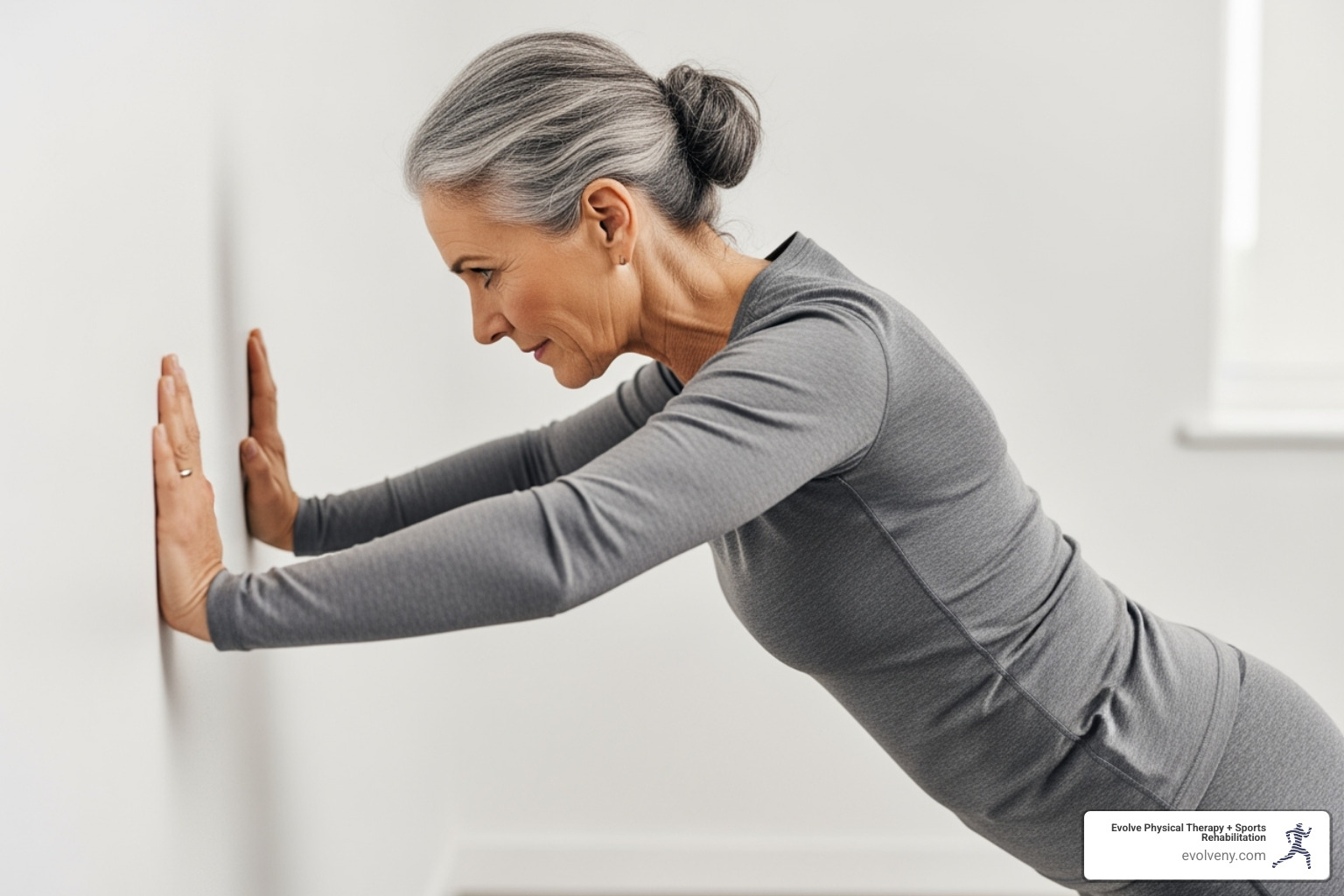
Daily task it mimics: Pushing open heavy doors or bracing yourself from a stumble.
Muscles worked: Chest, shoulders, triceps, and core.
Stand facing a wall, about an arm's length away. Place your hands on the wall slightly wider than your shoulders. Keeping your body in a straight line, bend your elbows to lower your chest toward the wall. Push back to the starting position. To make it easier, move your feet closer to the wall; for more challenge, step further back. Complete 10-15 repetitions for 2-3 sets. See a visual guide on how to do a wall push-up.
4. Farmer's Walk
This practical exercise mimics carrying heavy items like groceries or luggage, building full-body strength and stability.
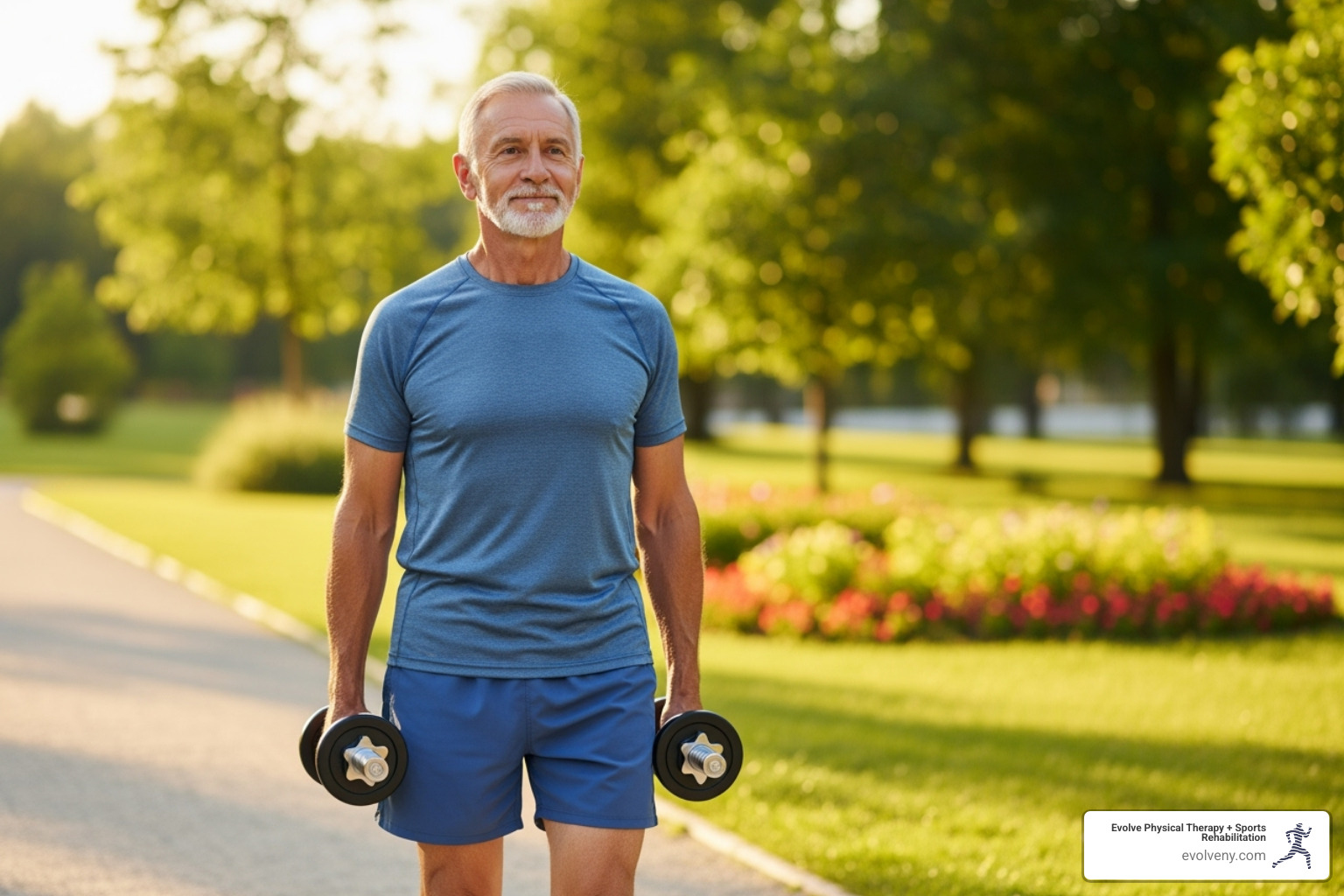
Daily task it mimics: Carrying groceries, luggage, or a laundry basket.
Muscles worked: Grip, forearms, shoulders, upper back, core, and glutes.
Hold a light weight (dumbbell, kettlebell, or water bottle) in each hand. Stand tall with shoulders back, chest up, and core engaged. Walk slowly for a set distance (20-30 feet) or time (30-60 seconds), maintaining perfect posture. Rest and repeat for 2-3 rounds. Start with very light weights. This exercise is a great addition to any Strengthening Program Brooklyn.
5. Heel-to-Toe Walk
This exercise specifically targets the coordination and stability needed to walk confidently and stay steady on your feet.
Daily task it mimics: Walking in a straight line and maintaining balance on narrow or uneven surfaces.
Muscles worked: Core, ankles, and small leg stabilizing muscles.
Stand tall and place the heel of one foot directly in front of the toes of the other, as if on a tightrope. Focus on a point ahead of you for balance. Slowly walk forward, taking 10-20 steps. Turn around and repeat. Complete 2-3 sets. Perform this next to a wall or countertop for support if needed. This is a core component of Balance and Gait Training for fall prevention.
6. Bicep Curls
This simple exercise strengthens your arms for all the daily lifting and carrying tasks we often take for granted.
Daily task it mimics: Lifting a gallon of milk, a pot from the stove, or a grandchild.
Muscles worked: Biceps and forearms (grip strength).
Sit or stand holding a light weight (dumbbell, resistance band, or soup can) in each hand, palms facing forward. Keeping your elbows close to your sides, slowly curl the weights toward your shoulders. Squeeze your biceps, then slowly lower the weights back down. Avoid using momentum. Complete 10-15 repetitions for 2-3 sets. You can find suitable Exercise Equipment on our site, but household items work well too.
7. Glute Bridge
This exercise strengthens your glutes and hamstrings, which are crucial for good posture, pelvic stability, and reducing lower back strain.
Daily task it mimics: Getting out of bed, standing up straight, and stabilizing your body while walking.
Muscles worked: Glutes, hamstrings, and lower back.
Lie on your back with knees bent and feet flat on the floor, hip-width apart. Squeeze your glutes and lift your hips until your body forms a straight line from shoulders to knees. Hold for a second, then slowly lower back down. Aim for 10-15 repetitions for 2-3 sets. Focus on using your glutes, not your lower back. This is also excellent for knee stability. Learn more about How to Strengthen Knees if knee health is a concern.
Creating Your Safe and Effective Functional Fitness Seniors Routine
Building a functional fitness seniors routine is about creating sustainable habits. The goal is consistency, not intensity.
- Start Slowly: If you're new to exercise, begin with fewer repetitions (e.g., 5 instead of 10) and focus on proper form. Your body needs time to adapt.
- Be Consistent: Gentle, regular movement is more effective than sporadic, intense workouts. Aim for even 10-15 minutes a day.
- Listen to Your Body: Mild muscle soreness is normal, but sharp pain is a signal to stop. Modify exercises or take a rest day when needed.
- Warm-Up and Cool-Down: Always start with 5-10 minutes of light cardio (marching in place, arm circles) and end with 5-10 minutes of gentle stretching, holding each stretch for 20-30 seconds.
For more on the power of regular movement, read our article Get Movin: The Undeniable Benefits of Exercise. The CDC also provides a great guide, Growing Stronger - Strength Training for Older Adults.
Equipment for Senior Functional Fitness
You don't need a gym. Most of what you need is already in your home.
- Bodyweight: Your most valuable tool for exercises like sit-to-stands and wall push-ups.
- Resistance Bands: Inexpensive, space-saving, and gentle on joints.
- Light Dumbbells: Start with 1-3 pounds for curls and walks.
- Sturdy Chair: Essential for sit-to-stands and balance support.
- Household Items: Soup cans or water bottles work perfectly as light weights.
If you wish to invest, we have a selection of senior-friendly Fitness Equipment.
Modifications for Pre-existing Conditions in functional fitness seniors
Safety comes first. Always talk to your doctor or physical therapist before starting a new exercise program. They can help you modify exercises for your specific needs.
- Arthritis: Move through a comfortable range of motion without forcing it. For example, do partial squats or use a higher step for step-ups. Our Osteoarthritis Physical Therapy Brooklyn program can help.
- Osteoporosis: Avoid heavy twisting or forward bending. Focus on safe, weight-bearing movements like wall push-ups. Professional guidance is key, which our Osteoporosis Physical Therapy Brooklyn services provide.
- Heart Conditions: Start with low intensity and build up gradually. Stop immediately if you feel chest pain, dizziness, or unusual shortness of breath.
- Balance Concerns: Always exercise near a sturdy support like a wall or counter. Prioritize stability over speed.
The Critical Role of Functional Fitness in Fall Prevention
The fear of falling keeps many seniors from living fully. With over 25% of adults 65 or older falling each year, prevention is critical. The good news is that a significant number of these falls are preventable.
Research shows that older adults who perform well on functional fitness tests have a dramatically lower risk of falling. Functional fitness seniors programs are designed to strengthen your body's natural fall-prevention system.
Strength is your foundation. Strong leg, hip, and core muscles provide a stable base, giving you the power to react quickly and catch yourself if you stumble. Exercises like sit-to-stands and step-ups build this essential power.
Balance training is your early warning system. Exercises like the heel-to-toe walk improve your body's awareness in space (proprioception). This helps you make constant, tiny adjustments to stay upright and sure-footed. Our Physical Therapy for Fall Prevention Brooklyn programs focus heavily on this.
Faster reactions save you from injury. Dynamic functional exercises train your body to respond faster when you lose your balance. That split-second reaction can be the difference between a close call and a hospital visit.
Perhaps most importantly, functional fitness builds confidence. When you trust your body's strength and stability, the fear of falling loses its grip. This allows you to stay active and engaged, breaking the cycle of inactivity that ironically increases fall risk. Our specialized Elderly Balance Training programs are built to give you the physical resilience and mental confidence to live freely and safely.
Frequently Asked Questions about Functional Fitness for Seniors
Here are answers to some of the most common questions I hear from older adults.
How often should a senior do functional fitness exercises?
The ideal frequency is 3-5 times per week. This allows for muscle recovery while providing enough consistency to build strength and balance. You don't need long sessions; even 10-15 minutes of focused movement daily can make a huge difference. Consistency is far more important than intensity.
Can functional fitness help with arthritis pain?
Yes. While it seems counterintuitive, the right kind of movement is medicine for arthritis. Strengthening the muscles around a painful joint provides a natural support system, taking pressure off the joint itself and often reducing pain. The key is to use modified, gentle, and controlled movements within a comfortable range of motion. Our Osteoarthritis Physical Therapy Brooklyn program is designed to help you move better with less pain.
Is it ever too late to start functional fitness?
It is never too late. The human body retains a remarkable ability to adapt and get stronger at any age. I've worked with clients in their 80s and 90s who have made incredible improvements in their strength, balance, and independence. You may not become an Olympic athlete, but you can absolutely build enough functional strength to carry your own groceries, play with your grandchildren, and walk confidently without fear. The secret is to start where you are today and build gradually. Your age is a starting point, not a barrier.
Conclusion
The seven exercises you've just learned are more than a workout plan; they are practical tools to prepare your body for real life. This is the core of what makes functional fitness seniors programs so effective. The benefits—improved balance, increased strength, better mobility, and a reduced risk of falls—translate directly to a more independent and confident life.
It's never too late to feel stronger and more stable. At Evolve Physical Therapy, we understand that generic programs don't work for everyone. We take a hands-on approach, creating personalized plans that address your specific needs and goals. We work alongside you, adapting your program as you grow stronger.
The path to a more independent life starts with a single step. You've already taken the first one by learning about these exercises. Now, take the next one.
