

What Are Advanced Manual Therapies? A Comprehensive Overview
Understanding Advanced Manual Therapies: Beyond Basic Hands-On Treatment

Advanced manual therapies are specialized, hands-on treatment approaches used by highly trained physical therapists to diagnose and treat complex musculoskeletal conditions. Unlike general massage or basic manipulation, these techniques require extensive post-graduate training (e.g., FAAOMPT) and integrate clinical reasoning, evidence-based practice, and a comprehensive understanding of the body's systems. Treatment focuses on identifying the root cause of dysfunction, not just symptoms, and combines joint mobilization, soft tissue techniques, and therapeutic exercise within a patient-centered care model.
The field has evolved significantly from a mechanical, clinician-centered approach to a patient-centered practice that considers the whole person—including psychological factors like patient expectations and the therapeutic relationship. Research now shows that manual therapy works through both specific biomechanical effects (like improving tissue mobility) and contextual effects (the healing power of skilled human touch).
As Lou Ezrick, founder of Evolve Physical Therapy in Brooklyn, I've spent nearly two decades refining my expertise in advanced manual therapies, helping patients with complex chronic pain and hypermobility conditions avoid surgery through comprehensive, hands-on care. My approach combines osteopathic manipulation, specialized mobilization techniques, and incremental strength training to address the root cause of dysfunction and restore long-term function.
Understanding the "Advanced" in Manual Therapy
When we talk about advanced manual therapies, we mean a highly specialized form of physical therapy that goes beyond treating symptoms to address the true source of your discomfort. At Evolve Physical Therapy in Brooklyn, our approach begins with rigorous clinical reasoning and a thorough diagnostic process to assess movement dysfunction and identify the root cause of your pain, allowing us to create a custom treatment plan.
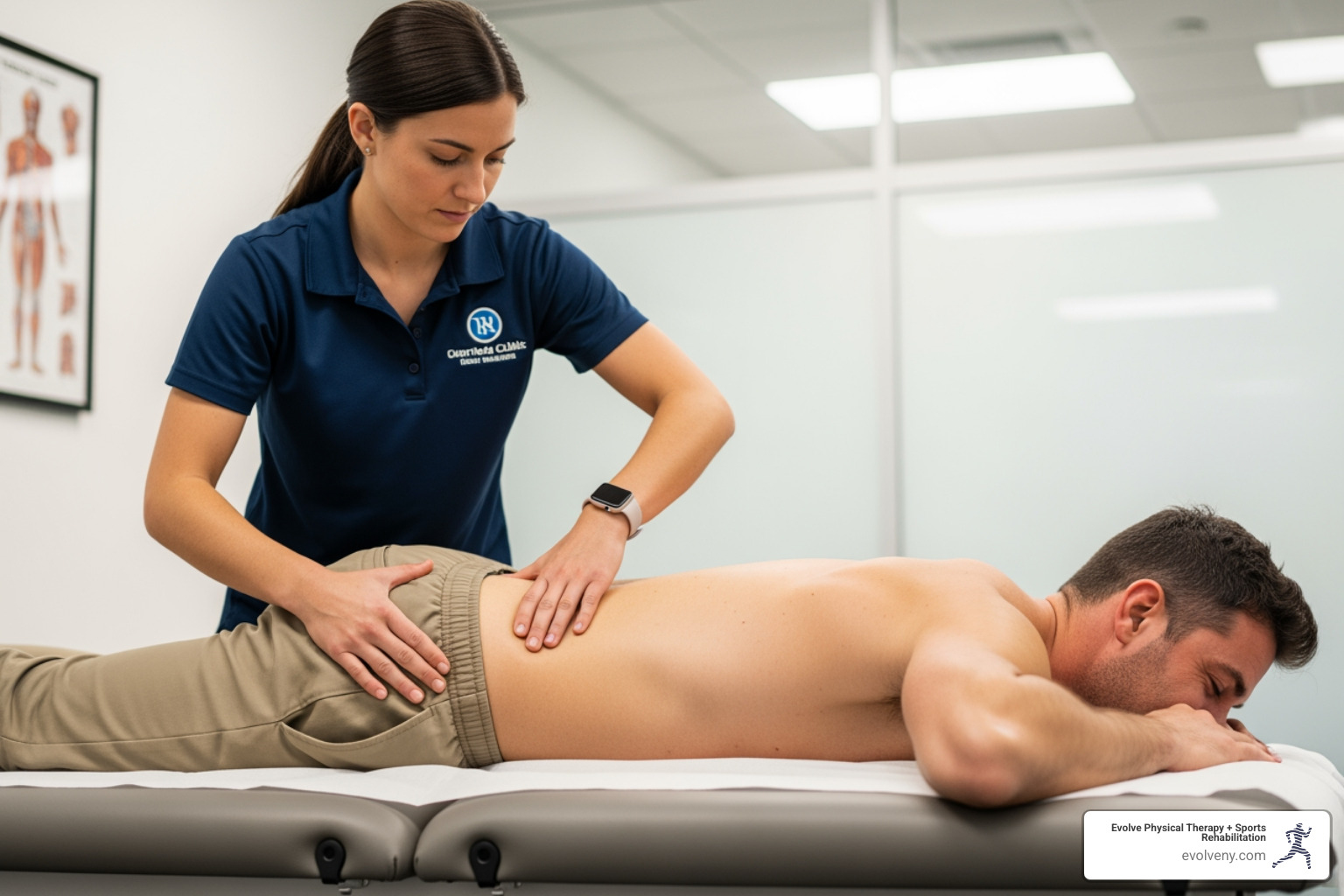
General vs. Advanced Manual Therapy
What makes manual therapy "advanced"? The distinction lies in the practitioner's education, diagnostic skills, and the complexity of the techniques. General manual therapy often involves basic techniques for relaxation and reducing muscle tension. Advanced manual therapies, however, are practiced by physical therapists with significant post-graduate education and certifications, such as the FAAOMPT (Fellow of the American Academy of Orthopaedic Manual Physical Therapists) designation. These practitioners are trained to handle complex conditions with sophisticated diagnostic and treatment techniques. Modern manual therapy has evolved into a patient-centered care model that emphasizes safety, communication, and measurable outcomes, moving beyond a sole reliance on palpation to an evidence-informed practice.
If you're looking for more info about manual therapy services offered at Evolve Physical Therapy, we encourage you to explore our services.
The Core Philosophy: A Biopsychosocial Approach
At the heart of advanced manual therapies is the biopsychosocial model—the understanding that physical, psychological, and social factors are deeply intertwined. Historically, manual therapy took a purely mechanical view. Modern research, however, shows that factors like stress, fear of movement, and your beliefs about pain significantly influence recovery. As highlighted in studies like The Neurobiologic Mechanisms in Manipulative Therapy, manual therapy works not just by physically altering tissues but also by influencing these neurobiological mechanisms. We recognize that "contextual effects"—the therapeutic relationship, your expectations, and your sense of safety—are powerful. Our hands-on techniques aim to improve movement and create a positive environment where you feel confident in your path to recovery, empowering you with tools for long-term health.
A Deep Dive into Advanced Manual Therapy Techniques
Advanced manual therapies encompass a wide array of specialized techniques, each designed to address specific types of musculoskeletal dysfunction. Our physical therapists in Brooklyn are experts in these methods, using them strategically to restore function, reduce pain, and improve your body's natural healing capabilities.
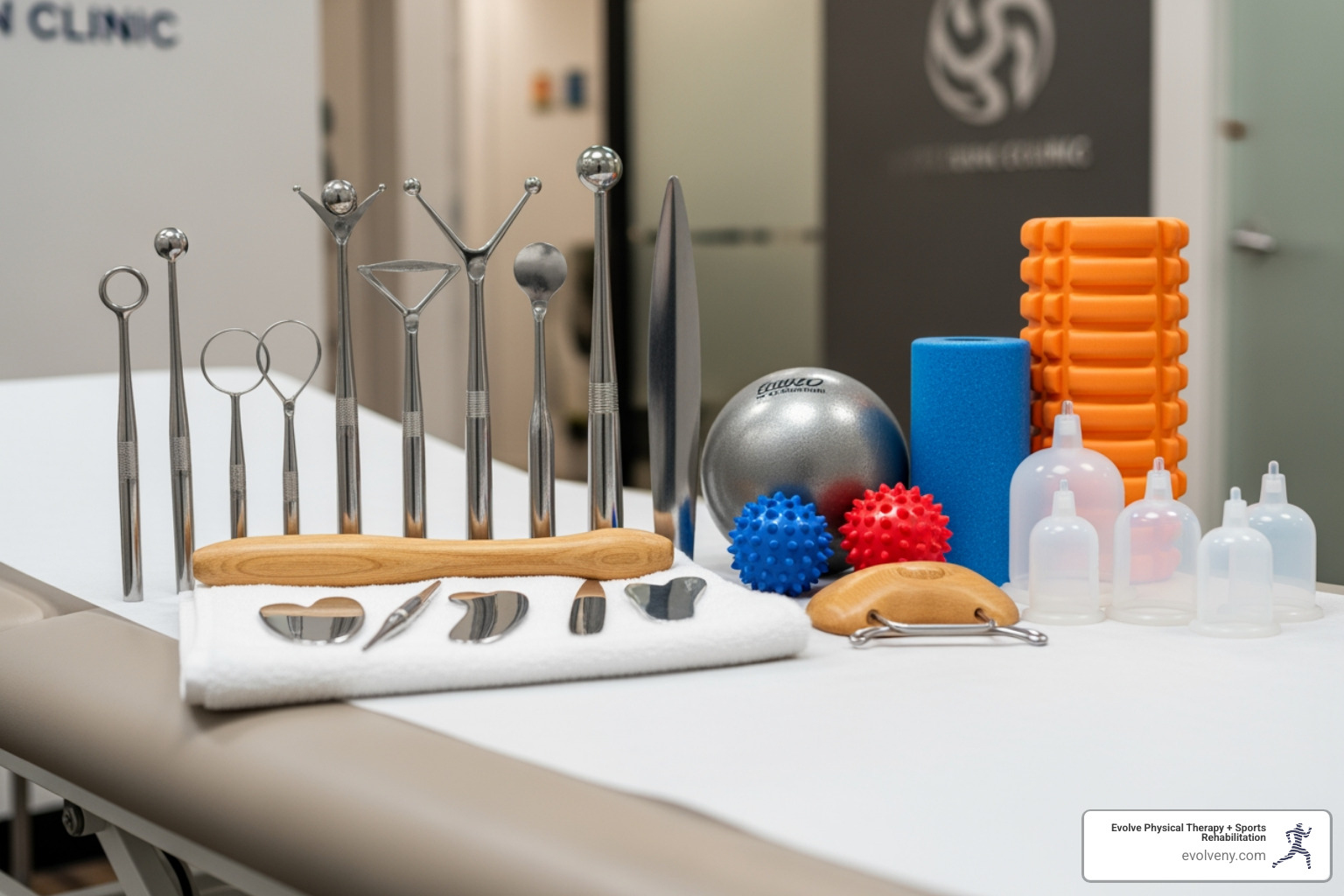
These techniques often involve precise joint mobilization, sophisticated soft tissue manipulation, and targeted myofascial techniques. It's like a highly skilled mechanic with a specialized toolkit—we have many different tools for different problems, and we know exactly when and how to use them.
Joint-Focused Techniques
When your joints aren't moving as they should, it can cause pain, stiffness, and limit your mobility. Our joint-focused advanced manual therapies are designed to restore normal joint mechanics.
- Joint Mobilization: This involves rhythmic, passive movements applied to a joint to improve its range of motion and reduce pain. Mobilizations are carefully graded (e.g., Maitland or Kaltenborn systems) to ensure the appropriate intensity for pain reduction or stretching joint capsules.
- Joint Manipulation (High-Velocity Low-Amplitude - HVLA): A quick, precise thrust applied to a joint, often resulting in a "pop" sound from gas release in the joint fluid. This technique restores normal joint play and mobility and requires extensive training to ensure safety.
- Spinal and Extremity Mobilization: These techniques are customized for specific joints (spine, shoulder, hip, etc.) to restore the small, involuntary movements ("joint play") needed for smooth, pain-free function.
Soft Tissue and Myofascial Techniques
Beyond the joints, the muscles and connective tissues (fascia) play a huge role in movement and pain. Our soft tissue and myofascial techniques address restrictions and trigger points within these tissues.
- Myofascial Release Therapy: Fascia, the connective tissue web surrounding muscles and organs, can become restricted, causing pain and limiting movement. Myofascial Release Therapy applies sustained pressure to release these restrictions, effective for chronic pain and headaches. Learn more about our Myofascial Release Therapy Techniques and Myofascial Release for Back Pain.
- Active Release Therapy (ART): A patented technique treating muscles, tendons, and nerves. Active Release Therapy combines therapist-applied tension with active patient movement to break up scar tissue, making it popular for athletes and repetitive strain injuries.
- Muscle Energy Techniques (MET): MET uses a patient's own muscle contractions against a therapist's counterforce to correct joint restrictions and lengthen shortened muscles. It's a versatile technique for joints and postural muscles, often integrated into a biopsychosocial framework.
- Trigger Point Therapy: This involves applying sustained pressure to hyperirritable spots ("trigger points") in muscles to release them, reducing both local and referred pain. It is often used for myofascial pain associated with conditions like back pain.
- Soft Tissue Therapy: A broad category of techniques aimed at improving muscle, tendon, and fascia health. Our Soft Tissue Therapy services are customized to your specific needs.
Instrument-Assisted and Other Modalities
Sometimes, our hands need a little extra help. That's where instrument-assisted techniques come in, allowing for deeper and more precise treatment of soft tissue restrictions.
- Instrument Assisted Soft Tissue Mobilization (IASTM): IASTM uses specially designed instruments to detect and treat fascial restrictions and scar tissue more deeply than hands alone. Learn What is Instrument Assisted Soft Tissue Mobilization and about this Hands Off Approach to Injury on our blog.
- Graston Technique: A specific, patented form of IASTM, the Graston Technique is highly effective for treating scar tissue and chronic inflammation in conditions like tendinitis.
- Cupping Therapy: An ancient technique using suction cups on the skin to promote blood flow, reduce inflammation, and facilitate healing.
- Connective Tissue Mobilization: This technique targets deeper layers of connective tissue to improve elasticity and reduce restrictions, similar to myofascial release.
Who Benefits Most? Applications of Advanced Manual Therapies
One of the most common questions we hear at Evolve Physical Therapy in Brooklyn is, "Can advanced manual therapies help me?" The answer is often a resounding yes! These specialized techniques are incredibly versatile and can benefit a wide range of individuals, from those suffering from chronic pain to athletes looking to optimize their performance.
Our focus is always on your pain management, rehabilitation, and overall function. Whether you're dealing with a nagging injury, recovering from surgery, or simply want to move better, these therapies offer a powerful path to healing.
Common Conditions Treated with Advanced Manual Therapies
Advanced manual therapies are highly effective for a variety of musculoskeletal conditions. Here are some of the most common issues we successfully treat:
- Back and Neck Pain: Manual therapy is consistently shown to be effective for acute and persistent back and neck pain.
- Headaches and Migraines: Therapies targeting the cervical spine show promising results for chronic tension headaches and migraines, as supported by systematic reviews.
- Arthritis: For osteoarthritis of the hip or knee, manual therapy can reduce pain and improve function, as shown in scientific research on manual therapy for osteoarthritis.
- Sciatica: Manual techniques can decompress the spine and release muscle tension to alleviate radiating leg pain.
- Tendinitis: Conditions like tennis elbow or Achilles tendinitis benefit from soft tissue techniques like Active Release Therapy and IASTM.
- Sports Injuries: Athletes use our therapies for rapid recovery from sprains, strains, and muscle tears to return to play.
The Role in Rehabilitation and Performance
Beyond addressing specific conditions, advanced manual therapies play a crucial role in broader rehabilitation and performance improvement:
- Improving Range of Motion (ROM): Releasing joint restrictions and tight muscles significantly increases flexibility.
- Reducing Muscle Tightness: Techniques like MET and soft tissue mobilization relax hypertonic muscles and reduce spasms.
- Breaking Up Scar Tissue: After injury or surgery, IASTM and other techniques effectively break down adhesions that limit movement.
- Enhancing Athletic Performance: Athletes use manual therapies for prevention and to optimize movement patterns, improving power and flexibility.
- Post-Operative Care: Manual therapy is essential after surgery to reduce swelling, manage pain, and restore mobility for a faster recovery.
- Functional Movement: The ultimate goal is to restore your ability to move freely and confidently in daily life, whether bending, lifting, or walking without pain.
Evidence, Frameworks, and Finding a Qualified Practitioner
We believe in a transparent, evidence-based approach at Evolve Physical Therapy in Brooklyn. When you choose us for advanced manual therapies, you're choosing a team dedicated to practices supported by rigorous scientific research and adhering to the highest professional standards. This commitment extends from our clinical guidelines to the extensive qualifications of our practitioners, always prioritizing your safety and optimal outcomes.
Influential Schools of Thought
The landscape of advanced manual therapies has been shaped by several influential schools of thought, each contributing unique assessment and treatment frameworks. Our therapists draw upon these diverse methodologies, integrating the best principles from each to provide comprehensive, individualized care.
- Maitland Concept: Developed by Geoffrey Maitland, this approach emphasizes oscillatory movements (mobilizations) and manipulations, graded from I to V, to address joint dysfunction and pain. Maitland's philosophy prioritizes clinical evidence and patient feedback over a rigid diagnosis, requiring high levels of problem-solving and clinical reasoning from the therapist.
- McKenzie Method (MDT): Mechanical Diagnosis and Therapy (MDT), developed by Robin McKenzie, focuses on assessing the patient's response to repeated movements or sustained positions. It classifies spinal and peripheral joint problems into syndromes (derangement, dysfunction, postural) and uses specific exercises and movements for treatment and prevention.
- Cyriax Approach: Dr. James Cyriax's system emphasizes precise diagnosis of soft tissue lesions and specific treatment techniques, such as deep transverse friction massage, to promote healing and restore function.
- Kaltenborn-Evjenth Concept: Freddy Kaltenborn and Ola Grimsby developed this system, which focuses on biomechanical assessment and treatment of joint hypomobility using translatory gliding and traction mobilizations, often graded I to III, to restore normal joint play.
- Mulligan Concept: Brian Mulligan's approach, known as "Mobilisation with Movement" (MWM), combines sustained accessory joint mobilization with active physiological movement by the patient. This technique aims to correct positional faults and improve pain-free range of motion.
Each of these frameworks offers a valuable lens through which to assess and treat musculoskeletal issues, and our skilled practitioners are adept at applying the most appropriate principles for your unique situation.
The Scientific Backing for Advanced Manual Therapies
The efficacy of advanced manual therapies is increasingly supported by a growing body of scientific evidence. Modern research digs into the intricate neurophysiological mechanisms at play, moving beyond purely mechanical explanations.
- Neurophysiological Mechanisms: Studies show that manual therapy can influence the nervous system, modulating pain signals through mechanisms like the pain-gate theory (where non-painful input closes the "gates" to painful input). It can also reduce central sensitization, a phenomenon where the nervous system becomes hypersensitive to pain, leading to chronic pain states. Researchers like Bialosky and Beneciuk have explored these complex interactions, as detailed in their work on Unraveling the Mechanisms of Manual Therapy: Modeling an Approach.
- Placebo and Contextual Effects: While often misunderstood, the placebo effect and other contextual factors (like patient expectation, the therapeutic relationship, and a sense of safety) are now recognized as powerful components of healing. Advanced manual therapies leverage these positive effects through skilled communication and a patient-centered approach.
- Inflammation Modulation: Some research, including findings from animal models, suggests that manual therapy can locally modulate inflammation and reduce fibrosis in tissues, contributing to pain relief and improved tissue health.
The evidence base for manual therapy is strong for many musculoskeletal conditions, with moderate to small effects on pain and function for conditions like chronic tension headache, fibromyalgia, low back pain, persistent neck pain, and osteoarthritis of the knee and hip. As manual therapy evolves, it is increasingly seen as effective when used in conjunction with other modalities, forming a comprehensive treatment plan that addresses the whole person.
Qualifications and Certifications
To ensure you receive the highest quality care, it's crucial to seek practitioners with specialized training in advanced manual therapies. At Evolve Physical Therapy in Brooklyn, our team comprises highly qualified physical therapists who continually advance their education and skills.
Key qualifications and certifications to look for include:
- Orthopaedic Clinical Specialist (OCS): This board certification signifies advanced clinical knowledge and skill in orthopaedic physical therapy.
- Fellow of the American Academy of Orthopaedic Manual Physical Therapists (FAAOMPT): This is a prestigious designation for physical therapists who have completed extensive post-graduate training, including a fellowship program in orthopaedic manual physical therapy. The American Academy of Orthopaedic Manual Physical Therapists (AAOMPT) defines orthopaedic manual physical therapy (OMPT) as "an advanced specialty area of physical therapy practice that is based on manual examination and treatment." You can find more information in their Description of Advanced Specialty Practice.
- Post-Graduate Fellowships: These intensive programs provide advanced clinical reasoning and hands-on skills in manual therapy, preparing therapists to treat complex neuromusculoskeletal conditions.
- Continuing Education: The field of manual therapy is constantly evolving, with new research and techniques emerging regularly. Our therapists are committed to ongoing learning, regularly attending advanced courses and workshops to stay at the forefront of the profession.
When you choose a physical therapist with these advanced credentials, you're choosing someone who has dedicated years to mastering the art and science of hands-on treatment, ensuring you receive expert care rooted in the latest evidence.
Frequently Asked Questions about Advanced Manual Therapies
It's natural to have questions when considering a new or specialized treatment approach. Here, we address some of the most common inquiries we receive about advanced manual therapies at Evolve Physical Therapy in Brooklyn.
Is advanced manual therapy painful?
This is a common concern, and it's an important one. While some advanced manual therapies might involve moments of discomfort, the goal is never to cause significant pain. We always prioritize your comfort and safety.
Think of it as the difference between "discomfort" and "pain." Discomfort might occur as we work to release tight tissues or mobilize stiff joints, but it should always be tolerable and temporary. We encourage open communication throughout your session—if something feels too intense, just let us know. Our skilled therapists can adjust techniques and pressure instantly.
You might experience some mild soreness similar to what you feel after a good workout, especially after your first few sessions. This is a normal response as your body adapts to new movement patterns and releases long-held tension. This soreness should pass within a day or two and be replaced by improved mobility and reduced pain. The ultimate goal of our treatments is always pain reduction and improved function, not creating more discomfort.
How is this different from chiropractic care or massage?
While all these professions use hands-on techniques, there are key differences in their scope, philosophy, and approach to care.
- Chiropractic Care: Chiropractors primarily focus on the spine and nervous system, often emphasizing spinal adjustments (manipulations) to correct what they refer to as "subluxations." While adjustments are a component of advanced manual therapies, physical therapists incorporate a broader range of techniques and usually integrate them with therapeutic exercise and patient education.
- Massage Therapy: Massage therapists specialize in soft tissue manipulation, focusing on relaxation, reducing muscle tension, and improving circulation. While beneficial for general wellness and muscle soreness, it typically does not involve joint mobilization or manipulation, comprehensive musculoskeletal assessment, or the integration of therapeutic exercise for long-term functional improvement.
- Advanced Manual Therapies by a Physical Therapist: Our approach at Evolve Physical Therapy is distinct because we combine advanced manual therapies with a comprehensive assessment of your entire movement system. We aim to uncover the root cause of your issue, not just provide temporary relief. Our treatment plans are integrated, meaning manual techniques are paired with therapeutic exercise, movement re-education, and patient education to empower you for long-term self-management. We're focused on restoring function, improving performance, and preventing recurrence, all within a holistic, evidence-based framework. Our physical therapists have extensive knowledge of the musculoskeletal and nervous systems, using touch and movement for both diagnosis and treatment, which goes beyond what is typically offered in massage or general chiropractic care.
How many sessions will I need?
The number of sessions required for advanced manual therapies is highly individualized, as it depends on several factors:
- Condition Severity and Duration: Acute injuries might respond quickly, while chronic conditions that have been present for years may require a longer course of treatment.
- Patient Goals: Are you aiming for complete resolution of pain, improved athletic performance, or simply better daily function? Your goals will influence the treatment duration.
- Active Participation: Your role in the process is crucial! Adhering to prescribed exercises, making lifestyle modifications, and actively engaging in your recovery can significantly impact your progress and reduce the total number of sessions needed. We believe in empowering our patients with self-management strategies.
- Progress Evaluation: We continuously evaluate your progress, adjusting your treatment plan as needed. We'll discuss your improvements, set new milestones, and collaboratively decide on the optimal course of action, ensuring efficiency and effectiveness.
During your initial evaluation at Evolve Physical Therapy in Brooklyn, we will provide a clear estimate of your treatment plan and discuss what to expect every step of the way. Our aim is to get you back to living your life to the fullest as efficiently as possible.
Conclusion
Advanced manual therapies represent the pinnacle of hands-on physical therapy—a sophisticated, evidence-based approach that goes far beyond basic pain relief. At Evolve Physical Therapy in Brooklyn, we pride ourselves on offering this specialized care, integrating a deep understanding of anatomy, physiology, and neurophysiology with a patient-centered, biopsychosocial philosophy.
We've explored how these therapies differ from general manual techniques, emphasizing the extensive post-graduate training, rigorous clinical reasoning, and the comprehensive nature of our assessments. From precise joint mobilizations and manipulations to targeted soft tissue and myofascial release techniques, our toolkit is designed to address the root cause of your discomfort, not just its symptoms. We've also highlighted the diverse range of conditions that benefit, from chronic back pain and headaches to sports injuries and post-surgical rehabilitation, all supported by a growing body of scientific evidence.
Our commitment extends to ensuring you receive care from highly qualified practitioners who adhere to influential schools of thought while continually integrating the latest research. We empower you, the patient, to be an active participant in your recovery, understanding that true healing is a collaborative journey.
At Evolve Physical Therapy, our hands-on philosophy is more than just a technique; it's a commitment to your whole-person health, helping you heal, strengthen, and evolve. Whether you're recovering from an injury, managing chronic pain, or striving for peak performance, our advanced manual therapies are designed to open up your body's potential and restore your freedom of movement.
Ready to experience the difference specialized, hands-on care can make? Learn more about our Manual Physical Therapy in Brooklyn and let us help you on your path to recovery and wellness.
