

Brooklyn Physical Therapy News- Evolve NY
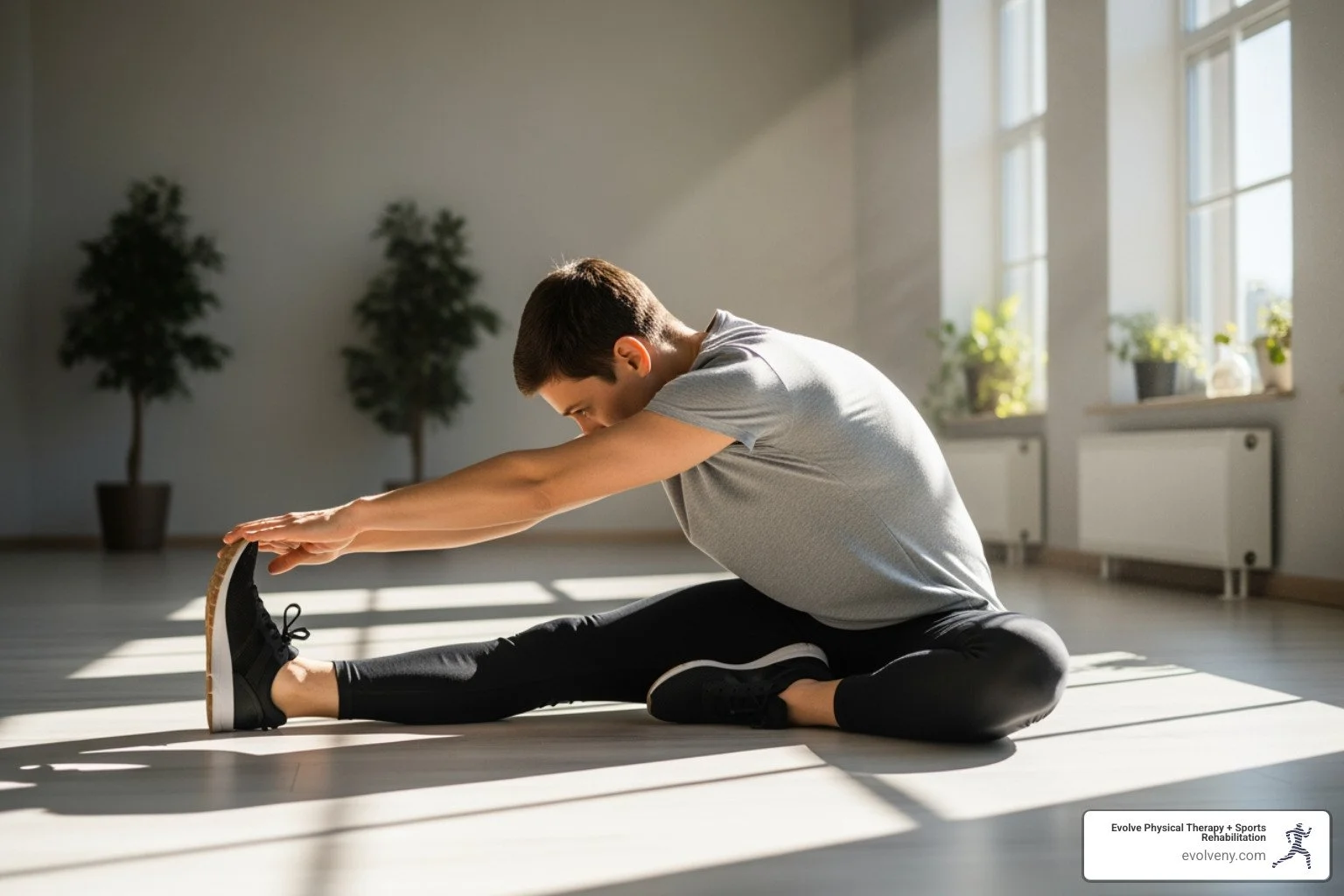
Beyond the Stretch: How Manual Exercises Transform Your Body
Why Manual Stretching Exercises Matter for Your Body
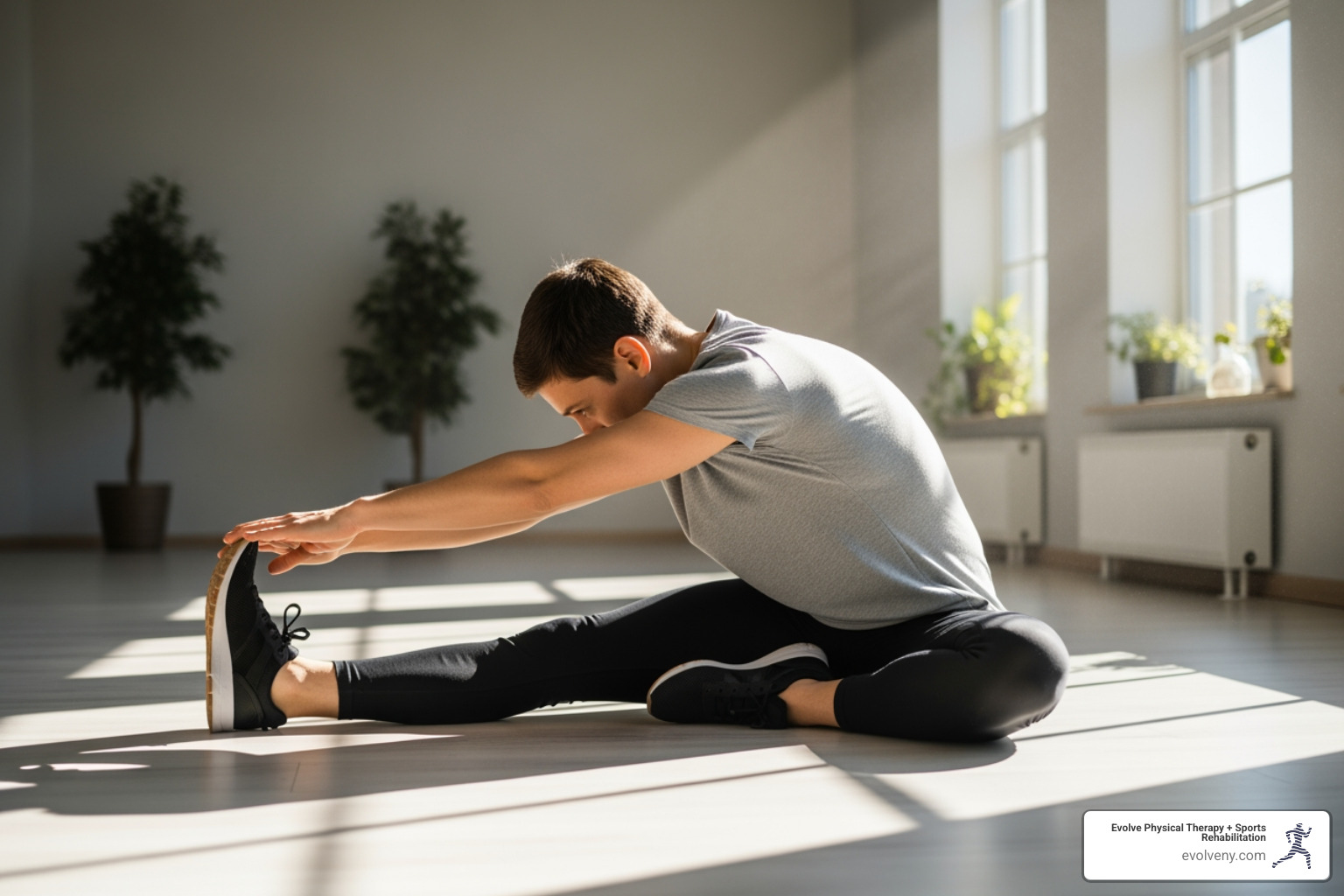
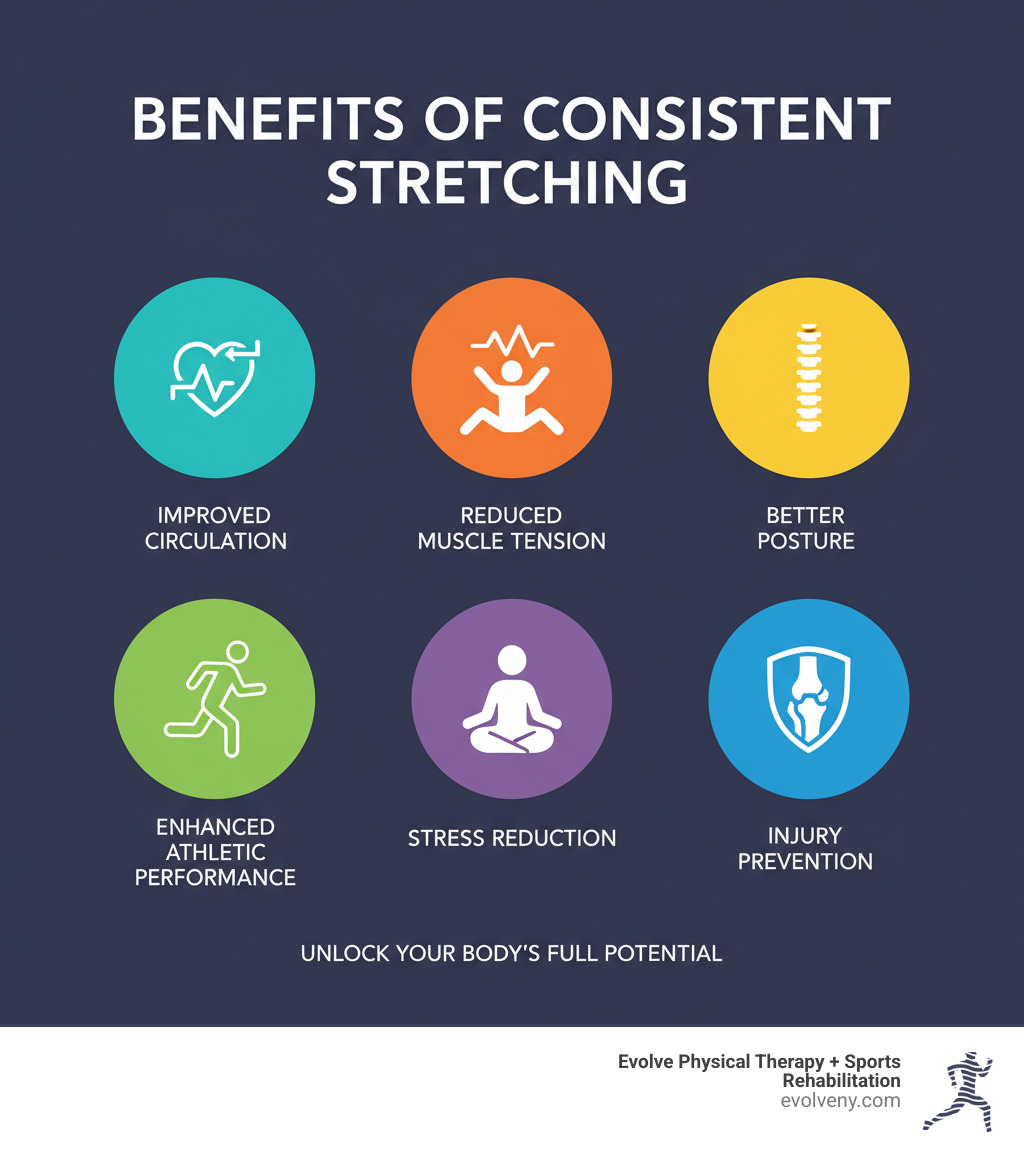
Manual stretching exercises are movements where you deliberately lengthen muscles to improve flexibility and range of motion. When done correctly, they offer significant benefits:
- Increased Flexibility & Range of Motion: Move more freely in daily activities.
- Injury Prevention: Reduce strain risk by strengthening muscle-tendon connections.
- Pain Relief: Ease chronic discomfort in the back, neck, and joints.
- Better Posture: Correct muscle imbalances caused by prolonged sitting.
Many active adults struggle with recurring pain despite staying fit. Traditional advice often suggests rest or surgery, but this overlooks the root cause: tight, shortened tissues pulling the body out of alignment. Manual stretching exercises target these imbalances directly.
Research confirms that consistent stretching improves flexibility, reduces injury risk, and helps manage conditions like back pain. Holding a stretch for 30 seconds, repeated several times, can significantly improve your range of motion. However, the type of stretching matters. Static stretching (holding a position) is best for general flexibility, while dynamic stretching (controlled movements) prepares your body for exercise.
I'm Lou Ezrick, founder of Evolve Physical Therapy in Brooklyn. For nearly two decades, I've helped thousands of patients overcome chronic pain with targeted manual stretching exercises and hands-on rehabilitation. I've seen how the right program can transform not just movement, but a person's entire quality of life.
The Science of the Stretch: How Your Muscles Adapt
When you perform manual stretching exercises, you're triggering a conversation between your muscles and your nervous system. Consistent stretching literally lengthens your muscles over time by adding new units called sarcomeres. It also remodels the connective tissue (fascia) that wraps your muscles, making it more pliable.
Your nervous system has built-in safety mechanisms. Muscle spindles detect when a muscle stretches too fast or too far, triggering a protective stretch reflex that causes it to contract. This is why bouncing during a stretch is counterproductive. Conversely, Golgi Tendon Organs (GTOs) monitor tension; when it's high, they signal the muscle to relax. This allows for a deeper, safer stretch.
Through consistent manual stretching exercises, you can retrain these reflexes, teaching your nervous system to allow a greater range of motion. You're not forcing change; you're working with your body's natural systems. For a deeper dive, see these current concepts in muscle stretching for exercise and rehabilitation.
Static vs. Dynamic Stretching: What's the Difference?
Timing and technique are crucial for effective manual stretching exercises. The two main types are static and dynamic.
Static stretching is when you hold a stretch in a still position, typically for 15-60 seconds. It's best performed after a workout as part of your cool-down. This helps improve long-term flexibility, increase range of motion, and relax your muscles.
Dynamic stretching involves controlled, fluid movements that take your joints through their full range, like leg swings or arm circles. It's the ideal warm-up before exercise, as it increases blood flow, raises body temperature, and prepares your neuromuscular system for activity.
| Feature | Static Stretching | Dynamic Stretching |
|---|---|---|
| Purpose | Increase flexibility, improve ROM, cool-down | Warm-up, prepare for activity, improve mobility |
| Movement | Held position, no bouncing | Controlled, fluid movements, repetitive |
| Timing | After workout/activity | Before workout/activity |
| Examples | Hamstring stretch, calf stretch, triceps stretch | Leg swings, arm circles, torso twists |
| Primary Benefit | Long-term flexibility gains, muscle relaxation | Improved performance, improved blood flow |
A simple rule: use dynamic stretches to prepare for movement and static stretches to cool down afterward. Avoid ballistic stretching (bouncing), which can trigger the stretch reflex and increase injury risk.
Advanced Stretching Techniques
For those ready to advance, Proprioceptive Neuromuscular Facilitation (PNF) is a powerful technique. PNF combines passive stretching with muscle contractions to achieve rapid gains in flexibility. It leverages the GTO reflex to trick the muscle into relaxing more deeply.
One common method is the hold-relax technique. A partner stretches your muscle to a comfortable limit. You then isometrically contract that muscle against their resistance for 5-10 seconds. Upon relaxing, your partner can guide you into a deeper stretch. PNF often produces more immediate gains in range of motion than static stretching alone.
Because PNF is a form of assisted stretching and is quite intense, it's best performed with a qualified professional. At Evolve Physical Therapy, we use PNF to help patients restore joint mobility quickly and safely.
The Ultimate Guide to Safe and Effective Manual Stretching Exercises
To get the most from manual stretching exercises, safety is paramount. Following a few key guidelines ensures you're helping your body, not harming it.
The most important rule is that stretching should never hurt. You should feel a gentle pull or mild tension, not sharp pain. Pain is a signal to stop. Always warm up for 5-10 minutes with light cardio before stretching to prepare your muscles. Never bounce your stretches; this can trigger a protective muscle contraction and increase injury risk. Instead, move slowly and deliberately.
Avoid stretching if you have an acute injury, active inflammation, or feel sharp pain during movement. People with hypermobility, unhealed fractures, or bony blocks that limit movement should also be cautious and seek professional guidance. For more on safe stretching, see these current concepts in muscle stretching for exercise and rehabilitation.
The Golden Rules: Duration, Frequency, and Breathing
To see real results from manual stretching exercises, follow these three golden rules:
- Duration: Hold static stretches for 15-30 seconds. For deeper, more lasting changes, you can work up to 60 seconds. Perform 2-4 repetitions for each stretch.
- Frequency: Consistency is key. Stretch your major muscle groups at least 2-3 days per week to see and maintain improvements in flexibility.
- Breathing: Never hold your breath. Breathe slowly and rhythmically. Try to relax deeper into the stretch with each exhalation to reduce tension and increase effectiveness.
Getting Started with Basic Manual Stretching Exercises
These foundational manual stretching exercises target common areas of tightness in the lower body.
- Hamstring Stretch: Lie on your back and loop a towel under the ball of one foot. Gently straighten that leg toward the ceiling, pulling the towel to feel a stretch in the back of your thigh. Hold for 15-30 seconds.
- Quadriceps Stretch: Standing, use a wall for balance. Grab your ankle and gently pull your heel toward your buttock, feeling a stretch in the front of your thigh. Hold for 15-30 seconds.
- Calf Stretch: Face a wall, step one foot back, and keep the back leg straight with the heel on the floor. Lean forward until you feel a stretch in your calf. Hold for 15-30 seconds.
- Groin Stretch (Butterfly): Sit on the floor with the soles of your feet together. Gently press your knees toward the floor to stretch your inner thighs. Hold for 15-30 seconds.
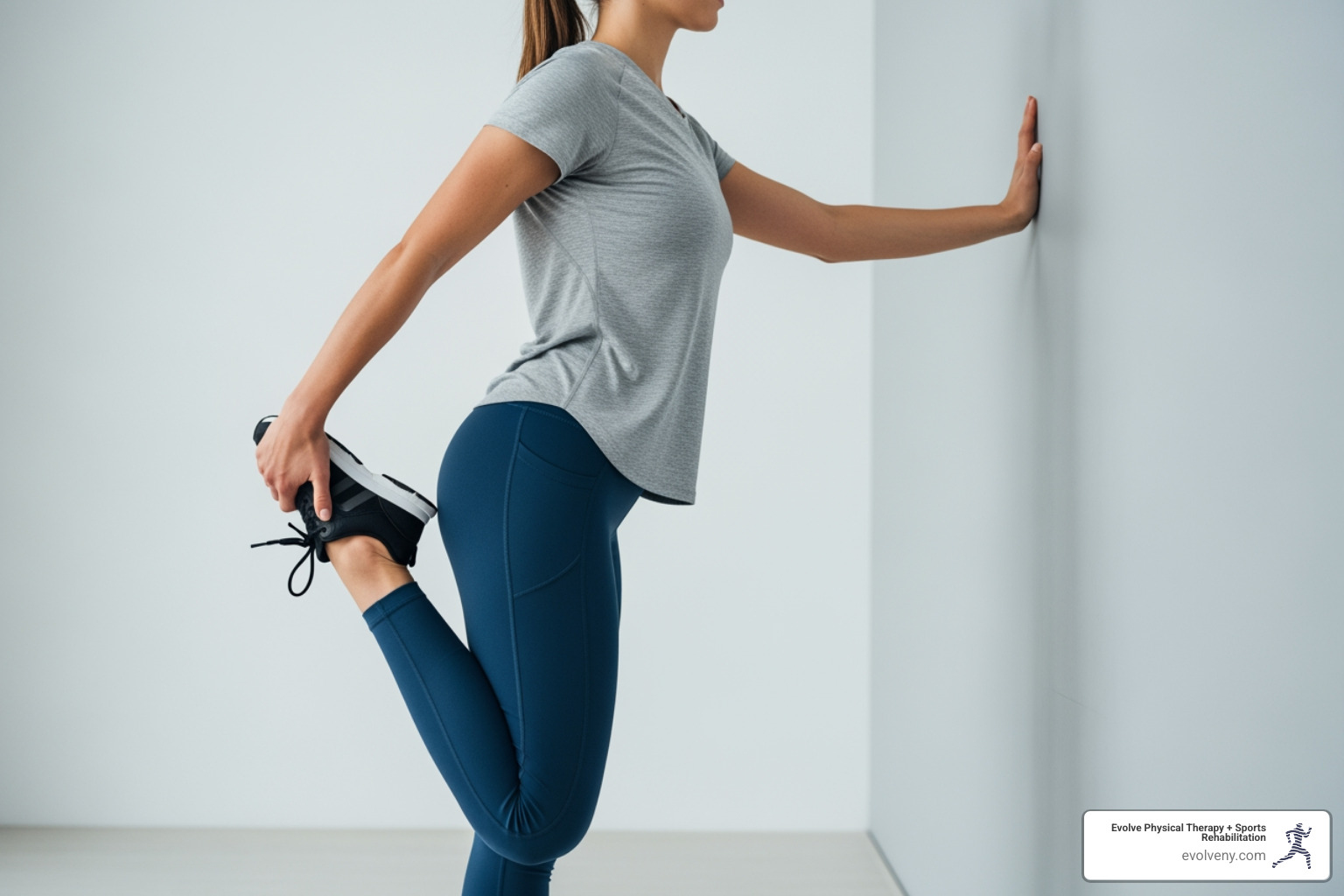
For more ideas, check out this guide to basic stretches from the Mayo Clinic.
Targeting Key Areas: Neck, Shoulders, and Back
Combat the tension from desk work and daily stress with these upper body manual stretching exercises.
- Side Bend Neck Stretch: Sit tall and gently tilt your ear toward your shoulder. Hold for 15-30 seconds and repeat on the other side.
- Cross-Body Shoulder Stretch: Pull one arm across your chest with your opposite hand, keeping the shoulder down. Hold for 15-30 seconds, then switch arms.
- Doorway Chest Stretch: Stand in a doorway with forearms on the frame. Step forward and lean in to feel a stretch across your chest. Hold for 20-30 seconds.
- Knee-to-Chest Stretch: Lie on your back and gently pull one knee toward your chest to stretch your lower back. Hold for 15-30 seconds and repeat with the other leg.
- Seated Trunk Rotation: Sitting in a chair, twist your upper body to one side, using the chair for a gentle assist. Hold for 10-20 seconds, then switch sides.

Always ease into these stretches gently and listen to your body. Regular practice will bring significant relief and improved mobility.
Integrating Stretching into Your Life
Manual stretching exercises are about more than flexibility; they're about creating a life with easier movement, less pain, and reduced stress. Approaching stretching mindfully, by focusing on your breath and body sensations, can calm your nervous system and break the cycle of stress-induced muscle tension.
Regular stretching makes everyday movements feel effortless and helps protect against injury, which is especially important as we age. For those with chronic conditions like osteoarthritis, it's a powerful tool for managing discomfort. The key is consistency and gradual progression.
Stretching for Your Lifestyle: Warm-ups, Cool-downs, and Desk Breaks
Manual stretching exercises can be integrated into any lifestyle. Small, strategic moments of stretching create meaningful change.
- Warm-ups: Before exercise, perform 5-10 minutes of dynamic stretching (e.g., arm circles, leg swings). This prepares your body for action by increasing blood flow and muscle temperature.
- Cool-downs: After your workout, use static stretching. Holding stretches for 15-30 seconds while your muscles are warm improves long-term flexibility and can reduce soreness.
- Desk Breaks: If you sit for long periods, take short stretch breaks every hour. Try these simple stretches at your desk:
- Neck: Slowly turn your head to look over each shoulder, holding for 10-30 seconds.
- Wrists: Extend one arm and gently pull your fingers down, then up. Repeat on the other side.
- Chest: Interlace your fingers behind your head and squeeze your shoulder blades together to open your chest.
How to Progress with Manual Stretching Exercises
As you become more flexible, your manual stretching exercises will feel easier. To continue making progress, you can:
- Increase duration: Gradually work up from holding stretches for 30 seconds to 60 seconds.
- Go deeper: As a muscle relaxes, gently ease further into the stretch without causing pain.
- Add variety: Incorporate new stretches or use props like a strap or foam roller.
- Try advanced techniques: When ready, consider PNF stretching with a professional to accelerate flexibility gains.
Progression should always be gradual and pain-free. Consistency is more important than intensity for building lasting flexibility.
Frequently Asked Questions about Manual Stretching
Here are answers to the most common questions we hear about manual stretching exercises at our Brooklyn physical therapy clinic.
Should stretching hurt?
No. Stretching should never cause sharp pain. The "no pain, no gain" myth is dangerous when it comes to stretching. You should feel a gentle pull or mild tension in the muscle, which indicates it is lengthening effectively. Sharp pain is your body's signal to stop, as it can mean you are triggering a protective muscle contraction or causing damage. Always listen to your body and ease off if you feel pain.
How long does it take to see flexibility improvements?
This varies for everyone, depending on factors like age, genetics, and starting flexibility. However, with a consistent routine of manual stretching exercises (2-3 times per week), most people notice measurable improvements in their range of motion within 2 to 4 weeks. More significant, long-lasting changes typically take several months of dedicated practice. The most important factor is consistency; regular, short sessions are more effective than infrequent, long ones.
Is it better to stretch before or after a workout?
Both, but the type of stretching is different.
- Before a workout: Use dynamic stretching (e.g., leg swings, arm circles) as part of your warm-up. These active movements increase blood flow and prepare your muscles for activity, improving performance and reducing injury risk.
- After a workout: Use static stretching (holding a stretch for 15-60 seconds) as part of your cool-down. Your muscles are warm and pliable, making this the ideal time to improve long-term flexibility and range of motion.
Conclusion: Transform Your Movement, Transform Your Life
You now have the knowledge to use manual stretching exercises to improve flexibility, reduce pain, and prevent injuries. The key is to put this knowledge into action. Committing to a consistent routine, even for just a few minutes a week, will be rewarded with greater mobility and an improved quality of life.
Many people, like the patient with sciatic pain mentioned earlier, have avoided invasive procedures by addressing the root cause of their pain through targeted stretching and physical therapy. This is the power of a proactive, hands-on approach.
At Evolve Physical Therapy, we help people across Brooklyn—from Marine Park to Park Slope—find their body's potential. Our hands-on method involves a unique evaluation, expert guidance on proper technique, and a personalized program that adapts as you progress. We address the underlying imbalances, not just the symptoms.
If you're ready to move with more ease and confidence, we're here to help. Learn how our personalized manual stretching exercises and hands-on therapy can make a difference. Find out more at our manual physical therapy services page.
Your body has carried you this far. Let's help it carry you even further.

Sleep Tight, Sleep Right: Ergonomic Sleeping Posture Tips
Why Ergonomics Sleeping Posture Matters for Your Body

Ergonomics sleeping posture is the practice of positioning your body during sleep to maintain natural spinal alignment and minimize stress on your joints and muscles. Since we spend about one-third of our lives sleeping, how we position ourselves directly impacts how we feel when we wake up.
Quick Answer: Key Principles of Ergonomic Sleeping Posture
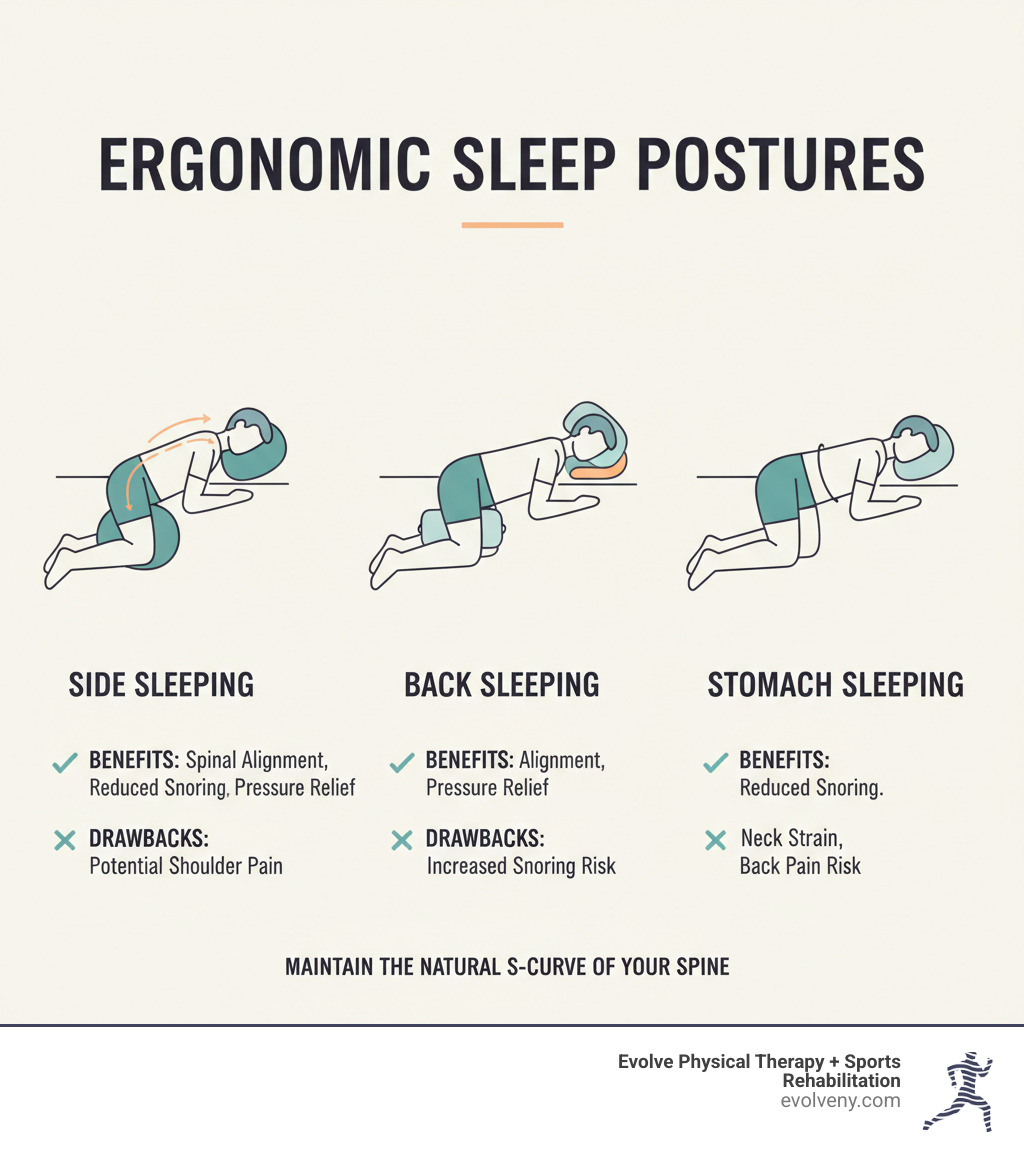
- Side sleeping: Use a pillow between your knees and one that fills the gap between your ear and mattress.
- Back sleeping: Place a pillow under your knees and use a neck pillow that supports your natural curve.
- Stomach sleeping: Use a thin pillow (or none) and place one under your hips.
- Mattress: Choose medium-firm support to keep your spine aligned.
- Goal: Maintain the natural S-curve of your spine in any position.
Poor sleep posture isn't just about comfort; it's about the strain your body accumulates. When you sleep in positions that twist your spine or compress your joints, you're setting yourself up for morning stiffness, chronic pain, and poor sleep quality. With research showing that 84% of people report back pain at some point, sleep posture is a key factor in both causing and relieving it.
The good news is that small adjustments can lead to dramatic improvements. Whether you have a stiff neck, lower back pain, or just don't feel rested, understanding sleep ergonomics can help you break the cycle of pain and poor sleep.
I'm Lou Ezrick, a physical therapist at Evolve Physical Therapy in Brooklyn. With nearly two decades of experience, I've seen how improving sleep posture is often the missing piece for recovering from neck and back pain. Let's explore how you can transform your sleep and wake up feeling refreshed.
Your Sleep Foundation: Choosing the Right Mattress and Pillows
Your mattress is the foundation for your ergonomics sleeping posture. It should support your body's natural curves and distribute pressure evenly. While personal comfort is key, comfort without support leads to morning stiffness. A mattress that's too soft lets your spine sag, while one that's too firm creates pressure points. Research shows that medium-firm mattresses may effectively decrease pain among individuals complaining of back pain and improve sleep quality.
To test your mattress, lie on your back and slide a hand under your lower back. If it slides through with slight resistance, the firmness is likely good. A large gap means it's too firm; difficulty sliding your hand through means it's too soft. Most mattresses have a lifespan of 8-10 years. Visible sagging, feeling bumps, or rolling toward the middle are signs it's time for a replacement. If you consistently wake up with aches that fade after moving around, your mattress may be the culprit.
Focus on how a mattress supports your body rather than on marketing features like coil counts. For more details, a 2021 review on mattress choice for back pain offers further insight.
The Role of Pillows in Proper Sleep Posture
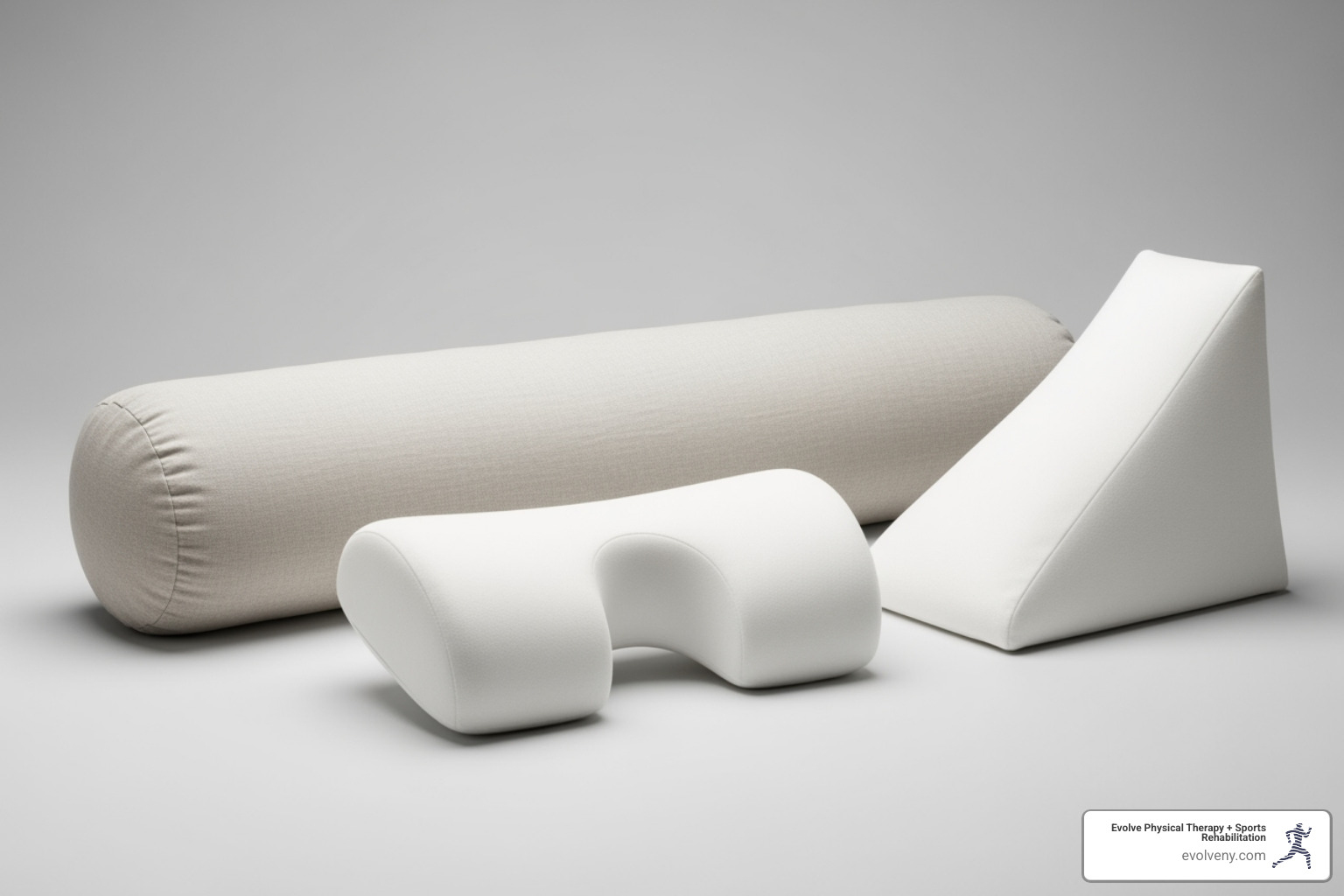
Your pillow's job is to fill the gap between your head and the mattress, keeping your head and neck aligned with your spine. The right pillow depends on your sleeping position, neck curve, and mattress firmness. A softer mattress may require a thinner pillow, while a firmer one may need a thicker pillow.
Your goal is a neutral, aligned position. If your pillow is too high, it pushes your head forward; too low, and it tilts back. If your current pillow isn't right, try adjusting its filling or adding folded towels to change its height. A rolled towel under your neck can also provide temporary support. A plush mattress pad can cause your body to sink, potentially requiring a thinner pillow.
Pillow Setups for Each Sleeping Position
Proper pillow placement can transform your ergonomics sleeping posture. Here’s how to optimize your setup:
For back sleepers, use a medium-loft pillow that supports your neck's natural curve without pushing your head forward. Place a small pillow or rolled towel under your knees to relieve lower back pressure.
For side sleepers, use a thicker pillow to fill the gap between your ear and the bed, keeping your head aligned with your spine. A firm pillow between your knees is essential to align your hips and reduce stress on your lower back.
For stomach sleepers, use a very thin pillow or no pillow at all for your head to minimize neck strain. Place a thin pillow under your hips to prevent your lower back from arching.
Body pillows are excellent for side sleepers. Hugging one can support your upper arm and prevent you from leaning forward, while placing it between your knees aligns your hips. This is especially helpful during pregnancy or for those with hip or knee pain.
Mastering the Positions: An Ergonomic Guide to Sleeping
The goal of ergonomics sleeping posture is to maintain neutral spinal alignment, keeping the natural curves of your spine intact just as they are when you stand tall. When your spine is aligned during sleep, pressure on your joints and ligaments decreases, and your muscles can fully relax and recover. Poor posture forces these structures to work overtime, leading to morning stiffness.
Side Sleeping: The Most Common Position
Over 60% of adults are side sleepers, a position we often recommend for back pain, snoring, and sleep apnea.

The key to proper side sleeping is placing a firm pillow between your knees. This prevents your top leg from pulling your pelvis out of alignment and twisting your lower back. Your head pillow should be thick enough to fill the gap between your ear and the mattress, keeping your head level with your spine. Rest both arms in front of you rather than under your head to avoid shoulder and nerve compression.
Side sleeping keeps your airways open, making it a form of positional therapy for snoring and sleep apnea. If you have acid reflux, research shows that sleeping on your left side can provide relief by using gravity to keep stomach acid down. For pregnant individuals, left-side sleeping improves blood flow to the heart, uterus, and baby.
Back Sleeping: The Gold Standard for Alignment
Back sleeping is often considered the gold standard for spinal health because it allows your body to rest in a neutral position, with weight distributed evenly.

The key is to place a small pillow or rolled towel under your knees. This supports your lower back's natural curve and reduces stress on your lumbar spine. For your neck, choose a low-loft pillow that cradles its natural curve without pushing your head too far forward. This position is often best for reducing neck pain because it allows neck muscles to rest.
However, back sleeping can worsen snoring and sleep apnea, as gravity can cause your tongue and soft tissues to block your airway.
Stomach Sleeping: How to Modify for Better Comfort
Stomach sleeping is the least recommended position because it puts significant strain on your neck and spine. To breathe, you must twist your head to one side for hours, which can lead to chronic pain. This position also provides the least back support and can cause your midsection to sink into the mattress, creating an unhealthy arch in your lower back.
If you cannot break the habit, these modifications can minimize the damage. Use the thinnest possible pillow for your head, or no pillow at all, to keep your neck in a more neutral position. Second, place a thin pillow under your pelvis or lower abdomen to counteract the arch in your lower back.
Stomach sleepers generally need a firmer mattress to prevent their midsection from sinking too deeply. At Evolve Physical Therapy, we encourage patients to transition away from this position for long-term neck and back health.
Sleep Solutions: How Ergonomics Sleeping Posture Affects Health
How you position your body for eight hours at night is just as important as your posture during the day. Sleeping in a twisted or strained position prevents your body from properly resting and healing, leading to morning aches and pains. Simple adjustments to your ergonomics sleeping posture can dramatically reduce these issues and improve your sleep quality.
Ergonomics Sleeping Posture for Back and Neck Pain
Back and neck pain are often linked to sleep habits. For lower back pain, side sleeping with a pillow between your knees is ideal to keep your hips and spine aligned. If you prefer sleeping on your back, a pillow under your knees is essential to take pressure off your lumbar spine.
Neck pain often responds well to back sleeping, which allows neck muscles to relax. In any position, the key is using a pillow that supports the natural curve of your neck, keeping your head in a neutral line with your spine. For a deeper dive, see our post on the best sleeping positions to combat back, neck, foot and elbow pain or this scoping review on sleep posture and spinal symptoms.
Breathing, Snoring, and Sleep Apnea
Your sleep position significantly impacts your breathing. Back sleeping is the worst position for snoring or sleep apnea because gravity can cause your tongue and soft tissues to fall backward and block your airway.
Side sleeping acts as natural positional therapy by keeping your airways open. For many people with positional obstructive sleep apnea, simply changing to a side position can significantly improve symptoms. Elevating the head of your bed by about six inches with blocks or a wedge pillow also uses gravity to your advantage, making it harder for airways to collapse.
Special Considerations: Pregnancy, Hip Pain, and Heartburn
Certain conditions require specific attention to ergonomics sleeping posture.
Pregnancy: Sleeping on your left side with knees bent is recommended to improve blood flow to the heart, uterus, and baby. A body pillow can support your belly and fit between your knees to maintain alignment.
Heartburn and GERD: Left-side sleeping can prevent stomach acid from flowing back into the esophagus. Combining this with elevating the head of the bed can further reduce nighttime reflux.
Hip and Knee Pain: For side sleepers, a pillow between the knees is non-negotiable to keep hips stacked and reduce stress. Back sleepers should place a pillow under their knees to keep joints slightly flexed and comfortable.
Frequently Asked Questions about Sleep Posture
What is the healthiest sleeping position?
While side sleeping is often considered the healthiest for most people because it supports spinal alignment and can help with snoring and acid reflux, there is no single "perfect" position. The best position is ultimately the one that allows you to sleep soundly and wake up feeling refreshed and pain-free. At Evolve Physical Therapy, our goal is to help you optimize your preferred position for your unique body and health needs.
How do I know if my mattress or pillow is wrong for me?
Your body will give you clear signals. Waking up consistently with stiffness, neck pain, or back pain that disappears after 15-30 minutes of moving around is a major red flag. For your mattress, look for visible sagging or indentations. For your pillow, the main sign it's wrong is if your head is tilted significantly up or down, rather than being in a neutral, straight line with your spine. If you're constantly bunching it up or adjusting it, it's not providing the right support.
How can I train myself to sleep in a new position?
Changing a long-term sleep habit takes patience, but it's possible. The key is to use pillows strategically to support your body and prevent you from rolling back into your old position. To become a side sleeper, try hugging a body pillow and placing another pillow behind your back to act as a "bumper." To become a back sleeper, place pillows on either side of you to create a supportive "nest." Always place a pillow under your knees for comfort, which makes the position more sustainable.
It may take a few weeks for your body to adapt. You will likely wake up in your old position at first; just readjust and be persistent. The long-term benefits for your ergonomics sleeping posture and pain levels are worth the adjustment period.
Conclusion: Waking Up Refreshed and Pain-Free
We spend roughly a third of our lives in bed, a crucial time for the body to repair itself, recover, and decompress. How you position yourself during this recovery time has a measurable impact on how you feel when you wake up.
Understanding ergonomics sleeping posture is about working with your body's natural alignment to minimize stress and maximize healing. Your bed is your nighttime workspace for recovery. Small, consistent adjustments—like adding a pillow between your knees or choosing a medium-firm mattress—can lead to big improvements in how you feel each morning. Give your body a few weeks to adapt to any new supports or positions.
Posture is a 24/7 activity. Eight hours of misalignment every night can undo the good work you do during the day. If you've tried optimizing your sleep setup and still wake up with pain, professional guidance can make all the difference. At Evolve Physical Therapy in Brooklyn, we look at the whole picture to create a personalized plan that works for your life. Our hands-on approach helps you understand your unique needs so you can function at your best.
Whether you're dealing with chronic pain or just want to wake up feeling better, we're here to help. Sleep tight and sleep right—your body will thank you for it.
Learn more about how our ergonomic physical therapy services in Brooklyn can help you achieve better sleep and a pain-free life.

Don't Trip Up: Proven Fall Prevention Tips for Older Adults
Why Fall Prevention Matters More Than You Think

Fall prevention strategies are essential for maintaining independence and quality of life as you age. Here are the most effective, research-backed approaches:
Core Fall Prevention Strategies:
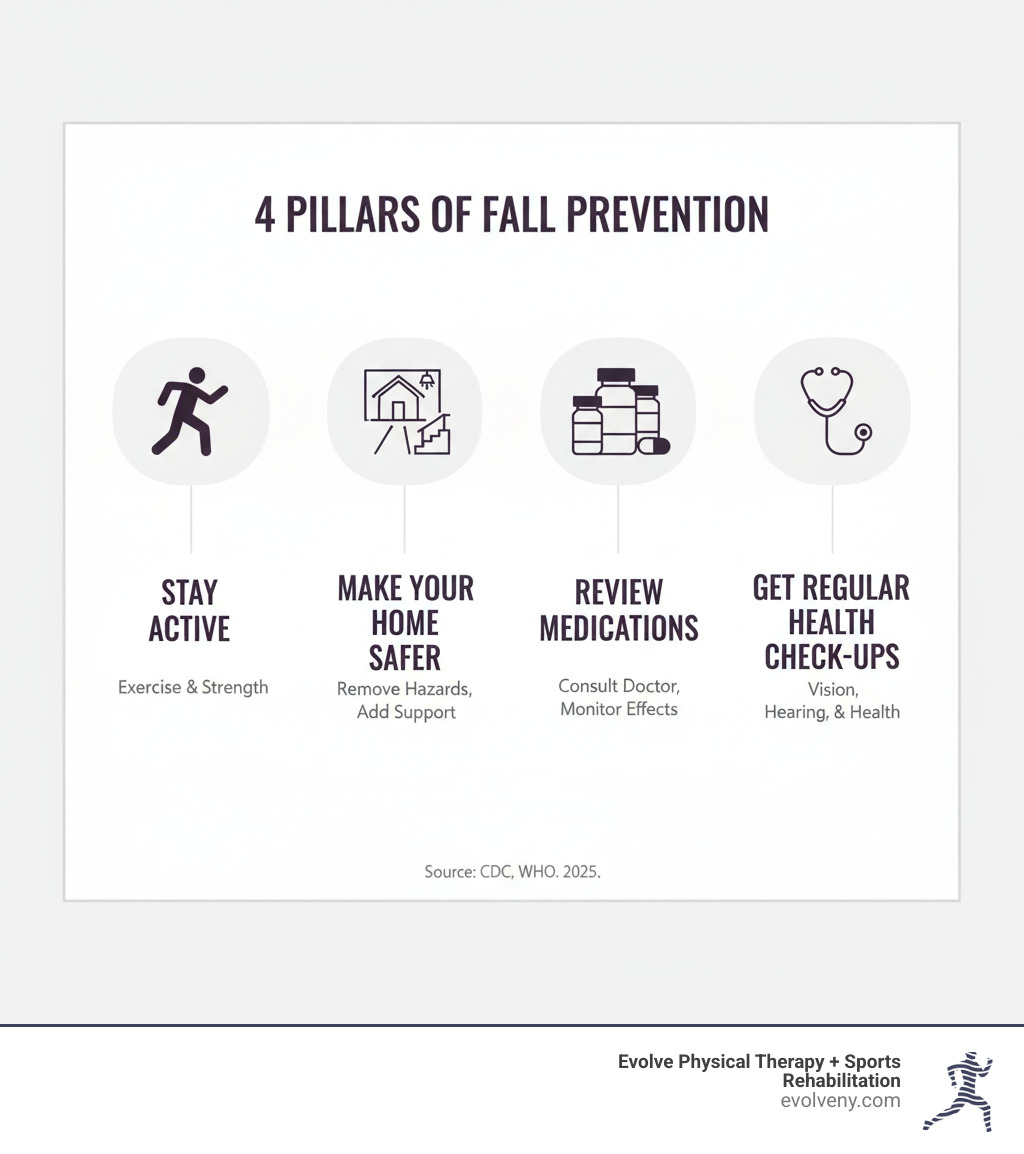
- Stay Physically Active - Programs like Tai Chi can reduce falls by up to 35%.
- Make Your Home Safer - Remove tripping hazards, improve lighting, and install grab bars.
- Review Your Medications - Many drugs cause dizziness or drowsiness that increases fall risk.
- Get Regular Check-ups - Annual vision, hearing, and health assessments catch problems early.
- Wear Proper Footwear - Use non-skid, low-heeled, well-fitting shoes.
- Use Assistive Devices - Canes and walkers provide stability when needed.
The stakes are high. More than one in four adults over 65 fall each year, leading to over 38,000 deaths in 2021 and nearly 3 million emergency room visits. The annual medical costs are a staggering $50 billion.
The good news is that falls are not an inevitable part of aging. Research proves they are preventable. Most falls happen at home, but simple changes to your environment and exercises to improve strength and balance can dramatically reduce your risk. The Otago Exercise Program, for example, reduced falls by 35%.
As Lou Ezrick, founder of Evolve Physical Therapy, I've spent nearly two decades helping older adults with personalized movement therapy and strength training. My approach addresses the root causes of instability, not just the symptoms.
Understanding Your Fall Risk
Understanding your personal risk of falling is the first step toward prevention. Falls are the leading cause of injury death for adults 65 and older, and in Canada, they account for 85% of seniors' injury-related hospitalizations.
Falls typically result from a combination of factors.
Biological changes with age matter. Declining eyesight and hearing, muscle loss (sarcopenia), and chronic conditions like diabetes or heart disease can affect stability. Postural hypotension—lightheadedness when standing up—and cognitive changes also play a role.
Daily choices contribute to your risk. A sedentary lifestyle leads to weaker muscles and poorer balance. Rushing, even in familiar spaces, and consuming alcohol can impair your balance and judgment.
Your environment is a major factor. In fact, 50% of falls causing hospitalization happen at home. Common hazards include clutter, poor lighting, loose rugs, and wet surfaces.
Understanding these factors is your foundation for creating effective fall prevention strategies. To get a clearer picture of your personal risk, you can take the Falls Free Checkup.
How to Assess Your Personal Risk
Answering these questions can help you assess your risk.
- Have you fallen in the past year? A previous fall is a strong predictor of future falls, signaling underlying issues that need attention.
- Do you feel unsteady when walking or standing? This feeling often indicates balance issues that can be addressed.
- Are you taking medications that cause drowsiness or dizziness? Even over-the-counter drugs can have side effects that increase fall risk.
- Have you noticed changes in your vision or hearing? Difficulty seeing obstacles or hearing sounds can impact your safety.
- Do your feet hurt or feel numb? Foot problems and poor footwear are often connected to falls.
- Are there hazards in your home you regularly steer around?
If you answered yes to any of these, it's time for a conversation with your doctor or physical therapist. They can conduct assessments like gait analysis and balance testing to pinpoint concerns. Learn more about how we can help with physical therapy for balance disorders.
The Fear of Falling Cycle
The fear of falling is a common anxiety that can, ironically, increase your fall risk. This fear often leads to a vicious cycle:
- You become afraid of falling, so you move less.
- Moving less causes your muscles to weaken and your balance to decline.
- Weaker muscles and poorer balance increase your actual risk of falling.
- This increased risk makes you even more fearful, continuing the cycle.
This pattern can lead to social isolation and a loss of independence. But you can break this cycle. Building confidence through targeted exercises helps you trust your body again.
Physical therapy is particularly effective at interrupting this fear cycle. We create structured programs that gradually challenge your balance in a safe, supportive environment, helping you build strength and confidence step by step. The goal is to help you reclaim an active, independent life. Learn more about how we approach balance and gait training to help you move confidently again.
Proactive Fall Prevention Strategies: Strengthening Your Body
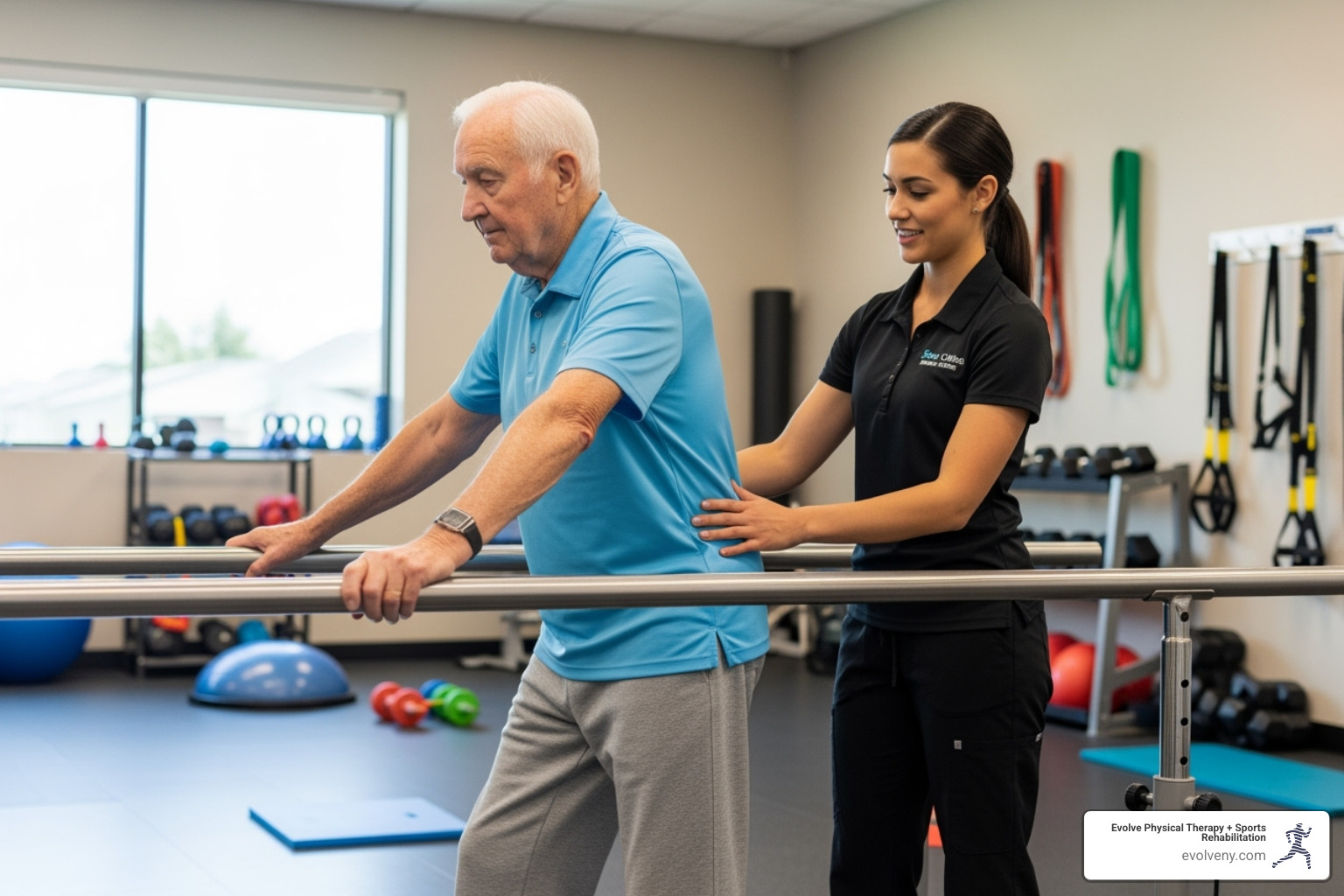
Your body is your best defense against falls. Physical activity is one of the most powerful fall prevention strategies, with research showing the right exercise program can reduce fall risk by up to 35%.
At Evolve Physical Therapy, we specialize in preventing injuries before they happen. Our approach addresses the root causes of instability, from muscle weakness to risky movement patterns. Learn more about our comprehensive approach to physical therapy for fall prevention.
Recommended Exercises for Balance and Strength
Certain exercises are proven to reduce fall risk.
- Tai Chi: This gentle practice of slow, flowing movements improves balance, coordination, and flexibility. It's a low-impact option suitable for various fitness levels.
- The Otago Exercise Program: Delivered by physical therapists, this personalized, home-based program focuses on leg strengthening and balance retraining, reducing falls by 35% in studies.
- Walking: Regular walking builds leg strength and endurance. Aim for at least 150 minutes per week.
- Water Aerobics: The water supports your body while providing resistance, making it ideal for those with joint pain.
- Strength Training: Using resistance bands or light weights twice a week directly addresses muscle weakness in the legs, core, and upper body.
- Yoga and Pilates: These practices emphasize core strength, flexibility, and body awareness, which are all critical for balance.
The key is finding an activity you enjoy. Start slowly and gradually increase the intensity. For exercises you can do at home, see our guide to balance exercises at home. For more specialized guidance, explore our resources on balance training for seniors.
How Physical Therapy Creates a Custom Plan
Because every person is unique, effective fall prevention requires a custom plan. At Evolve Physical Therapy, our comprehensive assessment identifies the specific causes of your instability.
- Gait analysis reveals patterns in your walk that might increase fall risk.
- Strength assessment tests key muscle groups for stability, such as your legs, hips, and core. We have proven strategies to help you rebuild strength, as explained in our guide on physical therapy for muscle weakness.
- Balance testing shows how you maintain stability in different situations, helping us design targeted exercises.
Based on this data, we create a personalized exercise prescription. We teach you proper, safe form and gradually increase the difficulty as you get stronger. We also specialize in helping people overcome general deconditioning after illness or inactivity. Learn more about our approach to physical therapy for general deconditioning.
Our goal is to give you the physical capabilities and confidence to live an active, independent life.
Creating a Safer Environment at Home and Beyond
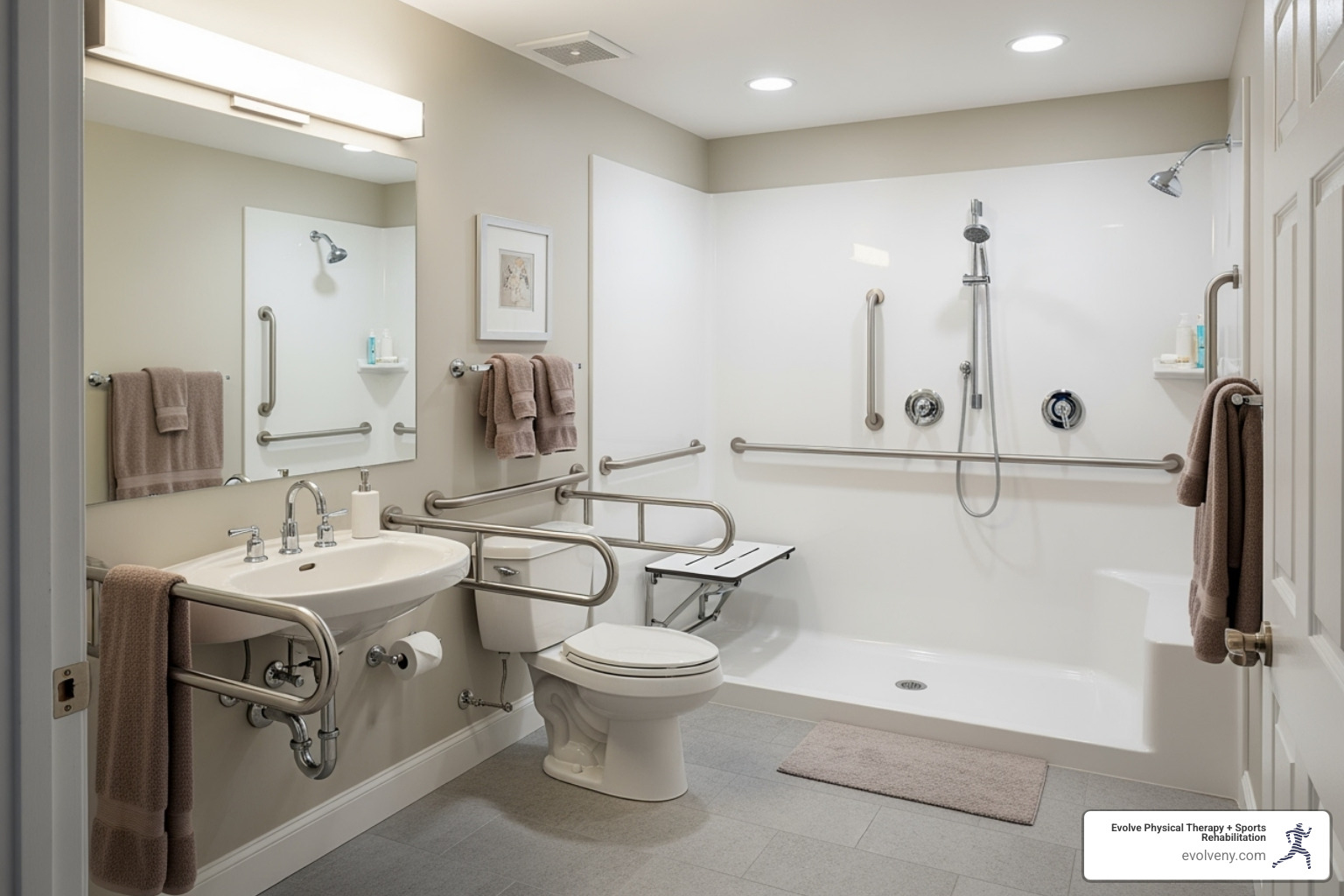
Surprisingly, 50% of falls causing hospitalization happen at home. The good news is that thoughtful changes can make your home much safer. Effective fall prevention strategies must include your environment. Most home modifications are simple and can make a dramatic difference.
Key Fall Prevention Strategies for Your Home
- Remove hazards: Clear clutter, cords, and other tripping hazards from floors and stairs.
- Secure rugs: Use double-sided tape or non-slip backing on all throw rugs, or remove them.
- Improve lighting: Install night lights in bedrooms, bathrooms, and hallways. Keep a lamp by your bed.
- Make bathrooms safer: Install grab bars by the toilet and in the shower. Use non-slip mats in the tub or shower and consider a bath seat.
- Secure stairs: Ensure stairs have solid handrails on both sides, are well-lit, and are always clear of clutter.
- Organize for reach: Store frequently used items where you can easily reach them without stretching or climbing.
- Clean spills immediately: Wipe up any spills, especially in the kitchen, to prevent slippery surfaces.
Footwear and Assistive Devices
Proper footwear is a key fall prevention strategy. Wear sturdy, well-fitting shoes with non-skid rubber soles and low heels. Avoid walking in socks or slippers on stairs or slippery floors.
If your doctor or physical therapist recommends a cane or walker, use it. These tools help you maintain independence. Ensure the device is the correct height and has non-worn rubber tips. At Evolve, we can help you choose and properly use the right assistive device. For more information, see our complete guide to physical therapy for balance.
What to Do If You Fall
Knowing how to respond to a fall can prevent a serious injury.
- Stay calm and assess. Before moving, take a moment to check for injuries. If you feel pain (especially in your head, neck, or back) or suspect a fracture, do not move. Call for help.
- Get up safely (if uninjured). Roll onto your side, then push up to your hands and knees. Crawl to a sturdy piece of furniture. Place your hands on the furniture, slide one foot forward, and push yourself up to a sitting position before standing.
- Call for help when needed. If you are injured, can't get up, or are alone, call for help immediately. Consider a medical alert system and keep a phone within reach.
Always tell your doctor about any fall, even if you aren't hurt. A fall can signal a new medical problem or medication side effect that needs to be addressed.
The Medical Side of Fall Prevention

Your healthcare team is a powerful partner in preventing falls. Regular check-ups can spot potential problems early. At Evolve Physical Therapy, we believe the best fall prevention strategies come from collaboration between you, your doctors, and your physical therapist to create a comprehensive safety plan.
Medical Fall Prevention Strategies to Discuss with Your Doctor
As we age, our bodies process medicines differently, and some can increase fall risk by causing side effects like dizziness or drowsiness. Medications to be aware of include:
- Sedatives and anxiolytics
- Antidepressants
- Antihistamines (e.g., Benadryl)
- Blood pressure medications
- Opioid pain medications
- Muscle relaxants
- Diabetes medications
- Antipsychotics
Taking multiple medications (polypharmacy) can also increase the risk of side effects.
Bring a complete list of all prescriptions, over-the-counter drugs, vitamins, and supplements to every doctor's appointment. Ask your doctor or pharmacist to review this list specifically for fall risk. They may be able to adjust dosages or switch to safer alternatives. The CDC information on fall interventions offers more resources on this topic.
The Importance of Vision, Hearing, and Nutrition
Your senses and nutrition play a large role in stability.
- Vision: Get annual eye exams to check for conditions like glaucoma and cataracts. Ensure your glasses prescription is current.
- Hearing: Even mild hearing loss is linked to increased fall risk. Get regular hearing tests and use aids if recommended.
- Nutrition and Bone Health: Strong bones can prevent a fall from becoming a fracture. Talk to your doctor about osteoporosis screening. Ensure you get enough calcium and Vitamin D through diet or supplements.
- Lifestyle: Quit smoking and limit alcohol, as both can decrease bone mass and impair balance. Maintaining a healthy weight is also important for bone health.
Frequently Asked Questions about Fall Prevention
We often hear similar questions from our patients and their families about fall prevention strategies. Here are some of the most common ones, answered with the practical insights we've gained from years of helping older adults stay safe and active:
What is the single most effective fall prevention strategy?
There is no single "magic bullet." The most effective approach is a multifaceted strategy that combines several interventions: regular exercise to improve balance and strength, home safety modifications, medication management, and regular health check-ups. Programs like Tai Chi and the Otago Exercise Program show their greatest impact when part of a comprehensive plan.
Can falls be completely prevented?
While not all falls can be prevented, your risk can be dramatically reduced. Falls are not an inevitable part of aging. By implementing comprehensive fall prevention strategies, you can significantly lower both the likelihood of falling and the severity of potential injuries. The goal is to empower you to live with greater confidence and substantially reduced risk.
How often should I review my medications for fall risk?
You should have all your medications reviewed by your doctor or pharmacist at least once a year. You should also request a review any time a new medication is prescribed, a dosage changes, or if you experience new side effects like dizziness or unsteadiness. Open communication with your healthcare team is a powerful way to protect yourself. For more information, the CDC provides extensive resources that can help guide your conversations with healthcare providers.
Take the Next Step in Fall Prevention
We've journeyed through quite a bit together today—from understanding the sobering statistics about falls to exploring the many practical fall prevention strategies you can start using right now. If there's one message we hope resonates with you, it's this: prevention is truly an investment in your independence. It's about protecting the life you've built and ensuring you can continue doing the things you love, on your own terms.
Taking these proactive steps isn't just about avoiding injury. It's about empowerment. It's about reclaiming confidence in your body and your ability to move through the world safely. Whether you start by clearing the clutter from your hallways, signing up for a Tai Chi class, reviewing your medications with your doctor, or simply having an honest conversation about your concerns, each action matters. Every small change adds up to create a safer, more active life.
At Evolve Physical Therapy + Sports Rehabilitation, we've dedicated ourselves to helping older adults just like you build strength, improve balance, and most importantly, regain confidence. We know that falls aren't just a physical issue—they affect your peace of mind, your willingness to stay active, and your overall quality of life. That's why we take a hands-on approach, creating personalized programs that address your specific challenges and goals.
Our expert physical therapists don't believe in cookie-cutter solutions. We take the time to understand your unique situation, conduct thorough assessments, and develop a plan that works for you. From gait analysis to customized exercise prescriptions, we're with you every step of the way. And we're proud to say that our specialized approach has helped countless Brooklyn residents move with greater confidence and freedom.
You don't have to steer this alone. The fear of falling doesn't have to control your choices or limit your life. With the right support and a commitment to evidence-based fall prevention strategies, you can take control of your stability and accept the independence you deserve.
Ready to get started? Take control of your stability with our specialized senior physical therapy programs. We're here to guide you, support you, and celebrate every milestone along the way. Your journey to greater confidence and safety begins with that first step—and we'd be honored to take it with you.
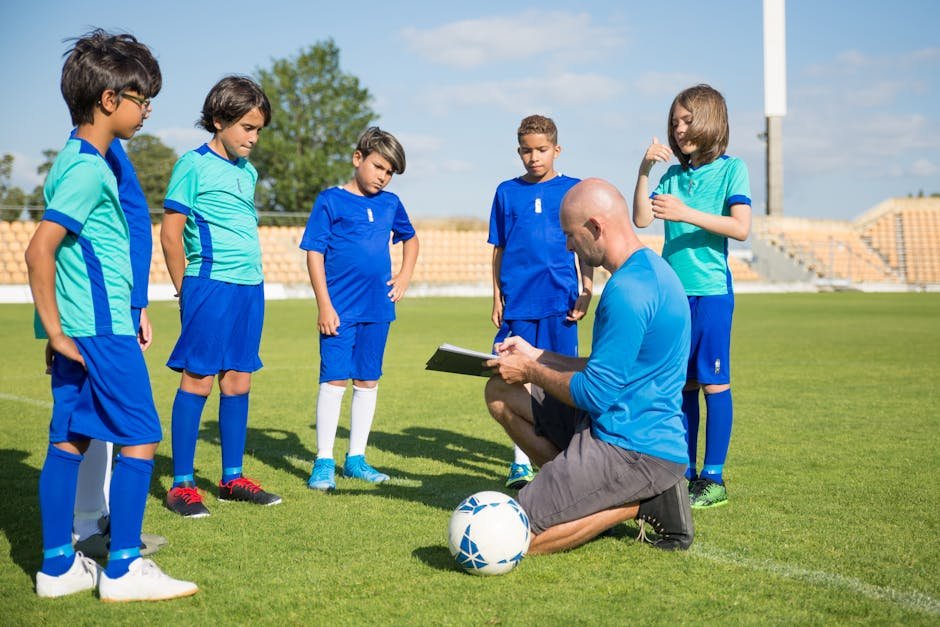
Sports Coaching Certification: Your Ticket to the Big Leagues
Why Sports Coaching Certification Matters for Every Coach

Sports coaching certification is your gateway to becoming a trusted, effective coach. Whether you're volunteering with youth sports or aiming for elite levels, certification provides the standardized training, safety knowledge, and credibility you need to succeed.
Quick Answer: What You Need to Know About Sports Coaching Certification
- What it is: Standardized training programs (like Canada's NCCP) that teach coaching skills, athlete safety, and ethical practices across 65+ sports
- Why it matters: Ensures athlete safety, builds your credibility, and opens career opportunities
- How to get it: Register on platforms like 'The Locker,' complete online modules and workshops, pass evaluations
- Time required: Varies by sport and level—from a few weeks to several months
- Cost: Typically $135-$900+ depending on the certification level and bundled courses
- Maintenance: Requires ongoing professional development to keep credentials current
Since 1974, over 2 million coaches have completed training through programs like the National Coaching Certification Program (NCCP). These programs teach you how to create safe, inclusive environments where athletes thrive.
Certified coaches develop crucial leadership skills, communication abilities, and emotional intelligence. You'll learn to make ethical decisions, prevent injuries, and build a positive sport culture that keeps young people engaged.
Certification is about channeling your passion for sport into real, measurable impact. It gives you the tools to teach fundamental skills to children or develop high-performance strategies for elite competitors. The journey starts with understanding the pathways and requirements, and there's a clear roadmap for every coach.
As Lou Ezrick, founder of Evolve Physical Therapy, I've seen how proper training—whether in *sports coaching certification or injury prevention—transforms not just performance, but lives.* My experience rehabilitating athletes has shown me that the best coaches combine technical knowledge with a deep understanding of human movement, safety, and psychology.
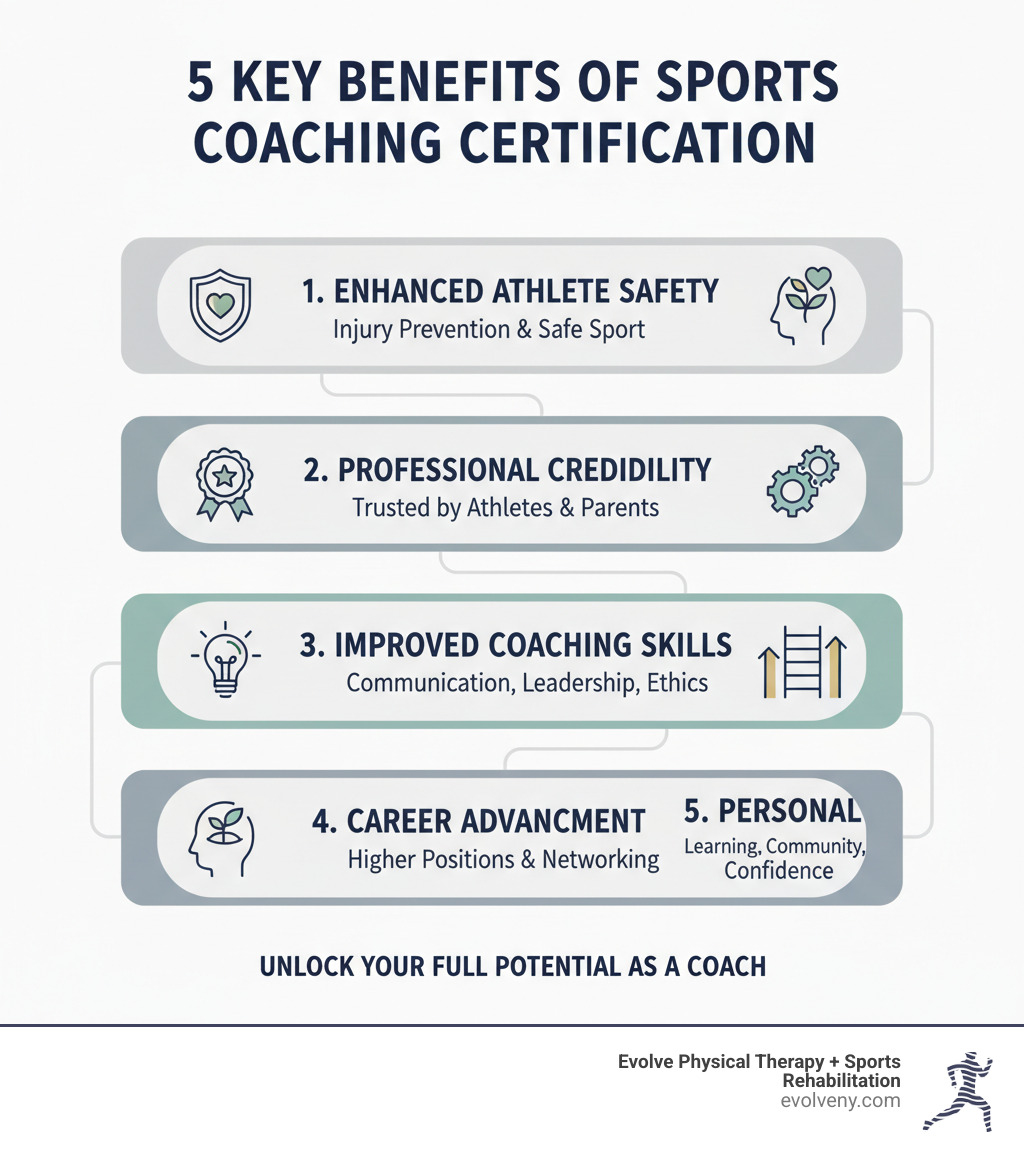
Why Get a Sports Coaching Certification? The Winning Edge
Think about the coaches who made the biggest difference in your life. They knew how to communicate, inspire, and create a safe environment to grow. That's what sports coaching certification helps you become.
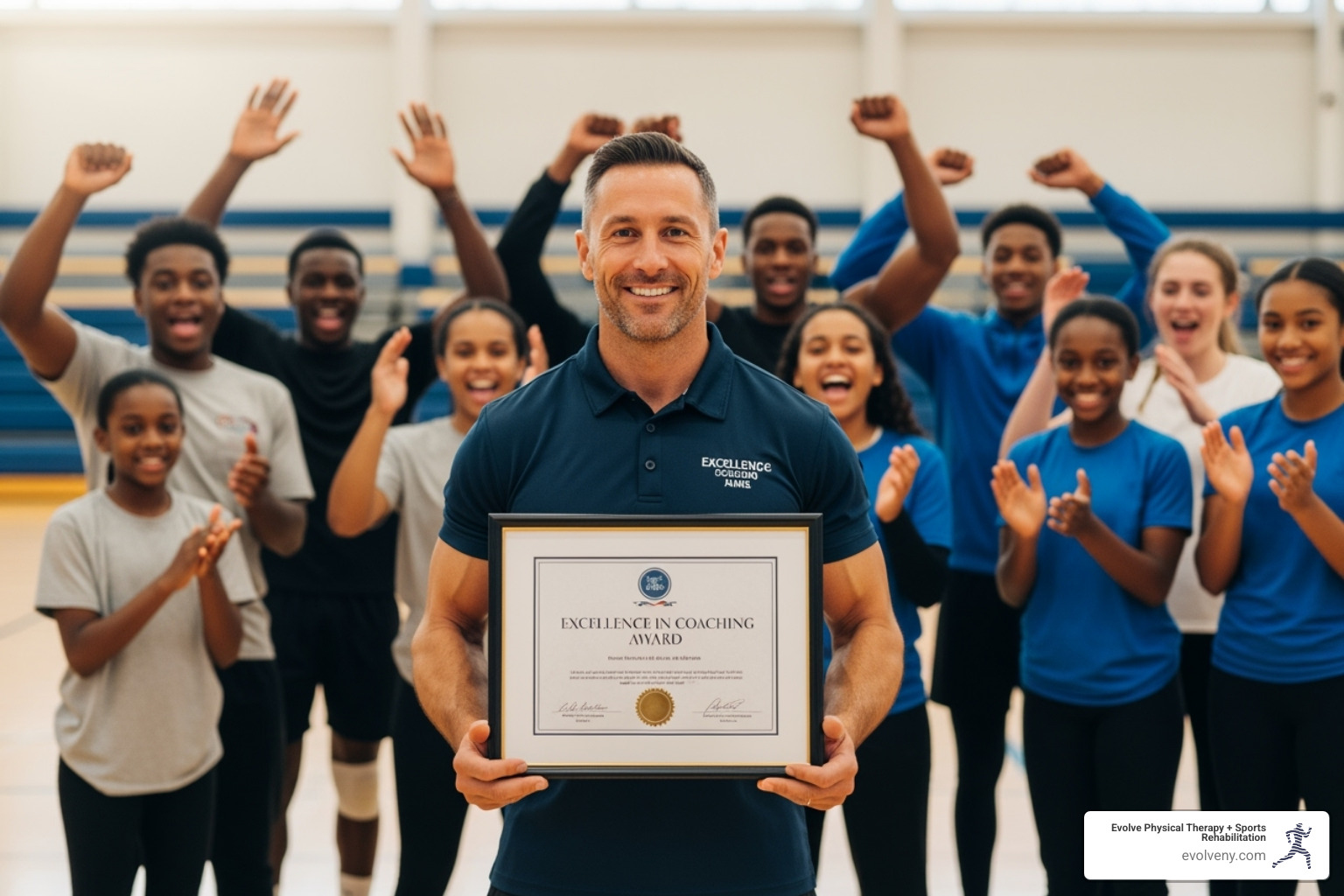
Improved credibility through certification shows athletes and parents that their trust is well-placed. It demonstrates your commitment to doing things right and meeting established standards.
The real game-changer is athlete safety. Certification teaches you injury prevention, emergency protocols, and how to spot signs of physical or psychological harm. This knowledge is essential for creating environments where athletes can push their limits safely.
You'll also develop stronger leadership skills, learning to motivate different personalities and manage team dynamics. Your impact extends into the community, as certified coaches often become role models who promote healthy, active lifestyles. The journey itself fuels personal growth, sharpening your communication, organization, and emotional intelligence.
For comprehensive resources, platforms like Human Kinetics Coach Education offer excellent materials to support your coaching journey.
Creating a Quality Sport Environment
A quality sport environment is about building a space where athletes thrive as whole people. Safe Sport practices form the foundation. You'll learn to protect athletes from abuse, harassment, and discrimination. Training covers your ethical responsibilities and prepares you to make sound decisions in difficult situations, often through modules like "Make Ethical Decisions."
Inclusivity is another cornerstone. You'll gain tools to welcome and support athletes from all backgrounds, abilities, and identities, and learn to recognize your own biases. Many programs now include focused content like anti-racism in coaching to address systemic issues.
The goal is a positive athlete experience where development and respect are priorities. When athletes feel safe and included, they're more likely to stick with sport for life. Certification gives you the knowledge to foster that growth in every athlete you work with.
Boosting Your Career and Personal Growth
Sports coaching certification is an investment in yourself. It opens doors to career opportunities, as many organizations require certification for higher-level or paid coaching roles.
The networking opportunities are also valuable, connecting you with other passionate coaches for advice and collaboration. Your communication skills will improve significantly as you learn to explain complex strategies and deliver motivating feedback.
Perhaps most importantly, certification builds your emotional intelligence. You'll develop a deeper understanding of how to manage different personalities and conflicts. All of this contributes to building confidence in your abilities. You'll know you're not just winging it—you've been trained in best practices.
The journey of professional development is ongoing, and certification provides a solid foundation to keep your knowledge current and your skills sharp.
Understanding Certification Frameworks: The NCCP Example
In Canada, the National Coaching Certification Program (NCCP) is the gold standard for sports coaching certification. Managed by the Coaching Association of Canada (CAC) since 1974, it provides standardized education across more than 65 sports. This consistency ensures coaches nationwide learn the same fundamental principles of athlete safety, skill development, and ethical coaching.
Over 2 million coaches have completed NCCP training, raising the quality of sport across the country. The program effectively combines multi-sport modules (foundational principles) with sport-specific technical training, giving you both universal coaching knowledge and the particular skills your sport demands.
Navigating the Certification Pathways
The NCCP recognizes that coaching contexts vary, so it offers three distinct streams.
The Community Sport stream is for coaches working with participants for fun and fitness, focusing on engagement and basic skills.
The Competition stream is for coaches whose athletes want to improve performance. It has multiple levels (Introduction, Development, Advanced) that build your skills for regional, provincial, or national competition.
The Instruction stream targets coaches teaching specific skills in a lesson-based format, like swimming or gymnastics instructors.
Within these streams are designations like Sport Coach or Performance Coach, each with specific training modules. Requirements vary significantly by sport, so a youth basketball coach follows a different path than an elite figure skating coach. To find your specific requirements, check your sport's specific pathway.
The Role of Sport Organizations
The NCCP works through a network of sport organizations.
National Sport Organizations (NSOs), like Athletics Canada or Basketball Canada, develop the sport-specific technical content for the NCCP framework. They ensure your certification is custom to the real demands of your sport.
Provincial and Territorial Sport Organizations (PSOs and TOs) are your direct point of contact. They deliver NCCP workshops and training in your region and can answer questions about local requirements.
Local clubs and associations implement these certified standards on the ground, where coaches work directly with athletes. This three-tier system creates a cohesive pathway from national standards to your local community. Contacting your NSO and PSO early in your journey can make the process much smoother.
Your Step-by-Step Guide to Becoming a Certified Coach
Ready to turn your coaching passion into certified expertise? Getting your sports coaching certification is a straightforward process. Here's a step-by-step guide to get you started.

Step 1: Choose Your Sport and Identify Requirements
First, pick your sport. Then, research the unique requirements set by the National Sport Organization (NSO) and the Provincial or Territorial Sport Organization (PSO or TSO). Requirements vary depending on whether you're coaching youth athletes or elite competitors, and whether you're a volunteer or a professional. Your sport's NSO or PSO website is the best source of information, and their staff can guide you.
Step 2: Register and Access Training via 'The Locker'
For Canadian coaches, 'The Locker' is your online portal for everything related to sports coaching certification. Creating an account on The Locker gives you access to the NCCP workshop calendar and a library of eLearning modules you can complete at your own pace.
The Locker automatically tracks your progress, storing your completed courses and coaching credits digitally. You can register for workshops and additional training directly on the platform, keeping everything organized in one place.
Step 3: Complete Modules and Evaluation for your sports coaching certification
Your certification journey will involve a mix of training types. You'll start with core multi-sport modules that cover foundational topics like coaching philosophy and safety. The Make Ethical Decisions (MED) module is mandatory for most certifications and teaches you how to handle complex ethical situations.
Next are the sport-specific technical modules, developed by your NSO. These dive deep into the unique skills, strategies, and rules of your chosen sport.
Many certifications also require a practical coaching assessment where you demonstrate your skills in action. This might involve being observed during a practice, submitting video recordings, or developing season plans. The evaluation process ensures you can apply what you've learned. Each module has its own assessment, from quizzes to practical demonstrations, so take your time to genuinely build the skills that will make you a better coach.
Advancing Your Skills and Maintaining Your Sports Coaching Certification
Getting your initial sports coaching certification is just the starting line. Sport science, athlete psychology, and training methods are always evolving, which is why maintaining your certification and advancing your skills is so important.

Most programs require you to accumulate Professional Development (PD) points over a set period to keep your certification current. You can earn these points by attending workshops, completing e-learning modules, participating in conferences, or mentoring other coaches. This system ensures your knowledge stays fresh.
For those wanting to go deeper, advanced diplomas offer comprehensive programs in sports psychology, nutrition, and injury prevention. For high-performance coaches, programs like the Sport Performance Coaching Certificate (SPCC) provide specialized training for developing elite athletes.
What are the costs associated with certification?
The financial investment for sports coaching certification varies by program, level, and sport. Module costs are the main expense, with individual NCCP modules ranging from about $135 to $205. Bundled prices for entire certification pathways, like the SPCC at around $900, can offer better value.
You should also consider NSO/PSO fees for registration or membership, as well as potential travel expenses for in-person workshops. Some coaches also invest in optional additional resources like textbooks. For the most accurate pricing, check the website of your specific NSO/PSO or 'The Locker' platform.
Resources for Continuous Learning
After achieving sports coaching certification, numerous resources can help you continue to grow. Webinars and e-learning offer flexible, self-paced learning on current topics in sports science and coaching. National coaching summits provide opportunities to learn from experts and network with peers. Mentorship programs pair new coaches with experienced ones for one-on-one guidance.
There are also excellent online resources, like Human Kinetics Coach Education. In the United States, programs like USA Basketball's Coach License program offer structured development. Embracing these resources helps you refine your craft and provide the best experience for your athletes.
Frequently Asked Questions about Sports Coaching
We hear the same questions again and again from coaches just starting their certification journey. Here are answers to some of the most common concerns about sports coaching certification.
How long does it take to get a coaching certification?
The timeline depends on the certification level and your sport. A basic community sport certification might take a few weeks to a couple of months, combining online modules with a weekend workshop.
Higher-level competition certifications are a longer journey, taking several months to a year or more due to numerous modules, technical training, and practical assessments.
The self-paced nature of online modules offers flexibility, but in-person workshops and evaluation scheduling also affect the overall timeline. Your best bet is to check the specific pathway details from your National Sport Organization for the most accurate estimate.
Are certifications from one country valid in another?
While coaching principles are universal, formal recognition of sports coaching certification varies by country. Canada's NCCP is highly respected, but moving to another country may require you to meet their national standards.
The transferability process might involve additional assessments or bridging courses. Before you move, contact the national sport governing body in the country where you plan to coach. They can clarify their requirements and any process for recognizing foreign credentials. Your existing knowledge and skills will still provide a strong foundation.
Do I need a First Aid certificate to be a coach?
Almost always, yes. A current First Aid certificate is either strongly recommended or mandatory for sports coaching certification, particularly when working with youth.
As a coach, you are responsible for your athletes' safety. Injuries happen, and knowing how to respond in the first few moments is critical. Many programs require "Sport First Aid" courses, which focus on injuries common in sports, like concussions, fractures, and heat exhaustion.
Check with your NSO and PSO for their specific First Aid and CPR requirements, including renewal frequency. This training gives you the confidence to handle emergencies and builds trust with parents. It's an investment that creates a safer environment for everyone.
Conclusion: Coach with Confidence and Lead the Way
Getting your sports coaching certification is about becoming the kind of coach who truly changes lives. It empowers you to lead with confidence.
We've covered how certification builds credibility, keeps athletes safe, and opens career doors. We've also explored the practical steps through programs like the NCCP and the resources available for continuous learning. This confidence comes from knowing you're prepared. You'll have the tools to create inclusive environments, make ethical decisions, and connect with athletes on a human level.
The impact of a certified coach extends far beyond the scoreboard, building character, resilience, and a lifelong love of sport. That's the real winning edge.
Of course, athletes can't perform at their best if they're sidelined by injury. At Evolve Physical Therapy, we've spent nearly two decades helping athletes recover and return to what they love. Our hands-on approach ensures athletes get back to peak performance. Learn how our sports rehab programs help athletes recover and perform at their peak.
Your journey toward sports coaching certification is an investment in yourself and your athletes. Take the first step, build your skills, and become the coach your athletes deserve. The field is waiting for you.

Parkinson's Support Groups: Connect, Share, Thrive
Finding Connection and Community Through Parkinson's Support

A Parkinson's disease support group provides a vital lifeline for individuals navigating this complex neurological condition. Here are the most effective ways to find one near you:
Quick Ways to Find Support Groups:
- Ask your neurologist or physician for local recommendations
- Contact the American Parkinson Disease Association (APDA) for chapter locations
- Check with local hospitals for community outreach programs
- Search the Parkinson's Foundation website for nearby resources
- Look in community calendars in local newspapers
Types of Groups Available:
- General support groups for people with Parkinson's
- Caregiver-only support groups
- Young-onset Parkinson's groups
- Women-specific groups
- Online/virtual meeting options
Living with Parkinson's, a progressive neurological disorder, involves more than motor symptoms like tremors. Non-motor symptoms like depression, sleep problems, and cognitive changes can leave individuals feeling isolated.
Support groups help combat this isolation. Research shows these groups are therapeutic, providing a space to share stories, resources, and connect with others who truly understand. As one member shared: "The PD support group gives a place where everyone is going through the same issues and no one judges you, and I’ve made life-long friendships that I wouldn’t have had without this group!"
Beyond emotional support, groups offer practical information on medication, coping strategies, and healthcare. With over 800 groups in the U.S., options range from large meetings to small gatherings.
I'm Lou Ezrick, a physical therapist at Evolve Physical Therapy. I've seen how Parkinson's disease support groups complement medical treatment by providing the community connection essential for thriving with this condition.
The Power of Community: Why Join a Support Group?

When you're living with Parkinson's, the physical challenges can be overwhelming, but the hardest part is often feeling like you're facing it all alone. That's where a Parkinson's disease support group shines. Walking into a room of people who "get it" provides an immediate sense of relief and belonging.
The emotional benefits are profound. Being surrounded by people who understand your daily frustrations without explanation creates powerful connections that combat the isolation and depression that often accompany Parkinson's.
But it's more than emotional validation. Members share practical strategies that improve daily life, from medication timing tips to recommending an exercise routine that helps with balance. This real-world advice is often invaluable. The atmosphere is accepting and encouraging, fostering friendships that extend beyond the meeting room.
Common Topics Discussed in Groups
Every Parkinson's disease support group is unique, but some topics are universal:
- Medication management: Sharing experiences with different drugs, timing strategies, and side effects.
- Symptom tracking: Comparing notes on motor and non-motor symptoms, which helps normalize the experience and offers practical insights.
- Exercise routines: Discussing boxing, dance, or physical therapy exercises that maintain strength and mobility.
- Diet and nutrition: Exchanging tips on managing symptoms like constipation or how food timing affects medications.
- Emotional challenges: Honestly discussing the frustration, grief, and anxiety of living with a chronic diagnosis.
- Other topics: Family dynamics, navigating healthcare, and the latest research news, often with guest speakers like neurologists.
Benefits for Care Partners and Family
Parkinson's affects the entire family, which is why many support groups welcome care partners. Connecting with other caregivers is incredibly healing, as they can share the unique challenges of their role with people who truly understand.
These connections help reduce caregiver burnout by showing you're not alone in feeling overwhelmed. Other care partners offer practical advice, emotional support, and permission to practice self-care. For families seeking more resources, we have detailed information on caregiver support groups. These groups create extended families who understand your journey and are invested in your wellbeing.
How to Find the Right Parkinson's Disease Support Group

Finding the right Parkinson's disease support group can take time. Not every group will be the perfect fit, so don't be discouraged if you need to try a few. Some are large and formal, others small and informal. Your neurologist or physician is a great starting point for recommendations, as are local hospitals and community centers.
Finding Local and In-Person Groups
Face-to-face connection can be a powerful comfort. For many, in-person groups become a lifeline.
- National organizations are your best bet for finding established groups. The American Parkinson Disease Association (APDA) and the Parkinson's Foundation have local chapters across the country. You can find a local APDA chapter or find a Parkinson's Foundation chapter through their websites.
- Medical centers and movement disorder clinics often run their own support groups and may feature guest speakers like neurologists or physical therapists.
- Local community calendars in senior centers, libraries, and newspapers can also list ongoing support groups.
Before you go, call the organizer to ask about the group's format and if they welcome drop-ins.
Exploring Online and Virtual Communities
Online communities offer incredible flexibility and accessibility, especially for those with mobility challenges or who live in remote areas. They provide 24/7 support and connect you with a wider community than you might find locally.
- The Parkinson's Buddy Network from the Michael J. Fox Foundation is a great online community for making connections.
- Online forums like NeuroTalk offer robust discussions on specific topics.
- Facebook groups are also popular; ask your doctor for recommendations.
For a comprehensive list of options, see our guide to Online Support Groups for Parkinson's Disease. The flexibility of online groups allows you to participate whenever it works for your schedule, which can be a game-changer.
How to Start Your Own Parkinson's Disease Support Group
If you can't find a group that fits your needs—perhaps for young professionals or caregivers—consider starting your own. It can be incredibly rewarding.
- Identify the need: Define the specific audience or focus for your group (e.g., newly diagnosed, caregivers, exercise-focused).
- Handle the logistics: Choose a convenient location and time. Community centers, libraries, or churches often have low-cost meeting rooms.
- Decide on a format: Will meetings be structured with topics and guest speakers, or informal sharing circles?
- Spread the word: Use flyers in neurologists' offices and community centers. Create a social media page and contact local APDA or Parkinson's Foundation chapters for help with promotion.
Your role is to facilitate connection, not give medical advice. For more detailed guidance, see our guide on how to form a support group.
Types of Support Available

The Parkinson's disease support group community has evolved to meet a wide range of needs. No two groups are identical, allowing you to find one that fits your specific situation.
- General support groups are open to anyone with a Parkinson's diagnosis, offering a mix of experiences from the newly diagnosed to those who have managed the condition for years.
- Caregiver-only groups provide a vital outlet for spouses, adult children, and others to share frustrations and tips without worrying about being overheard by their loved one.
- Combined groups welcome both individuals with Parkinson's and their care partners, fostering mutual understanding and shared learning.
- Young-Onset Parkinson's Disease (YOPD) groups serve those diagnosed before age 50, addressing unique concerns like careers and raising young children.
- Women with Parkinson's groups focus on how women may experience the condition differently, from hormonal influences to medication responses.
- Atypical Parkinsonism groups support those with related but distinct conditions like Progressive Supranuclear Palsy (PSP), Multiple System Atrophy (MSA), and Lewy Body Dementia (LBD).
- Treatment-specific groups offer targeted discussions for those considering or using therapies like Vyalev or Duopa.
Special interest groups that combine support with activities like exercise, music, or art are also available, proving that support can happen anywhere.
Beyond Talk: Holistic Approaches to Living Well with Parkinson's
While Parkinson's disease support groups provide crucial emotional support, living well with the condition requires a comprehensive approach. The most successful individuals combine community support with proactive strategies like exercise and integrated therapies to maintain their quality of life.
At Evolve Physical Therapy, we see this integrated approach work every day. Patients who commit to both support groups and comprehensive care show better outcomes. For more details, visit our page on Parkinson's Disease.
The Critical Role of Exercise and Physical Therapy
Exercise is absolutely critical for Parkinson's. Research shows regular physical activity can slow symptom progression while improving balance, mobility, and mood. It's one of the most powerful tools available.
Physical therapy provides targeted, specialized interventions. At Evolve Physical Therapy, our hands-on method is customized to each person's needs. One highly effective program is Rock Steady Boxing, a non-contact fitness regimen designed for people with Parkinson's. It improves balance, speed, and strength while building community. We're proud to offer these classes at our Brooklyn location. You can learn more at Rock Steady Boxing for Parkinson's Disease NYC and read our article on Parkinson's Boxing Classes.
Staying Informed on Research and Clinical Trials
The world of Parkinson's research is moving fast, offering hope for better treatments. Clinical trials are crucial to this progress. Participating gives you access to cutting-edge treatments and helps the entire Parkinson's community. If you're interested, the Michael J. Fox Foundation provides an excellent resource to find information about clinical trials, allowing you to search for studies based on your location and symptoms.
Legal and Financial Considerations
Planning for the future is essential. Addressing legal and financial matters early gives you control and peace of mind.
- Financial planning includes understanding insurance, planning for future care, and exploring disability benefits.
- Legal planning involves creating documents like power of attorney and advanced directives to ensure your wishes are honored.
- Navigating insurance and understanding Medicare or long-term care options can save significant stress.
- Disability benefits may be available if symptoms affect your ability to work.
Consulting with experts who understand chronic illness helps create a plan that protects you and your loved ones. Early planning is one of the most caring things you can do.
Frequently Asked Questions about Parkinson's Support Groups
We understand that taking the first step toward joining a Parkinson's disease support group can feel overwhelming. Over the years, we've heard many of the same concerns and questions from individuals considering this important step. Let us address some of the most common worries that might be holding you back.
What if I'm an introvert or don't like the first group I try?
If you're naturally introverted or feeling anxious about group settings, you're definitely not alone. Many people worry about feeling out of place or being pressured to share personal details before they're ready. The good news is that support groups come in all shapes and sizes – from large, formal meetings with structured presentations to cozy "living-room" style gatherings with just a handful of people.
There's absolutely no pressure to share your story right away. In fact, many group members find that simply listening to others' experiences provides tremendous comfort and insight. You might find that the person sitting quietly in the corner is gaining just as much from the group as someone who speaks frequently.
If the first group doesn't feel right, don't give up. It's completely normal to try several different groups before finding your perfect fit. Think of it like shopping for a comfortable pair of shoes – sometimes you need to try on a few pairs before you find the ones that feel just right. The format, the people, and even the meeting time can make a huge difference in how comfortable you feel.
Are online support groups as effective as in-person ones?
This is such a practical question, especially for those dealing with mobility challenges or living in areas where in-person groups aren't readily available. Online support groups offer incredible flexibility – you can participate from the comfort of your own home, at any time that works for your schedule and energy levels.
Virtual communities provide 24/7 connection to a much wider network of people who understand exactly what you're going through. When you're having a difficult night with symptoms, or when you have a question at an odd hour, online forums and groups can be a lifeline. Many people find that the ability to think through their responses and participate at their own pace actually makes online groups less intimidating than face-to-face meetings.
The effectiveness really depends on what you're looking for. In-person groups offer the warmth of immediate human connection – the ability to see facial expressions, share a laugh, or even get a reassuring hug. Online groups excel at convenience, accessibility, and connecting you with specialized communities you might never find locally.
Many people find the best approach is using both formats. You might join a local group for that face-to-face connection while also participating in online communities for ongoing support and information sharing. The most important thing is finding the type of support that helps you feel less isolated and more empowered.
What is the difference between a support group and a therapy group?
This distinction is really important to understand, as both serve valuable but different purposes in your overall care plan. A Parkinson's disease support group is typically run by peers – people who are living with Parkinson's themselves or caring for someone who is. These groups focus on sharing real-life experiences, practical tips, and mutual encouragement.
Support groups are usually less structured and more conversational. You might discuss everything from medication timing to exercise routines to family dynamics, all guided by what the group members want to talk about. The power comes from knowing that everyone in the room truly understands your challenges because they're facing similar ones.
Therapy groups, on the other hand, are led by licensed mental health professionals like psychologists or social workers. These groups are more structured and focused on specific therapeutic goals, such as processing grief, managing depression, or developing coping strategies for anxiety. The leader uses clinical techniques to guide discussions and help participants work through emotional challenges.
Both types of groups can be incredibly beneficial, and many people participate in both. A support group might help you learn practical strategies for managing daily life with Parkinson's, while a therapy group might help you process the emotional impact of your diagnosis. Think of them as complementary tools in your toolkit for living well with Parkinson's disease.
Conclusion
Living with Parkinson's disease can be challenging, but remember: you are not alone. A Parkinson's disease support group can transform your experience from one of isolation to one of connection and hope.
The benefits are real and life-changing, from the emotional validation of being understood to the practical tips that make life easier. Connection is the key ingredient. It provides a wellspring of collective wisdom, strength, and encouragement.
Support comes in many forms, from in-person meetings to online communities. Taking that first step can feel intimidating, but finding the right fit is worth the effort.
A holistic approach that includes exercise and physical therapy is also essential for maintaining independence and quality of life. At Evolve Physical Therapy, our community approach recognizes that healing happens best when you're surrounded by support and specialized care. Combining peer support with targeted physical therapy creates a powerful foundation for living a full and meaningful life.
If you're ready to see how specialized physical therapy can complement your support group experience, we're here to help. Learn more about specialized Parkinson's physical therapy in Brooklyn and find how our comprehensive approach can support your journey.

Stand Up for Your Health: Ergonomic Tips for Standing Desks
Why Ergonomics Standing Desk Posture Matters More Than You Think

Ergonomics standing desk posture is the foundation for preventing pain and maximizing the health benefits of your sit-stand workstation. Here's what you need to know right now:
Quick Setup Checklist:
- Desk Height: Adjust so your elbows bend at 90 degrees when typing
- Monitor Position: Top of screen at or slightly below eye level, arm's length away
- Posture: Keep head, shoulders, hips aligned; weight evenly distributed on both feet
- Movement: Alternate sitting and standing every 30-60 minutes (aim for 1:1 or 2:1 ratio)
- Feet: Use an anti-fatigue mat and supportive shoes
- Wrists: Keep straight and parallel to the desk surface
You've probably heard the phrase "sitting is the new smoking." It's dramatic, but there's truth behind it. Prolonged sitting increases your risk of obesity, heart disease, diabetes, and chronic back pain. Standing desks became popular as a solution—but here's the catch: standing all day isn't the answer either.
The real key is movement. Your body needs to alternate between positions throughout the day. Standing burns about 20% more calories than sitting, engages your core muscles, and reduces lower back compression. But standing incorrectly or for too long creates new problems: leg fatigue, joint pressure, and even wrist strain from poor desk setup.
Most people who buy standing desks make the same mistakes. They stand too long without breaks. They set their desk at the wrong height. They lock their knees or lean on their desk. Within a month, many people stop using their standing desk altogether because they're uncomfortable or in pain.
The solution isn't complicated, but it requires understanding proper ergonomics standing desk posture for both sitting and standing positions.
I'm Lou Ezrick, a physical therapist with nearly two decades of experience treating chronic pain and movement dysfunction at Evolve Physical Therapy in Brooklyn. I've helped hundreds of patients resolve desk-related pain by optimizing their ergonomics standing desk posture and building healthier work habits. Let me show you exactly how to set up your workstation and develop a routine that actually works.
Why Your Posture Matters: The Pros and Cons of Standing Desks
Standing desks have become incredibly popular, and for good reason. They offer a real solution to the health problems caused by sitting all day. But here's what most people don't realize: the benefits only happen when you use proper ergonomics standing desk posture.
Just buying a standing desk isn't enough. You need to understand both what you're gaining and what could go wrong.
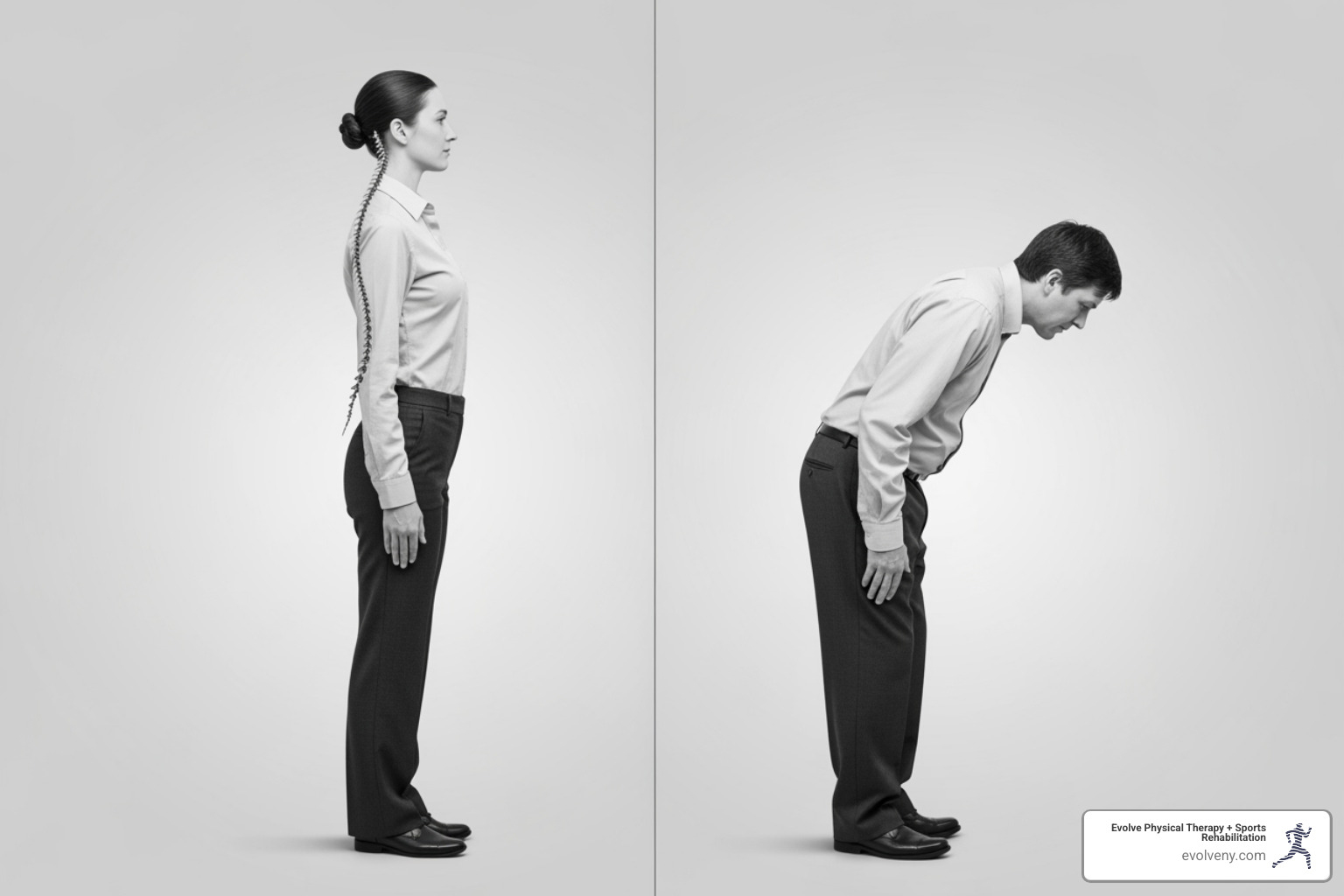
The Health Benefits of Alternating Postures
When you alternate between sitting and standing throughout your workday, something remarkable happens. Your body starts working the way it was designed to—with regular movement and position changes.
Standing burns about 20% more calories than sitting. That's not a substitute for your morning run, but those extra calories add up over weeks and months. More importantly, standing activates muscles throughout your body. This muscle activity triggers your brain to release endorphins, those natural mood-boosting chemicals that make you feel more energized and focused.
Your circulation improves when you stand. Blood flows more easily to your brain, which sharpens your thinking and helps you stay alert during that afternoon slump. Over time, this increased movement helps reduce your risk of chronic diseases linked to sitting—heart disease, type 2 diabetes, and certain cancers.
The key word here is "alternating." You're not just standing all day. You're giving your body the variety it craves. This is the real secret to maintaining proper posture at work—movement beats any single position, no matter how "correct" it is.
The Risks of Standing Incorrectly
Now for the reality check. Standing all day without proper form creates its own problems. I've treated bank tellers, retail workers, and assembly line employees who developed serious back pain from standing in one spot for hours.
When you stand still for too long, your leg muscles, tendons, and connective tissue take a beating. The blood pools in your lower legs, which can lead to varicose veins. Your knees, hips, and the balls of your feet bear increased pressure on their cartilage. Your circulatory system has to work 20% harder just to pump blood back up to your heart.
Without correct ergonomics standing desk posture, you're also setting yourself up for wrist problems. Many people lean on their desks or lock their knees when they get tired. Some shift all their weight to one leg. These habits create spinal misalignment and put extra strain on your joints.
Here's the worst part: carpal tunnel syndrome and wrist injuries become more likely when your desk height is wrong or you're compensating for fatigue with poor positioning.
The OSHA guidelines on ergonomics make this clear—ergonomics means fitting your workspace to your body's needs, not forcing your body to adapt to a bad setup. Movement is the foundation of good ergonomics.
| Activity | Calories Burned (Relative) | Health Risks (Prolonged) | Benefits (Alternating) |
|---|---|---|---|
| Prolonged Sitting | Low | Obesity, heart disease, diabetes, back pain, poor circulation | |
| Prolonged Standing | Moderate | Leg fatigue, joint pressure, varicose veins, circulatory strain, wrist injury, back pain | |
| Alternating Sit/Stand | Moderate (overall) | Reduced | Improved circulation, mood, energy, muscle activity, disease prevention |
The takeaway? A standing desk isn't about choosing standing over sitting. It's about creating a workstation that lets you move between positions comfortably throughout the day. That's where proper setup becomes essential.
Setting Up Your Workstation for Perfect Ergonomics Standing Desk Posture
You've got your standing desk – that's a fantastic first step! But here's the secret: the magic doesn't happen just by having one. It's all about how you set it up and how you use it. Getting your workstation dialed in for perfect ergonomics standing desk posture is like giving your body a big, supportive hug throughout your workday. Let's make sure your setup truly supports you, whether you're sitting or standing.
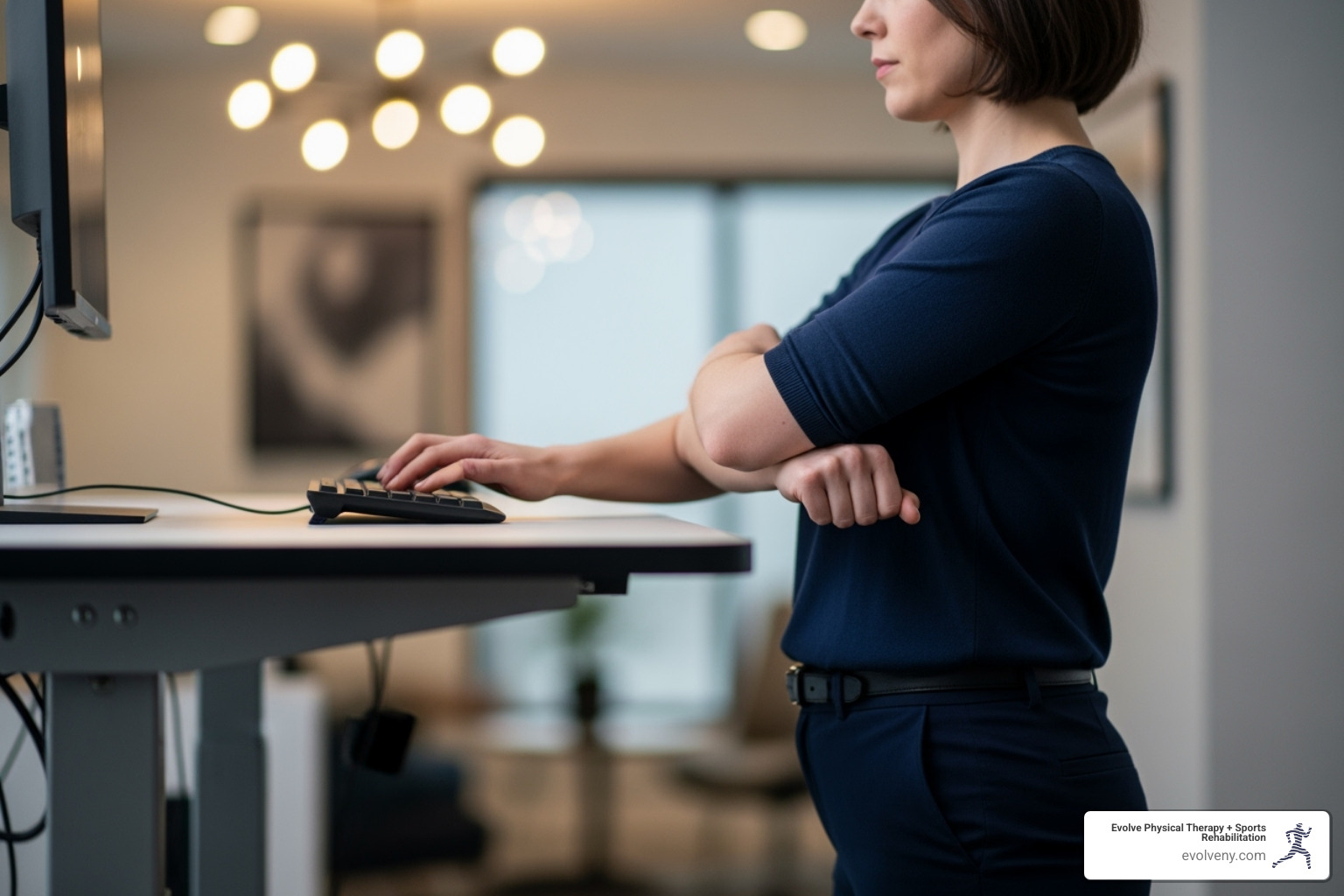
Workstation Types
The world of standing desks has really grown, giving us lots of choices. You might be familiar with the traditional workstation, which is just a regular desk and chair. While functional, it’s what we're trying to move away from for long periods. Then there’s the fixed standing workstation, which is always at standing height. It's better than sitting all day, but it misses the crucial point: movement and variety.
At Evolve Physical Therapy, we truly believe the best option is a sit-stand workstation, also known as an adjustable height desk. These are the gold standard because they let you easily switch between sitting and standing. You can find them in a few forms:
- Electric desks are super popular because they adjust with the push of a button, making changes effortless.
- Manual or crank desks also adjust, but you'll need to put in a little muscle power.
- And if you're looking for a more budget-friendly or space-saving option, sit-stand converters sit on top of your existing desk. They lift your monitor and keyboard when you want to stand.
No matter which type you choose, remember this: the ability to move and change positions throughout your day is what truly matters most for your health and comfort.
Achieving Ideal Ergonomics Standing Desk Posture
When you're standing at your desk, the main goal is for your body to feel relaxed and neutral, not strained or stiff. Think of it as finding your natural balance.
First up, desk height is probably the most important adjustment. You want your desk to be at a height where your elbows are bent at about a 90-degree angle when your hands are on your keyboard. Your forearms should be parallel to the floor. For example, if you're an average-height woman (around 5'4"), your desk surface might be about 41 inches high. For an average-height man (around 5'10"), it's closer to 45 inches. A desk that can adjust from about 22 to 48 inches will fit most people just right.
Next, let's talk about your monitor placement. Your screen should be right in front of you, about an arm's length (20-28 inches) away. The very top of your monitor should be at or just below eye level. A small upward tilt (10-20 degrees) can help reduce glare and keep your neck happy. If you wear glasses, especially bifocals, you might need to drop the monitor an extra inch or two.
And don't forget your keyboard and mouse! They should be at the same level as your desk surface. This lets your wrists stay straight and neutral, not bent up or down. Keep your upper arms close to your body for comfort.
Finally, let's look at your overall posture. Stand tall, imagining a string gently pulling you up from the top of your head. Your head should be aligned right over your spine, and your shoulders should feel relaxed, not hunched up by your ears. Keep your knees slightly bent – never locked! And make sure your weight is spread evenly between both feet. For even more detailed tips on setting up your screen and accessories, check out our guide on ideal computer posture.
Maintaining Your Ergonomics Standing Desk Posture While Sitting
Since the whole idea is to switch between sitting and standing, making sure your seated position is comfy and correct is just as important! Your ergonomic chair is a great tool, so let's make sure you're using it to its full potential.
Start with your chair height. Adjust it so your feet are flat on the floor. If your feet don't quite reach, a footrest can be a game-changer! Your knees should be bent at about a 90-degree angle, or a little lower than your hips.
Your chair's lumbar support is there to help your lower back. Make sure it fits snugly into the natural curve of your lower spine. This helps keep that healthy "S" curve and stops you from slouching.
Adjust your armrests so your arms can rest gently on them, with your elbows close to your body and bent at a 90-degree angle. Your shoulders should feel relaxed, not shrugged up.
Just like when standing, your keyboard and mouse should be positioned so your wrists stay straight and your forearms are parallel to the floor. This prevents strain.
Lastly, ensure you have plenty of legroom under your desk. You should be able to move your legs freely without bumping into anything. Avoid stuffing items under your desk that limit this movement. For a complete guide on how to get the most out of your chair, take a look at our article on the best ergonomic way to sit at a desk.
Special Considerations for Laptops
Laptops are incredibly convenient for working anywhere, but they can be real troublemakers for your ergonomics standing desk posture. Because the screen and keyboard are attached, they often force you to crane your neck or hunch your shoulders, leading to discomfort.

If you use a laptop at your standing desk, here’s how to make it work for you:
- Get a laptop stand. This lets you raise your screen to eye level, so you're not constantly looking down and straining your neck.
- Use an external keyboard. Once your laptop is on a stand, you'll need a separate keyboard so you can type with your elbows bent at 90 degrees and your wrists straight.
- Add an external mouse. This helps you keep your wrist in a neutral position and your arm comfortably close to your body.
Without these simple accessories, it's almost impossible to achieve proper ergonomics standing desk posture with a laptop. For even more smart ideas on setting up your home office for health, check out our tips for home office ergonomics.
Creating a Healthy Sit-Stand Routine
We’ve talked a lot about how movement is your body’s best friend during the workday. It's not just about sitting less, or even standing more; it's about finding that sweet spot of alternating positions. But how do you actually make this a smooth, sustainable part of your day? It all comes down to building a routine that truly supports you and your unique needs.
Common Mistakes to Avoid
It’s easy to get excited about a standing desk and then accidentally fall into some common traps. We see it all the time at Evolve Physical Therapy. Many people start with great intentions but quickly give up. Why? Because they make these mistakes:
- Standing for Too Long: It might seem counter-intuitive, but standing all day can be just as tough on your body as sitting all day. Studies show that many people end up using their standing desk for less than 15 minutes a day, and a lot of folks even go back to sitting full-time within a month because of discomfort. It's about alternating!
- Standing Rigidly: Your body loves movement. Standing perfectly still for long periods isn't the goal. Think about subtle shifts, small movements, and mini-breaks.
- Ignoring Pain: Your body is smart and will tell you when something isn't right. If you feel pain, listen to it! Pushing through discomfort usually makes things worse.
- Improper Desk Adjustment: Getting your ergonomics standing desk posture just right is crucial. If your desk, monitor, or keyboard aren't set correctly for both sitting and standing, you won't get the full benefits and might even create new problems.
- Alternative Workstations: While options like treadmill desks or exercise balls sound good for movement, they often come with their own downsides. Treadmill desks can actually make you type slower and make more mistakes! And exercise balls, despite popular belief, aren't usually recommended as ergonomic chairs because they lack proper back support and can be a bit wobbly.
Finding the Right Sit-to-Stand Ratio
So, what’s the magic number for sitting versus standing? Well, your body is unique, but there are some fantastic guidelines to help you find your rhythm. Experts often suggest aiming for a 1:1 or 2:1 ratio of sitting versus standing. This means for every 1 or 2 hours you spend sitting, try to spend 1 hour standing. Some research even leans towards 1:1 to 3:1 (standing to sitting) for the best results!
The most important takeaway? Alternate your positions every 30 to 60 minutes. Don't feel like you need to stand for hours right off the bat. Start small! Try standing for 10-15 minutes each hour. As your body gets used to it, you can gradually increase your standing time. The goal is to eventually build up to about two to four hours of standing per day, spread out and alternated with sitting. Always listen to your body and adjust as you go. For more insights, you can dive into research on optimal sit-stand ratios.
The Importance of Breaks and Movement
Even with a perfectly set up sit-stand desk and a great sit-stand routine, regular breaks and little bursts of movement are absolutely essential. These "micro-breaks" are your secret weapon against eye strain, stiffness, and that foggy mental feeling.
- Micro-breaks: Try to step away from your screen every 20-30 minutes, even if it's just for 30 seconds. A quick stretch or a glance out the window can do wonders.
- The 20-20-20 Rule: Your eyes need a break too! Every 20 minutes, look at something 20 feet away for 20 seconds. It helps prevent eye strain.
- Walk Around: Aim to get up and move your body at least once an hour. Go grab a glass of water, say hello to a colleague, or just stretch your legs.
- Simple Exercises and Stretches: Incorporate a few quick stretches right at your desk to release tension. Here are some favorites, recommended by kinesiologist Alex Doré:
- Chin Tuck: Relax your shoulders, look straight ahead, and gently slide your chin straight back (don't tilt your head). Hold for 5 seconds, then relax. Repeat a few times.
- Upper Trap Stretch: Sit tall, draw your head back, and align your ears over your shoulders. Place one hand behind your back and use the other hand to gently pull your head to the opposite side, stretching your neck.
- Scapular Retraction: Squeeze your shoulder blades together gently, making sure your shoulders stay down and don't shrug up towards your ears.
- Pelvic Tilt: While sitting, gently rock your pelvis forward and backward, and then side to side. It's a small movement that wakes up your core!
- Wrist Stretches: Gently pull your fingers back towards your body, holding for a few seconds, then push them forward. This is great for preventing wrist strain.
The best posture is always the next posture! Keep moving. For even more tips on maintaining healthy habits at your computer, check out our guide to correct computer posture.
Frequently Asked Questions about Standing Desk Ergonomics
We often hear some really great questions about getting the most out of your standing desk. It's smart to ask, because a little knowledge goes a long way in turning your workstation into a true ally for your health! Let's explore some of the most common queries we receive.
Do I need an anti-fatigue mat or special footwear?
Absolutely, yes to both! Think of these as your personal comfort crew when you're on your feet. When you choose to stand, especially for longer periods, having the right support is crucial for maintaining good ergonomics standing desk posture and preventing aches and pains.
An anti-fatigue mat is like a soft, supportive cloud for your feet. It's designed to cushion your steps and encourage tiny, subtle movements in your leg muscles. This actually helps your blood flow better and drastically cuts down on that tired, heavy feeling in your legs and lower back. In fact, studies have shown that people who stand for two or more hours a day feel much less discomfort and fatigue when they use these mats. They're a game-changer for preventing leg problems and easing lower back pain. You can even dig into studies on anti-fatigue mat effectiveness to see the science behind it!
And let's talk about your feet! When you're standing, your footwear really matters. Ditch the heels or those super-flat, unsupportive shoes. Instead, opt for comfortable, supportive shoes with plenty of cushioning. Good shoes act like shock absorbers, distributing pressure more evenly across your feet and easing the strain on your ankles, knees, and hips. For an extra touch, a footrest can be incredibly helpful. It allows you to shift your weight from one leg to the other, offering momentary relief and promoting those beneficial micro-movements.
What is the ideal height for a standing desk?
This is a fantastic question, and while the "ideal" height is truly personal to you, there's one golden rule that applies to everyone: the 90-degree elbow bend. When you're standing comfortably with your shoulders relaxed and your arms hanging naturally at your sides, your elbows should form a perfect right angle when your hands are resting on your keyboard. That's your sweet spot!
Based on ergonomic research, the average person needs a specific height to achieve this. For instance, the average female in the U.S. workforce (around 5'4") typically needs a worksurface height of about 41.3 inches when standing. For the average male (around 5'10"), that measurement is closer to 44.8 inches.
This is why an adjustable height desk is such a smart investment. A desk that can move from about 22.5 inches up to 48.5 inches can comfortably accommodate a huge range of people – from the shortest to the tallest among us. This ensures that no matter your height, you can always achieve that perfect ergonomics standing desk posture whether you're sitting or standing.
Are standing desks cost-effective?
This is a really thoughtful question, and the answer, like many good things, is a bit nuanced. Yes, the initial investment for a high-quality adjustable height desk can feel like a big chunk of change upfront. And truthfully, if not used correctly, some early studies showed that people might not stick with them, making them seem less cost-effective.
However, when a standing desk is used properly – meaning with good ergonomics standing desk posture and a balanced routine of sitting and standing – the long-term benefits can absolutely outweigh that initial cost. Think of it as an investment in your health, well-being, and even your professional performance.
Here's how those benefits can add up:
- Reduced Healthcare Costs: Less pain often means fewer trips to the doctor, fewer physical therapy appointments, and potentially less reliance on pain medication. This is something we see at Evolve Physical Therapy.
- Increased Productivity: When you're more comfortable and have better energy levels, your focus and concentration improve. This can lead to better work performance and efficiency.
- Improved Employee Morale: A workplace that cares about your physical comfort and health naturally leads to higher job satisfaction.
If a full adjustable desk isn't quite in your budget right now, don't despair! Sit-stand converters are a fantastic and more affordable entry point. They allow you to experiment with alternating postures without the larger commitment, helping you find the benefits before making a bigger investment. The true cost-effectiveness of a standing desk comes down to consistent, correct usage and valuing your long-term health.
Conclusion
Wow, we've journeyed through a lot of important information today! The big takeaway? It's not about picking sides between sitting or standing all day. Instead, it's about embracing movement as your superpower for a healthier workday. And nailing your ergonomics standing desk posture is the secret sauce to making that movement truly work for you.
So, let's quickly recap the essentials. Remember to set up your workstation correctly – that means getting your desk, monitor, keyboard, and mouse just right for both sitting and standing. Then, make sure you alternate your postures regularly. Aim for that sweet spot of a 1:1 or 2:1 sit-stand ratio, and always, always listen to what your body is telling you. Don't forget to incorporate micro-breaks and stretches throughout your day; these little moments of movement are game-changers for keeping your body and mind fresh. And hey, investing in supportive buddies like anti-fatigue mats and comfy footwear can make a world of difference for your standing comfort.
Here at Evolve Physical Therapy + Sports Rehabilitation in Brooklyn, we're all about empowering you with the knowledge and tools to live your best, pain-free life. If you've been diligently adjusting your workstation and still find yourself struggling with persistent aches, stiffness, or discomfort, it might be time for a professional, personalized look. Our friendly and experienced physical therapists are experts at evaluating your unique body mechanics and workstation setup. We can pinpoint what's going on and guide you toward lasting relief. Don't let discomfort hold you back from enjoying your work and your life!
Ready to truly stand up for your health? Get a professional ergonomic assessment with physical therapy in Brooklyn and let us help you move better, feel better, and work better.
Why Older Adults Should Keep Moving and Grooving
Why Movement is Medicine for Aging Adults

Exercise for older adults isn't just about staying fit - it's about maintaining independence, preventing disease, and adding quality years to your life. The research is crystal clear: regular physical activity can reduce your risk of falls by up to 50%, help manage chronic conditions like arthritis and diabetes, and keep your mind sharp as you age.
Here's what older adults need each week according to the CDC:
- 150 minutes of moderate-intensity aerobic activity (like brisk walking)
- 75 minutes of vigorous-intensity activity (or a combination of both)
- 2+ days of muscle-strengthening activities
- Balance exercises to prevent falls
- Daily movement - even light activity counts
The four key types of exercise work together like a powerful health formula:
- Endurance (Aerobic) - strengthens your heart and lungs
- Strength Training - maintains muscle mass and bone density
- Balance - prevents dangerous falls
- Flexibility - keeps you mobile and reduces stiffness
Yet less than one-third of Americans aged 65+ meet these basic recommendations. That's a missed opportunity for healthier aging.
I'm Lou Ezrick, a physical therapist with nearly two decades of experience helping people overcome chronic pain and movement limitations. Throughout my career, I've seen how proper exercise for older adults can transform lives - from helping seniors regain strength after injury to preventing falls that could end independence.
The "Why": Unpacking the Health Benefits of Regular Exercise
Think of exercise for older adults as a daily dose of medicine that feels good to take. The science is overwhelming: staying active protects our independence and quality of life. As the National Institutes of Health notes, many types of exercise can lengthen older adults' lives. Even moderate activity can prevent health problems, strengthen muscles, and keep your brain sharp. The physical benefits are just the beginning; regular movement also boosts mental wellness, helps manage chronic disease, and dramatically reduces fall risk.
Boost Your Physical Health
Your body is adaptable at any age. Give it the right movement, and it will respond with strength and resilience.
- Heart Health: Regular activity strengthens your heart, improves circulation, and helps with stroke prevention by keeping blood pressure in check.
- Bone Density: Weight-bearing activities and strength training increase bone density, which is crucial for preventing fractures. For those with osteoarthritis, targeted exercises can reduce pain and improve function, an area where specialized care like Physical Therapy for Osteoarthritis Brooklyn is invaluable.
- Improved Mobility: Exercise keeps joints and muscles flexible, making daily activities like reaching, bending, and walking easier. If you're limited by muscle weakness, it's often reversible with a targeted approach through Physical Therapy for Muscle Weakness.
Sharpen Your Mind and Mood
Exercise is one of the best things you can do for your brain, answering the question "Working Out to Stay Sharp: Can Exercise Keep Your Brain Healthier?" with a resounding yes.
- Cognitive Function: Physical activity increases blood flow to the brain, which helps maintain sharp thinking and may reduce the risk of dementia.
- Mood and Sleep: Exercise releases endorphins that fight depression and anxiety. It also leads to improved sleep and serves as excellent stress relief.
- Fall Prevention: Falls are a serious concern, but the right exercise program can dramatically reduce your risk. Our specialized Physical Therapy for Fall Prevention builds the strength and confidence you need to stay active and independent.
The "What": The Four Pillars of Exercise for Older Adults
Now that we know why exercise for older adults is vital, let's cover what to do. A complete fitness plan has four pillars: endurance, strength, balance, and flexibility. The CDC recommends adults 65+ get 150 minutes of moderate-intensity aerobic activity or 75 minutes of vigorous activity weekly, plus muscle-strengthening activities at least twice a week.
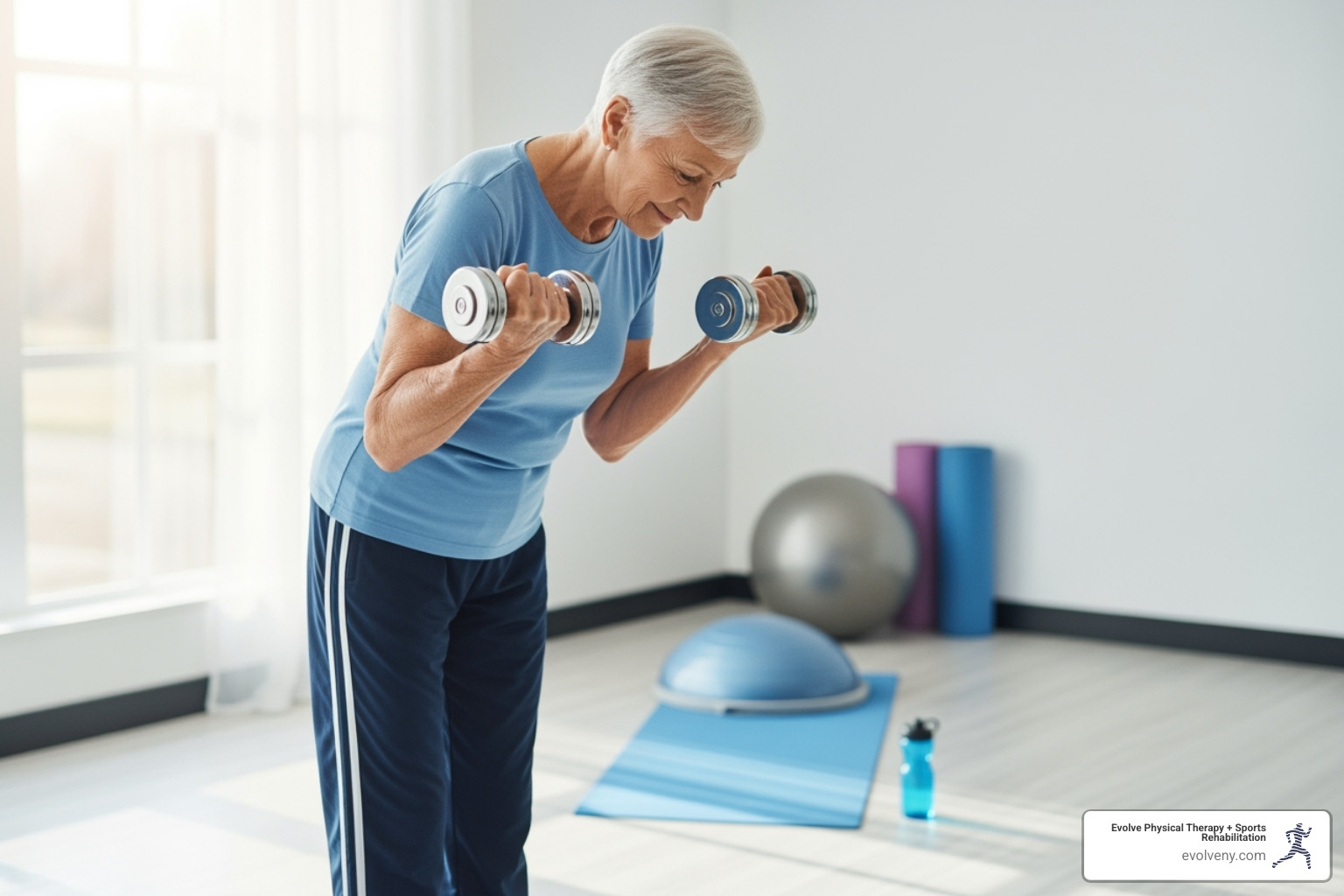
Some activity is always better than none. Every step counts. For comprehensive details, see the Physical Activity Guidelines for Americans, 2nd edition. If stability is a concern, our Balance and Gait Training program can help.
Endurance (Aerobic) Exercise for a Healthy Heart
Aerobic exercise strengthens your heart and lungs. You're at the right intensity if you can talk but not sing—the "talk test."
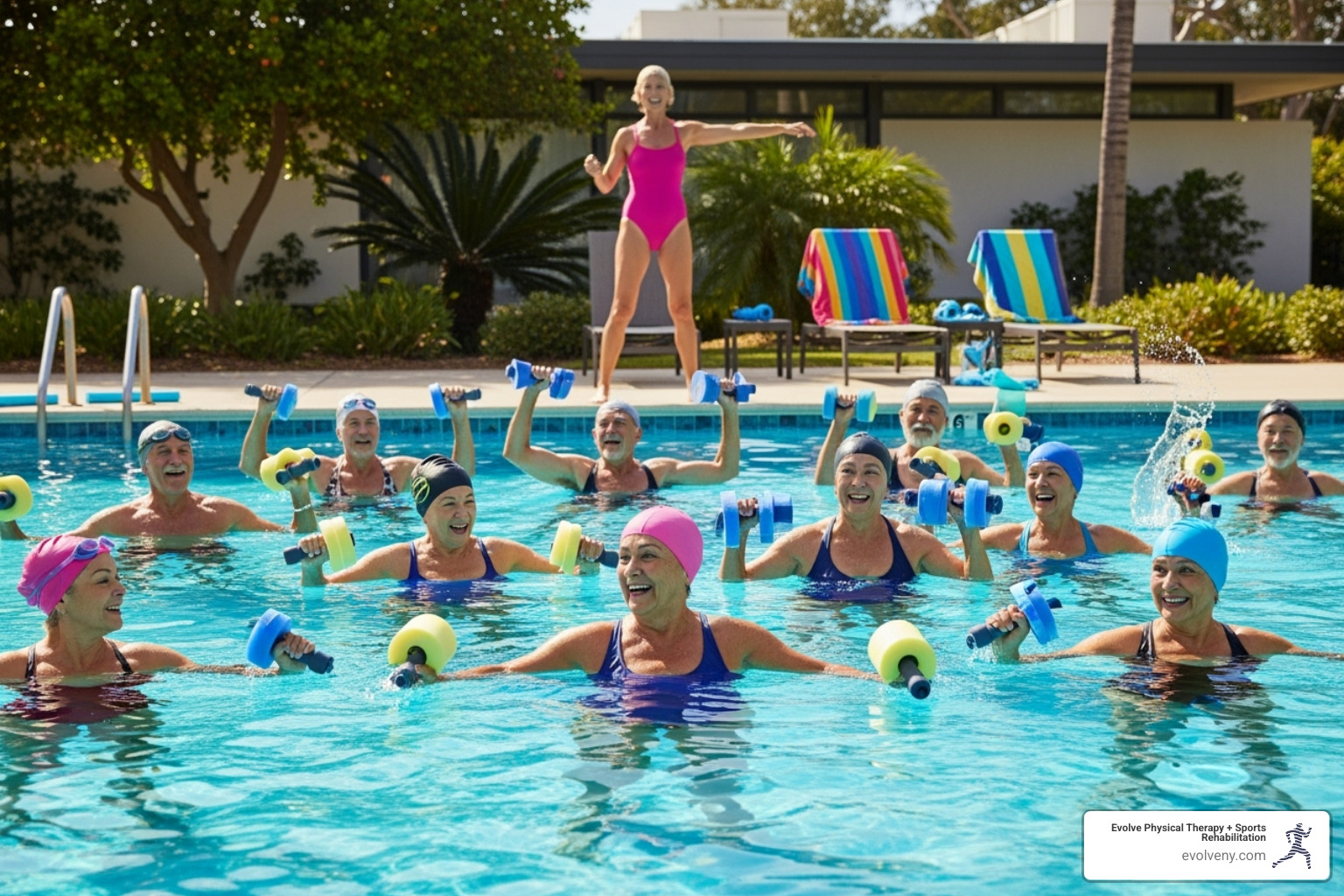
Great options include brisk walking, swimming, water aerobics, cycling, dancing, pickleball, and even vigorous gardening or housework. Activities like swimming are especially gentle on the joints.
Strength Training: The Key to Independence
Strength training reverses age-related muscle loss, which is essential for independence. Strong muscles protect joints, boost metabolism, and maintain bone density. The CDC's guide, "Growing Stronger: Strength Training for Older Adults," highlights how even small gains make a big difference.
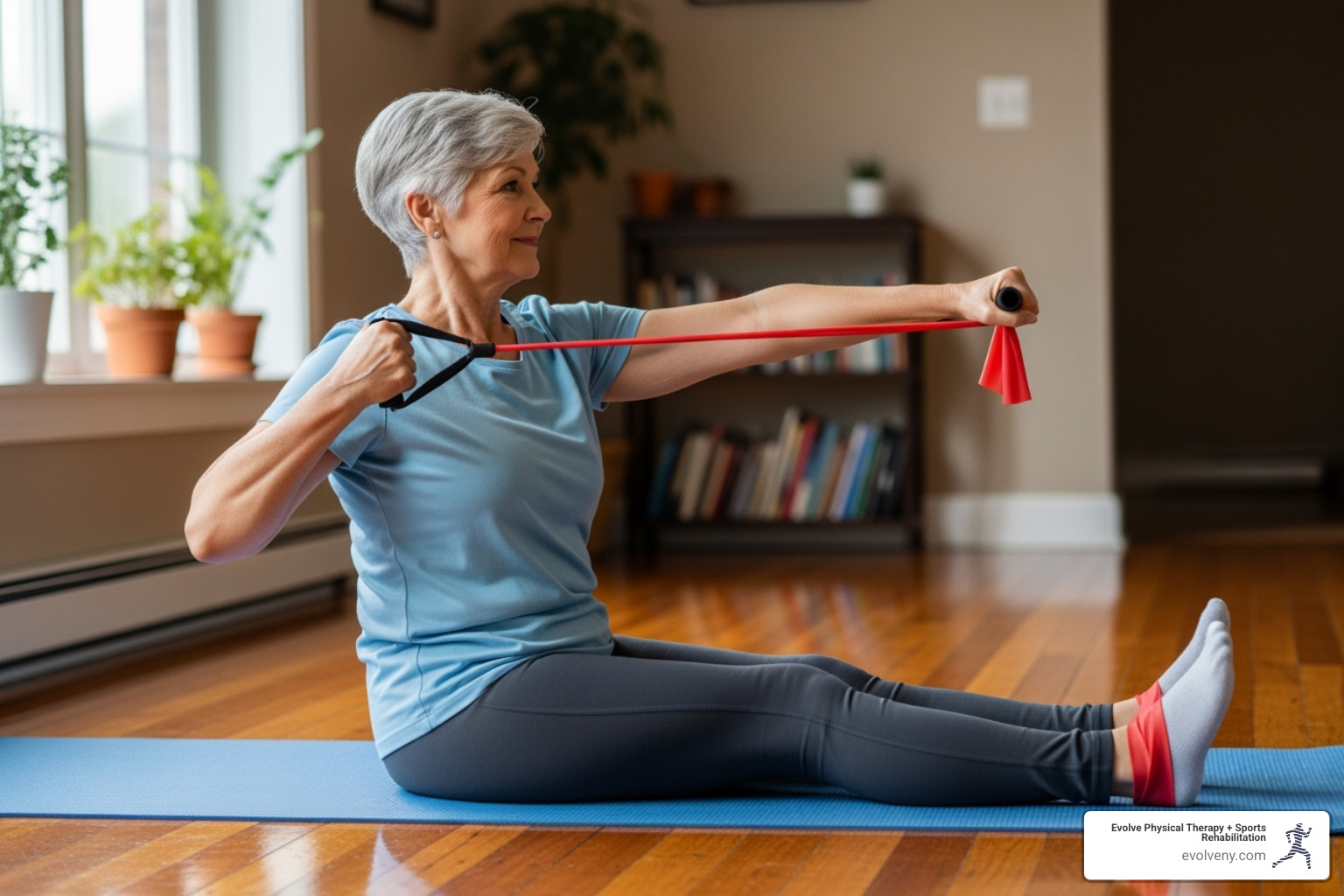
You can build strength at home using light weights, resistance bands, or bodyweight exercises like chair squats and wall push-ups. Even carrying groceries counts. Aim for two sessions a week, working muscles until they feel challenged.
Balance Exercises: Your Best Defense Against Falls
Balance exercises can reduce your fall risk by up to 50%. They train your vision, inner ear, and body sensors to work together, making you steadier on your feet.
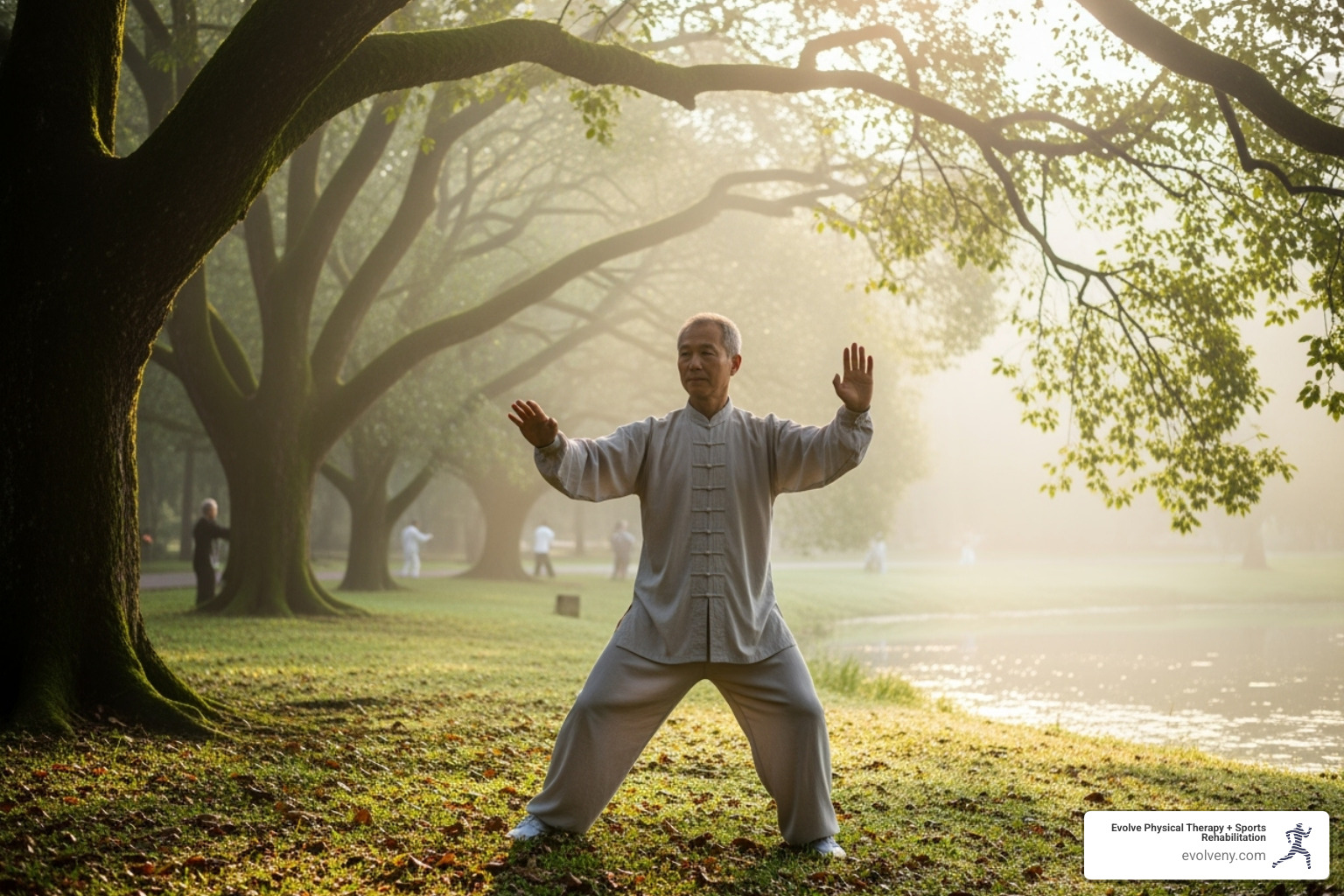
Simple yet effective exercises include standing on one foot (holding a chair for support) and heel-to-toe walking. Tai Chi is especially beneficial, as it combines gentle movements with deep breathing to improve balance, flexibility, and strength. The National Center for Complementary and Integrative Health explains the benefits of Tai chi in detail. For targeted help, consider our Elderly Balance Training or Physical Therapy for Balance Disorders in Brooklyn.
Flexibility and Mobility: The Importance of exercise for older adults
Flexibility training keeps you limber and reduces stiffness, making daily tasks like reaching, bending, and looking over your shoulder easier. Stretch when your muscles are warm, such as after a workout or shower.
Good stretches include shoulder rolls, neck stretches, and a seated hamstring stretch. The National Institute on Aging's YouTube channel offers excellent stretching videos for older adults. If posture is affecting your mobility, our Physical Therapy for Posture Training can help. Hold each stretch for 15-30 seconds without pushing into pain.
Getting Started Safely and Sticking With It
Starting a new fitness routine requires finding a safe but challenging balance. The good news is that the benefits of physical activity far outweigh the risks for most older adults, as noted in the Physical Activity Guidelines for Americans Midcourse Report. Here’s how to begin:
- Consult your doctor: Get medical clearance before starting, especially if you have chronic conditions.
- Start slowly: Begin with 10-15 minutes of gentle activity a few times a week and build up gradually.
- Listen to your body: Pay attention to signals of fatigue or pain. Mild muscle soreness is normal; sharp pain is not.
- Warm-up and cool-down: Always prepare your body before exercise and help it recover with light stretching afterward.
- Stay hydrated: Drink water regularly, as the sense of thirst can diminish with age.
- Find an activity you enjoy: You're more likely to stick with something you find fun. Set small, achievable goals to stay motivated.
Safety First: Essential Precautions
Being smart about how you exercise is key. A few precautions can prevent setbacks.
- Proper footwear: Wear supportive, well-fitting shoes with good traction.
- Weather awareness: Avoid extreme heat or cold. Dress in layers and have an indoor backup plan.
- Pain vs. discomfort: Mild soreness is a normal part of getting stronger. Sharp, shooting, or severe pain is a signal to stop.
- When to stop exercising: Stop immediately if you feel chest pain, severe shortness of breath, dizziness, or nausea, and consult a healthcare provider.
If you're dealing with general weakness, professional guidance can provide a safe path back to activity. Our team can help with Physical Therapy for General Deconditioning in Brooklyn.
The Role of a Physical Therapist in your exercise for older adults
A physical therapist is a personal movement coach for your long-term health and independence. At Evolve Physical Therapy, we provide:
- Personalized Exercise Plans: We listen to your health history, goals, and preferences to create a program that fits your life.
- Guidance on Proper Form: We teach you to move efficiently and safely, making small adjustments that prevent injury and maximize benefits.
- Adaptations for Health Conditions: We are experts in modifying exercises for conditions like arthritis, osteoporosis, or heart disease, ensuring you can work out safely.
- Injury Rehabilitation and Prevention: We guide you through recovery and teach you how to prevent future issues.
- Confidence Building: We help you overcome fear of falling or getting hurt through gradual, supported progress, empowering you to stay active.
Our hands-on approach makes us partners in your health. Learn more about how we can support your goals with Physical Therapy for Seniors.
Modifications and Seated Exercises for Every Ability
Exercise for older adults doesn't require standing for long periods. If you have balance concerns, joint pain, or limited mobility, chair-based workouts are a comfortable and effective alternative. Seated exercises provide a stable foundation, allowing you to gain strength, improve circulation, and increase flexibility without the fear of falling.
As Harvard Health notes in its guide on "Chair exercises for seniors: Boosting strength, flexibility, and stamina," these modifications help maintain independence and well-being. All you need is a sturdy chair that won't slide.
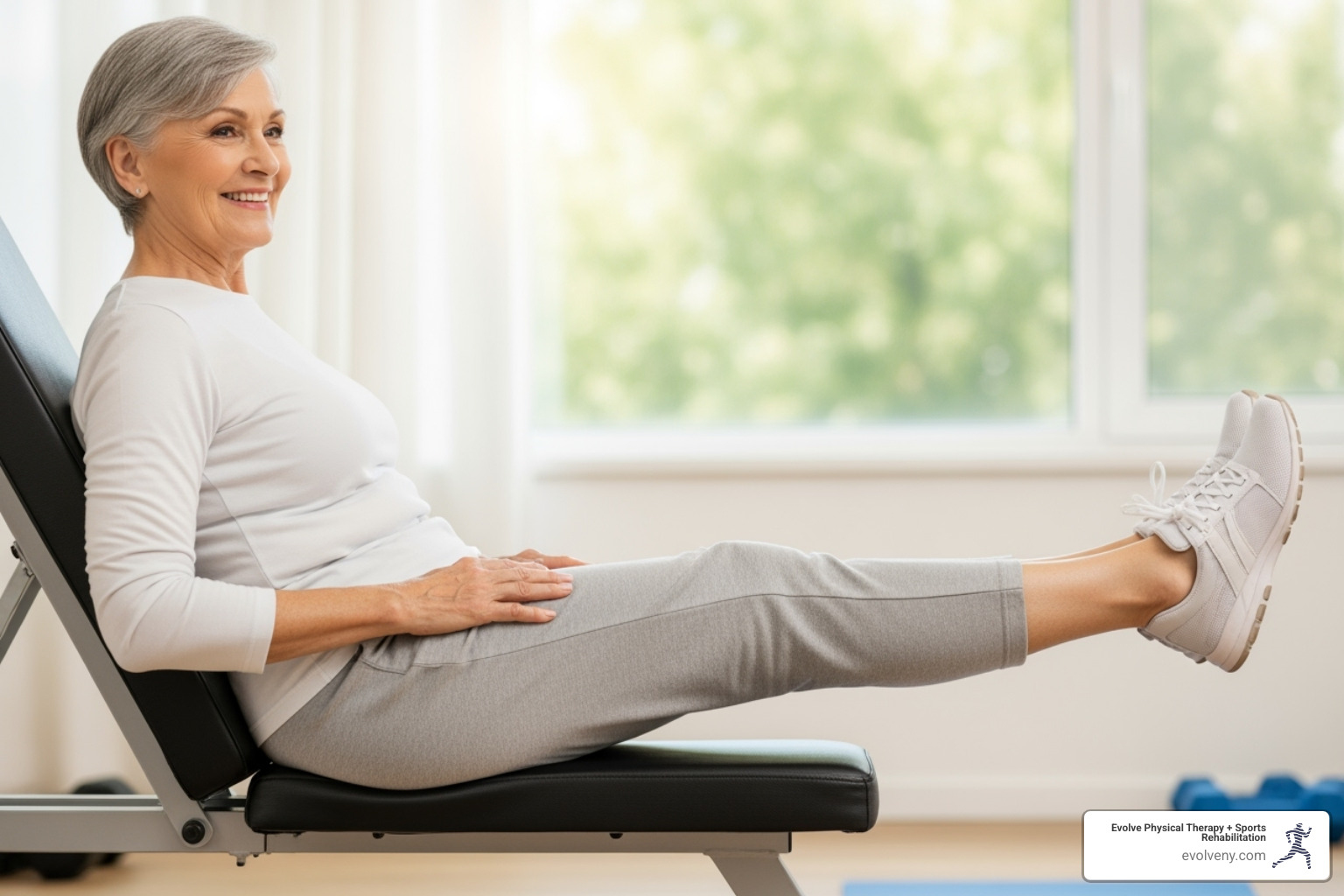
Seated Strength and Cardio
You can build strength and get your heart pumping right from your chair.
- Chair Squats: Sit on the edge of a sturdy chair, feet flat. Slowly stand up, then lower back down until you just touch the seat. Use your hands for support if needed. This strengthens legs and improves your ability to get up from chairs.
- Seated Marching: Sit tall and lift one knee toward your chest, then alternate legs. Swing your arms naturally. This improves circulation and strengthens hip flexors.
- Bicep Curls: Using light weights or soup cans, sit with elbows at your sides. Curl the weights toward your shoulders, then lower slowly and with control.
- Seated Overhead Press: Hold weights at shoulder height and press straight up as far as is comfortable for your shoulders.
- Ankle Pumps: Flex your feet, pulling your toes toward your shins, then point them away. This helps prevent swelling and improves circulation.
Seated Stretches for Flexibility
These gentle stretches can be done anytime to improve mobility.
- Seated Hamstring Stretch: Sit on the edge of your chair and extend one leg straight, heel on the floor. Lean forward from your hips until you feel a gentle stretch. Hold for 20-30 seconds.
- Neck Rotations: Slowly turn your head to look over one shoulder, hold, then repeat on the other side. Gently tilt your ear toward your shoulder to stretch the side of your neck.
- Seated Spinal Twist: Sit tall and gently rotate your upper body to one side, using the chair for light support. Hold for 20-30 seconds, then switch sides.
- Shoulder and Chest Stretches: Roll your shoulders forward and backward. To open your chest, clasp your hands behind your back and gently straighten your arms.
Frequently Asked Questions about Senior Fitness
When it comes to exercise for older adults, many people have the same questions. Here are answers to the most common concerns we hear in our Brooklyn clinic.
How much exercise is enough for a senior?
The CDC recommends adults 65+ aim for 150 minutes of moderate aerobic activity (like brisk walking) or 75 minutes of vigorous activity weekly. Add two days of muscle-strengthening activities and regular balance exercises. You can find more details in the Physical Activity Guidelines for Americans Midcourse Report. The most important rule is that some activity is always better than none. If 150 minutes seems like too much, start with 10 minutes a day and build from there. Every step counts.
What is the single best exercise to prevent falls?
There is no single best exercise, but rather a powerful combination of balance and strength training. Balance training like standing on one foot, heel-to-toe walks, or Tai Chi is the cornerstone. Tai Chi is a gentle, flowing practice proven to reduce fall risk. Strength training, especially for the legs and core, provides the power to catch yourself if you stumble. Sit-to-stand exercises from a chair are incredibly effective for building this functional strength. Combining these approaches is the most effective strategy.
Can I still exercise with a chronic condition like arthritis?
Yes, and for many chronic conditions like arthritis, exercise is one of the best treatments. The key is to choose the right activities and modifications.
- Low-impact activities are your best friend. Water aerobics and swimming are ideal because the water supports your body weight, providing gentle resistance while soothing stiff joints.
- Chair exercises allow you to build strength and flexibility without putting stress on painful joints.
- Gentle stretching helps keep joints moving freely and prevents stiffness.
Always consult your doctor or a physical therapist before starting a new routine. We can create a personalized plan that works with your body, not against it. For those with degenerative joint disease, our specialized Physical Therapy for Degenerative Joint Disease program can help you exercise safely and effectively.
Conclusion
The message is clear: movement is medicine. Regular exercise for older adults is your key to maintaining independence, sharpening your mind, and adding vibrant, quality years to your life. From brisk walking and strength training to balance-improving Tai Chi and seated stretches, there is a safe and effective option for every ability level.
It's never too late to start, and every movement counts. Your body is resilient and will respond to consistent, thoughtful activity.
At Evolve Physical Therapy + Sports Rehabilitation, we empower our Brooklyn community—from Marine Park to Gravesend, Midwood to Park Slope, and Mill Basin—to live their best lives through movement. Our hands-on, holistic approach means we create a personalized plan to help you build strength, confidence, and resilience safely.
You don't have to start this journey alone. Expert guidance makes all the difference. Let us be your partners in health, helping you move and groove into your golden years.
Sports Performance Coach Duties Demystified
Understanding the Sports Performance Coach Job Description

Behind every elite athlete stands an often-overlooked figure: the sports performance coach. These professionals blend cutting-edge sports science with motivational prowess to transform raw talent into championship performance. A sports performance coach job description involves designing and implementing training programs to improve athletic performance, reduce injury risk, and develop lifelong fitness skills. They combine exercise science, biomechanics, and psychology to optimize athlete development at all levels.
Key Responsibilities:
- Design sport-specific training programs (in-season, off-season, pre-season)
- Monitor athlete performance and adjust programs based on progress
- Educate athletes on proper lifting techniques and injury prevention
- Collaborate with athletic trainers, nutritionists, and sports medicine staff
- Track athlete progress against key performance indicators (KPIs)
- Ensure compliance with NCAA, conference, and organizational regulations
Required Qualifications:
- Bachelor's degree in Kinesiology, Exercise Science, or related field
- Professional certification (NSCA-CSCS or CSCCa-SCCC)
- CPR and First Aid certification
- 2-5 years of coaching experience (depending on level)
This guide breaks down what a sports performance coach does, the qualifications required, and how they contribute to athlete success. We'll cover the daily realities of the profession and the career path from assistant coach to director-level positions.
I'm Lou Ezrick, founder of Evolve Physical Therapy + Sports Rehabilitation, and over nearly two decades I've worked alongside sports performance coaches to rehabilitate athletes and optimize movement. Understanding the sports performance coach job description is essential to my collaborative approach in helping athletes return to peak performance after injury.
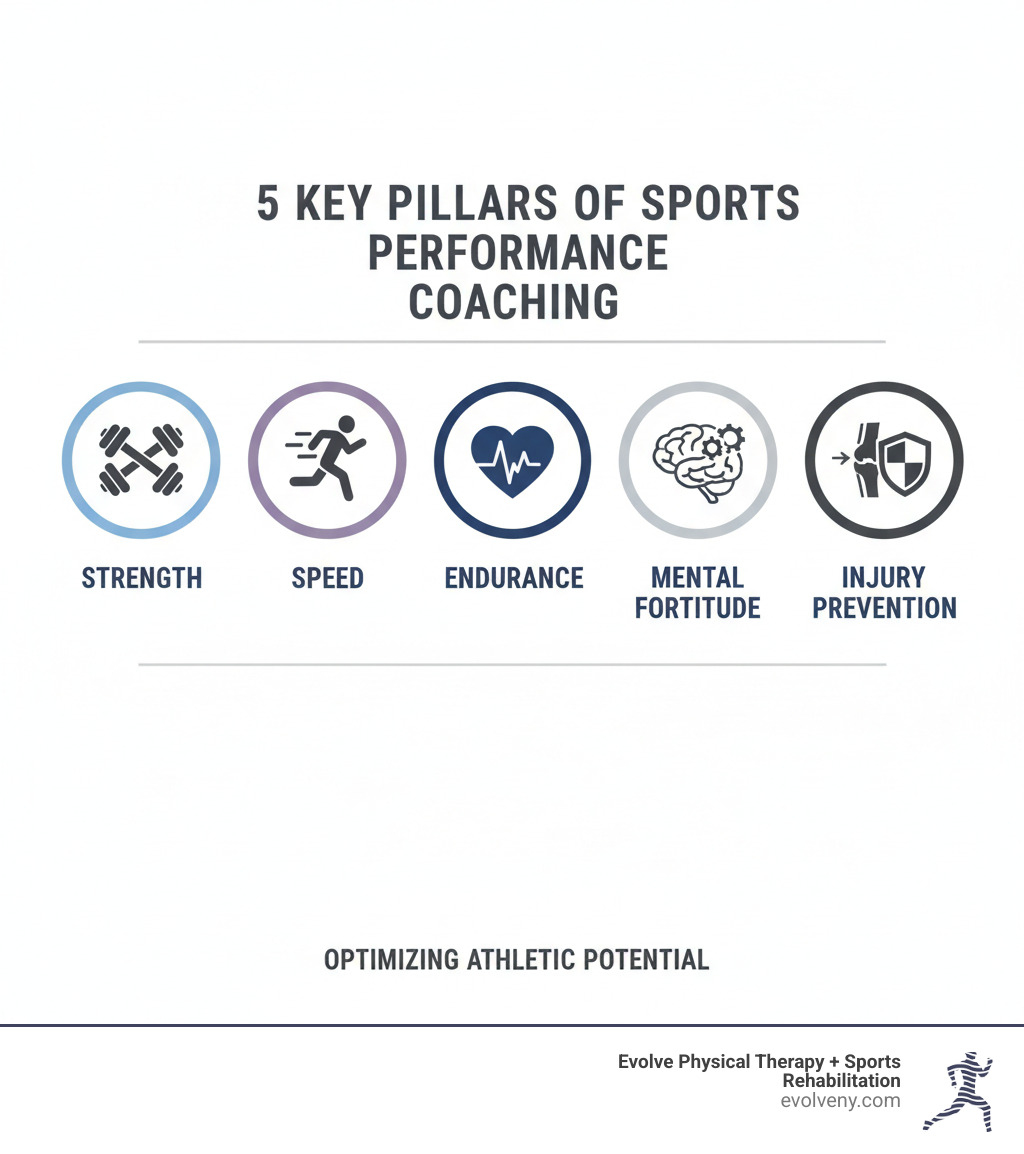
What is a Sports Performance Coach? The Core Role and Responsibilities
Think of a sports performance coach as the architect behind an athlete's physical change. The primary role is to improve athletic performance while simultaneously reducing injury risk through a holistic, science-based approach. This isn't about quick fixes; it's about long-term athlete development, building a foundation that makes athletes faster, stronger, more resilient, and mentally tougher for years to come.
The Foundation: Athlete Assessment and Program Design
Before any training begins, we conduct a needs analysis—a comprehensive evaluation of an athlete's movement patterns, strength, weaknesses, and injury risks. A volleyball player's needs differ from a soccer midfielder's, and our assessments reflect that.
From this analysis, we design individualized training programs built around the athlete's goals and the athletic calendar. These programs are periodized:
- Off-season: Focuses on building foundational strength and addressing weaknesses.
- Pre-season: Training becomes more intense and sport-specific to prepare for competition.
- In-season: The goal shifts to maintaining strength and power while managing fatigue and prioritizing recovery.
Every exercise and recovery protocol is purposeful. We establish clear goal setting markers with each athlete, ensuring they understand the "why" behind their training, which builds buy-in and motivation.

The Engine: Performance Monitoring and Injury Prevention
A critical part of the sports performance coach job description is continuous monitoring and adaptation. We constantly track progress and make adjustments based on data and observation. Modern technology use has transformed this process, allowing us to measure power output, speed, jump height, and other metrics. This data analysis removes guesswork and allows for objective programming decisions.
Movement screening helps us identify dysfunctions before they cause injuries. When we spot an issue, we integrate corrective exercise protocols to improve mobility and stability. This proactive approach is fundamental to injury prevention.
Teaching and reinforcing proper technique is paramount. Improper lifting doesn't just reduce effectiveness—it can cause serious injury. We supervise every movement, provide real-time feedback, and educate athletes on safe progression. We also establish safety protocols for training facilities to create an environment where athletes can push their limits safely.
The Support System: Athlete Education and Motivation
Physical training is only part of the equation. Athlete education and mental development are equally crucial for long-term success. We provide nutrition guidance to help athletes understand how food fuels performance and recovery. We also teach recovery strategies, emphasizing sleep quality, active recovery, and stress management.
Building mental fortitude is where coaching becomes an art. We help athletes develop confidence, resilience, and focus under pressure. Effective communication ties everything together, creating the trust necessary for athletes to commit to challenging programs. We're teaching lifelong fitness skills. Athletic careers end, but the knowledge and movement competency we instill can last a lifetime, promoting active, healthy lifestyles long after competition.
The Official Sports Performance Coach Job Description: Qualifications and Skills
Becoming a sports performance coach requires a serious commitment to education, certification, and developing a unique mix of technical and interpersonal skills. The field is constantly evolving, so a dedication to ongoing learning is essential.
Essential Educational and Certification Requirements
A Bachelor's Degree in Exercise Science, Kinesiology, or a related field is the standard entry point, confirmed by the U.S. Bureau of Labor Statistics for collegiate or professional roles. This education provides the scientific foundation for understanding how the body responds to training.
A Master's Degree can open doors to higher-level positions, like director roles, by offering specialized knowledge in areas like nutrition, training methodologies, and sport psychology.
Professional certifications are non-negotiable. The two most recognized are:
- Certified Strength and Conditioning Specialist® (CSCS®) from the National Strength and Conditioning Association (NSCA), considered the gold standard.
- Strength and Conditioning Coach Certified (SCCC) from the Collegiate Strength and Conditioning Coaches Association (CSCCa), often required for collegiate jobs.
Finally, current CPR, First Aid, and AED certifications are universal requirements for ensuring athlete safety during training.
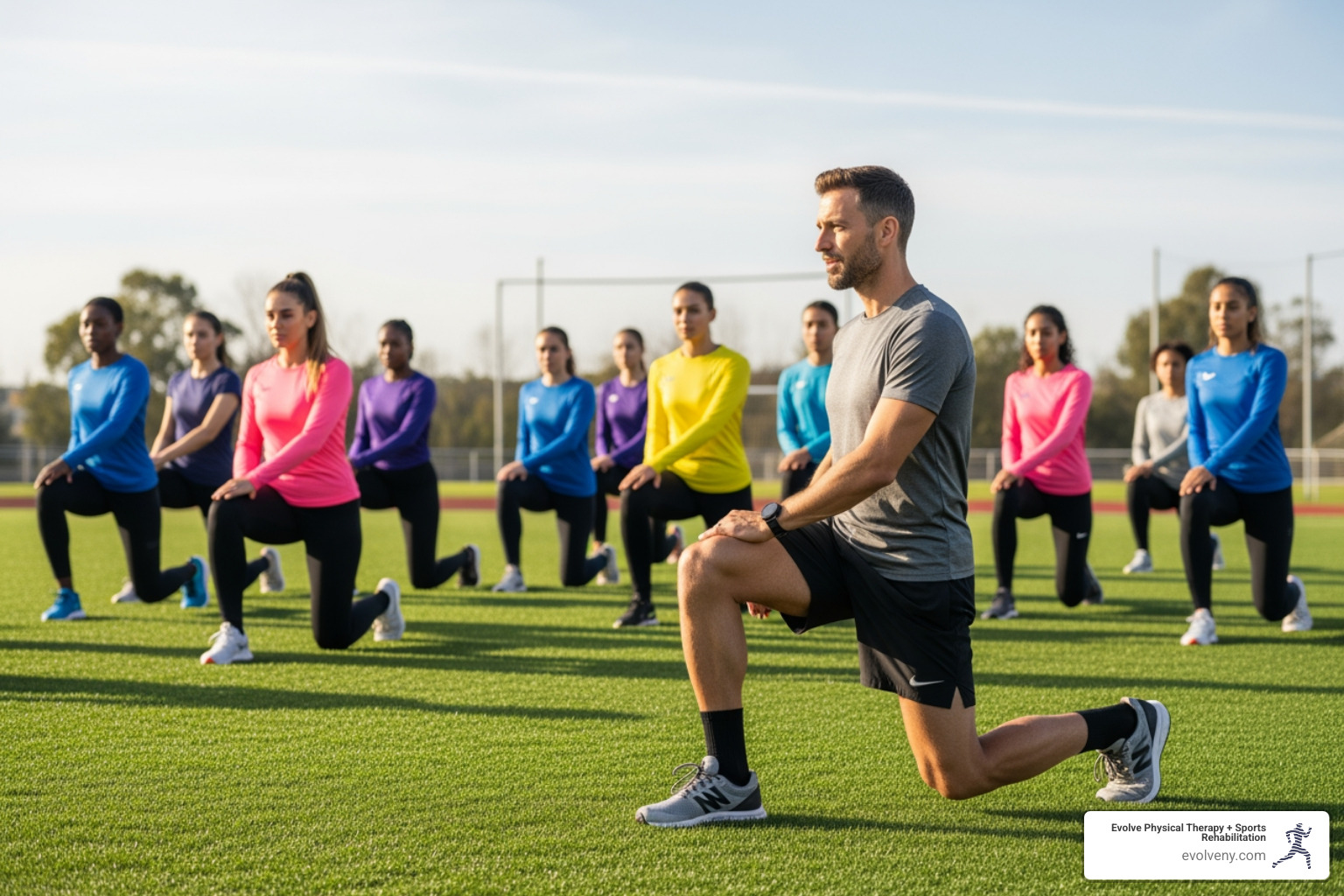
The Intangible Skills That Define a Great Coach
Degrees and certifications are vital, but personal qualities separate good coaches from great ones. The sports performance coach job description extends far beyond technical knowledge.
- Leadership: You must embody the discipline and work ethic you expect from your athletes.
- Communication: This is a critical skill. You need to translate complex concepts into simple terms, deliver constructive feedback, and listen effectively. The International Olympic Committee identifies this as a key trait of Qualities of a great coach.
- Empathy: Understanding an athlete's background and pressures allows you to know when to push and when to back off, building essential trust.
- Analytical Mindset: You must evaluate performance data, identify patterns, and make evidence-based decisions to ensure your programs are effective.
- Problem-solving: From athlete plateaus to equipment issues, you need creative solutions to overcome daily obstacles.
- Adaptability: Training plans change, and new research emerges. Flexible coaches thrive while rigid ones get left behind.
- Integrity and Passion: A genuine love for coaching and strong character create an environment where athletes are motivated to give their best.
At Evolve Physical Therapy + Sports Rehabilitation, we see how these intangible qualities directly impact athlete outcomes. The best coaches combine scientific rigor with genuine care.
A Day in the Life: Environments, Challenges, and Rewards
The life of a sports performance coach is demanding, with early mornings, late nights, and constant adaptation. However, for those passionate about helping athletes succeed, it offers unique rewards.
Where Do Sports Performance Coaches Work?
The sports performance coach job description is versatile, with opportunities in diverse settings:
- Collegiate athletics: A major employer, from large universities like Duke to smaller colleges, involving multiple teams and NCAA regulations.
- Professional sports teams: The pinnacle for many, working with elite athletes in high-stakes environments like the NFL, NBA, or MLB.
- High schools: A growing field as more schools hire dedicated coaches to ensure safe athlete development.
- Private facilities: Working with a diverse clientele, from youth athletes to adults, often in an entrepreneurial setting.
- Specialized centers: Including Olympic/Paralympic training centers or tactical settings with military and first responders.
A Typical Daily Schedule
A coach's day is long and varied. It often starts before sunrise (e.g., 5:30 AM) for a team's morning lift. The day is a mix of:
- Team Training: Supervising sessions in the weight room or on the field, coaching technique and managing energy.
- Individual Work: Providing one-on-one attention to athletes recovering from injury or needing specific skill work.
- Collaboration: Attending staff meetings with head coaches, athletic trainers, and sports medicine professionals.
- Administrative Tasks: Writing programs, analyzing performance data, managing equipment, and handling budgets.
Evenings may involve more training sessions or attending competitions. Travel for away games is also common, as noted in job descriptions like one from the Scottish Canoe Association.
The Highs and Lows of the Profession
Like any career, sports performance coaching has trade-offs.
The Rewards:
- Athlete Success: There's nothing like seeing an athlete achieve a goal you helped them reach, from earning a scholarship to setting a personal record.
- Team Camaraderie: You become part of a collective working toward a common goal, forming unique bonds.
- Tangible Results: You can directly measure improvements in strength, speed, and power, providing clear evidence of your impact.
The Challenges:
- Long Hours: The unsocial schedule, including early mornings, late nights, weekends, and holidays, can strain personal relationships.
- High Pressure: The stakes are often high, and coaches face scrutiny for injuries or performance plateaus.
- Job Instability: Positions can be tied to a team's success, leading to frequent changes.
- Physical and Mental Demands: The job requires being on your feet all day and managing diverse personalities and constant problem-solving.
Despite the challenges, most coaches find the rewards of making a measurable difference in people's lives to be worth it.
The Performance Ecosystem: Collaboration and Career Growth
Great sports performance coaches don't work in a vacuum. They are part of an interconnected support team—a performance ecosystem—where every specialist plays a vital role in athlete health and success.
The Integrated Support Team
Collaboration is key to changing good programs into great ones. As a coach, I'm in constant communication with:
- Head Coaches: To align training programs with the team's tactical vision.
- Athletic Trainers and Sports Medicine Staff: This partnership is critical for injury prevention, monitoring athletes, and coordinating return-to-play protocols.
- Nutritionists and Sports Psychologists: To optimize fueling strategies and build mental resilience.
At Evolve Physical Therapy + Sports Rehabilitation, we are a key part of this ecosystem. We provide specialized physical therapy for athletes that complements a coach's program. When a coach identifies a movement dysfunction or an athlete needs targeted rehab, we step in with hands-on treatment and corrective strategies to create a complete support system.
Measuring Success: Key Performance Indicators (KPIs)
Success in the sports performance coach job description is about measurable results. We track specific Key Performance Indicators (KPIs) to know if our programs are working:
- Athlete availability: Are athletes healthy and available for competition?
- Reduced injury rates: Shows that our prevention strategies are effective.
- Performance metric improvement: Measurable gains in strength, speed, and power.
- Team success: Our work contributes to the team's ability to compete at a high level.
- Athlete feedback and adherence: Qualitative data on confidence and whether athletes are following the program.
Your Path to Becoming a Sports Performance Coach
The journey is progressive, building from education to leadership roles.
- Education: Start with a Bachelor's degree in a related field; consider a Master's for advancement.
- Certification: Earn essential credentials like the NSCA CSCS or CSCCa SCCC.
- Experience: Gain hands-on skills through internships and volunteer work.
- Start as an Assistant: Most begin in assistant roles, learning from experienced mentors.
- Specialize: Focus on a particular sport, age group, or performance aspect to increase your value.
- Advance to Director: With 5+ years of experience, you can move into leadership roles, managing departments and budgets.
The U.S. Bureau of Labor Statistics projects strong job growth for coaches, though salaries vary widely by level and location.
Ethical Considerations and Best Practices
Ethical conduct is fundamental. Key principles include:
- Athlete Safety First: Every decision must prioritize safety to prevent injury.
- Scope of Practice: Know your professional limits and refer to other specialists (dietitians, psychologists) when needed.
- Confidentiality: Athlete data and personal information must be kept private.
- Anti-Doping Compliance: Stay knowledgeable about WADA/USADA rules and promote clean sport.
To clarify roles, here's a comparison between a Sports Performance Coach and an Athletic Trainer:
| Feature | Sports Performance Coach | Athletic Trainer |
|---|---|---|
| Primary Focus | Enhancing athletic performance through training—building strength, speed, power, endurance, and agility while preventing injuries. | Injury prevention, recognition, evaluation, immediate care, treatment, and rehabilitation of athletic injuries and illnesses. |
| Education & Certifications | Bachelor's or Master's in Exercise Science or Kinesiology; CSCS or SCCC certification. | Bachelor's or Master's in Athletic Training; Board Certified (BOC). |
| Scope of Practice | Design and implement training programs, teach proper technique, conduct conditioning sessions, perform performance testing. | First responder for injuries, clinical diagnosis, therapeutic modalities, rehabilitation exercises, emergency action plans, communication with physicians. |
| Collaboration | Works with athletic trainers, sport coaches, nutritionists, physical therapists, and sports psychologists. | Works with coaches, physicians, sports performance coaches, physical therapists, and parents. |
| Athlete Interaction | Guides training sessions, motivates athletes, educates on performance strategies. | Provides direct medical care, manages injuries, oversees rehabilitation protocols. |
| Key Contribution | Develops physical attributes for peak performance and builds resilience against injury. | Ensures athlete health and safety, facilitates safe return to play after injury. |
| Role with Evolve PT | We collaborate with sports performance coaches to ensure athletes are moving optimally and are physically ready for their training demands. | We work with athletic trainers by providing advanced physical therapy interventions for complex cases or when athletes need specialized rehabilitation beyond on-site capabilities. Our Brooklyn clinic serves as an excellent resource for athletic trainers seeking comprehensive rehab support for their injured athletes. |
Frequently Asked Questions about the Sports Performance Coach Job Description
What is the average salary for a sports performance coach?
While the U.S. Bureau of Labor Statistics reports a median salary of $38,640 for all coaches, this figure doesn't tell the whole story for this specific role. The salary range for a dedicated sports performance coach is wide.
Entry-level positions at smaller high schools or private facilities may be near that median. However, experienced coaches at major Division I universities or with professional sports teams can command six-figure salaries. Pay is influenced by several factors:
- Location: Coaches in high cost-of-living areas like Brooklyn, NY, typically earn more.
- Level of Competition: Professional and elite collegiate jobs pay significantly more.
- Experience and Expertise: Specialized skills can boost earning potential.
- Sport: Programs with larger budgets (e.g., football, basketball) often offer higher compensation.
Can you be a sports performance coach without a degree?
While technically possible in some private settings, it is practically very difficult and not recommended. Most legitimate sports performance coach job descriptions at the high school, collegiate, and professional levels require a Bachelor's degree in Exercise Science, Kinesiology, or a related field.
This requirement ensures you have the foundational knowledge of anatomy, physiology, and biomechanics needed to train athletes safely and effectively. Furthermore, major certifications like the NSCA CSCS require a bachelor's degree, making career advancement nearly impossible without one. If you're serious about this career, investing in your education is the best path forward.
What's the difference between a strength coach and a sports performance coach?
This question reflects the evolution of the profession. The term "strength coach" was the traditional title, focusing primarily on developing strength and power through resistance training in the weight room.
The modern title, "sports performance coach," signifies a more holistic and integrated approach. While strength training is still a core component, the role has expanded to include:
- Speed and agility training
- Sport-specific endurance development
- Proactive injury prevention through movement screening and corrective exercise
- Education on recovery strategies, nutrition, and sleep
- Analysis of movement efficiency and biomechanics
- Mental preparation to build resilience and focus
At Evolve Physical Therapy + Sports Rehabilitation, our physical therapy programs for athletes align with this comprehensive approach. In short, all sports performance coaches are strength coaches, but the modern role encompasses a much broader scope of responsibilities aimed at optimizing every facet of athletic readiness.
Conclusion: Building the Future of Athletic Excellence
The sports performance coach job description defines a dynamic and impactful career. These professionals are the architects of athletic excellence, blending science, psychology, and motivation to help athletes reach their full potential. From individualized program design to data-driven monitoring and collaboration with medical staff, they are integral to every aspect of an athlete's development.
The path requires a strong educational foundation, key certifications like the NSCA CSCS, and hands-on experience. But it's the intangible qualities—leadership, empathy, and passion—that truly define a great coach. While the hours are long and the pressure is high, the reward of seeing an athlete succeed is immeasurable.
At Evolve Physical Therapy + Sports Rehabilitation in Brooklyn, we are proud to be part of this collaborative ecosystem. Our specialized physical therapy programs for athletes complement the work of performance coaches by addressing biomechanical issues, optimizing movement, and ensuring a safe return to play.
Our hands-on approach means we partner with coaches to understand the unique demands of each athlete. If you're a coach in Brooklyn seeking a trusted partner in athlete care, or an athlete looking to optimize your capabilities, we invite you to connect with us. Together, we can build the future of athletic excellence—one breakthrough at a time.

Mind, Body, Parkinson's: Holistic Approaches to Support Your Health
Understanding Parkinson's and the Holistic Path to Wellness

Holistic parkinson s support combines traditional medical care with natural therapies to address the whole person - mind, body, and spirit. This comprehensive approach recognizes that Parkinson's disease affects far more than just movement, impacting digestion, sleep, mood, and overall quality of life.
Key Components of Holistic Parkinson's Support:
- Nutrition: Mediterranean diet, anti-inflammatory foods, gut health support
- Movement: Tai Chi, yoga, Rock Steady Boxing, strength training
- Supplements: CoQ10, omega-3s, curcumin (with medical guidance)
- Therapies: Massage, acupuncture, music therapy, mindfulness
- Lifestyle: Sleep optimization, stress management, social connection
Parkinson's disease primarily results from the loss of dopamine-producing nerve cells in the brain, leading to the characteristic tremors, stiffness, and balance issues. But research shows the condition also involves the gut-brain connection, with imbalances in gut flora potentially contributing to symptom progression.
While there's currently no cure for Parkinson's, emerging research highlights promising natural therapies that may help manage symptoms and improve quality of life. A Mediterranean-style diet rich in antioxidants, gentle movement practices like Tai Chi, and targeted supplements all show potential benefits when used alongside conventional treatments.
The key is working with healthcare professionals to create an individualized plan that safely integrates these approaches with your current medical care.
I'm Lou Ezrick, a physical therapist with nearly two decades of experience helping patients with complex neurological conditions through hands-on, holistic treatment approaches. At Evolve Physical Therapy, I've seen how comprehensive holistic parkinson s support can improve traditional care and help individuals maintain function, reduce symptoms, and improve their overall well-being.
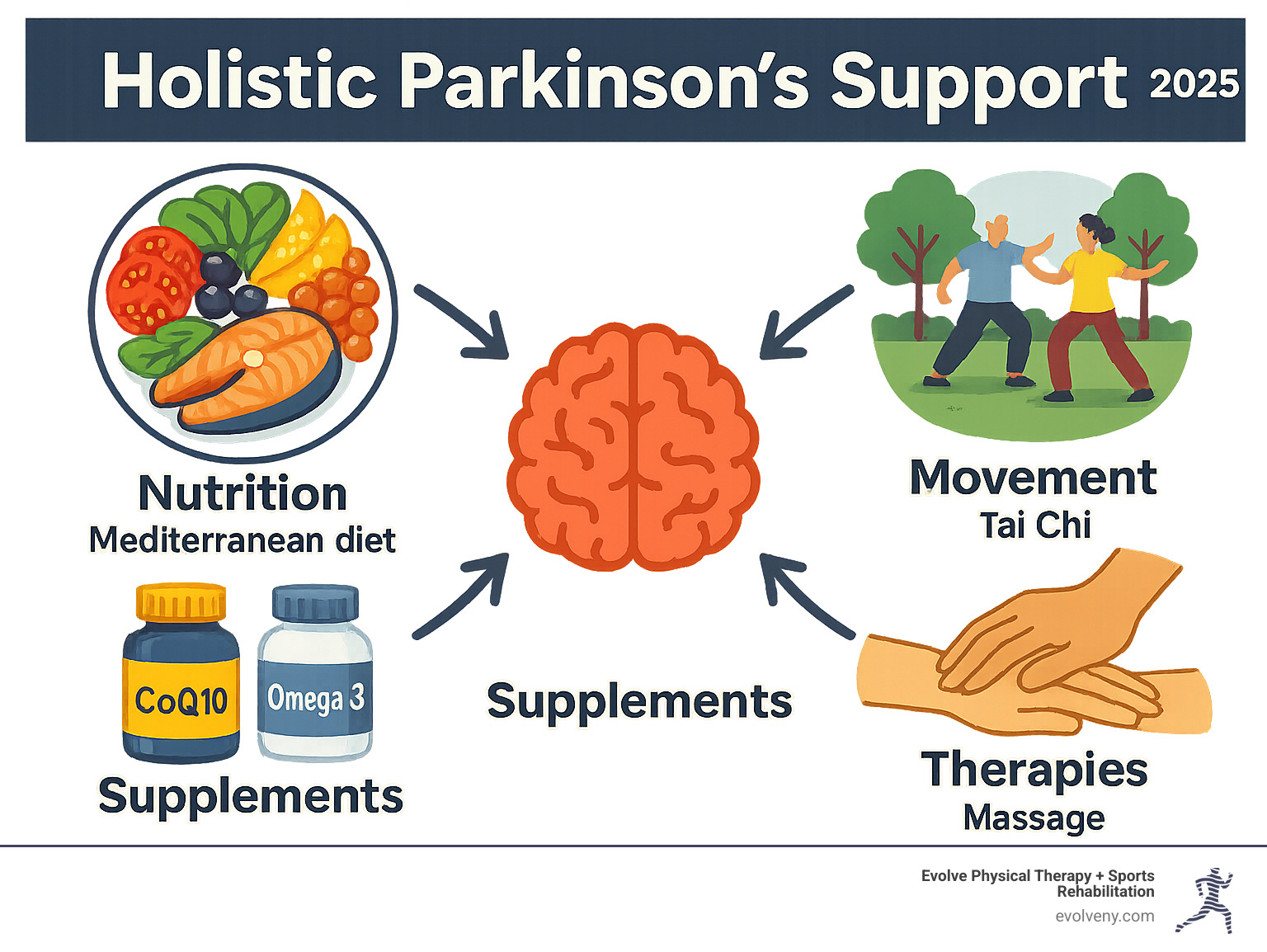
Parkinson's disease (PD) is a complex neurological condition that impacts movement, mood, and daily functioning. Our understanding of PD has evolved significantly, moving beyond just motor symptoms like tremors, rigidity, and balance issues to include a wide range of non-motor symptoms such as mood changes, fatigue, and constipation. This is why a holistic approach is so crucial – it addresses the entire person, not just the most visible symptoms.
The core problem in Parkinson's is the loss of dopamine-producing nerve cells in the brain. Dopamine is a neurotransmitter vital for smooth, coordinated movement. However, research also points to other factors, including the accumulation of a protein called alpha-synuclein and the role of oxidative stress in damaging nerve cells.
While conventional medical treatments, particularly medications like levodopa, are cornerstones of Parkinson's management, they often come with side effects and can become less effective over time. This is where holistic parkinson s support truly shines. It’s not about replacing conventional medicine, but rather complementing it. Integrative medicine, the approach we champion at Evolve Physical Therapy, focuses on treating the whole person – mind, body, and soul – using evidence-based practices that combine complementary therapies with standard treatments. This collaborative approach can improve medication effectiveness, reduce side effects, and address nutrient deficiencies that can arise from long-term pharmaceutical use.
The Pillars of Holistic Parkinson s Support: Nutrition and Gut Health
You know that old saying, "You are what you eat"? Well, when it comes to Parkinson's, it's particularly true! Our gut and brain are intimately connected, a concept we call the gut-brain axis. Emerging research continues to highlight the profound link between gut health and neurodegenerative diseases. In Parkinson’s, imbalances in gut flora and chronic gut inflammation may contribute to symptom progression, and many people with PD experience constipation and related intestinal inflammation issues. Supporting your gut is a key component of holistic parkinson s support.
Nutrition's Role in Holistic Parkinson s Support
When we talk about nutrition for Parkinson's, we're not just discussing what to eat, but how it impacts your brain and overall well-being. A Mediterranean-style diet, rich in antioxidants and anti-inflammatory foods, is often recommended. This way of eating, which prioritizes fresh, whole foods, may help reduce oxidative stress and support brain function. Think leafy greens, vibrant berries, generous amounts of olive oil, and lean protein like fish.
The MIND diet, a hybrid of the Mediterranean and DASH diets, is also gaining attention for its brain-protective benefits. Both the Mediterranean and MIND diets are rich in omega-3 fatty acids, which are associated with cardiac and brain health. While it's not entirely clear if omega-3s are specifically helpful for PD symptoms, eating a diet rich in them certainly has broader health benefits. One small study demonstrated that ingesting omega-3 fatty acids improved scores on the United Parkinson Disease Rating Scale (UPDRS), a common measure of PD symptoms.
Here are some key nutritional recommendations:
- Focus on a Mediterranean-style diet: Prioritize leafy greens, berries, olive oil, and fish. These foods are packed with antioxidants and anti-inflammatory compounds.
- Increase Omega-3 Fatty Acids: Incorporate sources like fatty fish (salmon, mackerel) and flaxseeds.
- Hydrate, Hydrate, Hydrate: Staying well-hydrated is crucial for overall health and can help with common PD symptoms like constipation.
- Maintain Balanced Blood Sugar: Stable blood sugar levels provide sustained energy and support neurological function.
- Be Mindful of Protein and Levodopa: For some individuals with PD, high protein meals can slow the absorption of carbidopa/levodopa, a common Parkinson's medication. As the disease progresses, it might be beneficial to consume protein later in the day to optimize medication effectiveness. Your healthcare team can help you steer this.
- Reduce Processed Foods: These often contain unhealthy fats, sugars, and additives that can contribute to inflammation.
Supporting Your Gut for Better Brain Health
Since PD can affect digestion, leading to issues like constipation, supporting your gut health is paramount. Probiotics, which are live microorganisms, help support a healthy gut. Taking a probiotic supplement has shown benefits against constipation for people with PD. A small, open-label study showed that Probiotic PS128 supplementation improved motor scores and quality of life in PD patients. While more data is needed and research is ongoing, it’s a promising area for gut support.
We often get asked, "Do you recommend the use of probiotics?" The answer is generally yes, especially if you're experiencing digestive issues. Beyond probiotics, consider incorporating digestive support strategies and, if needed, food sensitivity testing to identify specific triggers that might be contributing to gut inflammation.
Movement as Medicine: Enhancing Mobility and Balance
If there's one thing we emphasize at Evolve Physical Therapy, it's that movement is medicine. While medication plays a vital role, regular exercise is one of the most impactful ways people living with Parkinson’s disease can improve their health and well-being, preserve physical function, ease symptoms, and improve quality of life. Exercise and movement can truly slow the progression of Parkinson’s symptoms, improve mobility, and boost mood.
Mind-Body Movement Practices
Gentle, mindful movement practices are incredibly beneficial for individuals with Parkinson's. They don't just work your muscles; they train your brain and body to work together more effectively.
- Tai Chi and Qi Gong: These ancient Chinese practices promote coordination, reduce fall risk, and improve mind-body awareness. They involve slow, flowing movements combined with deep breathing and mental focus. A 2012 study published in the New England Journal of Medicine found that Tai Chi offered measurable improvement in balance and stability in people who had moderate Parkinson’s disease. Tai Chi uses movement and mindfulness to improve motor and non-motor symptoms and prevent falls in older adults with PD.
- Yoga: Yoga supports muscle flexibility, posture, and relaxation while reducing stiffness and stress. Adapted yoga can increase mobility, balance, strength, and flexibility, and it may also help improve mood and sleep.
High-Intensity and Strength-Building Exercises
Beyond gentle practices, more vigorous activities can also make a significant difference.
- Rock Steady Boxing: This non-contact boxing-inspired fitness program is specifically designed for people with Parkinson's. It helps improve balance, coordination, strength, and overall agility. We've seen incredible changes in our Rock Steady Boxing classes in Brooklyn! It’s a fantastic way to engage in high-intensity exercise in a supportive and fun environment. You can learn more about our specialized programs like Rock Steady Boxing for Parkinson's Disease NYC.
- Weight Training: Building muscle and endurance through weight training is crucial for maintaining strength and functional independence.
- Cardiovascular Workouts: Activities that get your heart rate up, like brisk walking, cycling, or dancing, are very important for overall brain health and stamina. The goal is at least 30 minutes of rigorous exercise for extra benefit, but remember, perfection is the enemy of good – any movement is better than none!
Here's a quick comparison of some of these powerful movement therapies:
| Therapy | Key Benefits for Parkinson's | Balance Improvement | Strength Improvement | Flexibility Improvement | Social Engagement |
|---|---|---|---|---|---|
| Tai Chi | Coordination, fall risk reduction, mind-body awareness, motor & non-motor symptom improvement. | Significant | Moderate | Moderate | Moderate |
| Yoga | Mobility, posture, stress reduction, stiffness relief, mood & sleep improvement. | Good | Good | Excellent | Moderate |
| Rock Steady Boxing | Coordination, agility, strength, balance, mood, non-contact cardio, fighting back against PD. | Excellent | Excellent | Good | Excellent |
Balance in PD cannot be improved by pills or supplements; it requires movement. We encourage you to explore our Parkinson's boxing classes to see how impactful this type of exercise can be. Always consult with your doctor before starting a new exercise program to ensure it's safe and appropriate for your individual needs.
A Guide to Supplements and Herbal Remedies
When we discuss supplements and herbal remedies for Parkinson's, it's like walking a tightrope – there's potential, but also a lot of caution needed. Nutritional supplements are not regulated with the same approval method as prescription drugs by the Food and Drug Administration (FDA). This means there's no guarantee of safety, strength, or purity, and most herbs and supplements have not been rigorously studied as safe and effective treatments for PD.
The golden rule is always to speak with your doctor before adding any new supplements or herbal remedies to your PD treatment plan. This is crucial because some may interfere with your medications or have unproven effectiveness. If you decide to try a new supplement, introduce one at a time and give it a couple of months to assess its effectiveness, unless it causes adverse reactions.
Supplements for Holistic Parkinson s Support: A Cautious Approach
While there isn't sufficient scientific data to recommend most supplements for Parkinson's as a definitive treatment, several have shown promising results in preliminary studies and are being actively researched.
- Coenzyme Q10 (CoQ10): This antioxidant has been widely advertised for PD. Early studies suggested it might slow disease progression, but a larger study in 2011 was halted because its purported protective benefits didn't differ from a placebo. Researchers still study CoQ10, but currently, they don’t suggest it as a standard recommendation.
- Curcumin: Found in turmeric, curcumin is a potent antioxidant and neuroprotective agent. While more research is needed, using curcumin along with standard PD treatment may help.
- Omega-3 Fatty Acids: As mentioned earlier, omega-3s are associated with brain health. One small study demonstrated an improvement in UPDRS scores with omega-3 ingestion.
- Vitamin D: Research links low vitamin D levels with a reduced risk of developing PD, and it's being studied for neuroprotective properties.
- B Vitamins: The Vitamin B family has antioxidant and anti-inflammatory effects and may be neuroprotective. Vitamin B6 and B12 are particularly important for nerve health.
- N-acetyl cysteine (NAC): NAC helps increase glutathione levels in the brain, and glutathione deficiency has been identified as an early event in PD progression. One trial showed NAC increased dopamine transporter binding and positively affected motor and cognitive issues in people with PD. Another trial on NAC also showed promising results, but larger studies are needed.
- Citicoline: This compound, naturally occurring in the body, may increase dopamine synthesis and inhibit dopamine re-uptake. People with PD taking citicoline have shown improvements in motor and cognitive function.
- Vitamin C and E: These vitamins are antioxidants. While vitamin C lack is linked to a higher PD risk, and a 2021 study linked high dietary vitamin E to a lower PD risk, large studies on their direct impact on PD progression have yielded disappointing or minimal results.
Exploring Herbal Options
Herbal remedies have been used for centuries, but their application in Parkinson's also requires careful consideration due to variable potency and potential interactions with medications.
- Mucuna pruriens (Velvet Bean): This herb contains L-dopa, the precursor to dopamine, and is a natural source of the compound used in Parkinson's medication. Mucuna Pruriens contains 6-9% levodopa by weight. Some small studies have suggested it might offer advantages over purified L-dopa medication. However, pharmaceutical sources of levodopa (like Sinemet) are preferred due to their standardization and predictability. If considering Mucuna pruriens, especially if you're also on Sinemet, it's crucial to consult your doctor, as some patients experience nausea or other issues when combining them. You can read more about Mucuna pruriens.
- Green Tea Extract: Based on cell and animal studies, green tea extract may offer a protective effect and help slow PD progression due to its antioxidant properties.
- Ginkgo biloba: Known for its potential to reduce inflammation and improve brain function, Ginkgo biloba may also assist with dopamine delivery.
- Brahmi (Bacopa monnieri): This herb may improve circulation to the brain, cognition, and mood. While few studies exist on its benefits in PD, its antioxidant properties show promise in protecting the brain.
For more in-depth information, we recommend you read more at the National Center for Complementary and Integrative Health website. They provide valuable, evidence-based insights into various natural therapies.
Expanding Your Toolkit: Lifestyle and Complementary Therapies
Living well with Parkinson's goes far beyond managing the physical symptoms. A truly comprehensive holistic parkinson s support approach recognizes that your daily habits, stress levels, and emotional well-being all play crucial roles in how you feel and function each day.
Think of it this way: if nutrition and exercise are the foundation of your wellness plan, then lifestyle adjustments and complementary therapies are the finishing touches that make your house a home. These practices address the mind-body connection in ways that can genuinely surprise you with their impact.
Enhancing Daily Life and Well-being
Small changes in your daily routine can create ripple effects that improve your overall quality of life. It's not about perfection – it's about finding what works for you and building sustainable habits.
Sleep hygiene is absolutely fundamental, yet it's often overlooked. Parkinson's can really mess with your sleep patterns, making it harder to fall asleep or stay asleep through the night. Creating a consistent bedtime routine, keeping your bedroom cool and dark, and limiting screen time before bed can make a real difference. When you sleep better, everything else tends to improve too.
Stress management deserves special attention because stress can actually make Parkinson's symptoms worse. The good news? You have more control over this than you might think. Mindfulness practices like meditation and deep breathing exercises aren't just trendy wellness buzzwords – they're powerful tools that can help lower blood pressure and promote genuine calm. Even simple prayer and contemplation have been shown to improve mood and reduce both depression and anxiety in people with Parkinson's.
Social connection might be the most underrated therapy of all. Staying engaged with friends, family, and community provides emotional support that no medication can replace. Creative activities like singing, dancing, or art therapy offer both physical and emotional benefits. There's something magical about creating something beautiful or sharing a laugh with others – it reminds you that you're so much more than your diagnosis. This is why we often share information about Parkinson's Disease Support Groups – connecting with others who understand your journey can be incredibly healing.
Therapeutic Practices for Symptom Relief
Beyond lifestyle changes, there's a whole world of hands-on and creative therapies that can target specific symptoms and improve your daily comfort. These aren't just feel-good treatments – many have real research backing their effectiveness.
Massage therapy can work wonders for the muscle tightness and rigidity that often come with Parkinson's. Studies have shown measurable reductions in muscle rigidity and resting tremor immediately after a 60-minute massage session. Plus, there's something deeply healing about therapeutic touch itself – it's a reminder that your body deserves care and attention.
Acupuncture brings thousands of years of traditional Chinese medicine to your modern wellness toolkit. While research on its direct impact on Parkinson's progression shows mixed results, many patients report real improvements in fatigue, constipation, insomnia, and chronic pain. Some also find it helps with anxiety and depression. Individual experiences can vary significantly, so it might be worth exploring if you're curious.
Music therapy taps into the incredible connection between rhythm and movement. It's fascinating how focusing on musical beats can help improve motor function, communication, and even swallowing and breathing patterns. Beyond the physical benefits, music therapy often brings pure joy – and that emotional lift can be just as healing as any other treatment.
Alexander Technique and Feldenkrais Method both focus on retraining how your body moves. The Alexander Technique teaches you to move more efficiently with less tension, which can significantly improve posture and balance. The Feldenkrais Method uses gentle movement sequences to improve range of motion, flexibility, and coordination. Both approaches recognize that your brain and body can learn new, healthier patterns of movement at any age.
Medical marijuana is an option some people explore, though research is still limited and legal status varies by location. It may help with symptoms like tremor, stiffness, insomnia, pain, or weight loss. The plant contains both THC (which is psychoactive) and CBD (which has anti-spasm and anti-anxiety properties). This is definitely something to discuss thoroughly with your doctor, as there can be side effects and interactions with other medications.
All of these therapies work best when combined with consistent, specialized care. You can learn more about physical therapy for Parkinson's and how it can be customized to your unique needs and goals.
Conclusion: Building Your Integrated Care Team
As we wrap up our journey through holistic parkinson s support, I hope you're feeling empowered and hopeful. We've covered a lot of ground together – from the gut-brain connection and Mediterranean-style eating to Rock Steady Boxing and mindfulness practices. The beauty of this approach is that it recognizes you as a whole person, not just a collection of symptoms.
Here's what I want you to remember: there's no magic bullet, but there are many powerful tools. What works wonderfully for your neighbor might not be the perfect fit for you, and that's completely normal. The key is finding your unique combination of strategies that make you feel stronger, more balanced, and more like yourself.
You have more control than you might think. While we can't cure Parkinson's yet, you can absolutely influence how you feel day to day. Whether it's adding more colorful vegetables to your plate, joining a Tai Chi class, or simply taking a daily walk, every small step matters.
But here's the most important part – and I can't stress this enough – always loop in your healthcare team before trying something new. Your neurologist, primary care doctor, and physical therapist are your partners in this journey. They'll help you steer potential interactions between supplements and medications, ensure your exercise program is safe for your specific needs, and make sure all your therapies work together harmoniously rather than against each other.
At Evolve Physical Therapy + Sports Rehabilitation, we've built our practice around this collaborative approach to holistic parkinson s support. We're not just treating symptoms in isolation – we're looking at how everything connects. Our hands-on approach means we're right there with you, whether you're working on balance exercises, participating in our Rock Steady Boxing program (yes, the one that made it onto NBC News!), or learning new strategies to manage daily activities.
We believe in treating the whole person, not just the condition. That's why our team across Brooklyn – from Marine Park to Park Slope, Gravesend to Mill Basin – focuses on comprehensive evaluation, healing, and strengthening. We're not just helping you get through today; we're helping you build strength and resilience for whatever comes next.
The path forward isn't always smooth, and that's okay. Some days will be better than others. But with the right integrated care team supporting you, you're never walking this journey alone. We're here to celebrate the victories, problem-solve the challenges, and adjust the plan as needed.
Ready to take the next step? Learn more about our specialized Parkinson's physical therapy programs in Brooklyn and find how we can help you build your personalized, integrated care team. Together, we'll help you not just manage Parkinson's, but truly thrive with it.

Move Like a Beast: Best Primal Movement for Joint Mobility
Why Your Body Was Built to Move This Way

What is the best primal movement for improving mobility? Quadrupedal movement (crawling) offers the most comprehensive benefits, simultaneously improving hip, spine, and shoulder mobility while building core strength and coordination. However, the deep squat is the best single movement for targeting hip and ankle mobility specifically, while the shin box excels for hip rotation.
Quick Answer:
| Movement | Best For | Key Benefits |
|---|---|---|
| Crawling (Bear/Crab) | Full-body mobility | Shoulders, hips, spine, core stability |
| Deep Squat | Hip & ankle mobility | Hip flexion, ankle dorsiflexion, spinal decompression |
| Shin Box | Hip rotation | Internal/external rotation, injury prevention |
It's 6 a.m. on a Sunday, and you can barely roll out of bed. Your hips feel like rusty hinges. Your shoulders click when you reach overhead.
This is the reality for millions of people trapped in desk chairs and car seats for hours each day.
Here's what most people don't understand: Mobility isn't the same as flexibility. Flexibility is your muscle's passive ability to stretch. Mobility is your active strength and control to move a limb through a joint's full range of motion.
Research shows that people who incorporated just one hour of quadrupedal movement training (QMT) into their routine twice a week for eight weeks saw major improvements in shoulder and hip mobility, plus better squat and lunge form.
Primal movements—squatting, crawling, hinging, lunging—challenge your strength throughout your joints' full range of motion. They're not just exercises. They're the way humans evolved to move for millions of years.
The modern fitness industry has complicated things with machines, isolation exercises, and complicated routines. But the truth is simpler: moving the way your body was designed to move is the fastest path back to pain-free function.
I'm Lou Ezrick, founder of Evolve Physical Therapy, and over nearly two decades, I've helped thousands of patients recover from chronic pain and movement restrictions using hands-on manual therapy and functional movement training. Understanding what is the best primal movement for improving mobility has been central to helping my patients—from office workers to athletes—reclaim their body's natural potential.
The Foundation: Key Primal Movements for Opening up Mobility
Think of a toddler squatting and crawling instinctively. These patterns are hardwired into our DNA. Before answering what is the best primal movement for improving mobility, we must understand these fundamentals. Primal movements are the seven patterns our ancestors used for survival: squatting (resting), hinging (lifting), lunging (stepping), pushing, pulling, twisting, and gait (walking/crawling).
These are not isolated exercises but compound movements that engage multiple joints and muscles, mirroring real-life activity. This bodyweight training approach reflects the natural movement habits found in Blue Zones, where people often live past 100. Mobility isn't just movement; it's the quality and control at your joints, a topic we explore in our article on the Difference Between Mobility and Movement.
At Evolve Physical Therapy, we help patients refind these patterns, which have often been lost due to years of sitting and inactivity.
How Primal Patterns Improve Joint Health
Joints need movement to stay healthy. Primal movements improve joint range of motion by building neuromuscular control—teaching your brain to actively command your muscles through their full range. This creates strength through movement, making you stronger and more stable at your end ranges, which is key for injury prevention.
A joint that is both mobile and strong is far less likely to get hurt. The benefits extend beyond joints, promoting hormonal homeostasis and improving bone density through natural resistance training. Primal movements close the dangerous gap between what your joints can do passively and what you can actively control, leading to healthier joints and smoother movement.
The Top Contenders for Opening up Your Body
While all primal movements are valuable, a few stand out for delivering dramatic mobility improvements. For anyone feeling tight from daily life, these movements are game-changers. Let's explore what is the best primal movement for improving mobility by examining the top contenders.
What is the best primal movement for improving mobility in the hips and ankles? The Deep Squat
The deep squat is one of the most natural human resting postures, yet most adults have lost the ability due to modern sedentary habits. The goal isn't lifting heavy weight, but simply reclaiming your ability to rest comfortably at the bottom of a full squat.
Practicing the deep squat provides incredible benefits:
- Improved Hip Flexion: It restores the full, natural range of motion to your hips, which is transformative for anyone who sits for long periods. Learn more in our guide to Hip Mobility Movements.
- Better Ankle Dorsiflexion: The squat gently and effectively improves your ankle's ability to bend, a common limitation for many. We cover this in our Ankle Mobility Movements article.
- Spinal Decompression: Sinking into a squat allows your spine to lengthen, while nourishing connective tissues around the hips, knees, and ankles.
As TrainP3 notes in their article "Primal Squat to become better human and athlete," it's a fundamental posture for maintaining lower body joint integrity.
The Ultimate Full-Body Mobilizer: Quadrupedal Movement (Crawling)
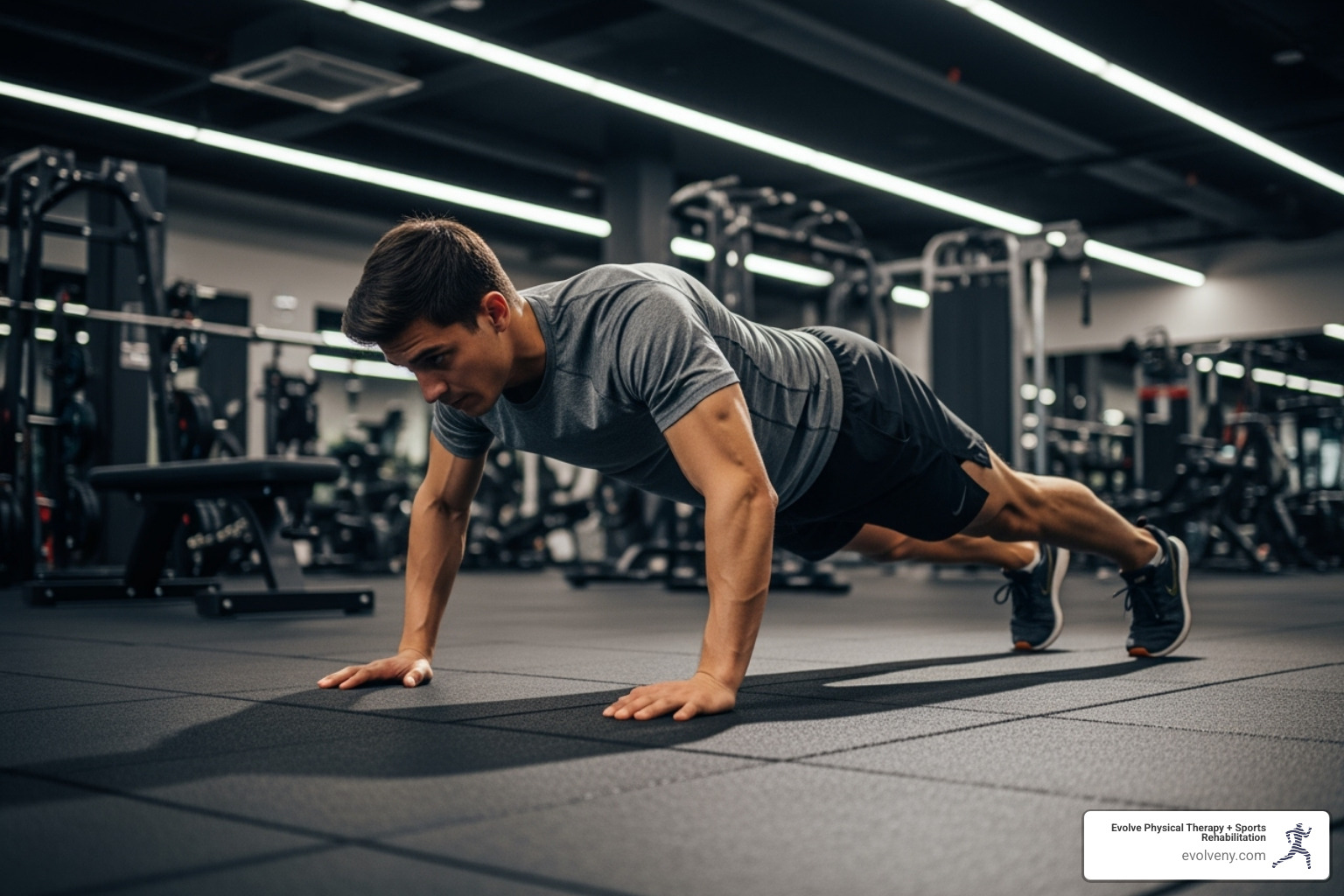
Crawling, or Quadrupedal Movement Training (QMT), is a powerful pattern from our infancy that delivers results few other movements can match. It's no wonder searches for "primal movement" have surged 120 percent on Pinterest.
Moving on all fours provides a unique, simultaneous challenge to your entire body:
- Constant Core Engagement: Your deep stabilizing muscles work nonstop to keep your torso stable, making it more functional than planks or crunches.
- Shoulder Strength and Mobility: Bearing weight on your hands strengthens the rotator cuff and shoulder blades, crucial for healthy overhead movement. This aligns with principles we use for mobilization with movement for the shoulder.
- Neurological Coordination: Crawling uses contralateral patterning (moving opposite limbs together), which improves communication between the brain's hemispheres.
Research confirms its effectiveness: just two hours of QMT per week for eight weeks led to major improvements in hip and shoulder mobility. To learn proper form, check out MovNat's Beginner's Guide to Efficient Crawling.
The Verdict: What Is the Best Primal Movement for Improving Mobility?
After exploring the foundational primal movements and diving deep into the benefits of squatting and crawling, we arrive at the question you've been waiting for: what is the best primal movement for improving mobility?
Here's the honest answer: it depends on what your body needs most right now.
If your hips and ankles are stiff from sitting all day, the deep squat is your best friend. If hip rotation is your weak spot and you want to prevent knee and back pain, the Shin Box is unbeatable. But if you're looking for a single movement that delivers the most comprehensive, full-body benefits for mobility, strength, and coordination, quadrupedal movement (crawling) takes the crown.
Crawling simultaneously challenges your hips, spine, and shoulders in a dynamic, integrated way that few other movements can match. It's not just working one joint or one plane of motion—it's teaching your entire body to work as a connected system.
| Movement | Hips | Shoulders | Spine | Core | Overall Mobility Impact |
|---|---|---|---|---|---|
| Crawling (QMT) | High | High | High | High | Excellent (Full-Body Integration) |
| Deep Squat | High | Low | Medium | Medium | Good (Lower Body Focus) |
| Shin Box | High | Low | Medium | Medium | Good (Hip Rotation Focus) |
What makes crawling special is its holistic approach to movement. When you crawl, you're not just moving your arms or legs in isolation. Your shoulders have to stabilize while your hips extend. Your core has to engage to keep your spine neutral. Your brain has to coordinate opposite limbs moving together. This is full-body integration at its finest.
The neuromuscular re-education that happens during crawling is profound. Your nervous system learns to coordinate complex movement patterns, improving body awareness and control in ways that translate to everything else you do. It's like upgrading your body's operating system.
Perhaps most importantly, crawling is highly scalable. A complete beginner can start with gentle knee-hand crawls on the floor. As you progress, you can advance to bear crawls, crab walks, and more challenging variations. This makes it accessible whether you're recovering from injury or training for high-level athletics.
So while the primal squat is essential for lower body health and the Shin Box is a hip mobility superstar, if we had to pick one movement for overall, integrated mobility improvement, it would be crawling. Think of it as a moving plank that mobilizes your entire structure while building real-world strength.
That said, the best approach isn't choosing just one. A balanced approach that includes squatting for your lower body, crawling for full-body integration, and rotation work for your spine will give you the most complete mobility benefits. Your body thrives on variety, and each primal pattern offers something unique.
Integrating Primal Movements Into Your Routine
Knowing what is the best primal movement for improving mobility is the first step; integrating it is where the magic happens. You don't need a gym, just floor space and consistency. Consistency beats intensity. Five minutes daily is more effective than one long session weekly.
Easily fit these movements into your day:
- Warm-ups/Cool-downs: Use bear crawls and squats to prepare your body for a workout or help it recover after.
- Microworkouts: Take a two-minute crawling break or drop into a squat while your coffee brews. These microworkouts counteract hours of sitting.
- Breathwork: Use deep, diaphragmatic breathing during movements to improve core stability and deepen your range of motion.
The long-term payoff is significant: injury prevention and sustained mobility as you age. For more ideas, see our guide on Mobility and Movement Exercises.
How to Start Safely and Modify for Your Body
To avoid injury, start smart. Listen to your body: discomfort is okay, but sharp pain is a stop signal. Use regressions and progressions to match your ability. Can't do a deep squat? Lift your heels on a towel or hold onto a doorframe. Wrists hurt during crawls? Use fists or push-up handles. Always prioritize correct execution over intensity. For guidance, our expert advice on functional training can help. Always consult a healthcare provider before starting a new program, especially with pre-existing conditions.
What is the best primal movement for improving mobility as a warm-up?
For warming up, you want to lubricate joints and activate muscles. Three of the Best Mobility Movements are:
- Shin Box: A phenomenal drill for hip rotation, activating the glutes, core, and lower back.
- Bodyweight Squats: Dynamically stretches the hips, knees, and ankles while activating lower body muscles.
- Inchworms: A full-body movement that stretches hamstrings and shoulders while engaging the core.
Primal Movements vs. Yoga and Static Stretching
The key difference is active versus passive range of motion. Static stretching improves passive flexibility. Primal movements build active mobility by developing strength and control at your end-range. This is "usable flexibility"—the kind that allows you to lift something heavy with good form, not just touch your toes.
Building strength at end-range is crucial for injury prevention, as it builds resilience where you are most vulnerable. Primal movements are also inherently functional, training patterns that translate to real life, similar to the benefits found in Calisthenic Movement Mobility. While yoga and stretching are valuable, primal movements offer a unique path to integrated, strength-based mobility.
Frequently Asked Questions about Primal Movements
Here are answers to common questions we hear at Evolve Physical Therapy about incorporating primal movements.
How long does it take to see mobility improvements?
With consistency, you can feel a difference sooner than you think. While a key study showed major improvements in eight weeks, you'll likely notice subtle changes within the first few weeks, such as less stiffness or a greater range of motion. These small wins compound over time into long-term benefits like reduced pain and improved resilience.
Can I build muscle with just primal movements?
Yes. Primal movements are a form of bodyweight resistance training. They are effective for promoting lean muscle growth by challenging multiple muscle groups at once. The goal isn't "bulking up" but developing functional strength—the integrated, usable strength for daily life activities.
Do I need any equipment to start primal movements?
No. The beauty of primal movements is their accessibility. Your bodyweight is the only tool you need, so you can practice anywhere. This makes them ideal for quick microworkouts. While optional tools like kettlebells can add resistance later, the barrier to entry is zero.
Conclusion: Reclaim Your Body's Natural Potential
Your body is hardwired to move well; these primal patterns are waiting to be refinded. We've explored how movements like the deep squat and Shin Box can restore mobility. But if you're asking what is the best primal movement for improving mobility, our answer is quadrupedal movement (crawling). It offers the most complete, full-body solution by integrating your hips, spine, and shoulders while building core strength.
However, the "best" approach is a balanced one. Combine crawling with deep squats and hip rotation work. The key is consistency, not perfection.
- Start slow: A few minutes a day is all it takes to begin.
- Listen to your body: Adapt to your body's feedback; progress isn't always linear.
For those in Brooklyn dealing with pain or significant mobility restrictions, you don't have to go it alone. At Evolve Physical Therapy, our hands-on approach creates a personalized plan to restore movement safely. Whether you're in Marine Park, Gravesend, Midwood, Park Slope, or Mill Basin, we're here to help. Our Physical Therapy for Mobility program combines manual therapy with functional training to help you reclaim your body's natural potential. Start today and remember how good it feels to move freely.
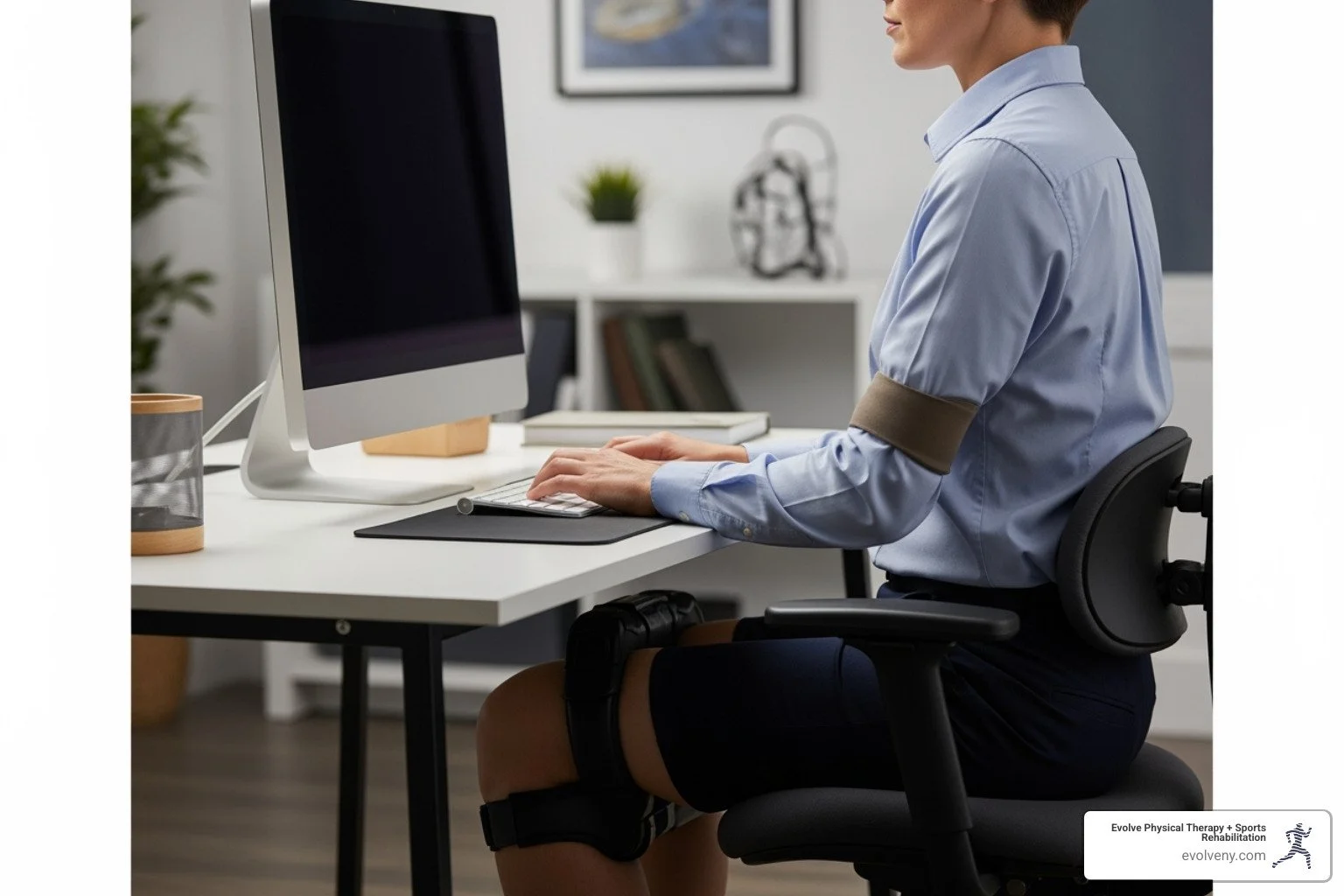
How to Sit at Your Computer Without Becoming a Human Pretzel
Introduction: The Modern Dilemma of Desk Work
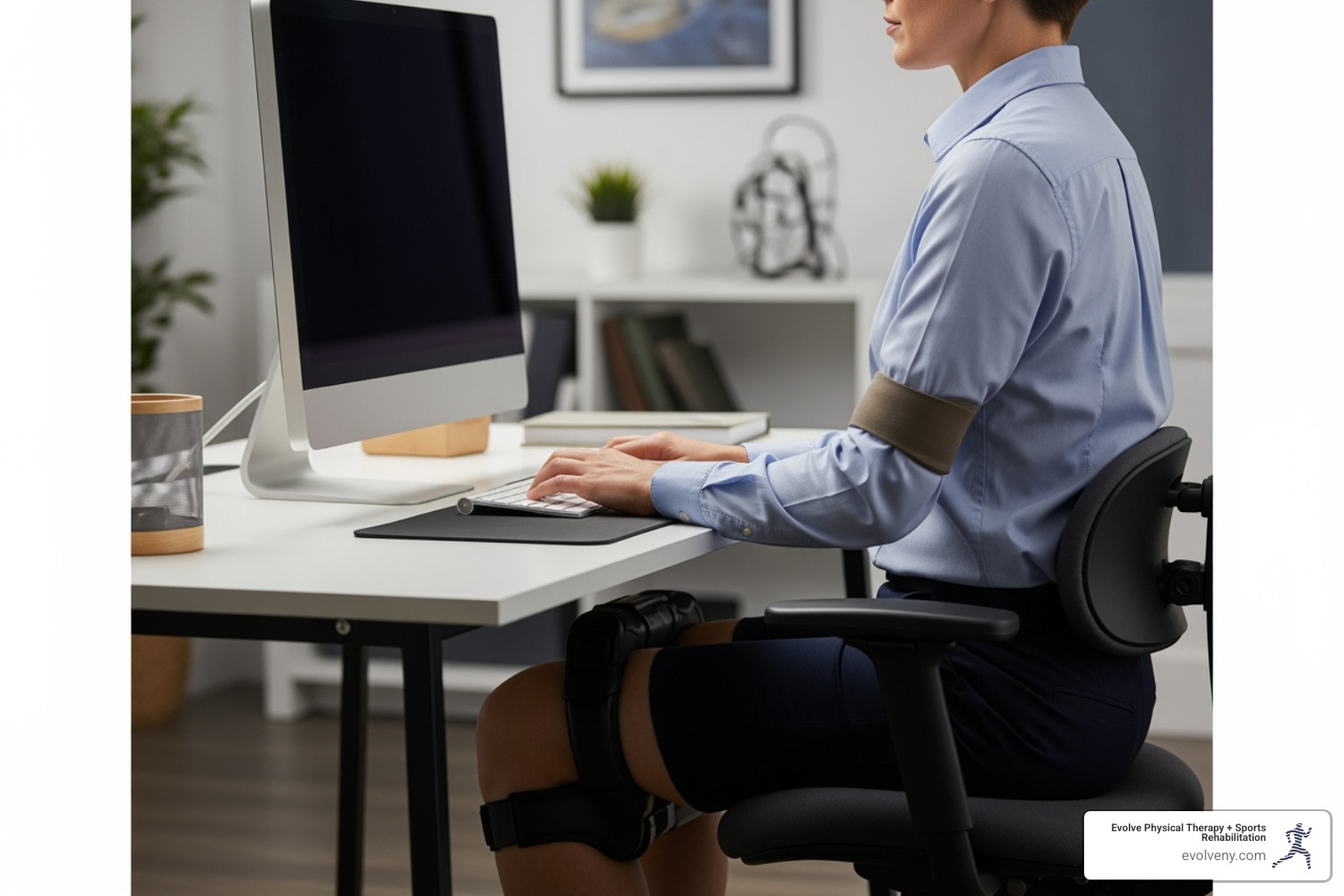
Computer sitting ergonomics is the science of arranging your workstation to fit your body, reducing strain and preventing injury. The key principles are:
- Chair height: Feet flat on the floor, knees at a 90-degree angle.
- Monitor position: Top of the screen at or slightly below eye level, an arm's length away.
- Keyboard placement: Elbows at 90 degrees, with wrists straight and neutral.
- Back support: Lumbar support fitted to your lower back, with a slight recline (100-110 degrees).
- Movement: Take breaks every 30-60 minutes to stand, stretch, and change posture.
If you work at a desk, you're not alone. The majority of Americans sit for 40 or more hours per week, and many don't realize that a poorly designed workstation can lead to serious health problems. Common symptoms include discomfort in the back, neck, and shoulders, pain in the hands and wrists, and headaches with eyestrain.
Prolonged sitting also increases the risk of diabetes and cardiovascular disease. Poor posture creates tension and pain throughout the body and reduces circulation. The good news is that discomfort doesn't have to be part of your job.
Simple adjustments to your workstation can make a dramatic difference. Understanding neutral body positioning and how to arrange your workspace can protect your health. I'm Lou Ezrick, founder of Evolve Physical Therapy in Brooklyn. For nearly two decades, I've helped patients recover from chronic pain caused by poor computer sitting ergonomics. I've seen how small, targeted changes can eliminate years of accumulated pain.
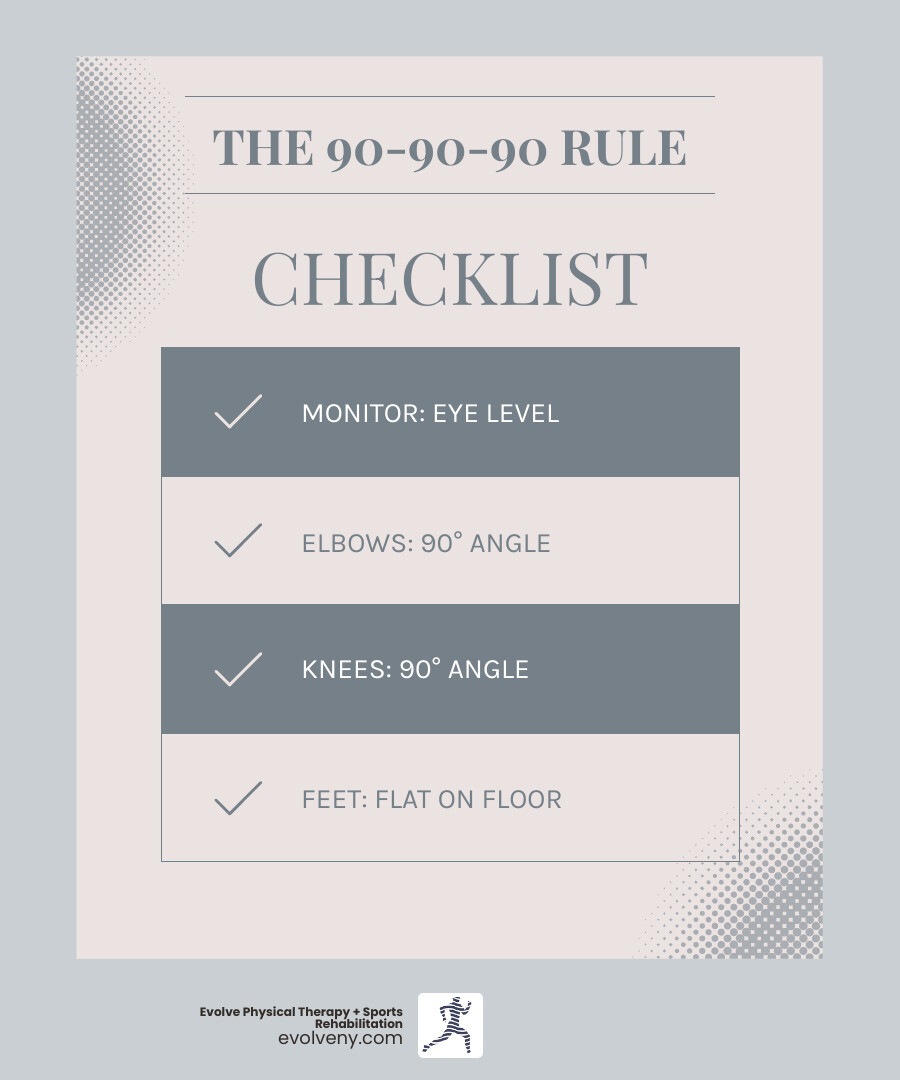
Why Your Desk Job Is a Health Hazard: The Risks of Poor Posture
That office chair you're sitting in might be slowly damaging your health. Millions of Americans work at computers, sitting for 40 or more hours per week. While it feels harmless, the toll on our bodies from sitting all day is real and accumulates over time.
The health consequences go beyond stiffness. Research shows that prolonged sitting increases your risk of diabetes and cardiovascular disease. When you sit for extended periods, your metabolism slows, and blood flow decreases. Poor posture compounds these problems, creating tension and pain in your neck, back, knees, and hips.
Over time, this leads to musculoskeletal disorders (MSDs)—injuries affecting your muscles, nerves, tendons, and joints. The risk increases with awkward postures held for long periods. At Evolve Physical Therapy, many patients develop these conditions from years of poor computer sitting ergonomics. Symptoms often start small: discomfort in the back, neck, and shoulders, pain in the hands and wrists, or headaches with eyestrain. These are warning signs. If you're already experiencing neck pain, our specialized Physical Therapy for Neck Pain Brooklyn services can help.
Fortunately, discomfort doesn't have to be part of your job. By implementing proper computer sitting ergonomics, you can reduce these risks, starting with neutral body positioning.
What is Neutral Body Positioning?
Neutral body positioning is a comfortable working posture where your joints are naturally aligned, reducing stress on your muscles, tendons, and bones. It requires minimal effort to maintain, which means less fatigue and a lower risk of injury.
For computer work, neutral positioning means:
- Neck: Upright and balanced over your shoulders, not jutting forward.
- Shoulders: Relaxed and hanging naturally, not hunched or rounded.
- Elbows: Bent at roughly 90 degrees and kept close to your body.
- Wrists: Straight and in line with your forearms.
- Back: Supported, especially the natural curve of your lower back.
- Thighs: Approximately horizontal to the floor.
- Feet: Planted flat on the ground or on a footrest.
This alignment allows your skeleton to support your body weight, rather than forcing your muscles to overcompensate. However, even perfect posture becomes a problem if held for too long. Our bodies are designed for movement, so frequent position changes are just as important as your initial setup. The goal is to create a foundation that reduces stress and strain while you move throughout your day.
If you're dealing with back pain from years of poor posture, our Physical Therapy for Back Pain Brooklyn program can help you recover and build better habits.
The Throne of Your Workstation: Mastering Your Ergonomic Chair
Your chair is the foundation of your workspace. A well-designed ergonomic chair protects your body from the cumulative strain that leads to chronic pain. At Evolve Physical Therapy, we've seen many patients find relief from back and hip pain simply by choosing and adjusting their chair properly.
Adjustability is everything. A quality ergonomic chair should adapt to you. Look for a stable five-castor base and adjustments for seat height, seat depth, and backrest angle. If the chair has armrests, they should be adjustable in height and width.
While some people use exercise balls, they lack the stability and lumbar support needed for extended work sessions and can lead to poor posture. Stick with a purpose-built ergonomic chair. If you're already dealing with back pain, our Physical Therapy for Back Pain Brooklyn team can help.
Adjusting Your Chair for Optimal Posture
Even the best chair is useless if not adjusted correctly. Follow these steps to set up your chair to support your body perfectly.
Seat Height: Adjust your chair so your feet rest flat on the floor. Your knees should be bent at approximately 90 degrees, at or slightly below hip level. This ensures proper blood flow and reduces pressure on your lower body. A footrest should only be used if your desk is too high and your chair cannot be lowered enough.
Seat Depth: Slide the seat pan so there is a small gap (about three fingers' width) between the front edge of the seat and the back of your knees. This prevents the seat from digging into your legs and putting pressure on nerves.
Backrest and Lumbar Support: Sit all the way back in your chair. Adjust the backrest height so the lumbar support fits comfortably into the curve of your lower back. This is essential for maintaining your natural spinal curve and preventing slouching. The backrest should have a slight recline of 100-110 degrees, which reduces stress on your lower back muscles and spinal discs more effectively than sitting at a strict 90-degree angle.
Armrests: If you use them, position armrests so your shoulders are relaxed and your elbows are close to your body. They should sit just beneath your elbows when your arms hang naturally. Armrests are for resting during breaks, not for supporting your body while typing.
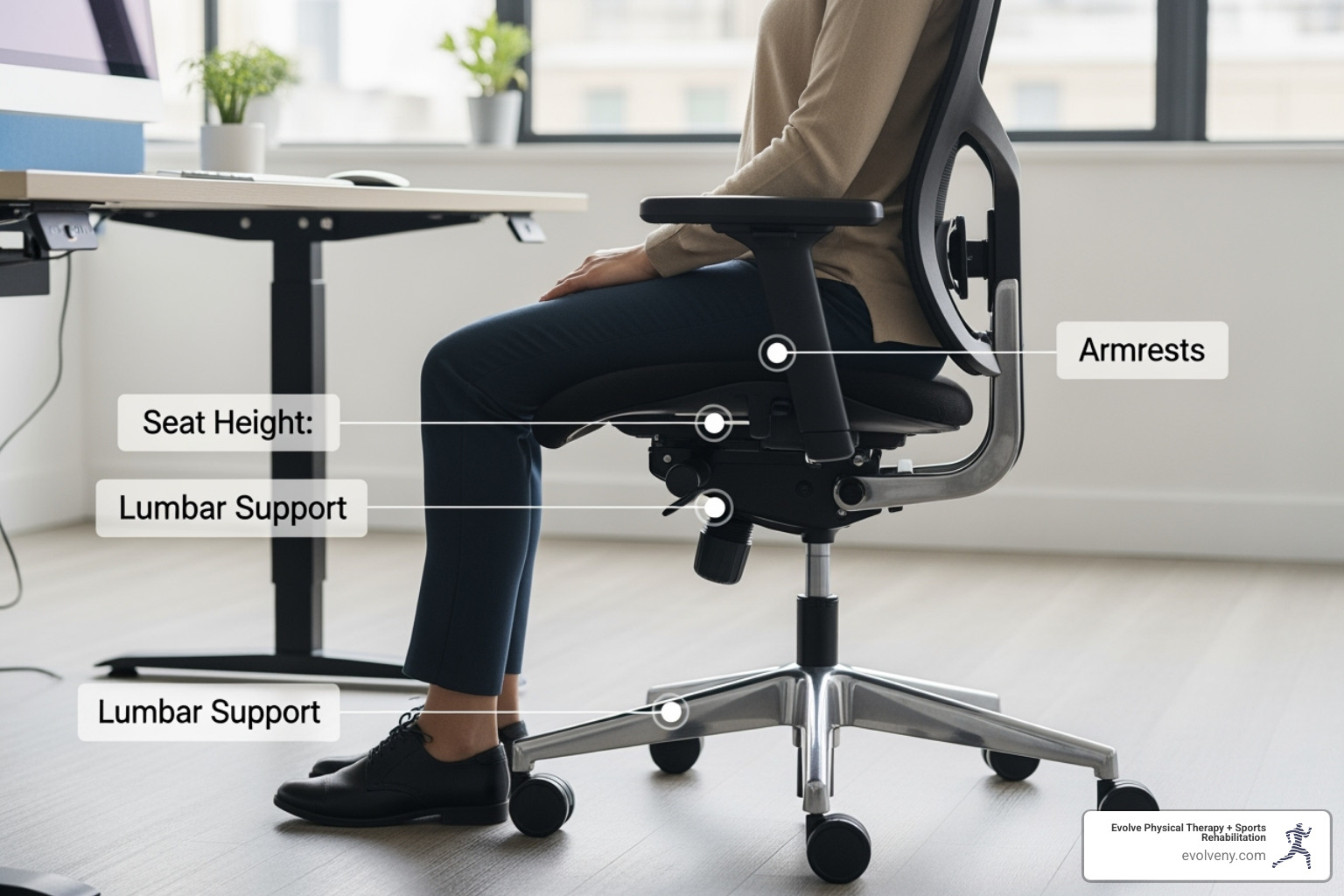
Taking the time to fine-tune these adjustments is one of the best things you can do for your long-term health. You're not just making your chair more comfortable—you're actively reducing your risk of pain and injury.
Building Your Pain-Free Zone: A Guide to Your Workstation Components
A perfect chair setup is a great start, but it's just one piece of the puzzle. Your monitor, keyboard, mouse, and desk must work together to create a complete ergonomic environment that supports your body.
This is where computer sitting ergonomics comes to life—it's about creating a system that works for you, not against you. Let's walk through each component.
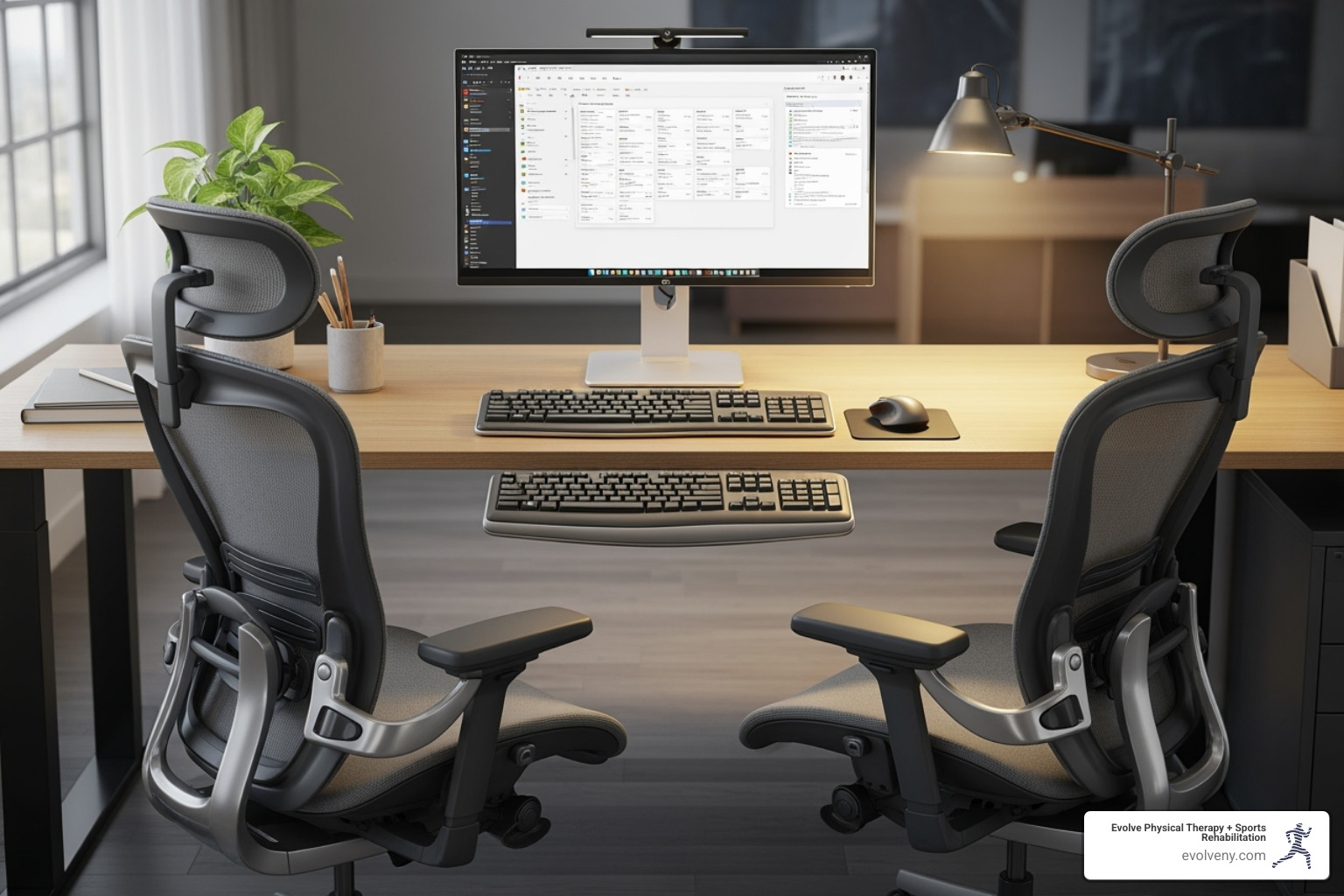
Monitor Positioning to Prevent Neck Pain and Eye Strain
Incorrect monitor positioning is a primary cause of neck pain and eye strain. Follow these simple rules:
- Position: Place the monitor directly in front of you, centered with your body.
- Height: The top of the monitor screen should be at or slightly below your eye level. This allows you to view the screen without tilting your head. If you wear bifocals, you may need to lower it an additional inch or two.
- Distance: Position the monitor about an arm's length away (typically 20-40 inches). This range helps prevent eyestrain while keeping text readable.
For more detailed guidance, check out OSHA's eTool on computer workstations.
Keyboard and Mouse Placement for Happy Wrists
Proper placement of your keyboard and mouse is crucial for preventing discomfort in your hands, wrists, and forearms.
- Position: Your keyboard should be placed so your wrists remain straight and your elbows are bent at approximately 90 degrees, close to your body. A keyboard tray can help achieve this, especially one with a "negative tilt" (front edge higher than the back) to keep wrists neutral.
- Neutral Wrists: Avoid bending your wrists up, down, or to the sides while typing or mousing. Any deviation from a straight line increases pressure on nerves and tendons.
- Mouse: Place your mouse on the same surface as your keyboard and close to your body to minimize reaching. If you spend a lot of time on the phone while typing, use a headset to avoid cradling the phone, which is a major cause of neck and shoulder pain.
Achieving the Correct Way to Sit at Computer involves paying attention to these collective details.
Ergonomic Desks, Laptops, and Lighting
Your desk, laptop, and lighting complete your ergonomic setup.
- Desk Height: Your desk should allow your elbows to bend at 90 degrees when your hands are on the keyboard. Height-adjustable (sit-stand) desks are excellent because they allow you to alternate between sitting and standing, reducing static load on your body.
- Laptops: Laptops are not designed for prolonged use. Their integrated screen and keyboard force a hunched posture. For sustained work, treat your laptop like a desktop: use an external keyboard and mouse, and place the laptop on a stand to raise the screen to eye level.
- Lighting and Glare: Position your monitor perpendicular to windows to reduce glare. Use blinds to control natural light. Your overall lighting should be moderate and indirect. If you need more light for documents, use an adjustable task lamp. Proper lighting and glare management reduce visual fatigue, burning eyes, and headaches.
Beyond the Setup: Active Habits for Healthy Computer Sitting Ergonomics
Even a perfect ergonomic setup can't prevent pain if you sit still all day. The problem isn't just how you sit—it's how long you stay in one position. Our bodies are not designed to be static. Holding any posture, no matter how good, leads to muscle fatigue, reduced blood flow, and discomfort.
Movement is critical. Research shows that moving for short periods every 30 minutes increases blood flow and re-energizes your body. Short, frequent rest breaks are far more beneficial than longer, infrequent ones. Sitting for over an hour without moving puts significant stress on your body.
We encourage patients to take "micro-breaks"—very short pauses of 20-60 seconds every 30 minutes. Stand up, walk around, or do a quick stretch. The goal is to break the static cycle and allow your body to reset. These breaks cost almost no time but pay huge dividends in comfort and health. For more ideas, explore our advice on Home Office Ergonomics.
Simple Stretches to Do at Your Desk
You don't need a gym to incorporate movement into your workday. These simple stretches can be done right at your desk to improve circulation and alleviate tension.
- Chin Tucks: To counteract forward head posture, sit tall and gently pull your chin straight back, creating a double chin. Hold for 5 seconds and repeat 5-10 times.
- Shoulder Rolls: Roll your shoulders up toward your ears, then back and down in a smooth circle. Repeat 5-10 times, then reverse direction.
- Upper Back Stretch: Interlace your fingers behind your head, open your elbows wide, and gently lean your upper back over your chair's backrest. Hold for 10-15 seconds.
- Wrist Stretches: Extend one arm, palm down. With your other hand, gently pull your fingers back toward your body. Hold for 15-20 seconds. Flip your hand palm up and gently pull your fingers down. Hold and repeat on the other arm.
- Gentle Backbends: Stand up, place your hands on your lower back, and gently arch your spine. Hold for a few seconds.
- Ankle Pumps: While seated, point and flex your ankles 10-15 times, then make circles in both directions to boost circulation.
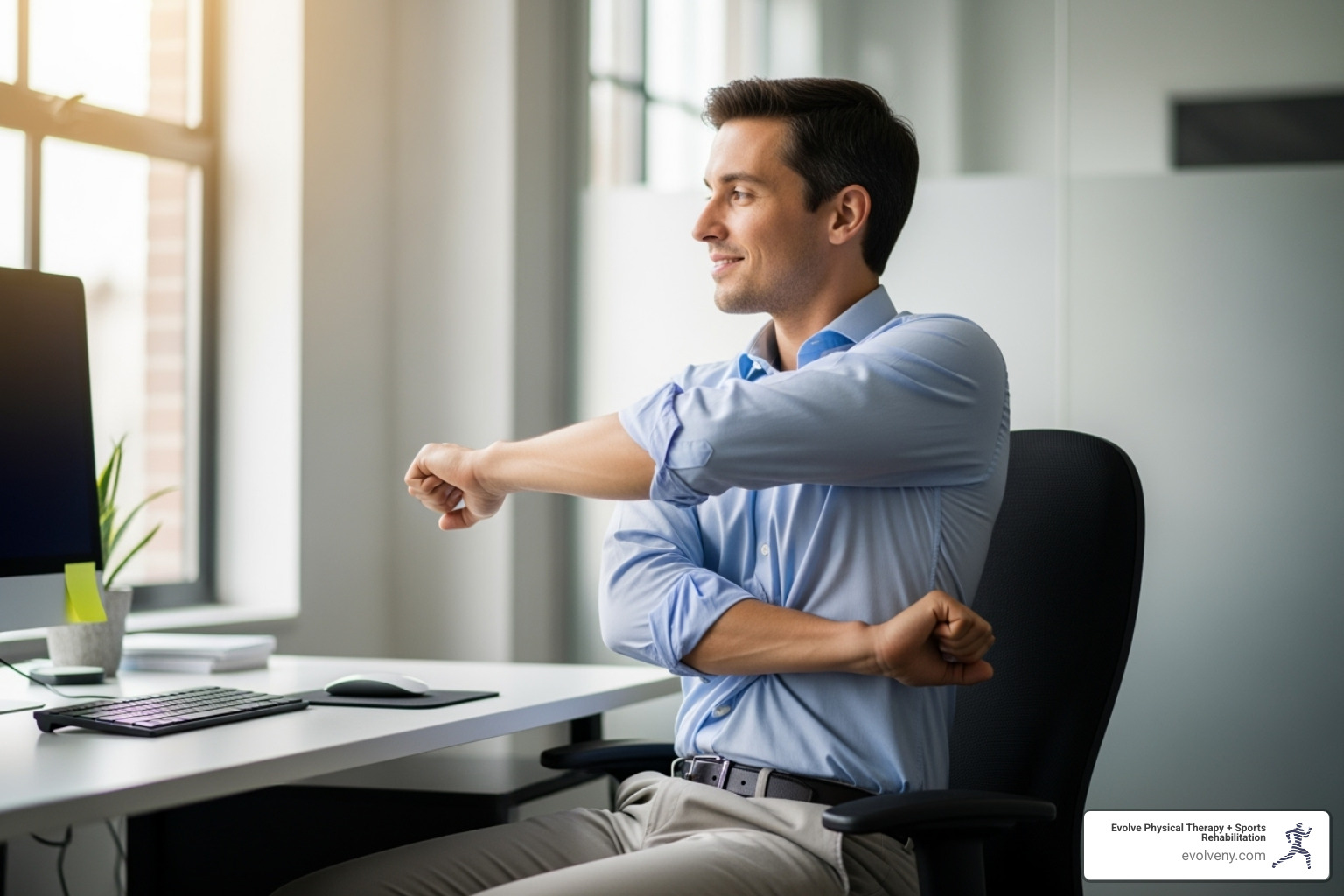
Remember to breathe deeply and listen to your body. The goal is gentle relief, not pain. If something hurts, ease off.
Frequently Asked Questions about Computer Ergonomics
Over the years at Evolve Physical Therapy, we've heard many of the same questions from patients dealing with workstation-related discomfort. Here are answers to some of the most common ones.
What are the first signs of a musculoskeletal disorder (MSD) from computer use?
MSDs often creep up slowly. Recognizing the early warning signs is key to preventing a minor issue from becoming a chronic condition. Look out for:
- Pain: Sharp, dull, aching, or throbbing sensations that may be constant or intermittent.
- Stiffness: Particularly in your neck, shoulders, back, or wrists after sitting.
- Numbness or Tingling: Often felt in the hands, fingers, or arms, indicating possible nerve compression.
- Burning Sensations: Another sign of nerve irritation.
- Swelling or Weakness: Noticeable around joints or a general loss of grip strength.
Even vague discomfort is your body's way of telling you that your computer sitting ergonomics need attention. Ignoring these signs can lead to more serious conditions like carpal tunnel syndrome or chronic back pain. If you're feeling discomfort in your upper back, our information on Upper Back Strains may be helpful.
How can I assess my own workstation for ergonomic issues?
You can perform a quick self-assessment. As you sit at your desk, run through this checklist:
- Chair: Are your feet flat on the floor? Are your knees at or below your hips? Does the lumbar support fit the curve of your lower back?
- Monitor: Is the top of the screen at or slightly below eye level? Is it an arm's length away and directly in front of you?
- Keyboard and Mouse: Are your wrists straight when you type? Are your elbows bent at about 90 degrees and close to your body?
- Body Feedback: Do you feel any pain, stiffness, or discomfort during your workday? Note where and when it occurs.
Creating a setup that supports a neutral posture is the goal. For a professional perspective, we offer Physical Therapy for Ergonomic Assessment to create a personalized plan.
Are wrist rests for keyboards actually helpful?
This is a common point of confusion. Wrist rests are for resting your palms during pauses in typing, not for support while you are actively typing.
Resting your wrists on a support while typing applies continuous pressure to the underside of your wrist, which can increase pressure inside the carpal tunnel and potentially contribute to symptoms. It also encourages a static wrist position, which good ergonomics aims to avoid.
The better approach is to adjust your chair and keyboard height so your hands can "float" over the keyboard with straight, neutral wrists. If you use a wrist rest, use it only for brief pauses. Think of it as a rest stop, not a permanent foundation.
Take Control of Your Comfort and Health
We've covered the core principles of computer sitting ergonomics, from adjusting your chair and monitor to keeping your wrists neutral and incorporating movement. This isn't a luxury; it's a fundamental investment in your health, productivity, and quality of life.
I've seen too many patients wait until pain becomes unbearable before seeking help. Proactively setting up your workstation and building movement into your day can prevent what might otherwise become a chronic condition. The cost of prevention is a little time and attention, while the cost of treating chronic pain is comfort, productivity, and quality of life.
At Evolve Physical Therapy in Brooklyn, we look at the whole picture. We don't just treat symptoms; we analyze how you sit, move, and work to identify the root cause of your discomfort. Our hands-on approach and personalized workstation assessments are designed to get you back to feeling your best.
You deserve to finish your workday feeling energized, not achy. The small changes in this guide can make a huge difference. If you're already experiencing discomfort, don't wait for it to become chronic. Learn how ergonomic physical therapy in Brooklyn can help you create a personalized plan to address your pain and build a healthier, more comfortable workday.
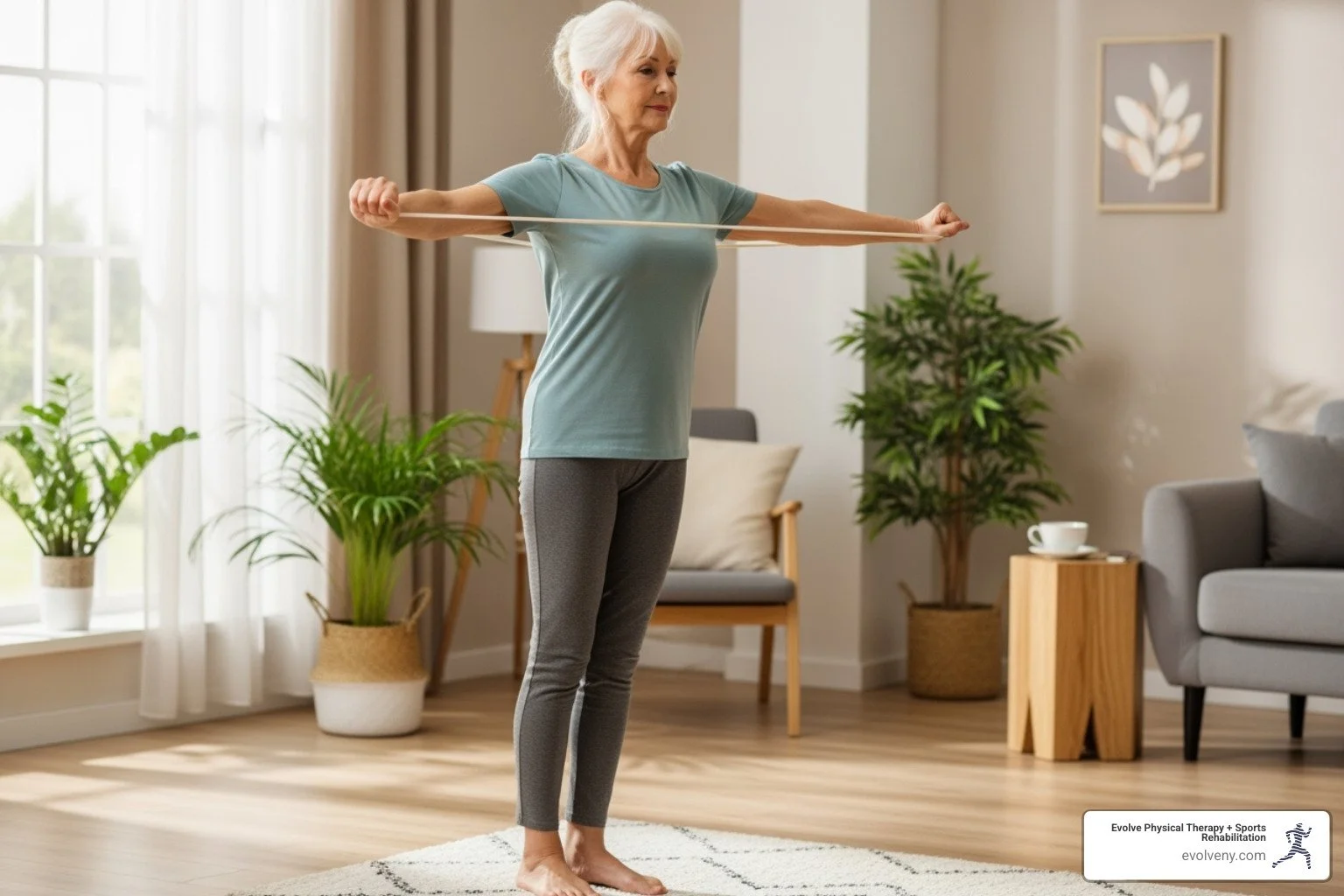
Stand Tall Again: Top Posture Correction Tools for Seniors
Why Posture Matters More As We Age
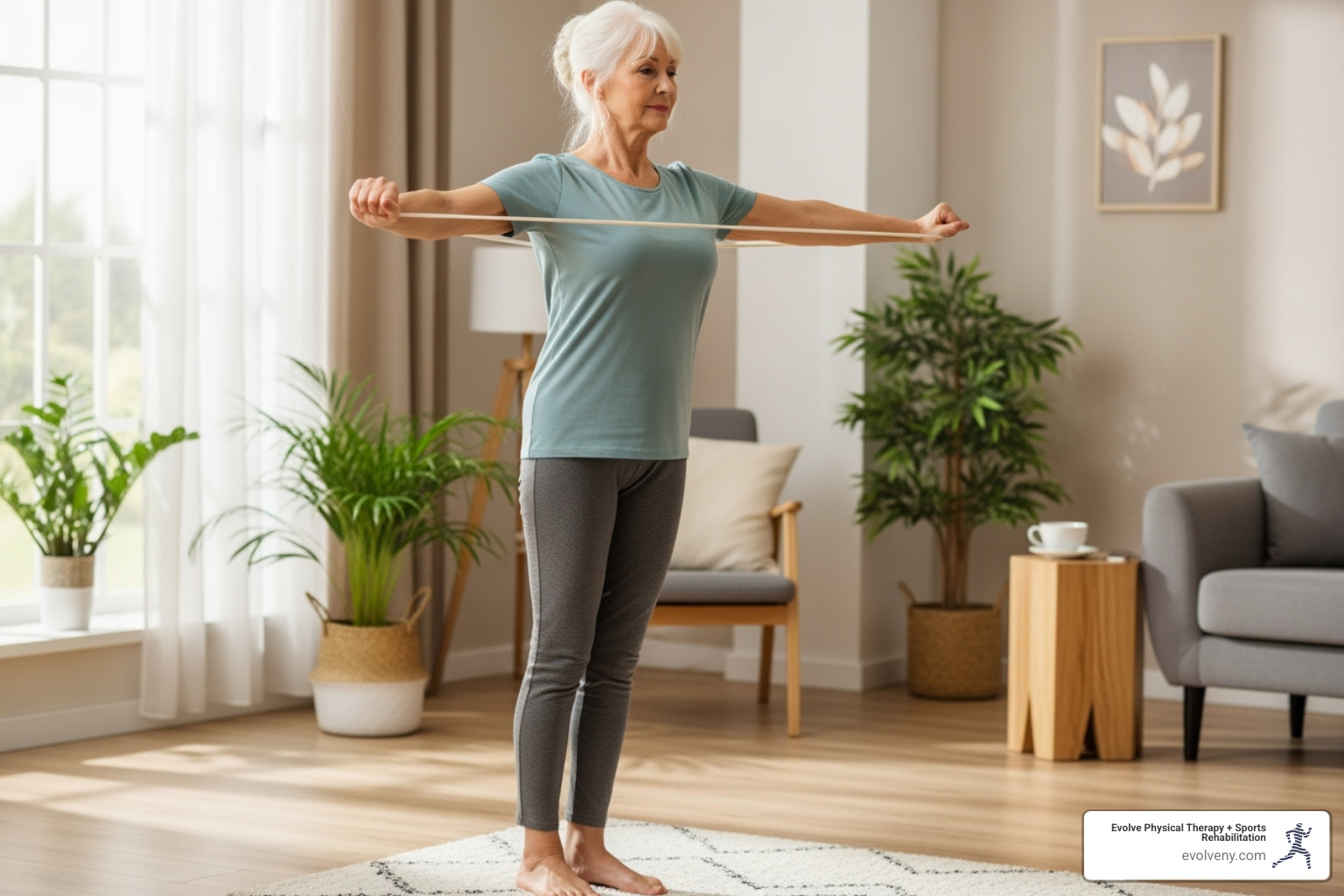
Elderly posture correction is critical as we age. While many seniors accept poor posture as inevitable, maintaining good posture can dramatically improve quality of life, reduce pain, and prevent serious injuries.
Quick answers for elderly posture correction:
- Strengthening exercises: Chin tucks, wall tilts, and scapular squeezes
- Essential stretches: Doorway chest stretches and wall angels
- Daily habits: Take breaks from sitting every 10-15 minutes
- Professional help: Seek physical therapy for persistent pain or severe curvature
- Timeline: Consistent practice shows improvements within 2-8 weeks
Poor posture isn't just about looks; it causes health problems that threaten independence. Slouching shifts our center of gravity, increasing fall risk. A hunched posture also compresses the chest and abdomen, affecting breathing and digestion.
The consequences extend beyond physical discomfort. Seniors with poor posture face:
- Increased fall risk due to altered balance
- Chronic pain in the back, neck, and shoulders
- Reduced lung capacity from chest compression
- Digestive issues from abdominal compression
- Loss of confidence and social withdrawal
Encouragingly, it's never too late to improve your posture. Muscles are adaptable throughout life. With the right exercises and habits, you can stand taller and feel stronger at any age.
I'm Lou Ezrick, a physical therapist with nearly two decades of experience. At Evolve Physical Therapy, I specialize in elderly posture correction using hands-on manual therapy and targeted exercises. I've seen countless seniors improve their posture, reduce pain, and regain confidence with our individualized approach.
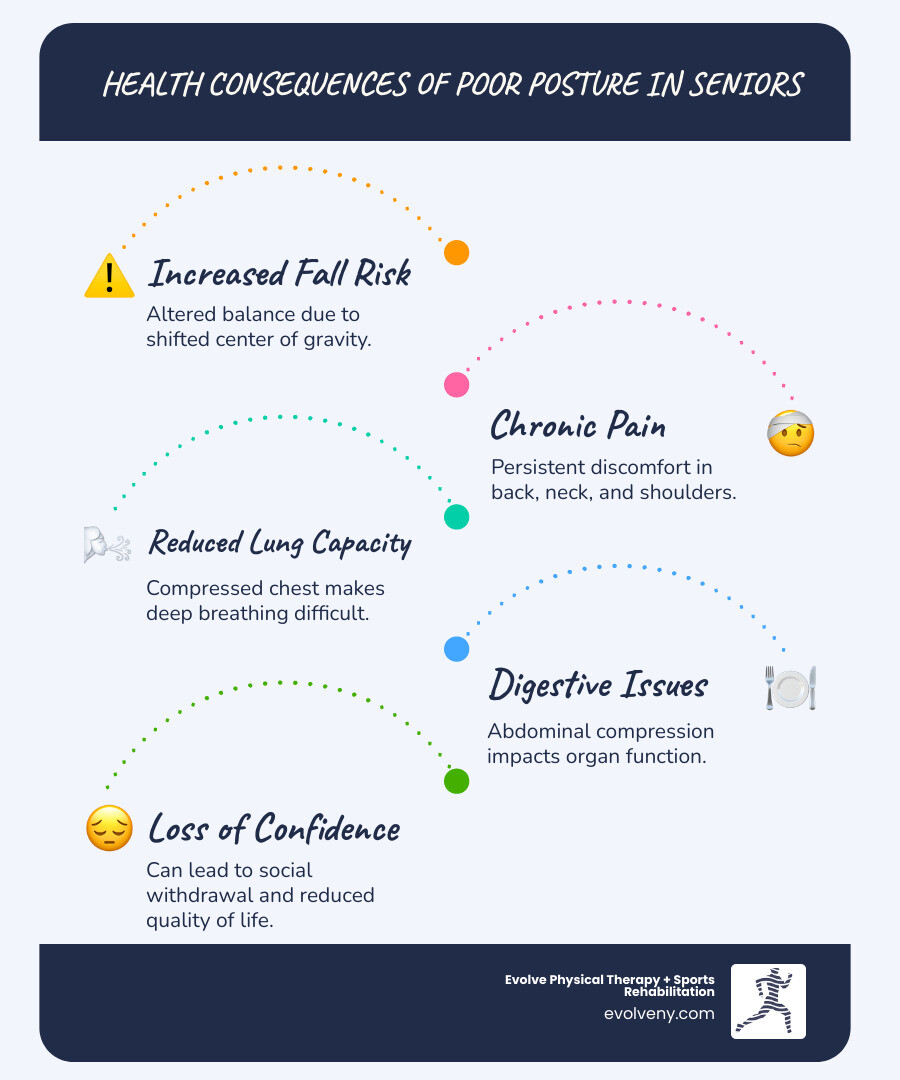
Understanding the Root Causes of Poor Posture in Seniors
Poor posture isn't an inevitable part of aging. While our bodies change, many factors causing a hunched appearance are controllable.
Muscle weakness is a primary cause of poor posture in seniors. Core, back, and shoulder muscles weaken without regular use. When these postural muscles weaken, gravity pulls the body forward into a hunch.
Joint stiffness, especially in the spine, shoulders, and hips, also contributes. Age-related inflexibility can make standing tall uncomfortable or even painful.
Bone density loss is another major concern. Conditions like osteoporosis can cause our vertebrae to become fragile and collapse, leading to compression fractures. This creates the rounded spine condition called kyphosis, sometimes referred to as a "dowager's hump." If you're concerned about bone health, our Physical Therapy for Osteoporosis Brooklyn program can provide specialized support.
Lifestyle factors are significant. A modern sedentary lifestyle contributes to poor posture. Spending hours sitting shortens hip flexors and tightens chest muscles, pulling shoulders forward. Habitual slouching while watching TV or using phones reinforces these poor positions.
Spinal changes, like the natural compression of spinal discs with age, also contribute to a forward-bent posture. However, targeted exercises and proper body mechanics can slow these changes.
Understanding these root causes is the first step toward effective elderly posture correction. Muscles can be strengthened, joints can regain flexibility, and habits can be changed at any age. If muscle weakness is a concern, our Physical Therapy for Muscle Weakness program offers targeted solutions.
For those interested in the science, this study on posture changes with age provides insights into how our posture evolves.
The Connection Between Posture, Balance, and Fall Prevention
Your posture directly affects your balance, which in turn determines your fall risk.
Good posture ensures your center of gravity is stable, allowing for quick reactions to balance threats. But when posture deteriorates—think hunched shoulders and a forward head—your center of gravity shifts forward. This makes you fight gravity just to stay upright.
This shift dramatically increases your risk of falls. Research shows that seniors with poor posture are more likely to fall and suffer serious injuries, which can lead to a loss of independence.
Improving your posture significantly reduces this risk. Better posture leads to better balance and more confidence in daily movements like walking, getting up from chairs, and navigating stairs.
Maintaining independence is the ultimate goal. Moving confidently and safely allows you to retain control over your life and continue your favorite activities.
At Evolve Physical Therapy, our Physical Therapy for Fall Prevention Brooklyn program specifically addresses the posture-balance relationship. We also offer comprehensive Balance Training for Seniors that works hand-in-hand with posture correction.
Foundational Exercises and Stretches for Better Posture
For elderly posture correction, we must strengthen loose, weak muscles and stretch tight, shortened ones. Posture improvement requires balancing muscle groups. Your core provides stability, back muscles pull your shoulders back, and chest muscles, often tight from hunching, need stretching.
Consistency is key. Just 15-20 minutes of focused, regular exercises can create remarkable changes in how you stand, move, and feel. These gentle yet powerful exercises are designed for seniors and can be done at home with little to no equipment.
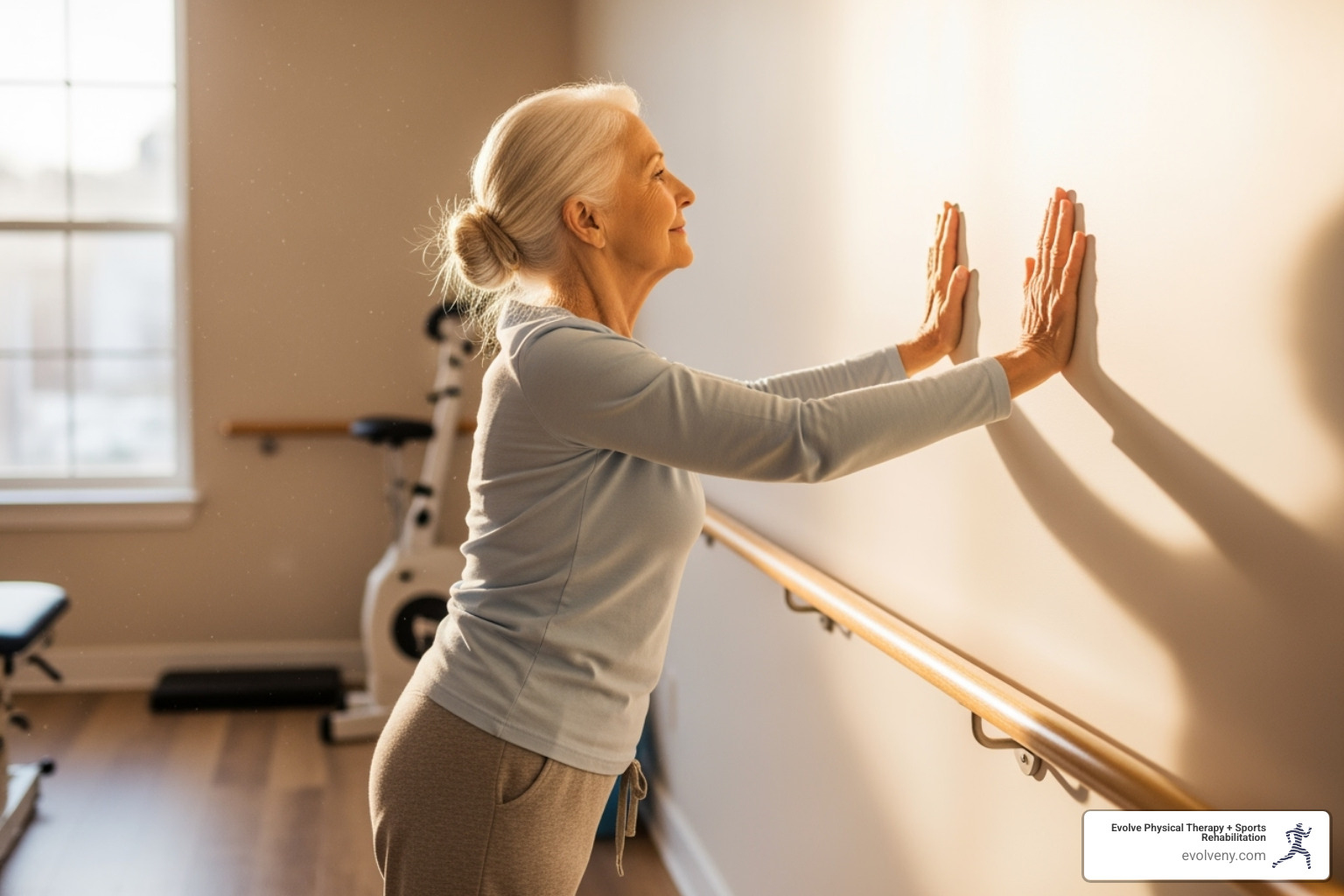
Strengthening Exercises for Elderly Posture Correction
Here are five effective strengthening exercises for elderly posture correction, each targeting specific weak muscles.
Chin tucks combat forward head posture. Sit comfortably and gently pull the back of your head straight back, creating a long neck without looking up or down. Hold for five seconds, feeling the deep neck muscles work. Repeat ten times.
Wall tilts strengthen your core. Stand with your back against a wall, feet six inches away. Pull your belly button toward your spine and tuck your tailbone to press your lower back flat against the wall.
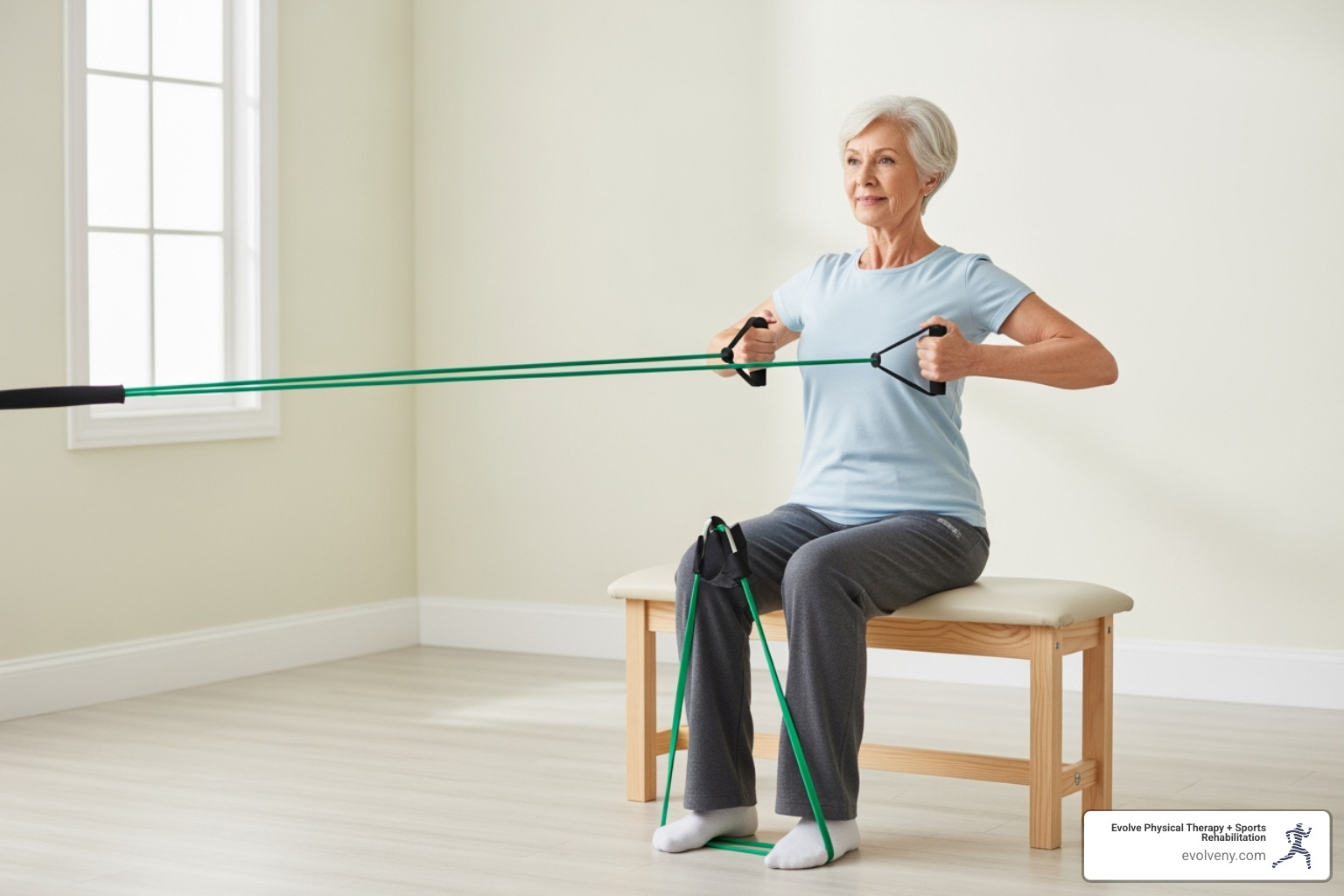
Scapular squeezes target rounded shoulders. Imagine squeezing a tennis ball between your shoulder blades. Keep shoulders down and back, hold for five seconds, then release.
The bird dog exercise is effective for core stability. Start on your hands and knees. Slowly extend one arm forward and the opposite leg back, keeping your back flat and core engaged.
Bridges strengthen your glutes and hamstrings. Lie on your back with knees bent. Lift your hips to create a straight line from shoulders to knees.
A seated row with a resistance band is perfect for adding resistance. The pulling motion directly counteracts forward hunching. For more on how physical therapy addresses joint health, see our guide on Physical Therapy for Degenerative Joint Disease.
Essential Stretches to Counteract a Hunched Back
Strengthening is crucial, but we must also stretch tight muscles that pull you into poor posture. These stretches target areas shortened by forward head posture and rounded shoulders.
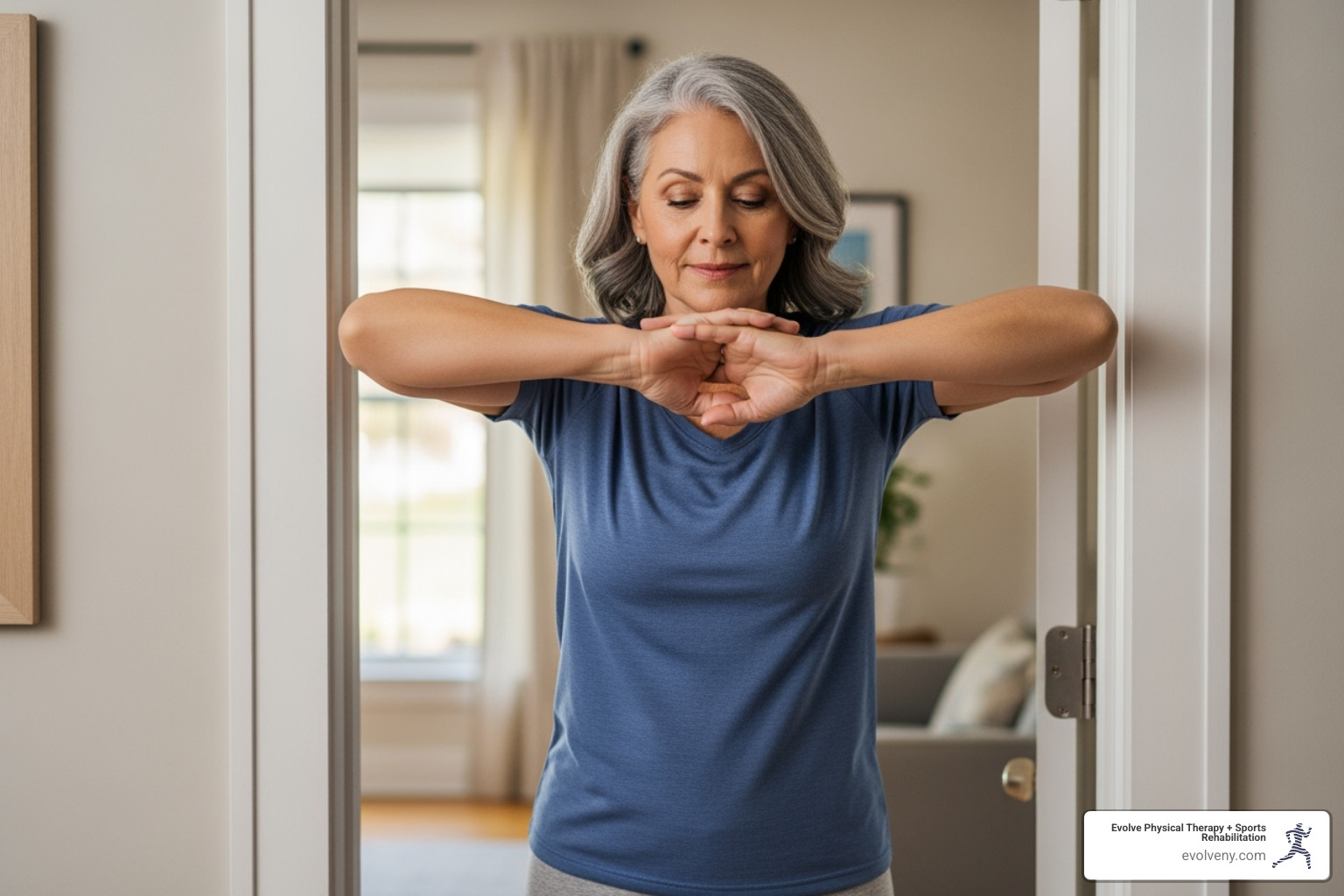
The doorway stretch is transformative for a tight chest. Stand in a doorway with your arms in a "cactus" position (elbows bent at 90 degrees, palms on the frame). Step one foot forward and lean gently into the stretch. Hold for 20-30 seconds.
A seated chest stretch can be done anywhere. Clasp your hands behind your back (or use a towel) and gently lift them away from your body to open up tight chest muscles.
Wall angels are like making snow angels against a wall. Stand with your back flat against a wall. Slowly slide your arms up and down, keeping elbows and hands on the wall.
Don't forget neck stretches. Gently tilt your head, bringing your ear toward each shoulder. To stretch the back of your neck, tuck your chin and look down slightly.
All stretches should feel gentle, not painful. For additional exercises, the Cleveland Clinic offers some excellent exercises to improve your posture.
Helpful Tools and Lifestyle Adjustments
Better posture requires more than exercise; it's a lifestyle change. Small, daily adjustments to your environment and habits can lead to remarkable improvements in elderly posture correction.
Ergonomics is about creating spaces that encourage proper alignment, so your surroundings support you. Daily habits, like slouching while watching TV or craning your neck to use a phone, shape our bodies. Developing self-awareness about your posture is the first step to improvement.
Supportive furniture is a game-changer. Choose chairs with good lower back support that let your feet rest flat on the floor. A simple lumbar cushion can improve existing chairs. Proper footwear with good arch support is your body's foundation, helping maintain alignment from the ground up.
How Evolve Physical Therapy Supports Posture Correction for Seniors
At Evolve Physical Therapy, effective elderly posture correction begins with a thorough assessment. We identify your unique challenges and goals to understand the specific causes of your posture concerns.
Our hands-on approach involves showing and guiding you. We find practical solutions like the use of supportive cushions and ergonomic adjustments for your home. We provide guidance on safe, effective posture strategies that become second nature, teaching you to engage your core, lift safely, and find a comfortable, natural posture.
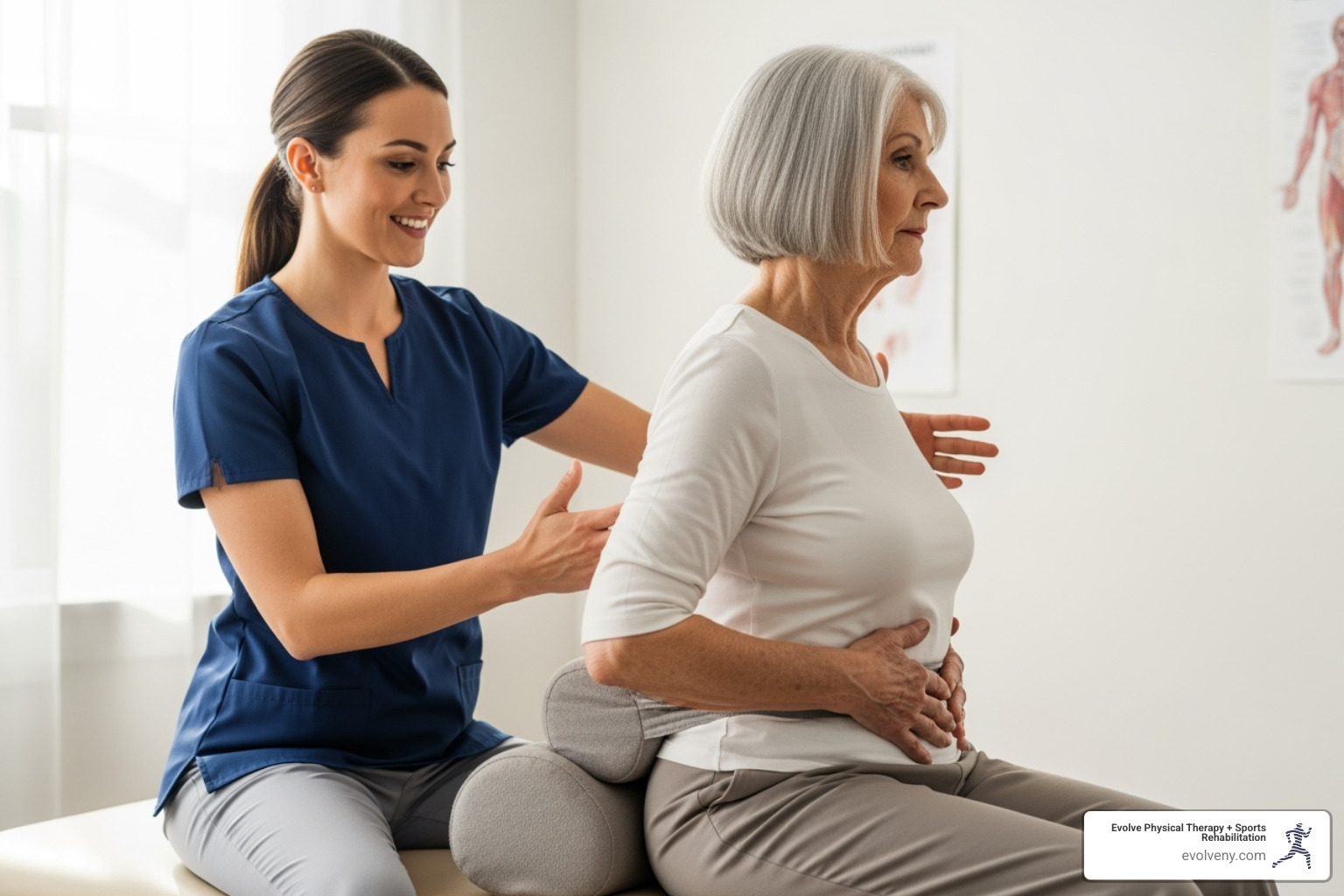
Knowing when to seek professional advice is key. If you have persistent pain, significant spinal curvature, or see no improvement from home efforts, our expertise is invaluable. We specialize in complex postural challenges, including those related to conditions like osteoporosis or past injuries. You can explore our Information on posture support options at Evolve Physical Therapy.
Lifestyle Adjustments for Lasting Elderly Posture Correction
Powerful changes come from daily habits that naturally support better posture.
Mindful sitting is key. Sit with your feet flat on the floor, back supported, and head held high. At a computer, keep the screen at eye level to prevent forward head lean. For more tips, see our guide to Correct Computer Posture.
Walk with intention: gaze forward, let your arms swing naturally, and think tall. Maintaining an aligned posture makes every step count.
Breaking up sedentary time is one of the most effective strategies. Our bodies aren't meant to be still for hours. Set a reminder to move every 30 minutes; even a brief stand and stretch helps.
Your proper sleeping positions also matter. For side sleepers, use a pillow between your knees. For back sleepers, a small pillow under the knees can reduce lower back strain.
Finally, hydration and nutrition are the building blocks for strong muscles and bones. Protein, calcium, and vitamin D are essential, and proper hydration keeps tissues supple.
When to Seek Professional Help for Posture Problems
While home exercises and mindful habits are effective, sometimes professional help is necessary to address deeper issues. The key is recognizing when your posture problems have moved beyond the "do-it-yourself" category.
Chronic pain that persists in your back, neck, or shoulders and interferes with daily life or sleep is a clear sign to seek help. Never ignore numbness or tingling in your arms, hands, or legs, as this may indicate nerve compression. Severe curvature of the spine, especially if it's worsening rapidly, also requires prompt professional evaluation.
After a fall or injury, it's wise to have a professional assessment, as it can cause subtle changes that lead to future posture problems. Also, seek help for difficulty breathing, which can be caused by a hunched posture compressing your chest.
If home exercises aren't enough after several weeks, it's time for a personalized approach. Every body is unique and may require a different solution.
How a Physical Therapist Can Help
At Evolve Physical Therapy + Sports Rehabilitation, our approach to elderly posture correction is both an art and a science. We go beyond telling you to "stand up straighter" by identifying the unique factors causing your posture issues.
Everything starts with a personalized assessment. We examine your movement, muscle strength, joint stiffness, and balance. This evaluation allows us to create a treatment plan that addresses your specific needs.
Our manual therapy techniques are a cornerstone of our hands-on philosophy. Using skilled touch, we can help release tight muscles, improve joint mobility, and reduce the tension pulling your body out of alignment.
We then develop custom exercise programs based on your assessment. We teach proper form and progression for maximum benefit and safety, unlike generic online exercises.
Pain management is often a crucial part of treatment. We use various techniques to reduce discomfort, allowing you to focus on your rehabilitation.
Our body mechanics education provides a deep understanding of how to move and position your body daily. We teach you how to get out of chairs, lift safely, and maintain good posture during all activities.
At Evolve Physical Therapy, we believe in empowering you with skills that last a lifetime. When you're ready to take the next step, you can learn more about our services at Physical Therapy for Seniors in Brooklyn.
Frequently Asked Questions about Elderly Posture Correction
At Evolve Physical Therapy, I often discuss posture with seniors. Their questions reflect real concerns about aging and independence. Here are answers to the most common questions to provide clarity and encouragement.
Is it ever too late to improve my posture?
The answer is a resounding no, it's not too late! I've worked with patients in their 80s and 90s who have made remarkable improvements in their posture and well-being.
Science shows that muscle adaptability doesn't have an expiration date. Your muscles respond to exercise throughout life. The process might take longer as we age, but the body's capacity for positive change remains.
One 78-year-old patient was convinced she couldn't improve. Three months later, she stood taller, slept better, and had less back pain. Small improvements make a big difference; the goal is better alignment, less pain, and more confidence, not perfection.
The key is consistency. Show up for yourself regularly and trust the process.
How long does it take to see results from posture exercises?
The timeline for results varies per individual, depending on your starting point, the severity of postural changes, underlying conditions, and consistency.
Typically, patients notice initial improvements in comfort and awareness within 2 to 4 weeks. You might experience less backache or find yourself naturally correcting your slouch.
Visible changes often appear after 2 to 3 months with consistency over weeks and months. However, focus on feeling better, not just looking different. Reduced pain, improved breathing, and easier movement are often the first and most meaningful changes.
Elderly posture correction is a journey, not a destination. Every day you practice is an investment in your long-term health.
Can poor posture affect my breathing and digestion?
Yes, absolutely! Your posture directly impacts how well your internal organs can function, a "hidden" consequence that affects your quality of life.
A hunched posture compresses the chest and restricts lung expansion, making it harder to breathe deeply. You might feel short of breath or take shallower breaths. Improved posture often resolves this.
Similarly, a forward, hunched position compresses abdominal organs. This can affect digestion by interfering with the natural movement of food, which may cause bloating or discomfort. These issues often improve as posture gets better.
Good posture gives your organs the space they need to function properly, while poor posture puts them in a cramped position all day long.
Conclusion: Take the First Step Towards Standing Taller
We've learned that elderly posture correction is about living better, not just looking better. Poor posture impacts breathing, balance, confidence, and independence. Most importantly, we've learned that it's never too late to make meaningful changes.
The benefits of improving your posture are extensive. Standing taller helps you breathe easier, move confidently, and significantly reduce your risk of falls. It also improves digestion, diminishes chronic pain, and empowers you to take control of your health.
This is about proactive health. Every exercise and moment of mindful sitting is an investment in your future, improving your current quality of life and building a foundation for lasting independence and vitality.
It's a journey, not a destination. Consistency is key, and small daily choices lead to significant change. Be patient with yourself, celebrate small victories, and trust in your body's remarkable ability to adapt and improve.
At Evolve Physical Therapy + Sports Rehabilitation, our hands-on approach has helped countless seniors transform their posture and confidence. We provide the personalized support and expert guidance you need for your unique journey.
Don't let poor posture define your golden years. You have the power to stand taller, move better, and feel stronger. Whether you're just beginning to notice posture changes or you've been struggling with chronic pain, professional help can make all the difference.

Why Every Athlete Needs a Sports Mental Coach
Why Mental Training is the Missing Piece in Your Athletic Performance

A sports mental coach is a specialized professional who helps athletes develop psychological skills like focus, confidence, and resilience to achieve consistent peak performance. Unlike sports psychologists who treat mental health issues, mental coaches work proactively to strengthen the mental game through techniques like visualization, goal-setting, and stress management.
Quick Reference: Sports Mental Coach Role
- Primary Focus: Mental skills training for performance improvement
- Key Skills Taught: Confidence, focus, stress management, mental toughness
- Target Audience: Athletes of all levels seeking competitive advantage
- Methods: One-on-one coaching, team workshops, visualization techniques
- Outcome: Consistent performance and overcoming mental barriers
Ask any elite performer, and they'll say the game is at least 90% mental. Yet most athletes spend countless hours on physical skills while neglecting their mental game. The line between winning and losing often comes down to mental preparation. Athletes invest in physical training but rarely develop the psychological tools to perform under pressure.
Mental performance coaches provide techniques to improve focus, goal setting, motivation, stress management, mental toughness, and confidence. This isn't just about overcoming problems—it's about gaining a competitive edge that separates good athletes from great ones.
I'm Lou Ezrick, founder of Evolve Physical Therapy. With nearly two decades of experience, I've seen how the mind-body connection impacts performance. While a sports mental coach hones psychological skills, integrating mental training with physical rehabilitation creates complete athletes who excel on and off the field.
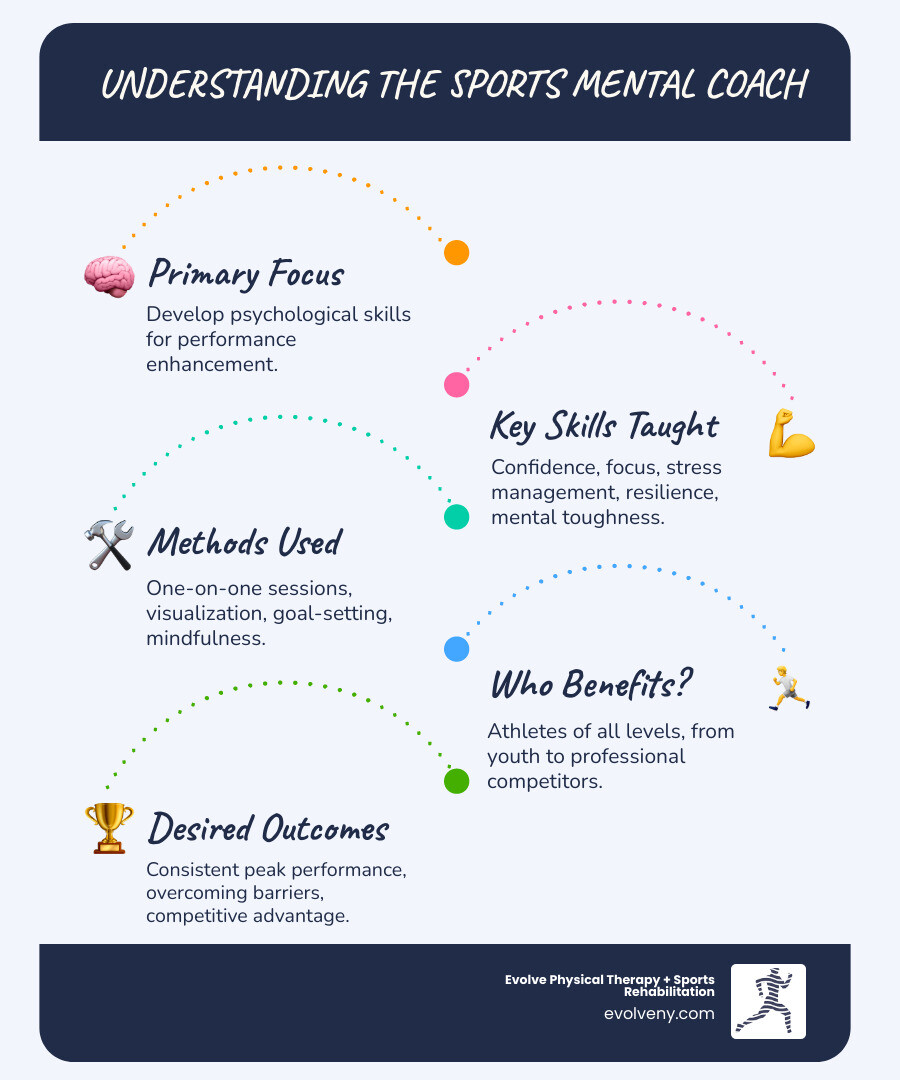
What is a Sports Mental Coach and What Do They Do?
When game time arrives and pressure mounts, an athlete's mind can become their biggest opponent. A sports mental coach steps in not to fix what's broken, but to build an unshakeable mental foundation that matches your physical prowess.
Defining the Role: Your Mental Game Strategist
A sports mental coach is a personal trainer for your brain. While a regular coach perfects technique, a mental coach works on the space between your ears, where championships are won or lost. They are performance architects, proactively helping you build mental skills like confidence, focus, stress management, and resilience.
These are the tools that separate athletes who crumble under pressure from those who thrive. For example, a basketball player who struggles with free throws in games despite nailing them in practice can learn techniques to manage their racing heartbeat and trust their muscle memory. This proactive approach builds mental muscle, develops composure under pressure, and helps you bounce back from mistakes faster. At Evolve Physical Therapy, we've seen how this mind-body connection transforms athletes.

What a Sports Mental Coach is Not: The Difference from a Sports Psychologist
Many people confuse a sports mental coach with a sports psychologist. Understanding the key differences is crucial for getting the help you need. A mental coach focuses on performance improvement for mentally healthy athletes, upgrading their mental software for peak efficiency. Sports psychologists are licensed professionals who diagnose and treat mental health conditions like depression or anxiety that affect performance.
Mental coaches are proactive, building skills before they're needed. Sports psychologists are often reactive, addressing existing clinical issues.
| Feature | Sports Mental Coach | Sports Psychologist |
|---|---|---|
| Primary Focus | Performance improvement, mental skills training | Mental health diagnosis & treatment, clinical therapy |
| Qualifications | Specialized certifications (CMPC, MGCP), coaching experience | Licensed psychologist (Ph.D. or Psy.D.), clinical training |
| Methods | Goal-setting, visualization, focus training, confidence building | Psychotherapy, cognitive-behavioral therapy, counseling |
In short: if you want to perform better, choose a mental coach. If you're struggling with mental health issues, start with a sports psychologist. For certified professionals, look for credentials like CMPC (Certified Mental Performance Consultant). You can learn more at More info on CMPC certification.
Tools of the Trade: How Coaches Build Mental Muscle
A sports mental coach uses a diverse toolkit custom to your needs.
- One-on-one coaching forms the backbone, offering personalized sessions to address unique challenges and strengths.
- Team workshops build collective mental toughness, improving communication and resilience for entire squads.
- Visualization techniques help you mentally rehearse success until it feels like second nature.
- Goal-setting strategies break down big dreams into manageable daily actions that build momentum.
- Mindfulness and relaxation skills teach you to stay present and calm under pressure.
- Cognitive behavioral principles help you reframe negative thought patterns into empowering ones.
- Focus and concentration drills train your attention like a muscle, a superpower in our distraction-filled world.
These skills transfer beyond sports, improving confidence and resilience in all areas of life. For additional resources, programs like Mental training Audio programs can reinforce key concepts.
The Winning Mindset: Key Skills and Benefits of Mental Training
The difference between a good athlete and a great one often lies in their mental game. A sports mental coach helps build this winning mindset by developing key psychological skills for a lasting competitive advantage.
Core Mental Skills for a Competitive Edge
Mental skills, like muscles, need consistent training. A sports mental coach helps develop these essential tools:
- Confidence building: Developing genuine, deep-rooted belief in your abilities that remains steady under pressure.
- Focus and concentration: Maintaining laser focus during competition, refocusing after errors, and blocking out distractions.
- Stress management: Channeling pre-game jitters and pressure into productive energy using techniques like controlled breathing.
- Resilience and mental toughness: Bouncing back stronger from setbacks, viewing challenges as opportunities for growth.
- Motivation and goal setting: Finding your deep "why" and setting meaningful goals that create momentum and direction.
- Composure under pressure: Learning to thrive in high-stakes moments rather than fear them.
- Overcoming fear of failure: Playing with courage and creativity by not being paralyzed by what might go wrong.
Who Benefits? From Youth Leagues to the Pros
Mental performance training benefits athletes at every level.
- Youth athletes learn to manage nerves and bounce back from mistakes, making sports more enjoyable and preventing burnout.
- Student-athletes get help balancing demanding academic and athletic schedules, reducing stress and improving focus in both areas.
- Collegiate performers adapt to higher levels of competition and pressure, learning to thrive in demanding environments.
- Amateur competitors improve performance and enjoyment in their chosen sport, helping them reach personal goals.
- Professional athletes gain the ultimate differentiator, fine-tuning focus and consistency to handle the pressures of elite competition.
At Evolve Physical Therapy, we see athletes from all levels across Brooklyn who need this mental edge. Our Physical Therapy for Athletes services show how powerful this combination can be.
Beyond the Game: Holistic Well-being and Academic Success
The skills learned from a sports mental coach become life superpowers.
- Overall well-being improves as athletes learn to manage stress, set goals, and maintain emotional balance.
- Life skills like goal-setting, stress management, and focus translate directly to career advancement and personal challenges.
- Injury recovery is more manageable, as mental training helps athletes stay motivated, manage frustration, and overcome the fear of returning to play.
- Academic excellence is a direct result for student-athletes, as focus and stress management skills improve study habits and test-taking.
- Balancing priorities becomes easier with improved time management and stress reduction techniques.
Our Athletic Performance Training programs complement mental coaching by building physical resilience, creating a complete foundation for success.
Success Stories: Mental Coaching in Action
The proof of mental coaching's power is in the results. Olympic medalists and world champions consistently credit mental training for their success.
- A collegiate swimmer, facing a career-ending injury, used mental coaching to rebuild confidence and manage frustration during rehab. He returned mentally stronger, achieving personal bests.
- A high school soccer team resolved internal conflicts and turned a losing season around by improving communication and building a supportive team culture through mental coaching.
- A professional beach volleyball player used mental coaching to develop unshakeable focus and pressure management skills for the Tokyo Olympics.
These stories show that investing in the mental game allows physical talent to translate into real-world success.

Finding Your Coach: Qualifications and the Selection Process
Choosing a sports mental coach is a critical decision that can transform your athletic journey. Just as you'd vet a physical therapist, selecting a mental coach requires careful consideration to find the right match.
What to Look for in a Sports Mental Coach
When hiring a coach to train your mind, prioritize these factors:
- Certifications: Look for top credentials like Certified Mental Performance Consultant® (CMPC) from the Association for Applied Sport Psychology (AASP) or Mental Game Coaching Professional (MGCP). These signify extensive training and experience. You can learn about the MGCP certification.
- Experience: Seek a coach with a proven track record of helping athletes at your level, whether high school, college, or professional. Decades of experience can be invaluable.
- Sport-specific knowledge: While many skills are universal, a coach who understands the unique pressures of your sport can offer more relevant insights.
- Coaching philosophy: Find a coach whose approach aligns with your needs, whether it's proactive skill-building, problem-solving, or a blend of both.
- Testimonials: A confident coach should be able to share success stories (while respecting confidentiality) that demonstrate their effectiveness.
How to Choose the Right Coach for You
Finding a qualified coach is half the battle; finding the right personal fit is the other.
- Use initial consultations: Most reputable coaches offer a free introductory session. Use this to assess their communication style and your comfort level.
- Ask key questions: Inquire about their typical approach, realistic results, and how they track progress. Ask how they bridge the gap between practice and game-day performance.
- Assess personality fit: This is crucial. You need to feel heard, understood, and inspired. The chemistry between you and your coach can make or break the experience.
- Be clear about your goals: Define what you want to achieve—whether it's overcoming choking, improving focus, or bouncing back from mistakes—to ensure the coach is a good fit.
- Understand the process: Clarify the meeting schedule, supplementary materials, and how they structure their program.

Finding the right sports mental coach is about finding a partner for your mental performance journey. At Evolve Physical Therapy, we know that peak performance requires both physical and mental strength, and a great coach can be the key to open uping your potential.
Frequently Asked Questions about Sports Mental Coaching
Athletes and parents often have questions about mental performance coaching. Here are clear, concise answers to the most common ones.
What is the main goal of working with a mental coach?
The primary goal is to achieve consistent elite performance by open uping your full athletic potential. A sports mental coach helps you develop the psychological skills to perform reliably under pressure, get into "the Zone" more often, and increase your overall enjoyment of your sport. It's a strategic investment for any athlete who wants to excel.
Is mental coaching only for athletes who are struggling?
No, this is a common misconception. While mental coaching helps with slumps and anxiety, it's also a proactive training strategy for athletes who want to go from good to great. Just as you train your body consistently to get stronger, mental training sharpens your psychological skills to gain a competitive edge. It's for any athlete serious about maximizing their potential.
How is mental coaching different from regular sports coaching?
They are complementary partners. A regular sports coach focuses on the physical and tactical training of your sport—the "how-to" skills like shooting mechanics or strategic plays. A sports mental coach focuses exclusively on psychological skills and mindset. They teach you how to manage pressure, maintain focus, and build confidence so you can use your physical skills effectively when it matters most. At Evolve Physical Therapy, we see how this integration of mind and body creates complete athletes.
Conclusion: Build Your Complete Athletic Profile
In any championship game, the winner is often the one who stays calm under pressure, bounces back from mistakes, and believes in themselves. Talent matters, but mental strength is frequently the deciding factor.
Mental strength isn't a nice-to-have—it's essential. When coaches say "90% of the game is mental," they're highlighting a critical truth. Athletes who consistently perform their best have trained their minds as deliberately as their bodies. Working with a sports mental coach provides the psychological tools to handle pressure, stay focused, and build resilience. These benefits extend beyond the game, enhancing schoolwork, relationships, and all of life's challenges.
Integrate Your Mind and Body for Peak Performance
At Evolve Physical Therapy, we see this mind-body connection every day. Your mindset during rehabilitation is just as crucial as the physical work. Our holistic approach addresses you as a complete person, integrating the mental and physical aspects of your athletic journey, whether you're at our Marine Park location or in Park Slope.
The most successful athletes treat mind and body as partners. Combining expert mental coaching with quality physical care builds a foundation for consistent excellence. Your mental game deserves the same attention as your physical training. When you're ready to take the next step in your physical development, we're here to support you. Start your journey with Sports Rehab Physical Therapy in Brooklyn and let's build your complete athletic profile together.
Remember: champions aren't just physically strong—they're mentally unshakeable.
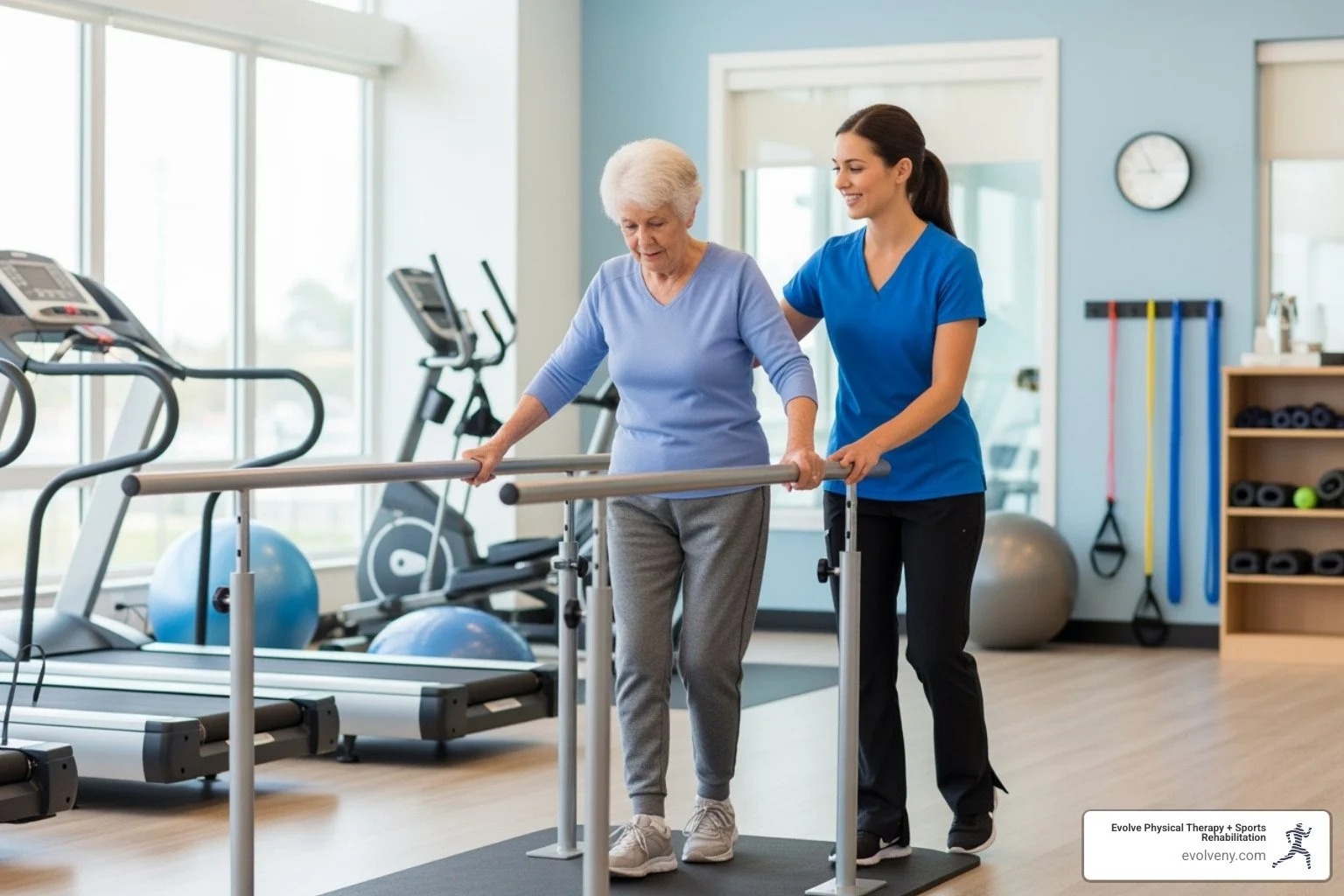
Parkinson's Gait Training: Putting Your Best Foot Forward
Understanding the Challenges of Parkinsonian Gait
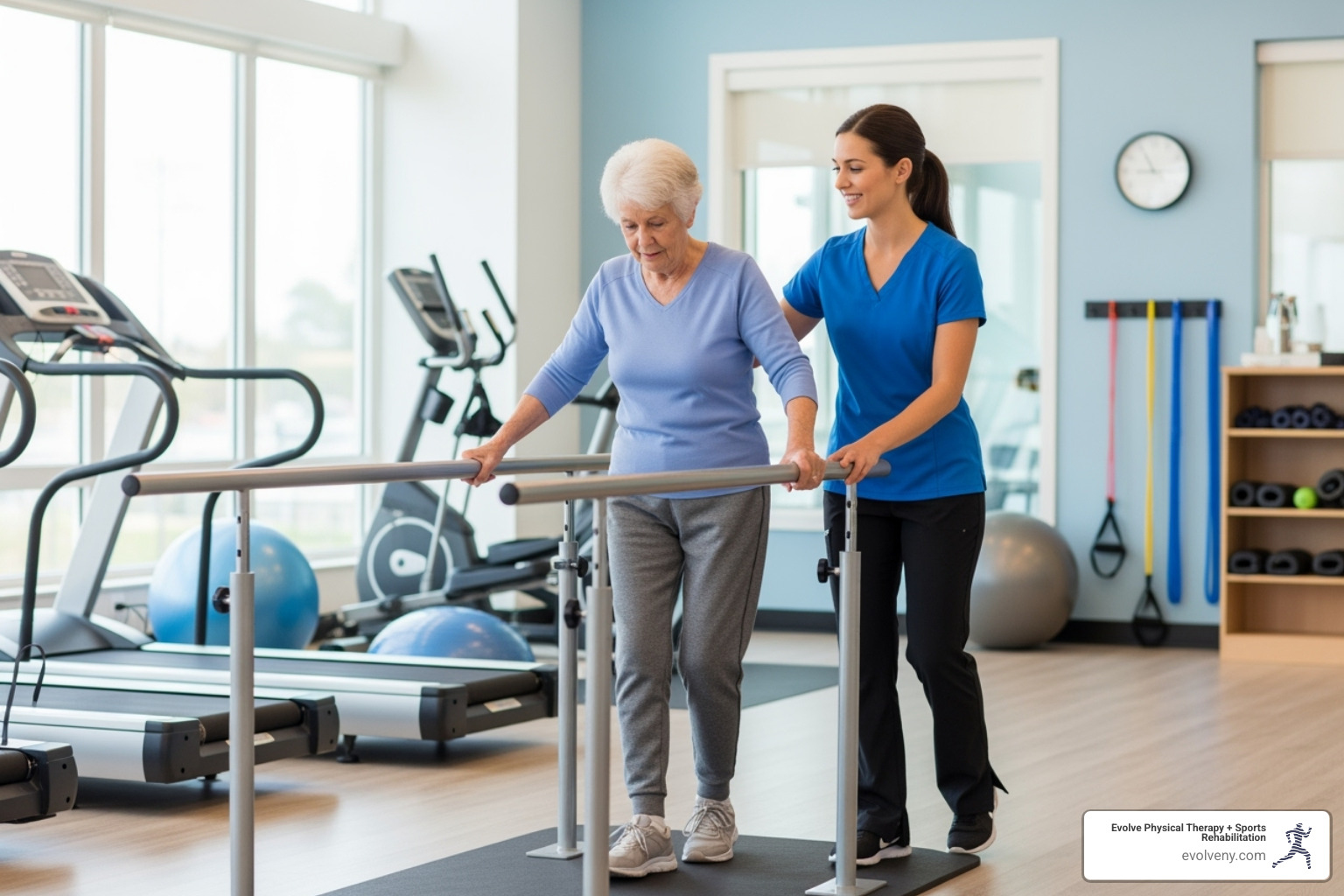
Gait training for parkinsons is a specialized form of physical therapy that helps people with Parkinson's disease improve their walking patterns, reduce fall risk, and maintain independence. Research shows this targeted approach can significantly improve walking speed, stride length, and overall mobility.
Key Gait Training Methods for Parkinson's:
- External cueing - Using visual lines, auditory beats, or tactile cues to improve step timing
- Treadmill training - Body-weight supported walking to practice normal gait patterns
- Dual-task training - Combining cognitive tasks with walking to improve real-world function
- Dance and movement therapy - Rhythmic activities that improve balance and coordination
- Strength and flexibility exercises - Building the physical foundation for better walking
Studies show a sobering 59% of people with Parkinson's experience falls within a six-month period, highlighting why gait training is essential. These challenges, including shuffling steps and stooped posture, stem from dopamine deficiency in the brain, which disrupts movement control.
The good news is that gait training works. Research shows participants can increase walking speed from 1.28 to 1.45 m/s—a change that significantly impacts real-world safety and independence. A change like that can mean the difference between crossing a street safely or not.
At Evolve Physical Therapy, we specialize in individualized gait training for parkinsons. Our hands-on approach helps patients regain mobility and confidence, proving that with the right techniques and consistent practice, people with Parkinson's can maintain their independence and quality of life.
The "Why" Behind Gait Issues: Causes and Medical Interventions
Walking challenges in Parkinson's disease aren't about weak muscles alone. They stem from a complex neurological issue where the brain's movement control center isn't getting the right signals. When we talk about gait training for parkinsons, we must first understand this root cause.
Defining Characteristics of Parkinsonian Gait
Parkinsonian gait has several distinct patterns:
- Stooped posture: A forward-leaning posture is a primary characteristic, throwing off balance.
- Shuffling and reduced stride length: This is often paired with shuffling, where feet drag instead of lifting, and a shorter stride length, which slows walking speed.
- Decreased arm swing: The natural arm swing that aids balance also diminishes or becomes uneven.
- Festination: Steps can become uncontrollably shorter and faster, as if the person is chasing their own center of gravity.
- Freezing of gait (FOG): This is a temporary, sudden inability to move, as if the feet are glued to the floor. It often occurs in doorways or during turns and is a major cause of falls.
- Difficulty turning: Turning is also difficult, often requiring multiple small, rigid steps instead of a smooth pivot.
These changes represent a loss of the automatic walking pattern most of us take for granted. For deeper insights, researchers have documented detailed gait dynamics that help us understand what's happening.
Underlying Neurological Causes
These gait issues are rooted in a shortage of dopamine, a key brain chemical for movement, caused by the breakdown of dopamine-producing cells in the substantia nigra. This deficiency impairs the basal ganglia, the brain's movement control center.
Without enough dopamine, the basal ganglia can't send clear instructions to the muscles. This results in motor control impairment—not due to muscle weakness, but faulty signals from the brain. As this neurodegeneration progresses, symptoms worsen, which is why gait training for parkinsons focuses on teaching the brain new strategies to compensate for these damaged circuits.
Understanding these causes explains why simply being told to "walk more" isn't enough. Specialized approaches are needed to bypass these neurological challenges. The Michael J. Fox Foundation offers more information on how these symptoms develop.
How Medication and DBS Address Gait
Medical treatments are a key part of management, though they have limitations.
Levodopa, a dopamine replacement therapy, is the gold standard medication and can improve walking speed and step length. However, it often fails to fully address freezing or balance issues and can sometimes lead to unpredictable freezing as the disease progresses.
Dopamine agonists, which mimic dopamine, have a similarly inconsistent impact on complex gait problems. Some people see improvements, while others notice little change.
Deep Brain Stimulation (DBS), a surgical procedure involving implanted electrodes, can be very effective for tremor and stiffness. Its effect on gait is mixed; some patients see improvements in speed, while others see little change in freezing or balance. It is not a cure-all for walking challenges, as detailed by The Michael J. Fox Foundation.
This gap is precisely why comprehensive physical therapy is crucial, combining medical management with specialized rehabilitation to improve function and quality of life.
The Core of Gait Training for Parkinson's: Physical Therapy and Exercise
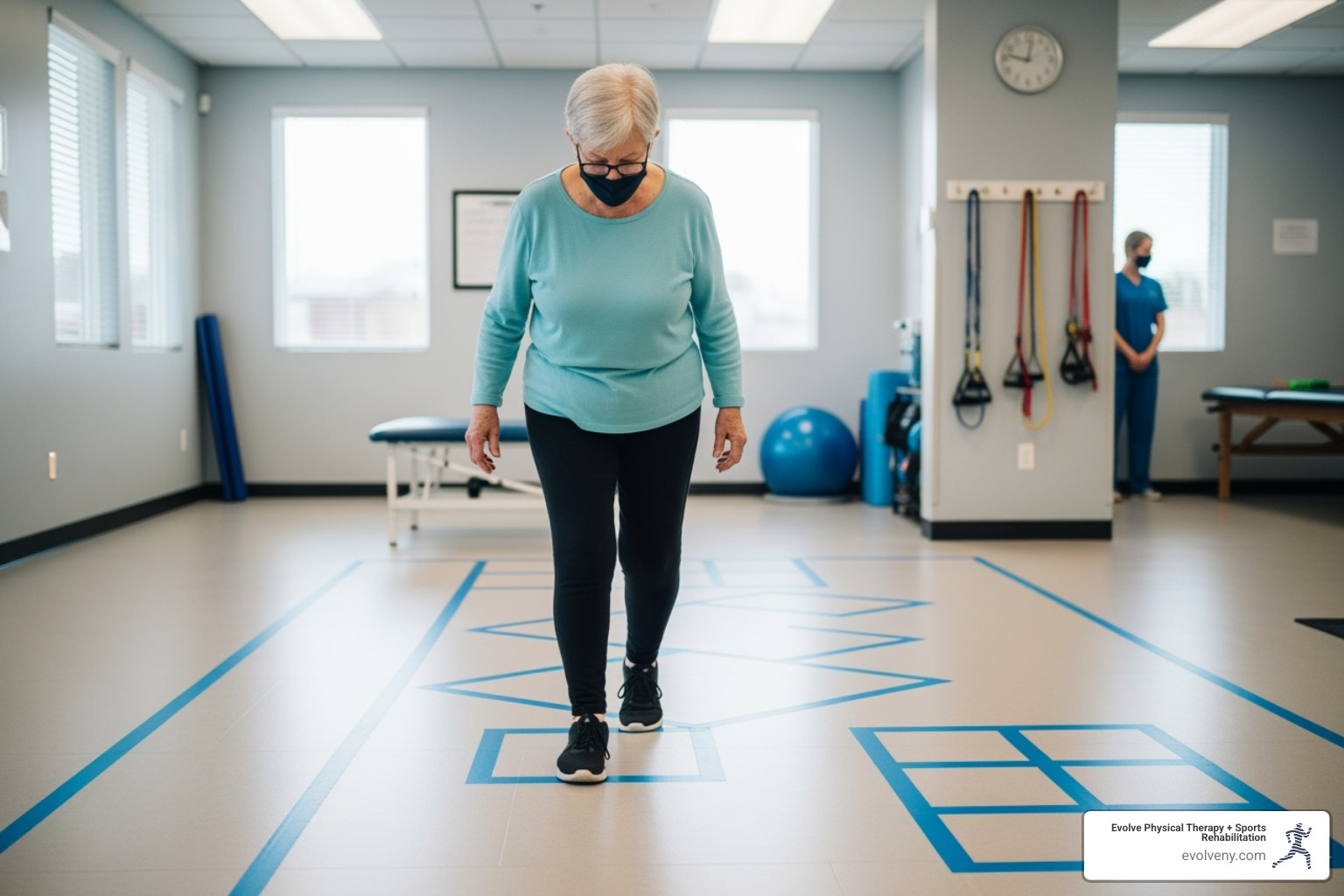
Gait training for parkinsons through physical therapy is about teaching your brain and body to work together in new ways, effectively rewiring the connections that Parkinson's has disrupted. People who participate see remarkable improvements: faster walking speeds, longer strides, and fewer falls.
Key Physical Therapy Strategies
- Movement strategy training is foundational. Instead of relying on the brain's damaged 'autopilot,' we break walking into conscious parts, using specific cues like "take a big step." This is adapted for all stages of Parkinson's.
- Balance exercises are crucial to reduce fall risk. We use varied surfaces and even fun tools like the Nintendo Wii Fit to challenge and improve stability in a controlled way.
- Strength training in the legs and core, through exercises like squats and lunges, provides the physical power needed for better walking and daily movements like standing from a chair.
- Flexibility work, including targeted stretching, counteracts the rigidity that restricts movement, especially in the trunk.
- Postural correction exercises help you stand taller, which immediately improves balance and movement.
Every person's program is different. Our goal is to give you back control over your movement. This evidence-based review provides excellent insights into what works.
The Role of External Cues in Gait Training for Parkinson's
External cues act like a guide for the brain, bypassing damaged circuits to improve walking.
- Auditory cues, like a metronome's beat or music, are highly effective. The rhythm provides an external signal that helps regulate pace and step length, leading to faster, longer steps.
- Visual cues, such as tape lines on the floor or a laser pointer, give the brain a concrete target to aim for. This is especially helpful for overcoming freezing.
- Somatosensory cues, like vibrating insoles, offer another tactile signal to guide movement.
Rhythmic cueing provides the steady beat the brain's internal rhythm generator can no longer supply.
The Power of Treadmill Training
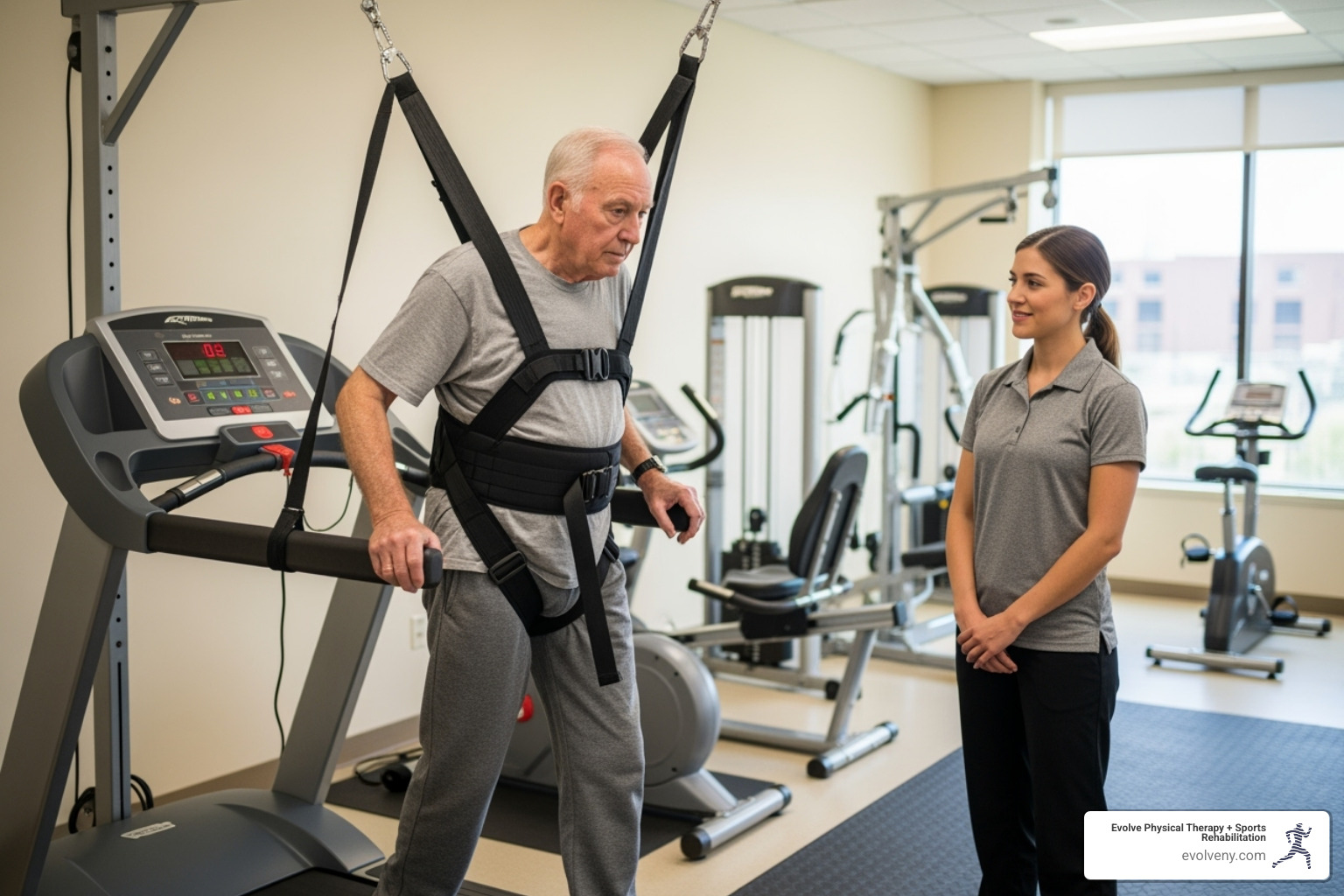
Treadmill training for gait training for parkinsons offers a safe, controlled environment to practice walking without fear of falling. Body-weight supported treadmill training (BWSTT) is especially effective. A harness system supports some of your weight, allowing you to practice larger, more normal steps safely.
The results are measurable. One study showed treadmill trainees improved their walking speed from 1.28 to 1.45 m/s, while a control group saw almost no change. Trainees also took longer steps, reducing shuffling. The treadmill also allows for practice with starts and stops, preparing you for real-world scenarios.
Dual-Task Gait Training for Parkinson's: Engaging Mind and Body
In real life, we walk while doing other things. For people with Parkinson's, this 'dual-tasking' can be dangerous. That's where dual-task training becomes essential. We practice walking while performing cognitive tasks (like counting backward) or motor tasks (like carrying objects).
This trains the brain to divide attention, making you less likely to stumble when distracted. Research confirms that dual-task training improves step length and rhythm, building confidence for handling the complexities of daily life, as shown in case studies. The goal is to make everyday life easier by training your brain to multitask effectively while staying safe.
A Spectrum of Effective Exercises and Therapies
Effective gait training for parkinsons offers a variety of options to suit individual preferences and goals. Finding an activity you enjoy, from dance to boxing, is key to staying motivated and improving.
| Therapy Type | Primary Gait Benefits | Additional Quality of Life Benefits |
|---|---|---|
| Dance | Improves gait velocity and step length. Stimulates neuroplasticity, improves coordination, balance, and quality of life. | Improves balance, coordination, spatial awareness, musicality, and motor control. |
| Tai Chi | Improves balance and reduces fall risk. Improves posture alignment and stability. | Promotes mindfulness, reduces stress, and builds confidence in movement. |
| Boxing Programs | Increases agility, coordination, and motor function. Improves balance and reaction time. | Builds strength, boosts mood, and creates a strong sense of empowerment and community. |
Dance, Tai Chi, and Yoga
Dance therapy combines music and movement to produce remarkable gait improvements. Research on dance therapy benefits shows styles like Tango can improve gait velocity and step length, as the rhythm provides an external guide for the brain.
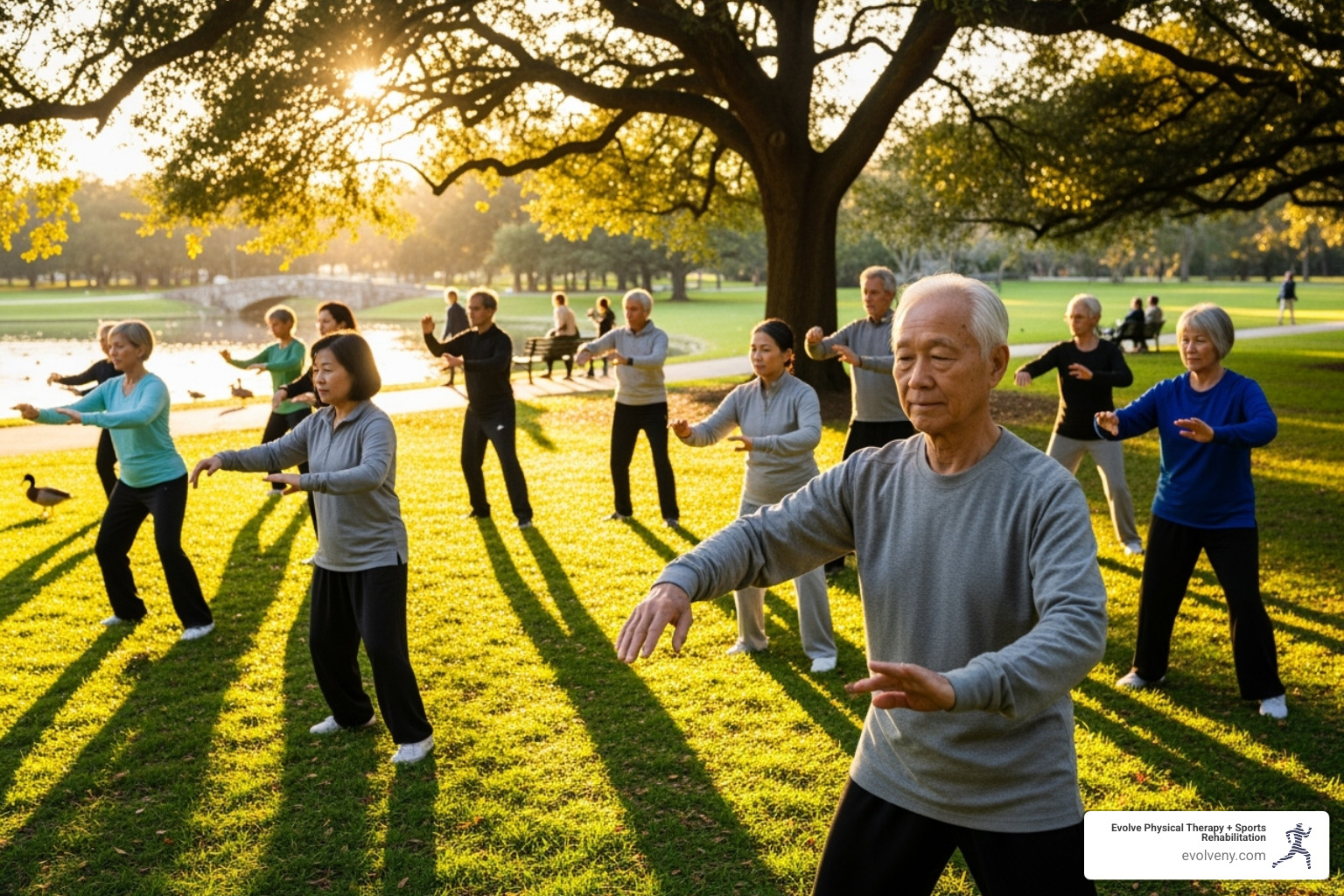
Tai Chi uses slow, flowing movements to improve balance, posture, and stability. This gentle practice builds confidence and has been shown to reduce fall risk. Yoga improves flexibility, strength, and body awareness. By lengthening tight muscles and promoting mindfulness, it can help make walking more fluid and manage anxiety that may trigger freezing.
Strength, Aerobic, and Boxing Programs
Vigorous exercise programs build the physical foundation for better walking and function.
- Resistance training builds muscle strength essential for improved walking and balance.
- Cycling is a great low-impact aerobic option for building leg strength and endurance, which can improve motor performance.
- Running, for some, with a proper heel-toe strike pattern may even help re-establish more normal gait mechanics.
Non-contact boxing programs, like Rock Steady Boxing, are particularly exciting. These high-intensity, full-body workouts are adapted for people with Parkinson's. Participants see improved balance, coordination, and motor function. Beyond the physical gains, these programs are incredibly empowering, building both strength and community.
Emerging Technologies: Robotics and Adaptive Footwear
New technologies are offering innovative ways to improve traditional therapy.
- Robotic-Assisted Gait Training (RAGT) uses devices like the Lokomat to guide a patient's legs through normal movement patterns. This high-intensity practice can improve gait speed, stride length, and reduce freezing.
- Wearable sensors, like Heel2Toe, provide real-time auditory feedback on gait quality, helping to correct walking patterns instantly.
- Future technologies like smart glasses may project visual cues directly into a user's field of vision to help initiate steps and prevent freezing.
- Adaptive footwear with features like special soles for stability can also make a significant difference, reducing shuffling and improving confidence.
Creating Your Plan: Management, Mindset, and Future Directions
A successful journey with Parkinson's requires a comprehensive plan. The best gait training for parkinsons programs are custom to the individual's physical needs, goals, and emotional well-being.
How to Choose the Right Program
Finding the right program involves building a support team and setting clear goals.
- Consult a neurologist to manage medications and monitor your progression, ensuring a coordinated care plan with your physical therapist.
- Work with a physical therapist specializing in neurological conditions. They will conduct a thorough evaluation to understand your specific challenges, from shuffling to freezing.
- Consider your disease stage. Early stages may focus on high-intensity exercise, while later stages emphasize safety and maintaining independence.
- Acknowledge personal preference. Whether you prefer group classes like Rock Steady Boxing or one-on-one sessions, the right fit boosts motivation and success.
- Set personal goals. Maybe you want to walk to the mailbox or play with grandchildren. We tailor your program to help you achieve what matters most to you.
The Impact of Anxiety on Freezing of Gait
Freezing of gait (FOG) is often triggered by specific situations, and anxiety can be a major factor. Feeling rushed, stressed, or worried about falling can make freezing episodes more frequent and severe. This stress response interferes with movement control, and the fear of falling can create a vicious cycle where worry about freezing makes it more likely to happen.
Stress management is a powerful tool. Simple deep breathing exercises or taking a moment to pause and reset can help break the anxiety-freeze cycle. Mindfulness is also a practical strategy. Focusing on your feet or humming a tune can help the brain bypass stuck pathways. As research shows, addressing anxiety is an essential part of effective FOG treatment.
Long-Term Outlook and Future Research
The future of gait training for parkinsons is bright, with our understanding of how to manage symptoms evolving rapidly. Maintaining gains requires making exercise a consistent part of your routine. Regular "booster sessions" with a physical therapist can help adapt your program as your needs change.
Exciting research suggests vigorous exercise may have neuroprotective effects, potentially slowing disease progression. Furthermore, advancements like wearable sensors and virtual reality are making rehabilitation more engaging and effective by providing real-time feedback on your walking patterns.
Future research aims to determine the optimal "dose" of exercise and integrate cognitive training. The goal remains to help you maintain independence, confidence, and quality of life for as long as possible.
Conclusion: Take the Next Step Towards Better Mobility
Understanding the challenges of Parkinson's is the first step. As we've explored, targeted physical therapy and gait training for parkinsons can transform daily life. The right intervention at the right time makes a clear difference.
Gait training works by addressing both the physical and confidence issues of movement difficulties. Measurable improvements in walking speed mean safer street crossings and greater independence. Modern gait training offers a variety of options, from dance and Tai Chi to Rock Steady Boxing. New technologies like robotics and smart sensors are making therapy more precise and engaging, ensuring there's an approach that fits you.
What matters most is taking that first step. Research clearly shows that regular, targeted gait training leads to meaningful improvements in mobility, balance, and quality of life. These aren't just statistics—they represent real people walking more confidently and falling less often.
At Evolve Physical Therapy + Sports Rehabilitation, we provide personalized, hands-on care. Our specialized approach to gait training for parkinsons, including our innovative Rock Steady Boxing program, empowers people to reclaim their mobility and take control of their future.
It's never too late to start. Prioritizing your mobility is a choice you can make today, leveraging your brain's remarkable ability to adapt and learn.
Ready to see what gait training for parkinsons can do for you? Learn more about our specialized Parkinson's programs and take the first step toward better mobility today. A more confident, mobile future is waiting.
Primal Movement Mobility – Unleash Your Inner Animal
Refind How Your Body Was Designed to Move
Primal movement mobility is a return to the fundamental patterns that defined human survival: squatting, crawling, jumping, pushing, pulling, and carrying. These movements are the foundation of how our bodies are designed to function.
What is primal movement mobility?
- Mimics our ancestors' daily activities
- Works multiple muscle groups simultaneously
- Prepares your body for real-world activities
- Restores your full range of motion
- Emphasizes body awareness over repetitive isolation
Modern sedentary lifestyles have disconnected us from these instinctive capabilities. As one movement expert puts it: "Modern science is finally catching up to what our ancestors knew intuitively: movement is medicine."
Unlike traditional gym workouts that isolate muscles, primal movement trains your body as an integrated system. This approach restores the natural mobility and coordination that keep you pain-free and moving efficiently.
The benefits extend beyond the gym. Research shows grip strength predicts overall mortality, and balance issues are a leading cause of injury-related death in people over 65. Primal movement addresses both by developing functional strength and neuromuscular control.
I'm Lou Ezrick, a physical therapist with nearly two decades of experience. At Evolve Physical Therapy, I've seen how primal movement mobility transforms lives by reconnecting people with their body's innate capabilities.
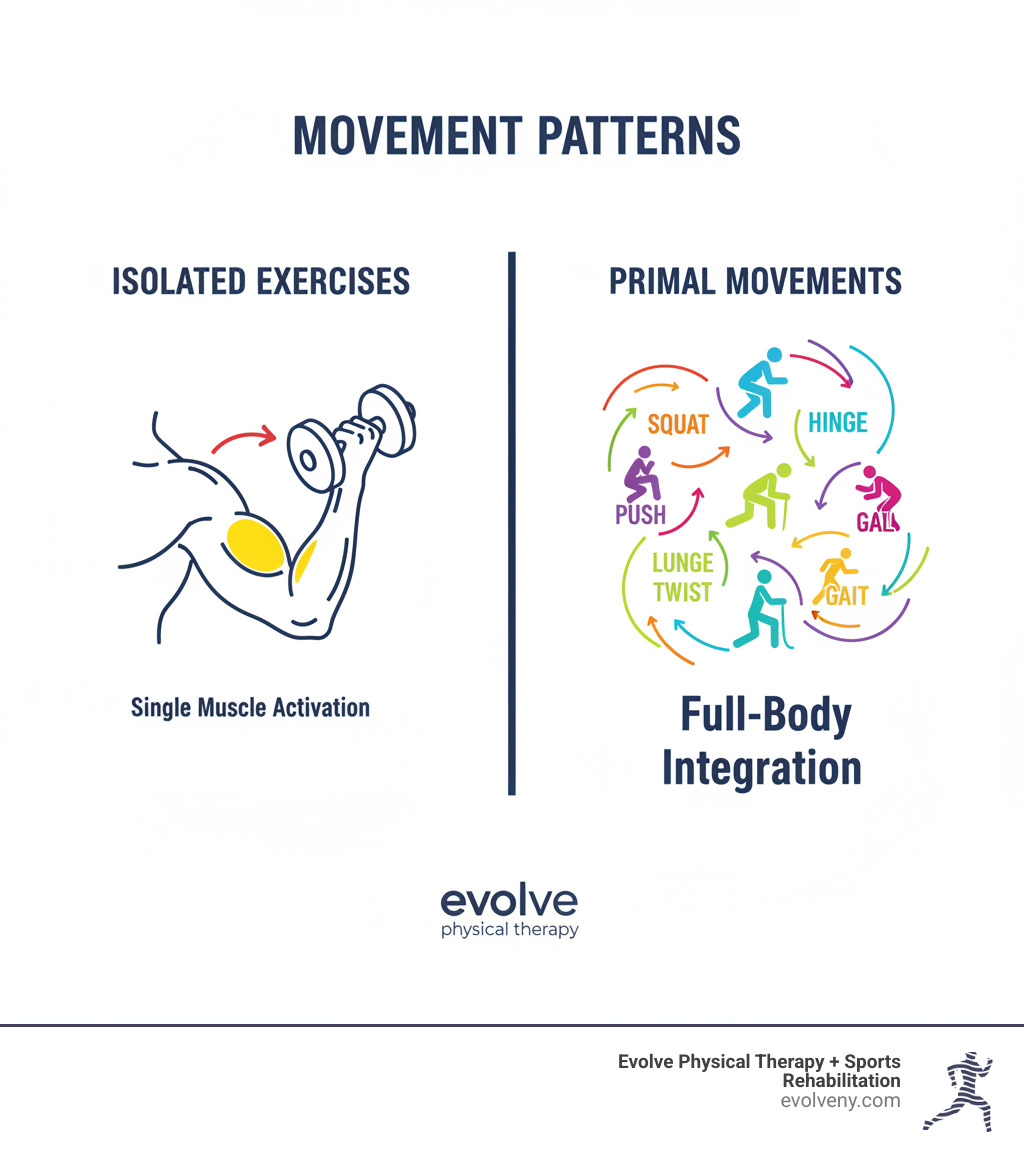
What is Primal Movement and Why Does it Matter?
Our ancestors' survival depended on natural movement patterns like crawling, climbing, squatting, and carrying. This is the essence of primal movement mobility: reconnecting with how our bodies were designed to move.
The key difference from traditional exercise is its integrated approach. Most gym routines isolate single muscles, but primal movements are compound movements that engage the entire body. A deep squat, for example, works your legs, core, back, and ankles simultaneously. This builds functional strength for real-life tasks like lifting a child or moving furniture.
As physical therapists, we see daily how sedentary life leads to lost mobility and chronic pain. Primal movement mobility aims to restore these lost capabilities, reclaiming the efficiency and resilience of our ancestors. How physical therapy approaches movement explores this connection between natural patterns and healing.
The Mind-Body Connection
Primal movement is more than just physical. When we're always "in our heads," it offers an antidote with its philosophy of "think less, move more."
When you crawl, balance, or twist, your mind must focus on the present moment. This improved body awareness (proprioception) becomes a form of active meditation, forcing you out of mental chatter and into mindfulness in motion. The result is reduced distraction, better coordination, and a deeper connection with your physical self.
The Rise of a Fitness Trend
Primal movement mobility has recently grown in popularity as people seek a holistic fitness approach that improves daily function. Its beauty lies in its accessibility for all levels.
You don't need expensive equipment; your body is the primary tool. This minimal equipment appeal makes it perfect for home workouts or quick movement breaks. The trend reflects a broader shift toward functional fitness—movement that serves your life outside the gym.
The 7 Foundational Primal Movement Patterns
At the heart of primal movement mobility are seven foundational patterns. Mastering these movements is key to open uping your full physical potential.
Here are the seven patterns:
- Squat: Descending the hips below the knees.
- Hinge: Bending at the hips with a relatively straight back.
- Lunge: Stepping forward, backward, or sideways, dropping one knee towards the ground.
- Push: Moving an object or your body away from you.
- Pull: Moving an object or your body towards you.
- Twist (Rotation): Rotating your torso.
- Gait (Locomotion): Moving from one place to another (walking, crawling, running).
1. The Squat
The squat is a fundamental human movement, though this natural ability often diminishes with age. A deep squat requires hip and ankle mobility, plus lower body strength. It improves core stability, coordination, and is associated with a lower risk of falls.
Example: A bodyweight squat. For a modification, squat to a chair or bench.
2. The Hinge
The hinge pattern is essential for safe lifting and protecting your lower back. It involves bending at the hips with a neutral spine, engaging your glutes and hamstrings. Mastering the hinge teaches proper lifting mechanics for everyday tasks.
Example: The Glute bridge is a great starting point. Progress to a Romanian Deadlift (RDL) with a light weight to practice the full motion.
3. The Lunge
This single-leg movement challenges your balance, coordination, and strength. It's critical for walking and running. Lunges improve neuromuscular control and can address muscular imbalances, leading to more efficient movement.
Example: The walking lunge. Step forward, lowering your hips until both knees are bent at roughly a 90-degree angle, then push off into the next lunge.
4. The Push
Pushing movements are vital for upper body strength in tasks like pushing open a door or getting up from the ground. They engage the chest, shoulders, and triceps, while the core provides stability. Pushing exercises also improve bone density and shoulder health.
Example: The classic push-up, which can be modified from wall push-ups to full variations.
5. The Pull
Often overlooked, pulling movements are crucial for posture and spinal alignment by working your back muscles, biceps, and forearms. They are also excellent for developing grip strength, a proven predictor of overall mortality.
Example: A bodyweight row or a simple bar hang. Hanging from a pull-up bar is great for grip strength and spinal decompression.
6. The Twist (Rotation)
Rotational movements are essential for spinal mobility and core power. Neglecting this pattern can lead to stiffness and injury risk during daily activities like reaching or throwing. Twisting engages your obliques and keeps your spine healthy.
Example: The standing torso twist. Stand with feet shoulder-width apart and gently rotate your torso from side to side.
7. The Gait (Locomotion)
Gait includes all forms of moving from one place to another, such as walking, running, and crawling. This fundamental pattern improves cardiovascular health, cognitive performance, and emotional well-being, keeping the entire body integrated. To dive deeper into improving your balance and gait, we have a comprehensive guide available here.
Open uping the Longevity Benefits of Primal Movement Mobility

Primal movement mobility is key to functional aging—aging on your own terms. By practicing these movements, you build the strength, mobility, and coordination that will serve you for decades. Think of it as an investment in your future self, ensuring you can get up from a chair or play with grandchildren with ease.
At Evolve Physical Therapy, we see patients find new levels of vitality by embracing natural movement. This holistic approach is central to our philosophy of physical therapy and overall wellness.
Build Resilient Strength and Prevent Injury
Falls are the leading cause of injury-related death in people over 65, but most are preventable. Primal movement mobility builds resilient strength—the kind that protects you in real-world situations. It's your body's ability to coordinate, balance, and react instinctively.
- Joint stability: Movements like crawling and rotating teach your shoulders, hips, and spine to be stable through complex patterns.
- Core control: Your core learns to function as it should—bracing, stabilizing, and supporting your spine during real activities.
- Grip strength: Primal movements like hanging and carrying naturally develop grip strength, a surprising and powerful predictor of longevity.
Improve Mobility and Bone Health
Stiffness is often the result of not moving through a full range of motion. Primal movements combat this by taking your joints through their natural ranges in a functional way, creating lasting mobility.
- Joint health: Movement lubricates your joints with synovial fluid, keeping cartilage healthy and reducing inflammation.
- Bone health: Research shows that resistance exercise significantly improves bone density. Primal movements provide this load naturally.
- Hormonal homeostasis: The varied nature of these movements helps regulate your endocrine system, leading to better sleep, mood, and metabolism.
These movements restore confidence in your body, creating a positive cycle of activity and vitality.
How to Integrate Primal Movements into Your Routine
You can easily integrate primal movement mobility into your day without special equipment. The secret is to start small and stay consistent, as your body responds best to regular, gentle challenges.
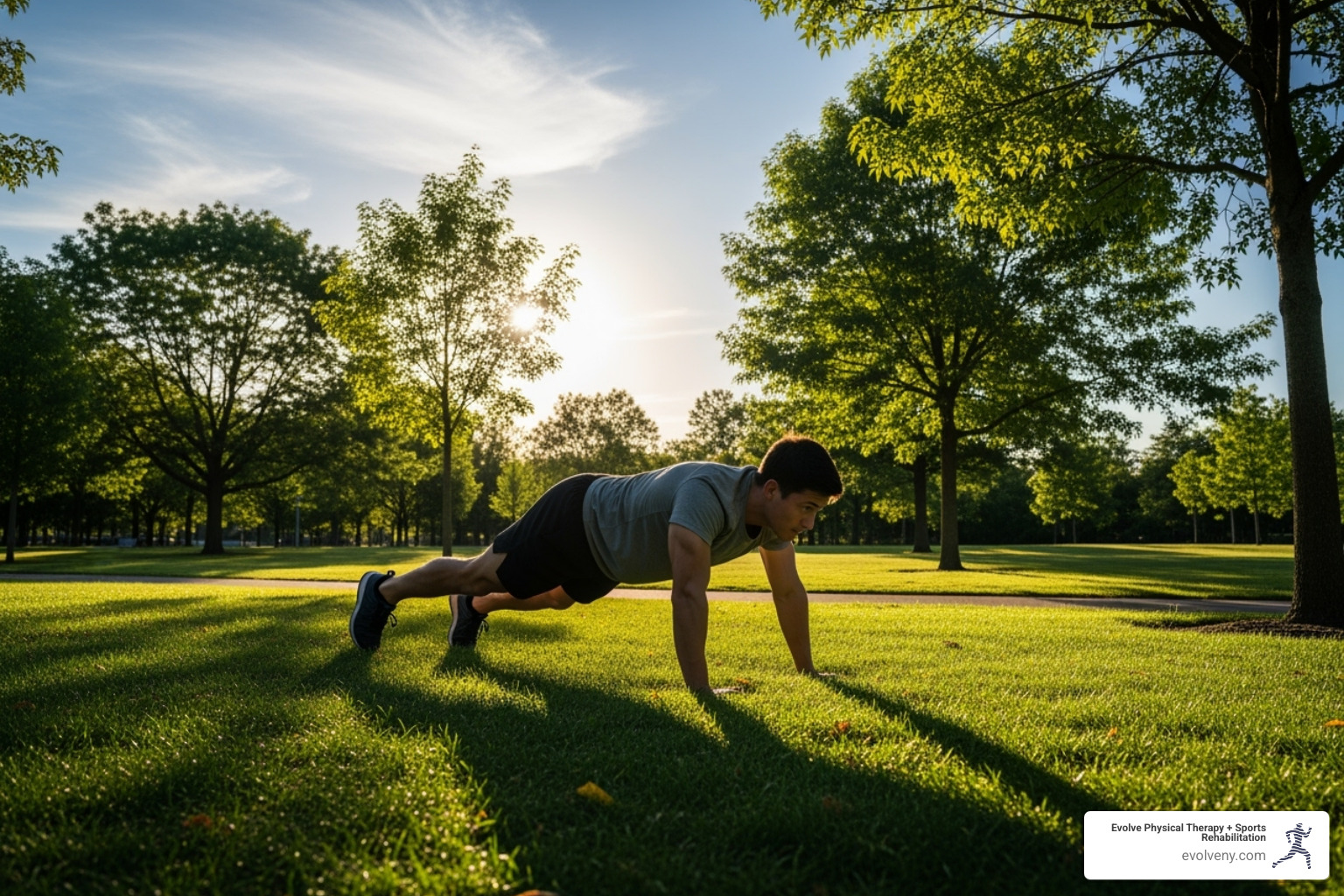
Starting Your Primal Movement Journey
Find natural entry points in your existing routine:
- Morning warm-ups: Spend 5-10 minutes waking up your body with squats, hip hinges, and arm circles.
- Microworkouts: Use two-minute breaks to do a deep squat while coffee brews or a bear crawl during a TV commercial.
- Dedicated primal sessions: Set aside 20-30 minutes weekly to play with different movement patterns without pressure.
- Combining with bodyweight training: Alternate between movements like push-ups, crawls, squats, and lunges for a more engaging workout.
Adapting for All Fitness Levels
Primal movements scale to your needs. Beginners can modify exercises: squat to a chair or do push-ups against a wall. The goal is progress, not perfection. Your bodyweight is the perfect starting weight.
As you get stronger, advanced progressions emerge. You can add a weighted vest, try pistol squats, or explore complex flows. Adding external load or increasing complexity keeps your mind and body challenged. Unilateral variations (single-side movements) are great for addressing imbalances.
Risks and Considerations for Primal Movement Mobility
While safe, smart preparation is key.
- Proper form matters more than intensity. Slow down and focus on quality movement.
- Listen to your body. Mild soreness is normal, but sharp pain is a signal to stop.
- If you have chronic pain or previous injuries, consult a professional. A physical therapist can create a customized plan that works for your body.
At Evolve Physical Therapy, we specialize in creating safe, effective programs. Learn more about our therapeutic exercise programs here – because movement should heal, not harm.
Frequently Asked Questions about Primal Movement Mobility
Here are answers to common questions about primal movement mobility.
Do I need special equipment for primal movements?
No, your body is the only equipment you truly need. The vast majority of primal movements are bodyweight exercises like squats, lunges, and crawls.
As you progress, simple tools can improve your practice. A pull-up bar is great for grip strength, while kettlebells or sandbags can add load to squats and hinges. Resistance bands can also provide assistance or help activate muscles. Don't let a lack of equipment be a barrier; start with your body.
How is this different from calisthenics?
There is overlap, as both use bodyweight exercises. However, calisthenics often focuses on mastering specific skills like handstands or muscle-ups.
Primal movement mobility takes a broader approach, focusing on the natural, integrated patterns our ancestors used. This includes more locomotion (crawling, rolling) and ground-based movements. While calisthenics is about achieving impressive feats, primal movement is about moving gracefully and powerfully through your environment. You can learn more about how calisthenics fits into the mobility picture in our detailed guide here.
Can primal movement help with my chronic back pain?
For many, yes. Much chronic back pain stems from a weak core, poor movement patterns, and lack of hip and spine mobility. Primal movements directly address these issues. The hinge pattern teaches safe lifting, while squats and crawls strengthen the core and glutes that support your spine.
However, chronic back pain needs a proper diagnosis first. While primal movement can be therapeutic, we always recommend consulting a physical therapist to understand the root cause of your pain. At Evolve Physical Therapy, we create customized programs to address the underlying dysfunction and build a more resilient body.
Reclaim Your Body's Potential
The freedom of movement you had as a child isn't gone—it's waiting to be refinded through primal movement mobility. By strengthening your body with natural squats, improving posture with pulls, and building resilience through functional patterns, you reconnect with your body's original blueprint.
The benefits impact every aspect of life:
- Better mobility to play on the floor with grandchildren.
- Improved strength to carry groceries without risk.
- Improved balance to move through your day with confidence.
Most importantly, primal movement fosters a genuine mind-body connection. It's about honoring the body you live in and giving it the movement it craves.
At Evolve Physical Therapy + Sports Rehabilitation, we help individuals refind their body's potential. Our experts guide you through a safe, progressive movement practice custom to your unique journey. Whether you're dealing with chronic pain, recovering from an injury, or just want to move better, we can help.
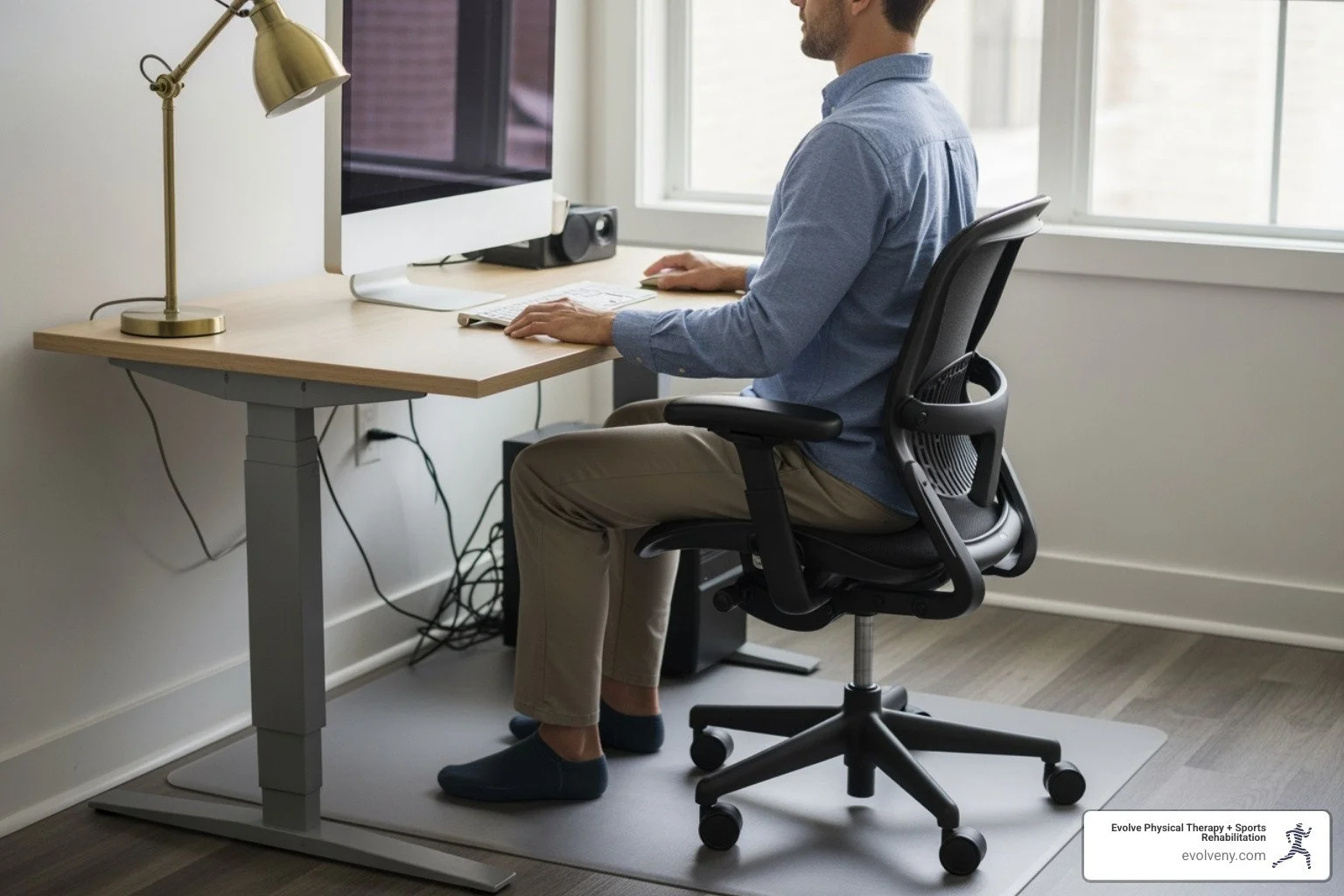
Desk Ergonomics 101: Stop Slouching, Start Thriving
Why Proper Desk Posture Ergonomics Can Transform Your Health
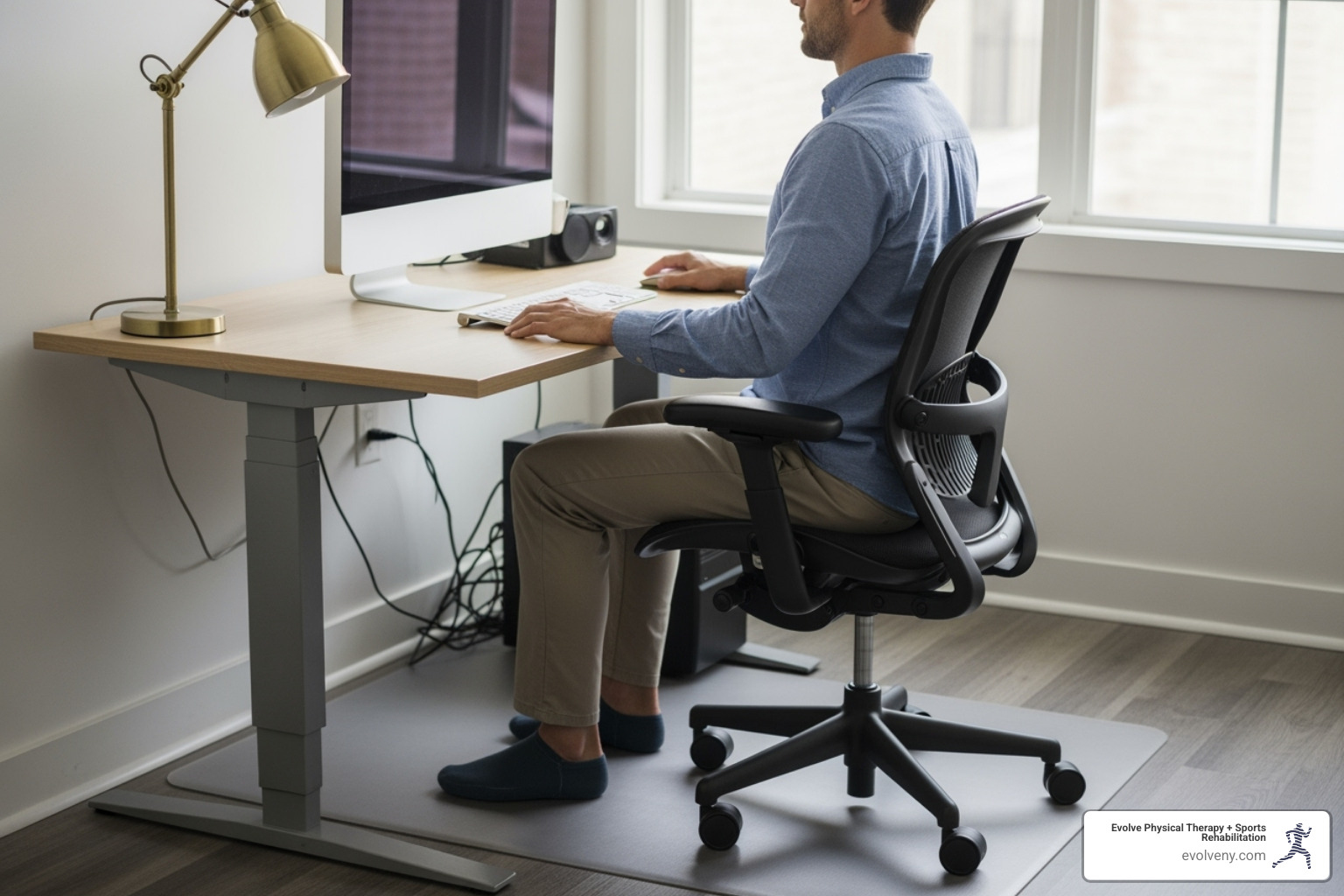
Desk posture ergonomics is the science of arranging your workspace to fit your body, reducing strain and preventing injury. If you experience back pain, neck stiffness, or fatigue from desk work, the solution often lies in optimizing how you sit, where you place your equipment, and how often you move.
Essential Desk Posture Ergonomics Checklist:
- Chair height: Feet flat on the floor, thighs parallel to the ground
- Monitor position: Top of screen at or slightly below eye level, an arm's length away
- Keyboard placement: Elbows at 90 degrees, wrists straight
- Back support: The natural curve of your lower back is supported
- Movement: Take breaks every 50 minutes and stretch regularly
With many workers spending more than 50% of their workday seated, a modern epidemic of posture-related problems has emerged. For every inch your head moves forward from its proper alignment, an extra 10 pounds of weight is placed on your neck.
Poor desk ergonomics can lead to chronic pain, reduced lung capacity, and decreased productivity. The good news is that small adjustments to your workspace can deliver dramatic improvements.
As Lou Ezrick, founder of Evolve Physical Therapy, I've spent nearly two decades helping professionals overcome chronic pain caused by poor desk posture ergonomics. My experience shows that prevention through proper ergonomics is far more effective than treating problems after they develop.
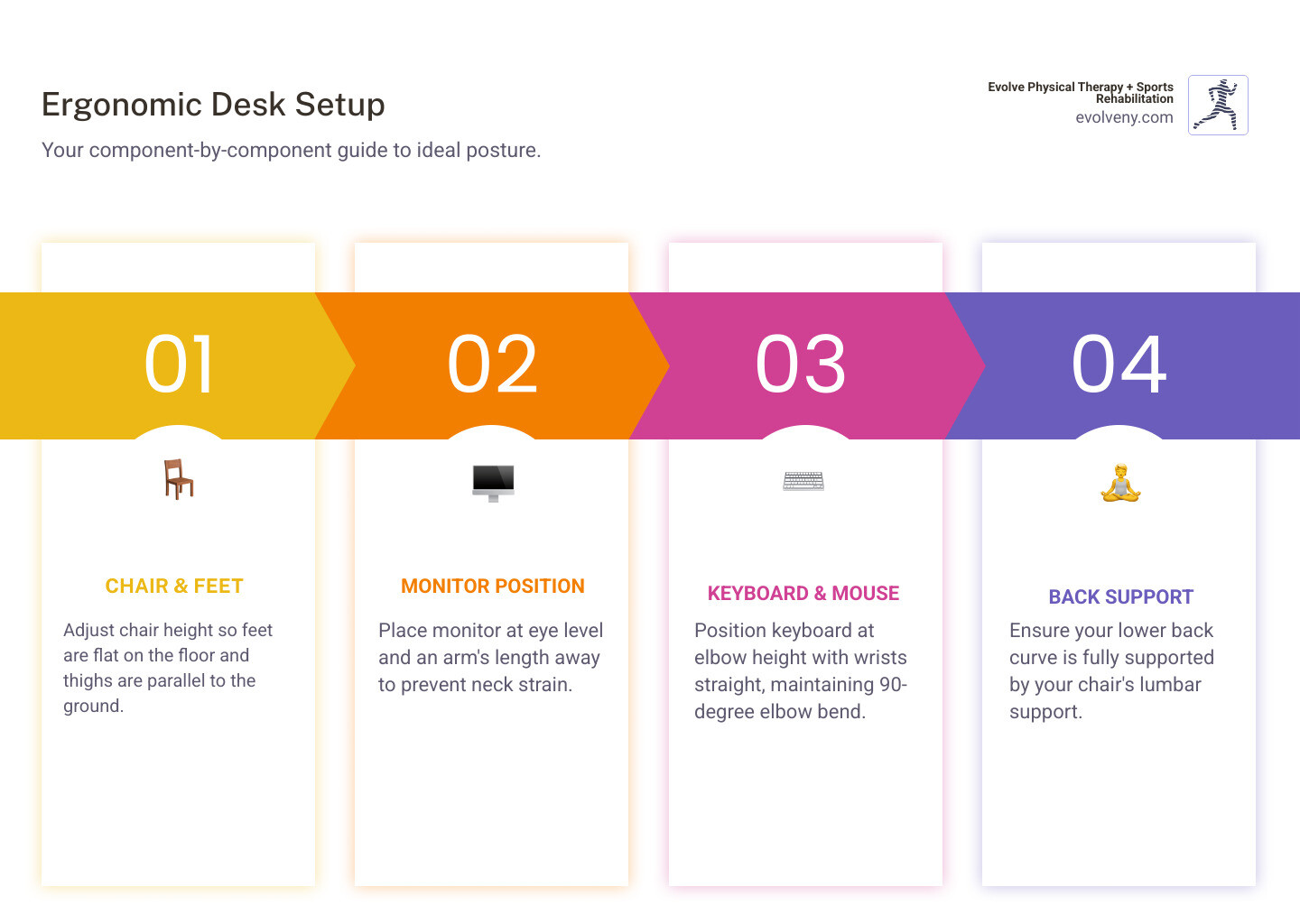
The High Cost of Slouching: Health Risks of Poor Desk Posture
Poor desk posture ergonomics isn't just about appearances; it's about preventing a cascade of health problems. When you slouch, you put your body under chronic stress, and your spine will eventually protest.
Back pain is often the first complaint. Slouching places immense pressure on your spinal discs, potentially leading to degeneration or nerve compression. Neck strain follows as we crane our necks toward screens, causing tension and stiffness. This tension can also trigger debilitating headaches. If this is familiar, our approach to Physical Therapy for Headaches addresses these issues at their source.
Poor posture's effects are systemic. It can reduce your lung capacity by compressing your chest, leading to fatigue as less oxygen reaches your brain. Your digestive system is also affected; hunching over can cause acid reflux and bloating. The good news is that proper posture reverses these effects, leading to increased energy, improved focus, and a reduced risk of injury.
If you're already experiencing persistent back pain, our team specializes in Physical Therapy for Back Pain Brooklyn, helping people break the cycle of pain and poor posture.
The "Text Neck" Phenomenon at Your Desk
Here's a startling fact: for every inch your head moves forward from proper alignment, you add an extra 10 pounds of stress to your neck. A common three-inch forward lean means your neck muscles are supporting an extra 30 pounds.
This forward head posture, or "text neck," happens when we lean toward computer monitors. Your head, normally 10-12 pounds, suddenly feels like a bowling ball to your neck muscles. This creates constant tension and leads to muscle imbalances, where some muscles become tight and others weaken. Shoulder rounding often accompanies this, creating a hunched appearance that can become permanent.
The resulting spinal stress can contribute to everything from tension headaches to pinched nerves. Research, including studies on health risks of bad posture, confirms these are legitimate health concerns. If you're dealing with neck pain, our guide on Physical Therapy for Neck Pain and Neck Injuries offers valuable insights.
Beyond the Spine: System-Wide Effects
Poor posture affects more than just your back and neck by compressing your internal organs. Your digestive system is a primary casualty, as a compressed abdomen can slow digestion and cause acid reflux and bloating.
Your breathing capacity also suffers. Slouching compresses your chest cavity, making it difficult to take deep breaths. This reduces oxygen flow, contributing to chronic fatigue and brain fog. Poor circulation is another hidden consequence, leading to numbness and tingling in your limbs.
These factors create a storm of discomfort and reduced vitality. The good news is that with proper desk posture ergonomics, many of these issues can be prevented or reversed. For a deeper dive, see our post on Bad Office Posture.
The Blueprint for Comfort: Achieving Ideal Desk Posture
Proper desk posture ergonomics allows your body to feel supported and balanced, not like it's fighting gravity all day. The goal is to support your spine's natural curves while keeping your joints in a relaxed, neutral position.
The "90-90-90 rule" is a great starting point. It suggests keeping your hips, knees, and elbows bent at roughly 90-degree angles. This isn't about mathematical perfection but creating a foundation where your joints can rest comfortably without strain.
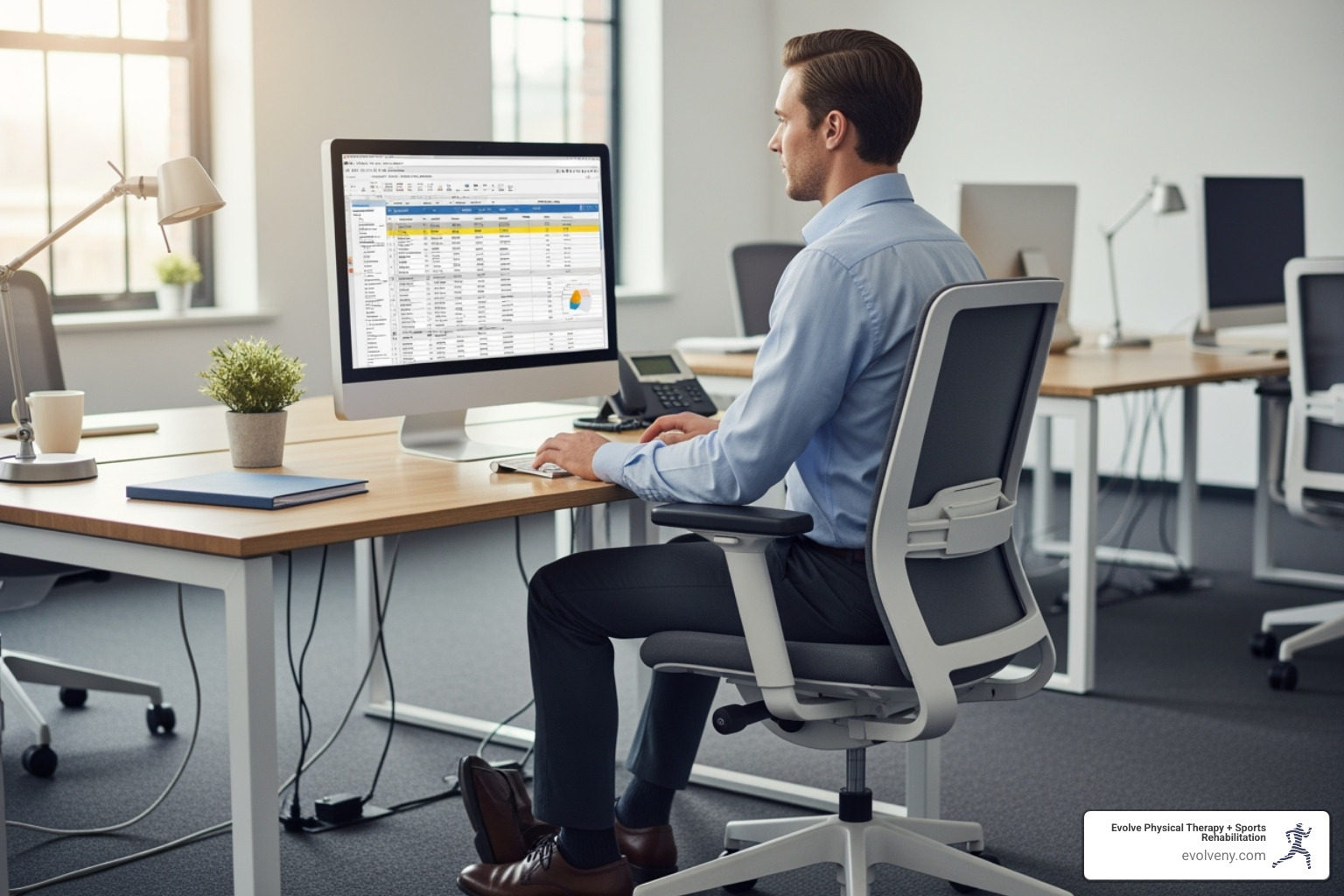
The real magic is maintaining your spine's natural S-curve. Slouching creates a C-shape that puts tremendous pressure on your discs and muscles. Your head should sit comfortably over your shoulders, and your shoulders should be relaxed and down. When everything aligns, your body works efficiently. For more guidance, see our guide on Ideal Computer Posture.
Head, Shoulders, Knees, and Toes: A Positional Checklist
Good desk posture ergonomics means getting every piece of the puzzle right. Here's a top-to-bottom checklist:
- Head alignment: Keep your ears directly over your shoulders with a slight chin tuck.
- Shoulders: Let them drop naturally, relaxed down and back.
- Elbows: Keep them close to your body, bent at about 90 degrees.
- Wrist position: Your wrists should be straight and neutral, as a natural extension of your forearms.
- Lower back: Use your chair's lumbar support to maintain its natural inward curve.
- Hips: Sit as far back in your chair as possible, with hips at about 90 degrees.
- Knees: Bend your knees at roughly 90 degrees, with two fingers' width of space between the back of your knees and the seat edge.
- Feet: Plant your feet flat on the floor. Use a footrest if they don't reach.
Following these guidelines will help you achieve the Best Posture for Desk Work for comfortable, productive days.
Your Ergonomic Toolkit: A Component-by-Component Setup Guide
Setting up your workspace correctly is the key to making good posture feel effortless. Your chair, monitor, keyboard, and mouse are the foundation of your daily comfort. Simple adjustments to what you already have can make a world of difference. For additional insights, the Mayo Clinic offers an excellent Office ergonomics guide from Mayo Clinic.
The Throne: Adjusting Your Chair
Your office chair is your primary support system. Getting its adjustments right is critical.
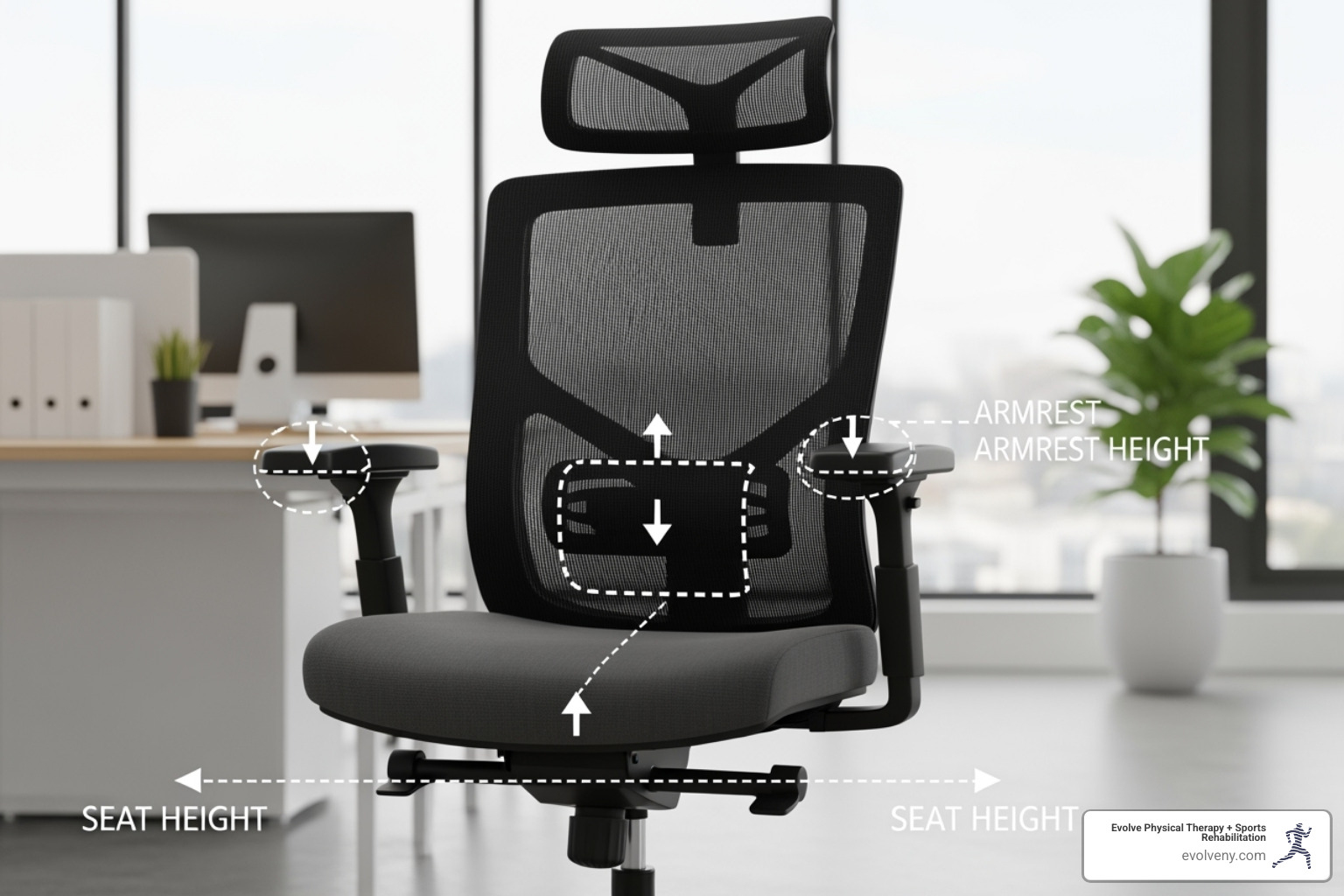
- Seat height: Adjust it so your feet are flat on the floor with your thighs roughly parallel to the ground.
- Seat depth: Sit all the way back, leaving two to four fingers' width of space between the seat edge and the back of your knees.
- Lumbar support: This should fit into the small of your back to maintain your spine's natural curve. A small pillow can work if your chair lacks support.
- Armrests: They should allow your arms to rest with relaxed shoulders. Adjust or remove them if they get in the way.
- Backrest angle: A slight recline of 100 to 110 degrees often feels better than a rigid 90-degree angle.
For more tips, explore our insights on the Best Ergonomic Way to Sit at Desk.
The Command Center: Positioning Your Monitor
Proper monitor placement can eliminate end-of-day neck stiffness.
- Monitor height: The top of your screen should be at or slightly below eye level. If you wear bifocals, you may need to lower it an extra inch or two.
- Distance: Position your monitor about an arm's length away. You should be able to read text clearly without leaning forward.
- Monitor angle: A slight backward tilt can reduce glare and create a more natural viewing angle. Position your screen perpendicular to windows to avoid glare.
These adjustments help prevent the forward head posture that leads to neck pain. For more tips, see our guide to Correct Computer Posture.
The Controls: Keyboard and Mouse Placement
Poor keyboard and mouse placement can cause wrist, elbow, and shoulder pain.
- Keyboard positioning: Center it directly in front of you. Your wrists should be straight, elbows bent at 90 degrees, and shoulders relaxed.
- Mouse placement: Keep it right next to your keyboard at the same height, within easy reach. Move your entire forearm, not just your wrist.
- Wrist rests: Use them for resting during pauses, not for active typing or mousing, to prevent nerve compression.
Proper setup is a fundamental part of desk posture ergonomics. Learn more about how physical therapy can help at Ergonomics and Physical Therapy.
Advanced Ergonomics: Common Mistakes and Special Considerations
Even with a good setup, subtle mistakes can undermine your desk posture ergonomics. Ergonomics isn't one-size-fits-all; your body and work are unique. Understanding these nuances is key, especially when creating a remote workspace. Our guide to Home Office Ergonomics offers specific strategies for this.
Top 5 Ergonomic Mistakes to Avoid
- Leaning forward: This causes "text neck" and back strain. Instead of leaning toward your work, bring your work to you.
- Dangling feet: This destabilizes your posture and strains your back. Use a footrest to ensure your feet are flat.
- Reaching for your mouse: Keep your mouse close enough to use with your elbow bent at 90 degrees.
- Crossing your legs: This twists your pelvis and can lead to hip imbalances and poor circulation. Keep both feet on the floor.
- Cradling your phone: This is a fast track to neck pain. Use a headset or speakerphone instead.
These simple fixes support your journey toward Good Posture for Office Workers.
Adapting Your Desk Posture Ergonomics for Laptops and Special Needs
Laptops are an ergonomic challenge because the screen and keyboard are attached. The solution is to treat it like a desktop: use a laptop stand to raise the screen to eye level and an external keyboard and mouse for neutral wrist positions.
Bifocal users should place their monitor 1-2 inches lower than the standard recommendation to avoid tilting their head back. For those with shorter legs, a footrest is essential equipment to maintain proper knee and thigh positioning when the chair is at the correct height for the desk.
The Truth About Alternative Seating and Other Desk Posture Ergonomics Myths
While some alternative seating options have benefits, many are not ideal for full-time use.
- Exercise balls: The lack of back support often leads to slumping and fatigue as your core tires. They are not recommended for all-day use.
- Kneeling chairs: These can relieve lower back pressure but may strain the shins and are best for short-term tasks.
- Standing desks: These are a promising alternative, but the key is to alternate between sitting and standing. Standing all day can cause its own set of problems.
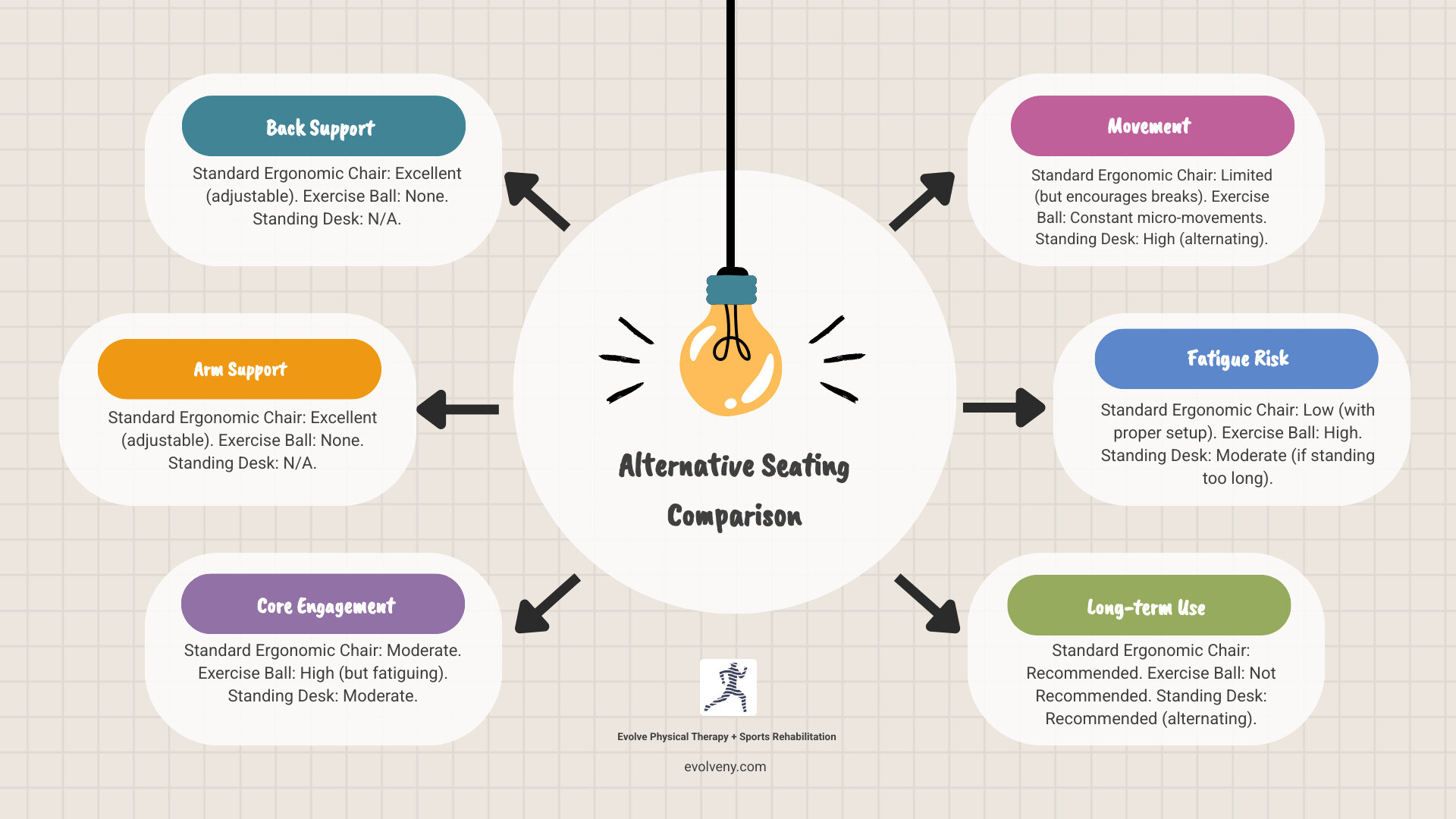
The most effective approach combines a properly adjusted ergonomic chair with regular movement and periods of standing.
The Active Desk: Why Movement is Your Best Medicine
Even with a perfect ergonomic setup, staying in one position for hours is harmful. Your body was designed for movement, not to hold a static pose. Just as you wake up stiff after sleeping in one position, you'll feel sore after sitting in one position all day.
The solution is the "active desk"—weaving movement into your workday. This means regular breaks, micro-stretches, and small bursts of activity. Movement boosts productivity by pumping fresh blood and oxygen to your brain.
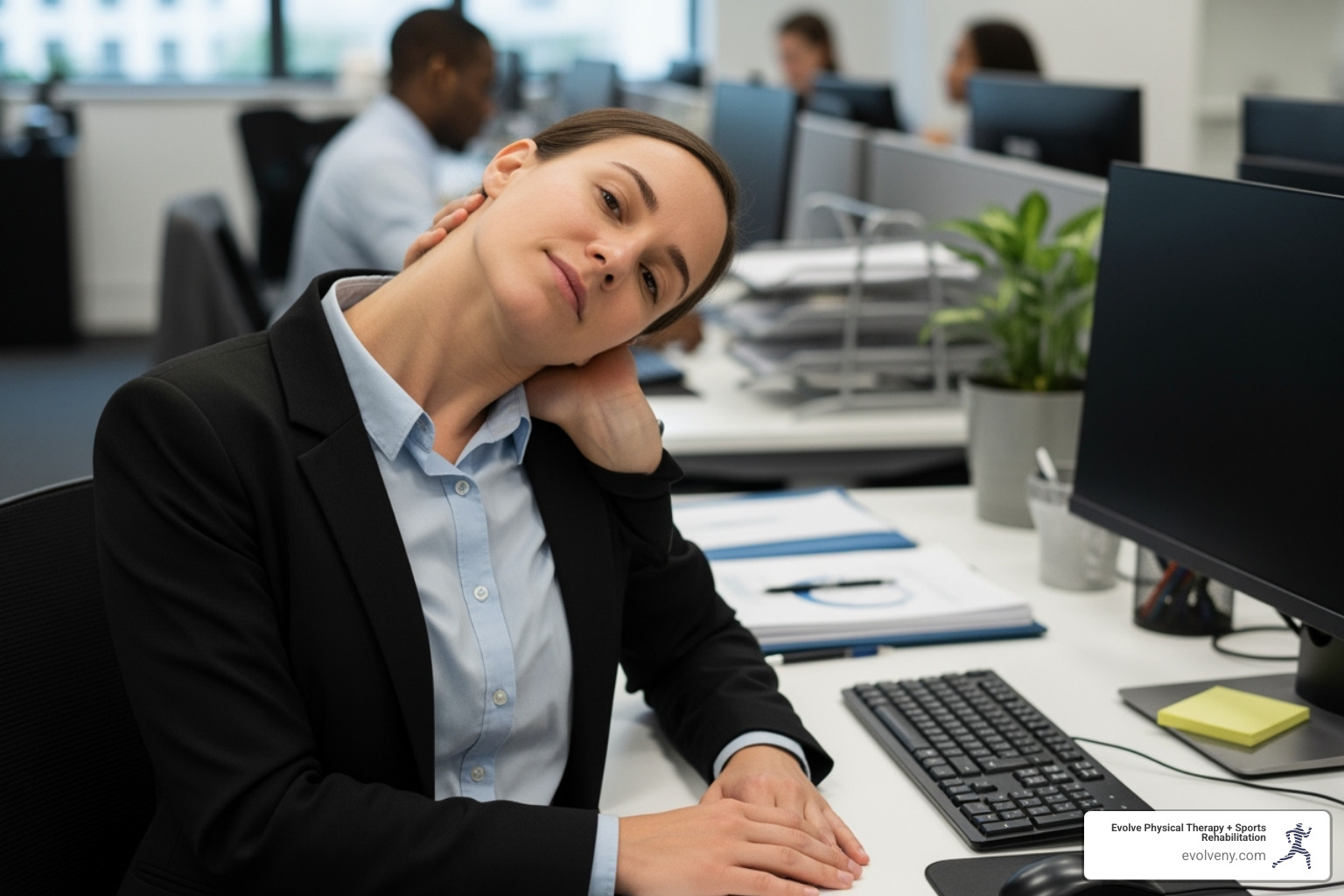
A good guideline is the 50-minute rule: for every 50 minutes of sitting, move for at least 10. Even micro-breaks of 30 seconds every 20-30 minutes can make a huge difference. Also, use the 20-20-20 rule for your eyes: every 20 minutes, look at something 20 feet away for 20 seconds to prevent eye strain.
As the NHS tips for sitting correctly emphasize, movement is as important as positioning.
Simple Stretches to Do at Your Desk
These simple stretches can be done right at your desk:
- Neck tilts: Gently bring your ear toward your shoulder, hold for 15-20 seconds, then switch sides.
- Shoulder rolls: Roll your shoulders forward and backward in slow circles to loosen knots.
- Overhead reaches: Lace your fingers, flip your palms up, and stretch toward the ceiling to wake up your torso.
- Torso twists: While seated, gently rotate your upper body to one side, using your chair for support.
- Wrist stretches: Extend one arm, palm up, and gently pull your fingers toward the floor. Repeat with the palm down.
- Chair squats: Stand up, then slowly lower yourself until you almost touch the seat. Hold, then stand back up. Repeat 5-10 times.
These movements are an essential part of smart desk posture ergonomics. Set a timer to make it a habit.
Frequently Asked Questions about Desk Posture Ergonomics
As a physical therapist, I frequently answer questions about workplace-related pain. Here are some of the most common ones we hear in our Brooklyn clinics.
How often should I take a break from sitting?
The key is to change positions regularly. Your body wasn't designed to stay in one pose for hours.
Follow the 50-minute rule: don't sit for more than 50 minutes without getting up to move for 5-10 minutes. Even better, incorporate micro-breaks. Every 20-30 minutes, take 30 seconds to stretch or shift your position.
Don't forget the 20-20-20 rule for your eyes: every 20 minutes, look at something 20 feet away for 20 seconds. This gives your eyes and neck a much-needed break.
Can physical therapy fix my bad posture from sitting?
Absolutely. By the time you're experiencing pain, you've likely developed muscle imbalances and joint stiffness that need professional attention.
At Evolve Physical Therapy, we start with a thorough assessment to find the root cause of your issues. Our approach combines manual therapy to release tight muscles and restore joint mobility with targeted exercises to strengthen the muscles that support good posture.
Posture retraining is a key part of what we do, helping you develop body awareness for better alignment throughout your day. We can also help you optimize your desk posture ergonomics. Once you understand what your body needs, you'll have the tools to maintain healthy posture for life. Learn more about our Physical Therapy for Posture Training services.
What is the most important ergonomic adjustment I can make first?
If you're feeling overwhelmed, start with one thing: getting your feet flat on the floor.
Adjust your chair height so your feet rest completely flat on the floor (or a footrest). Your knees should be bent at roughly 90 degrees, with thighs parallel to the ground. This creates a stable base for your entire body.
When your foundation is solid, everything else becomes easier to correct. Think of it like building a house—you have to start with the foundation.
Conclusion: Take Control of Your Comfort and Health
Mastering desk posture ergonomics is an ongoing process. Every small adjustment you make is an investment in your long-term well-being. The beauty of ergonomics is its simplicity: support your natural spinal curves, keep joints neutral, position your equipment correctly, and most importantly, move regularly.
Small changes create big results. Raising your monitor might eliminate neck pain, while adjusting your chair could end afternoon back stiffness.
If simple adjustments aren't enough, don't ignore persistent pain. At Evolve Physical Therapy + Sports Rehabilitation, our hands-on approach addresses the root causes of your discomfort. We create personalized plans to help you find lasting relief from neck tension, headaches, or backaches.
We proudly serve families and professionals throughout Brooklyn, from Marine Park to Park Slope and Gravesend to Midwood. Our patients often find that addressing their workplace ergonomics is life-changing, improving their overall quality of life.
Your health is worth the investment. Take the first step today, whether it's adjusting your chair or reaching out for professional guidance. Learn more about our ergonomic physical therapy services in Brooklyn and find how we can help you evolve toward a pain-free future.
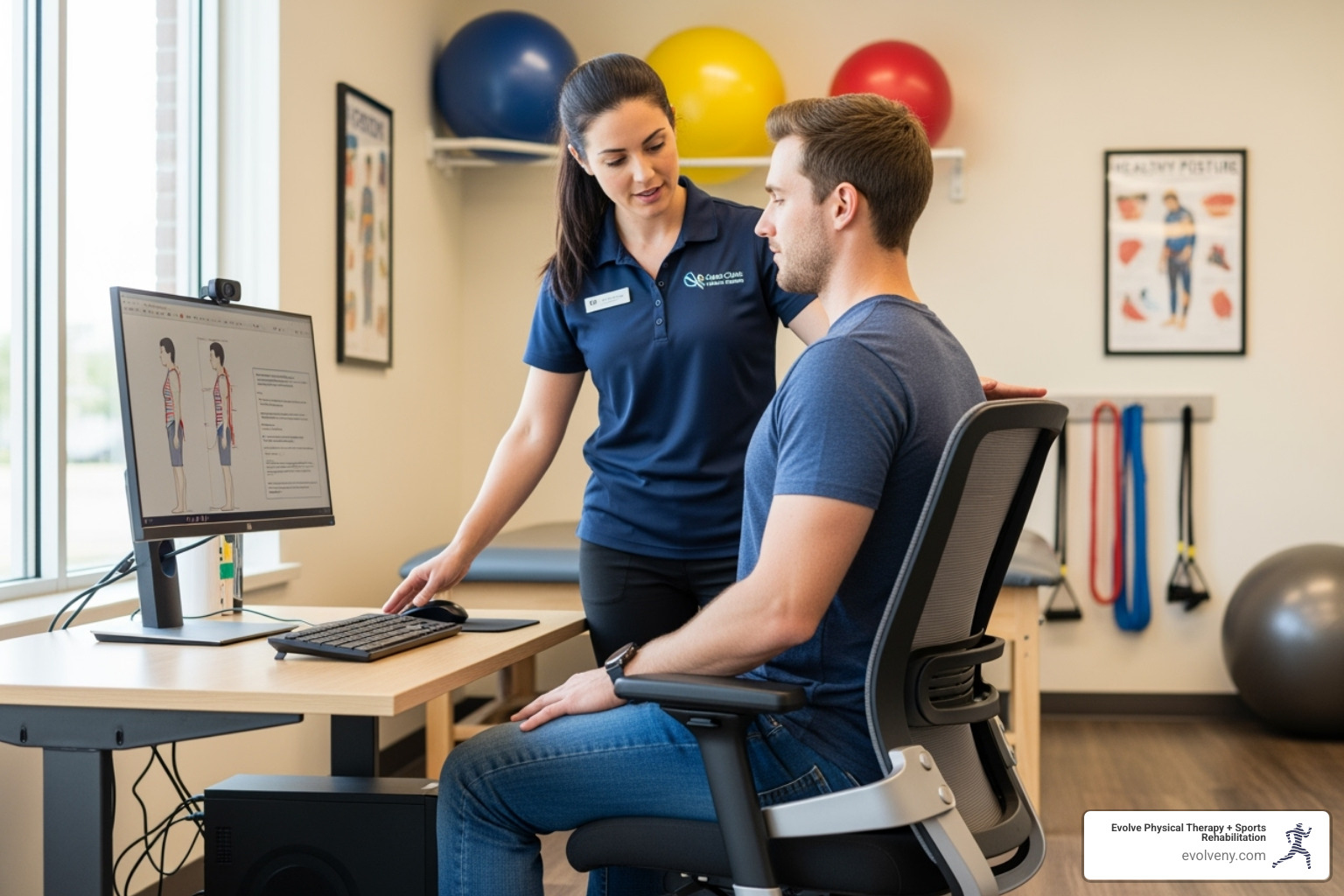
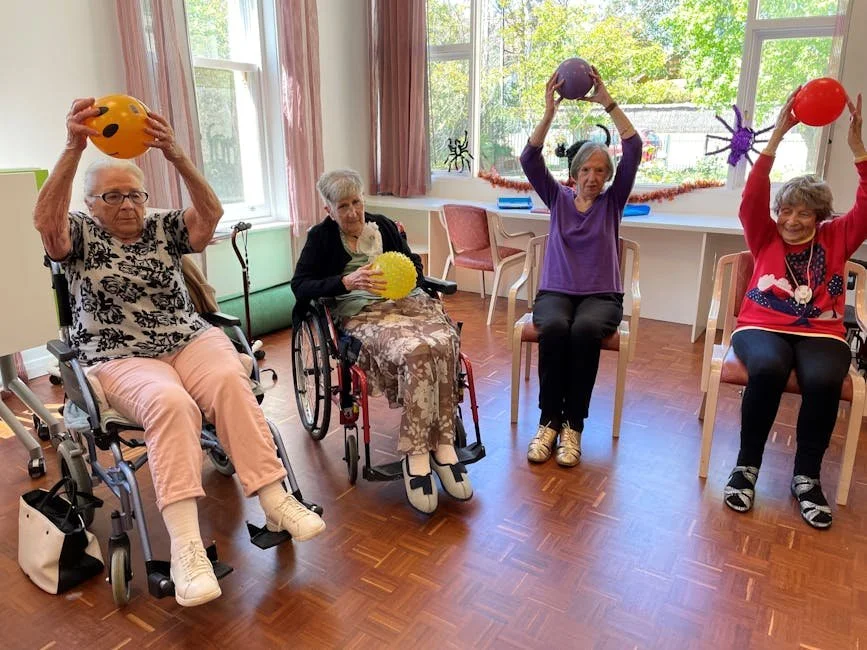
Step Up Your Game with Mobility Exercises for Seniors
Why Staying Mobile is Your Gateway to Independent Living

Elderly mobility exercises are specialized movements designed to improve strength, balance, flexibility, and endurance in older adults. These simple activities can dramatically reduce fall risk, ease daily tasks, and help you maintain the independence you value. As we age, our bodies naturally lose muscle mass and flexibility, but regular movement can slow or even reverse many of these changes.
Key Benefits of Elderly Mobility Exercises:
- Reduce fall risk by 35-45% through improved balance and coordination
- Maintain daily independence by making tasks like getting out of bed or climbing stairs easier
- Manage chronic conditions like arthritis through improved circulation and reduced stiffness
- Strengthen bones and muscles to combat age-related decline
- Boost mental health and cognitive function
Falls affect 35-45% of seniors annually, with over 800,000 requiring hospitalization. Most are preventable through targeted exercises that address declining strength, balance, and mobility.
I'm Lou Ezrick, a licensed physical therapist with nearly two decades of experience. At Evolve Physical Therapy, I've seen how the right elderly mobility exercises transform lives, helping seniors stay active, confident, and living on their own terms.
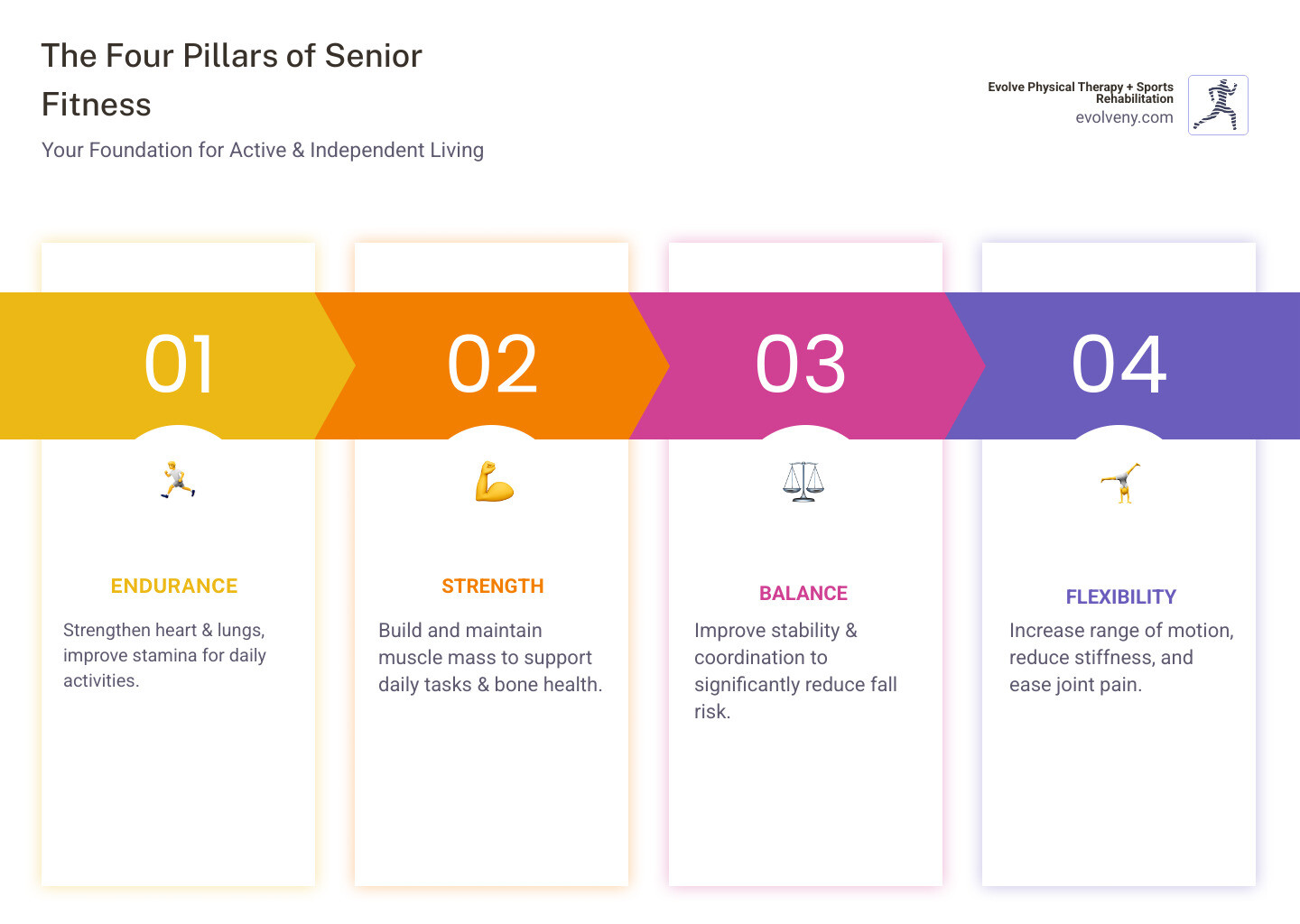
Why Mobility is Your Key to a Vibrant Life
Mobility is your personal freedom pass—the ability to move comfortably without pain. It's what lets you reach for a high shelf, tend your garden, or get out of bed with ease.
A major concern for older adults is falls, often caused by deconditioning from inactivity. The good news is that this is preventable. Elderly mobility exercises build a protective shield against falls by improving balance and coordination, giving you the confidence to move freely.
The benefits extend beyond fall prevention. Regular movement improves quality of life by making daily tasks easier and reducing joint stiffness, which is a great relief for those with arthritis. It also boosts improved cognitive function and provides the satisfaction of staying independent.
The Four Pillars of Senior Fitness
The CDC recommendations highlight four essential types of movement:
- Endurance: Keeps your heart and lungs strong for activities like walking or swimming.
- Strength: Fights age-related muscle mass loss, making it easier to carry groceries or stand up from a chair.
- Flexibility: Keeps joints moving freely, reduces stiffness, and helps lower the increased risk for osteoporosis.
- Balance: Your best defense against falls, improving stability with regular practice.
The CDC suggests 150 minutes of moderate activity weekly, plus strength and flexibility work twice a week. We'll show you how to make this manageable.
The Critical Link Between Balance and Flexibility
Balance and flexibility are interconnected. Good flexibility allows your body to adjust to uneven surfaces, preventing falls. A shoulder flexibility decline study shows we lose shoulder mobility each decade, but exercise can combat this. When your joints move freely, your body coordination and spatial awareness work together to keep you stable, building confidence in movement.
Getting Started: Safety First and Always
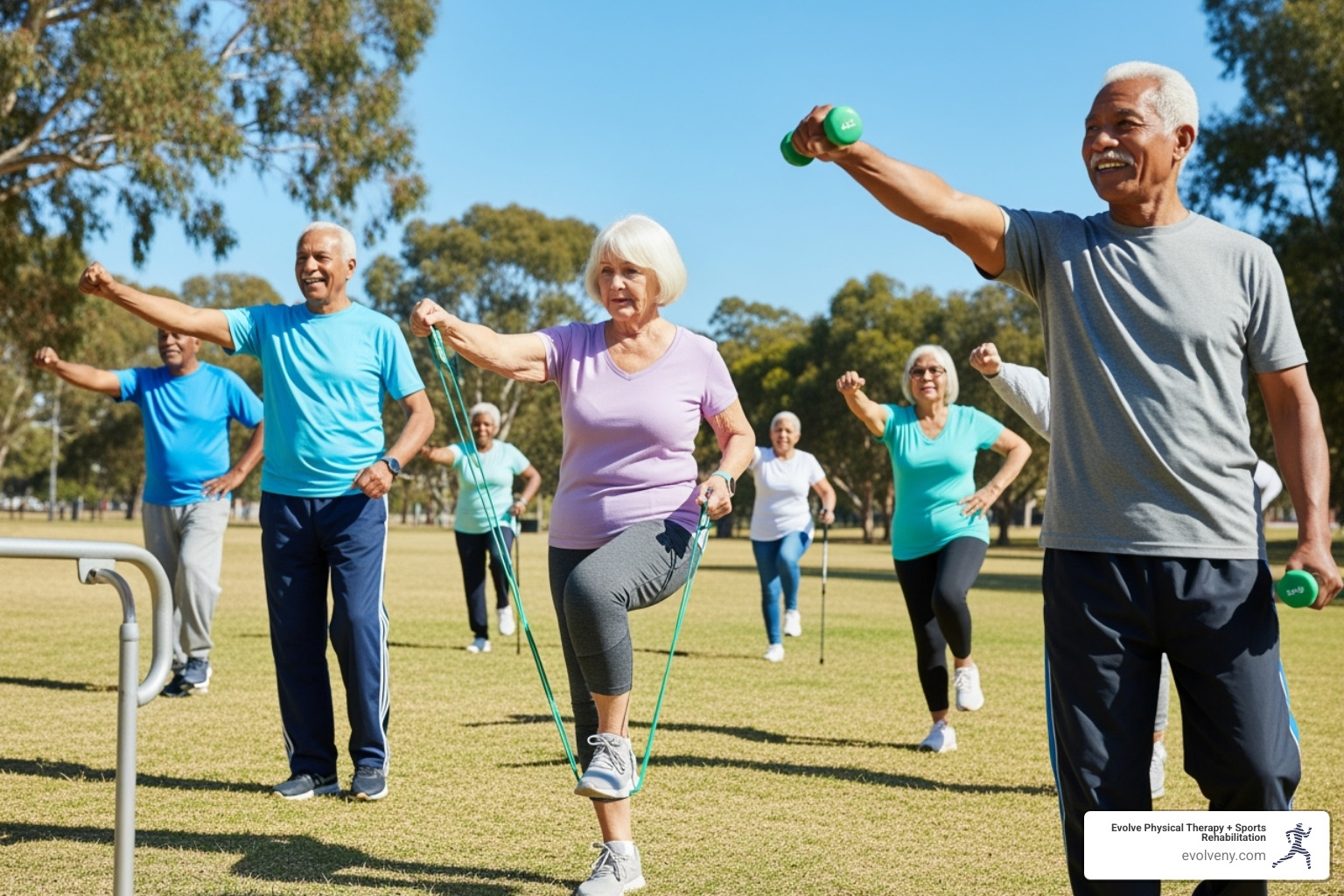
Before starting any elderly mobility exercises, the non-negotiable first step is consulting with your doctor or a licensed physical therapist. They can tailor a plan to your health history and needs, a step emphasized by the National Institute on Aging.
Once you have approval, set yourself up for success:
- Warm-up: Prepare your body with a few minutes of light cardio, like marching in place or arm circles.
- Cool-down: After exercising, help your heart rate return to normal and prevent stiffness with gentle stretches or slow walking.
- Proper clothing and hydration: Wear loose-fitting clothes and keep a water bottle handy.
- Listen to your body: Understand the difference between the mild discomfort of working muscles and sharp pain, which is a signal to stop immediately.
Exercises Seniors Should Approach with Caution or Avoid
While staying active is key, some exercises carry unnecessary risks. Be cautious with or avoid:
- High-impact exercises: Long-distance running or jumping can be hard on the joints.
- Heavy weightlifting: This includes deadlifts, full squats with heavy weights, and bench press exercises, which can strain the back, knees, and shoulders.
My golden rule is to stop any exercise causing sharp pain. Safer alternatives exist for nearly every risky exercise. For example, try wall push-ups instead of bench presses, and chair squats instead of weighted deep squats. The goal is to build strength and mobility without risking injury.
10 Foundational Elderly Mobility Exercises
Now, let's explore some of the most effective elderly mobility exercises to transform your daily life. These movements target key areas for maintaining independence. Think of them as your daily toolkit; you don't need to do them all every day. Start with a few and build your routine gradually, as consistency is more important than intensity.
Flexibility and Stretching: Your Foundation for Movement
These gentle stretches improve flexibility, helping you move with less stiffness. Hold each stretch for 10-30 seconds while breathing deeply.
Overhead Side Stretch: Ideal for improving reach. Stand or sit tall. Raise both arms overhead, clasping your hands. Gently lean to one side, feeling a stretch along your opposite side. Keep your shoulders relaxed. This improves flexibility in your shoulders, upper back, and torso.
Neck and Shoulder Stretches: These release common tension. Neck Turns: Gently look over one shoulder, hold, and repeat on the other side. Ear-to-Shoulder: Gently tilt your head, bringing your ear toward your shoulder. Shoulder Rolls: Roll shoulders forward, then backward. These movements improve posture and range of motion. For a visual guide, see this neck and shoulder mobility video.
Hamstring Stretch: Seated: Sit on a chair's edge with one leg extended, heel on the floor. Lean forward from your hips with a straight back until you feel a stretch. Standing: Place one heel on a low step, keep the leg straight, and lean forward from the hips. This stretch targets muscles that get tight from sitting, which helps walking and lower back health.
Ankle Rotations: Crucial for balance. Sit in a chair and lift one foot. Gently rotate your ankle in slow circles, clockwise then counter-clockwise. Repeat on the other foot. This improves ankle mobility, which is vital for stability and fall prevention.
Strength Training: Building a Resilient Body
Strength training makes daily tasks easier and keeps bones healthy. Aim for 8-12 repetitions, working up to 2-3 sets as you get stronger.
Chair Squats: A highly practical exercise. Sit on the edge of a sturdy chair, feet shoulder-width apart. Push through your heels to stand up, keeping your back straight. Slowly lower yourself back down. This strengthens your legs and glutes, making it easier to get out of chairs and cars. The sit to stand exercise benefits are significant for functional mobility.
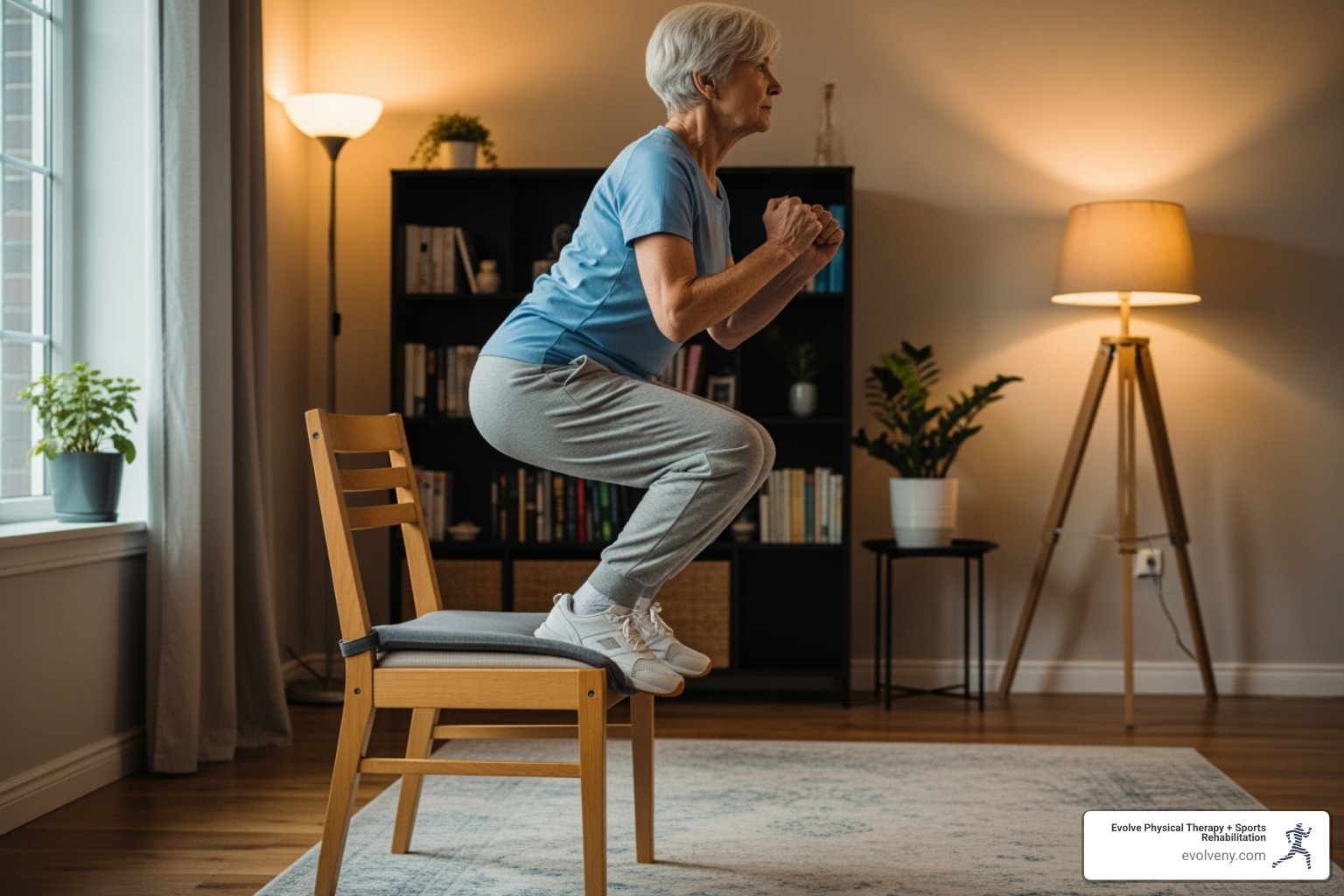
Wall Push-ups: A joint-friendly alternative to traditional push-ups. Stand arm's length from a wall. Place hands on the wall, slightly wider than your shoulders. Lean in, bending your elbows while keeping your body straight. Push back to the start. This strengthens the chest, shoulders, and triceps for pushing and lifting.
Glute Bridges: Excellent for glutes and back health. Lie on your back, knees bent, feet flat on the floor. Lift your hips until your body is in a straight line from shoulders to knees. Hold, then slowly lower. This strengthens glutes and hamstrings, which are vital for walking and supporting the lower back.
Seated Row with Resistance Bands or Light Weights: Improves posture and pulling strength. Sit tall in a chair with a resistance band looped around your feet or holding light weights. Start with arms extended. Pull your elbows back, squeezing your shoulder blades together. Slowly return. This strengthens your upper back and biceps.
Balance Boosters: Essential Elderly Mobility Exercises for Fall Prevention
Balance improves with practice. These exercises challenge your stability. Always have a sturdy chair or wall nearby for support.
Single-Leg Stance: A highly effective balance exercise. Stand next to a sturdy chair for support. Slowly lift one foot, bending the knee, and hold for 10-30 seconds. Repeat on the other side. As you improve, rely less on the support. This strengthens thighs and key stabilizer muscles.
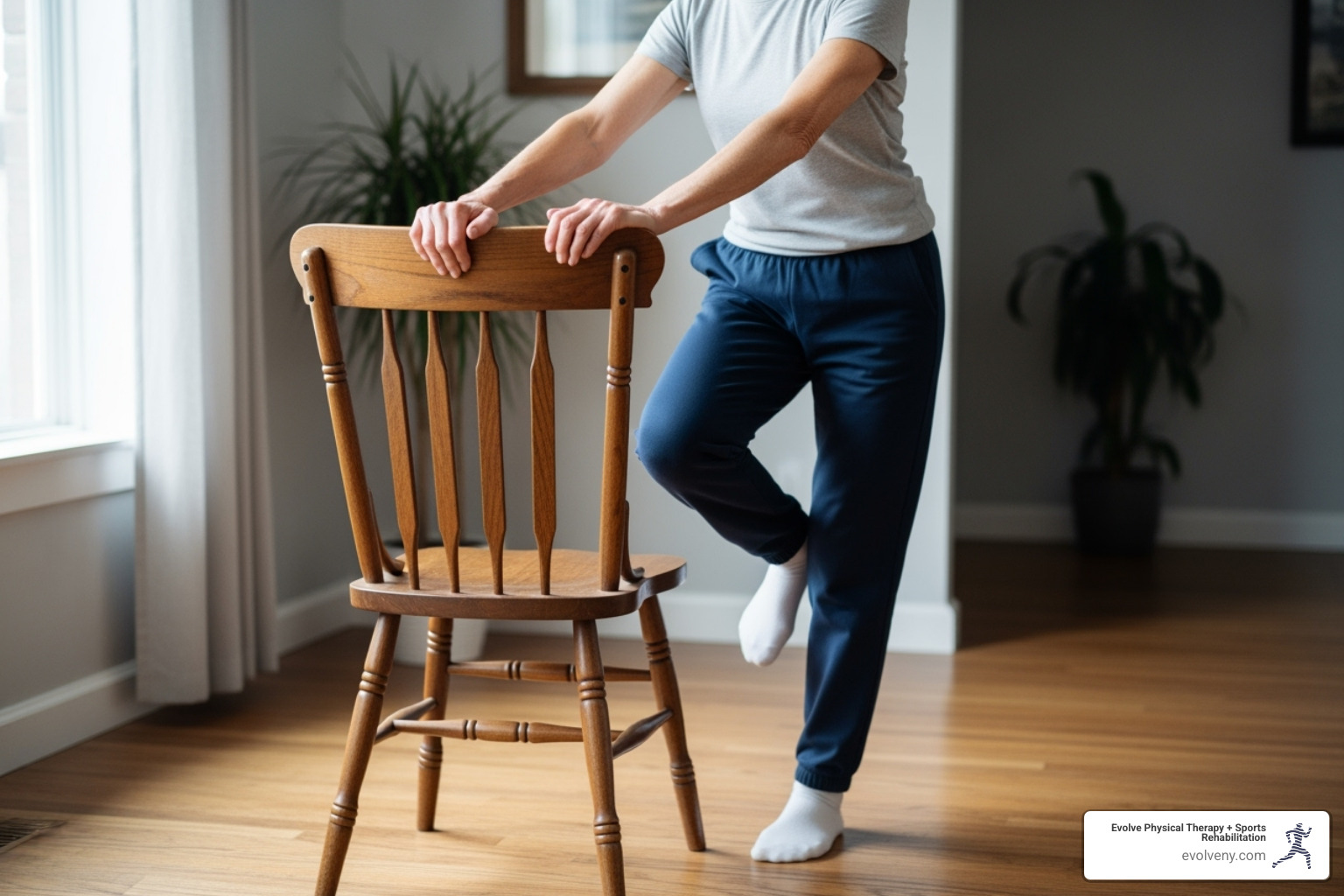
Heel-to-Toe Walk: Improves dynamic balance. In a clear space, walk by placing the heel of one foot directly in front of the other's toes. Gaze forward, not down. Take 10-15 steps, using a wall for support if needed. This is essential for steady walking.
Tree Pose with Chair Support: A gentle yoga pose for balance. Stand next to a chair for support. Shift your weight to one foot and place the sole of your other foot on your standing ankle or calf (avoid the knee). Focus on a spot in front of you. Hold for 10-30 seconds, then switch sides. This strengthens the standing leg.
Side Leg Raises: Targets key muscles for walking stability. Stand behind a chair for support. Slowly lift one leg straight out to the side, keeping your torso upright. Lift only as high as is comfortable and controlled. Lower slowly. Repeat 10-15 times, then switch sides. This strengthens hip abductor muscles to prevent wobbling.
Fun and Engaging Ways to Improve Mobility
Staying mobile doesn't have to feel like work. The most effective elderly mobility exercises are often the ones that bring joy into your day. When movement is enjoyable, consistency becomes effortless.
Consider these fun options:
- Gentle stretching or chair yoga classes: These are welcoming, non-intimidating spaces to move at your own pace, with the security of a chair for support.
- Group movement classes: Connecting with others adds motivation. Water aerobics is a great option, as the water supports achy joints while providing resistance.
- Light dancing: Put on your favorite music! Dancing is a fantastic way to improve coordination and balance while lifting your spirits.
- Walking groups: Turn a simple stroll into a social event, strengthening your legs and heart while you chat.
- Tai Chi-inspired movement: These slow, flowing movements are highly effective for improving balance and flexibility.
The most valuable guidance often comes from activities led or recommended by a physical therapist. At Evolve Physical Therapy, we see how personalized, enjoyable programs transform mobility and confidence.
Frequently Asked Questions about Elderly Mobility Exercises
Here are answers to some of the most common questions about elderly mobility exercises.
How often should a senior perform mobility exercises?
The CDC recommends 150 minutes of moderate activity per week for adults 65 and older. This can be broken into 30 minutes five days a week, or even shorter 10-15 minute sessions.
- Strength and flexibility: Aim for at least 2 days per week.
- Balance: Aim for 3 days per week to reduce fall risk.
Consistency beats intensity. Starting with 5-10 minutes of gentle movement daily is better than one long, infrequent workout. Start slow, gradually build up, and even light activities like gardening or stretching during TV time count.
Can these exercises help with arthritis pain?
Yes. Contrary to the belief that movement worsens arthritis, regular, gentle elderly mobility exercises are highly effective for managing symptoms.
- Improved circulation: Movement delivers nutrients to your joints and helps flush out inflammatory waste.
- Reduced stiffness: Gentle stretching prevents the stiffness that comes from inactivity and helps maintain range of motion.
- Stronger support: Strengthening the muscles around a joint provides better support and takes pressure off the joint itself.
Many of these exercises are low-impact (e.g., water aerobics, chair exercises), putting minimal stress on joints. Always listen to your body; mild discomfort is normal, but sharp pain is a signal to stop.
What if I use a walker or have very limited mobility?
Movement is beneficial regardless of your current mobility level.
- Chair exercises are powerful: You can do many strength, flexibility, and cardio exercises from a seated position, such as seated rows, ankle rotations, and shoulder stretches.
- Use your walker as a tool: A walker can provide stability for standing exercises like marches in place, side leg lifts, or calf raises. Ensure the brakes are locked if applicable.
Even small, controlled movements help prevent deconditioning (the weakening from inactivity). Consulting a professional is invaluable here. A physical therapist can create a safe, personalized program of elderly mobility exercises custom to your abilities. The goal is to maintain your quality of life, and every movement is a victory.
Conclusion: Your Path to Better Mobility Starts Now
You now have the tools—from foundational exercises to safety tips—to transform your daily life with elderly mobility exercises. The benefits are life-changing: reduced fall risk, less arthritis pain, stronger muscles, and the confidence that comes with independence.
Your body is adaptable at any age, and consistency is your secret weapon. Start with just five minutes a day; these small steps build lasting change. Think of movement as medicine. The right exercises can be more powerful than many medications, with only positive side effects.
At Evolve Physical Therapy + Sports Rehabilitation, we see these changes daily across our Brooklyn community, from Marine Park to Park Slope. Our hands-on, personalized approach helps seniors regain strength and confidence. Physical therapy isn't just for recovery; it's about preventing problems before they start. Our specialized programs, like the NBC News-featured Rock Steady Boxing for Parkinson's, show how targeted, enjoyable movement can make all the difference.
Your journey to better mobility and improved quality of life starts with the first step. Your future self—walking confidently and living independently—is waiting.
Learn more about physical therapy for seniors and find how personalized care can accelerate your progress toward better mobility and lasting independence.

How Seniors Can Strengthen Their Core and Confidence
Why Core Strength Matters More as You Age
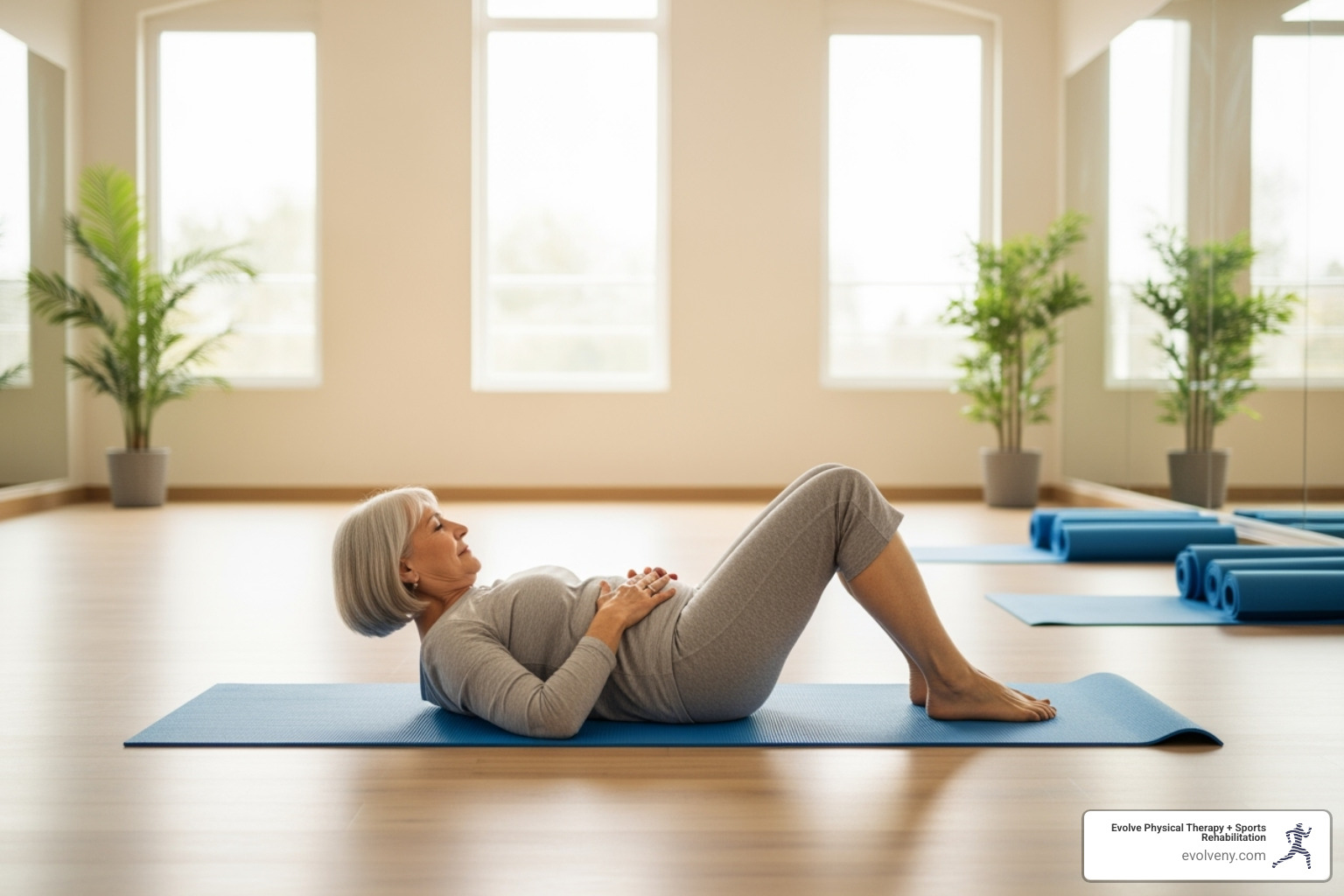
Core strength for seniors is not just about having a flat stomach; it's the bedrock of your ability to move safely, maintain balance, and live an independent, active life. As we age, preserving this strength becomes one of the most important things we can do for our overall health and well-being.
Quick Answer: The Best Approach to Core Strength for Seniors
- Start with seated exercises like belly breathing and pelvic tilts to build a foundational connection.
- Progress to standing movements using a chair or wall for support to improve balance.
- Practice 2-3 times per week, prioritizing proper form and control over speed or intensity.
- Focus on functional strength that directly translates to easier and safer daily tasks.
- Avoid high-risk movements like traditional sit-ups and crunches that can strain the neck and back.
The statistics on senior falls are alarming: in the United States, a senior falls every 12 seconds. This equates to one in four adults over 65 experiencing a fall each year. Tragically, about 20% of these falls result in serious injuries such as broken bones or head trauma, which can drastically alter one's quality of life. Beyond the physical injury, the fear of falling can lead to a cycle of inactivity, which further weakens muscles and increases fall risk.
However, there is powerful, proactive step you can take. Research has shown that regular core strengthening can reduce fall rates by up to 24% among older adults. This is where understanding your core becomes crucial.
Your core is far more than just your "abs." It's a sophisticated system of deep and superficial muscles that form a 360-degree support structure around your trunk. This includes:
- Abdominals (Rectus Abdominis, Transverse Abdominis): These muscles in the front help you bend forward and, more importantly, the deep transverse abdominis acts like a natural corset, stabilizing your spine.
- Obliques (Internal and External): Located on your sides, these are essential for twisting and side-bending movements.
- Lower Back Muscles (Erector Spinae, Multifidus): These run along your spine and are vital for maintaining an upright posture and controlling backward bending.
- Glutes (Gluteus Maximus, Medius, Minimus): Your buttock muscles are a powerhouse for hip extension and stabilization, which is critical for walking, climbing stairs, and getting up from a chair.
- Pelvic Floor: This sling of muscles at the base of your pelvis supports your organs and works in concert with your diaphragm and deep core muscles to regulate internal pressure and stabilize the spine from below.
Starting around age 30, we all begin to experience a natural decline in muscle mass, a condition known as sarcopenia. We can lose 3-8% of our muscle mass each decade, and this rate accelerates after age 60. The core muscles are particularly susceptible to this age-related weakening, which can lead to a cascade of problems: poor posture, chronic back pain, and a dangerous loss of balance.
A strong core counteracts this decline. It provides the stability to walk confidently on uneven sidewalks, improves your posture to alleviate backaches, and gives you the power to perform daily activities—like getting out of a chair or bending to tie your shoes—with ease and without fear. It is the fundamental component that empowers you to remain active and self-sufficient.
I'm Lou Ezrick, founder of Evolve Physical Therapy. With nearly two decades of experience in Brooklyn, I've dedicated my career to helping thousands of patients, especially seniors, reclaim their strength and confidence. At Evolve, we don't just give you a sheet of exercises. We use a hands-on, manual therapy approach to identify the root cause of your weakness or pain. We then build a personalized, progressive program focused on core strength for seniors that delivers sustainable, real-world results. Our goal is to move you beyond the clinic and back to a life of capability and independence.
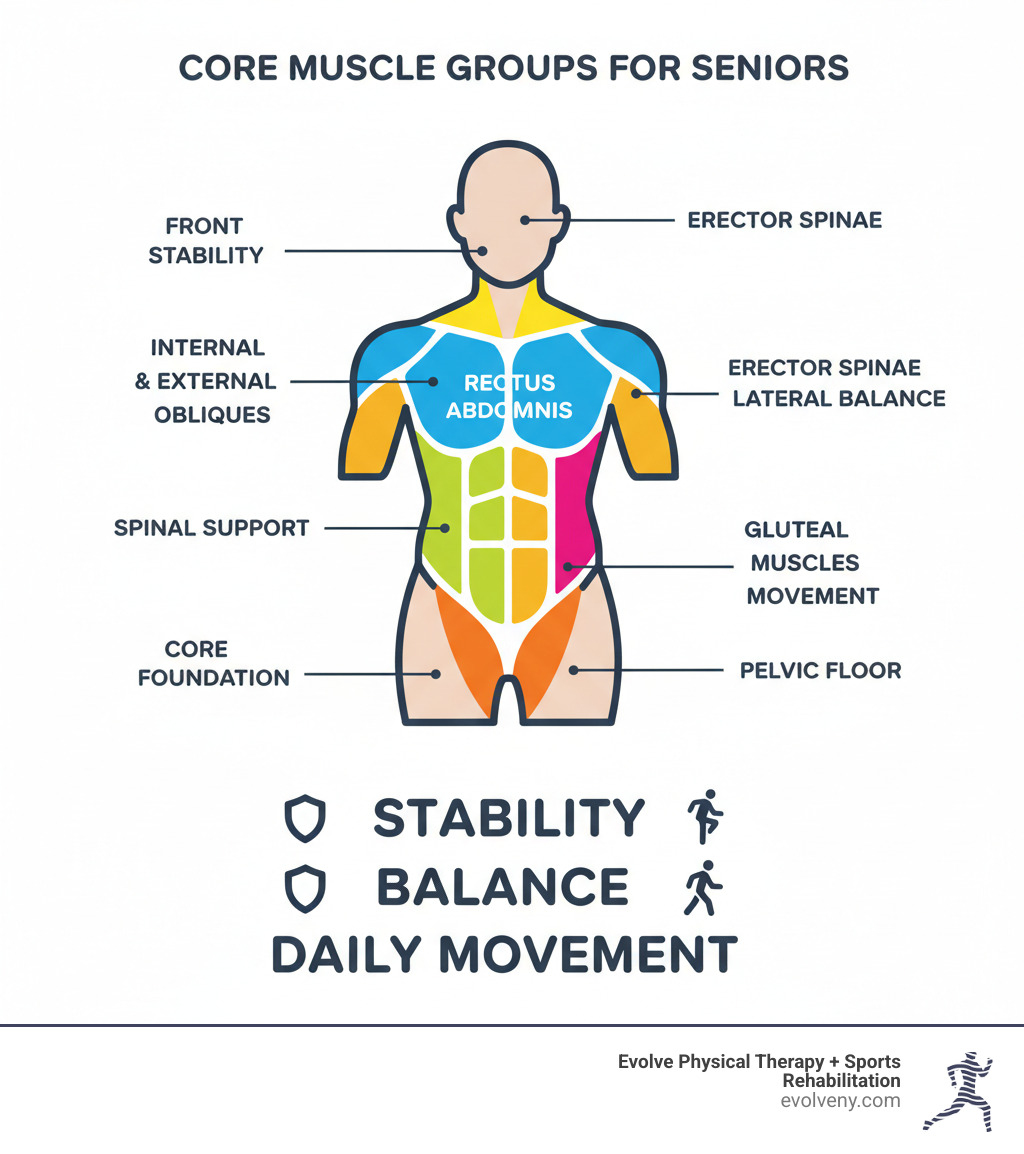
Why a Strong Core is Your Foundation for Healthy Aging
Think of your core as the central hub of your body, the foundation of a house. When that foundation is solid, the entire structure is more stable, resilient, and functional. For seniors, reinforcing this foundation is the key to aging with strength, grace, and independence.
The most immediate and life-changing benefit of building core strength for seniors is a dramatic improvement in balance and coordination. Your ability to stay upright is a complex dance between your muscles, your brain's sense of body position (proprioception), and your inner ear's vestibular system. A strong, engaged core provides a stable center of gravity, giving these systems a reliable platform to work from. Research confirms that core stability training significantly improves weight distribution and steadiness in older adults, which directly translates to better balance during both static (standing still) and dynamic (walking) activities.
This improved balance is your number one defense against falls. While the statistic that core exercises can reduce fall rates by up to 24% is impressive, the real-world impact is even more profound. A strong core allows you to make rapid, subconscious adjustments to catch yourself if you trip or lose your footing. It helps break the vicious cycle of fear-of-falling, where a fear of getting hurt leads to decreased activity, which in turn causes more muscle weakness and a higher actual risk of falling. For more in-depth strategies, our guide on physical therapy for fall prevention offers a comprehensive look at staying steady on your feet.
Beyond fall prevention, a strong core is a powerful antidote to chronic back pain. Many older adults suffer from back pain because weak abdominal muscles cause the pelvis to tilt forward, increasing the sway in the lower back and compressing the spinal joints. By strengthening your core muscles, you create a natural "internal corset" that supports your spine. This muscular brace offloads pressure from the vertebrae and discs, corrects postural imbalances that contribute to pain, and reduces the chronic strain on your back muscles. As noted by Harvard Health, strengthening your core is essential for providing this spinal support and combating the tendency to slouch.
Perhaps the most rewarding benefit is how a robust core makes everyday life easier and more enjoyable. These are not small feats; they are the cornerstones of independence. Consider the biomechanics:
- Getting out of a chair: A strong core engages first, stabilizing your trunk so your legs can powerfully and safely push you to a standing position without straining your back.
- Bending to tie shoes: Your core muscles hold your spine in a safe, neutral position, allowing you to bend from the hips and preventing painful disc or muscle strain.
- Carrying groceries: Your core acts as a rigid lever, transferring the load from your arms through your body and into your legs, protecting your spine from dangerous twisting or compression.
- Climbing stairs: A stable core provides the anchor point for your hip flexors and glutes to work efficiently, making each step smoother and less taxing.
These daily victories add up to something invaluable: the freedom to live life on your own terms. It's the confidence to play with your grandchildren, the ability to pursue hobbies like gardening, and the peace of mind that comes from moving through your day without pain or worry. At Evolve Physical Therapy, we see this change every day. When our senior patients commit to building their core strength, they aren't just doing exercises—they are rebuilding the foundation for a more active, engaged, and joyful life.
The Best and Safest Exercises for Core Strength for Seniors
When it comes to building core strength for seniors, the principle of "do no harm" is paramount. Not all exercises are created equal, and many popular core workouts designed for younger athletes can be ineffective or even dangerous for older adults. At Evolve Physical Therapy, our approach prioritizes safety and functional effectiveness, ensuring your efforts build you up without the risk of injury.
The key is to choose exercises that stabilize the spine rather than repeatedly flexing or twisting it under load. Let's compare some common exercise types to understand why certain movements are safer and more beneficial for seniors.
| Exercise Type | Safe for Seniors (Examples) | Risky for Seniors (Examples) | Why It's Risky for Seniors |
|---|---|---|---|
| Spinal Flexion | Seated Marches, Pelvic Tilts (Lying or Seated), Modified Plank | Full Sit-Ups, Double Leg Lifts, Abdominal Crunches | Puts significant strain on the neck muscles, causes excessive rounding (flexion) of the lumbar spine which can compress discs, and often over-activates the hip flexors instead of the deep core. |
| Spinal Rotation | Seated Trunk Twists (Gentle), Standing Unweighted Wood Chops | Weighted "Russian" Twists, Fast-Paced Twisting Crunches | Can create dangerous shearing forces on the vertebrae and spinal discs, especially for those with arthritis or degenerative disc disease. Rapid, uncontrolled twisting is a common mechanism for back injury. |
| Static Stability | Bird-Dog, Bridge, Wall Push-Ups, Modified Plank (on knees or forearms) | Advanced Plank Variations (e.g., with leg lifts), Exercises on Unstable Surfaces (initially) | These require a high level of foundational strength. Attempting them too early can lead to poor form, compensation with the wrong muscles (like the lower back), and potential strain or injury. |
The primary reason we advise against exercises like sit-ups and crunches is the high risk of neck and back strain. When you pull on your head to lift your shoulders off the floor, you place immense pressure on the delicate cervical spine. Furthermore, the repetitive forward-bending motion can exacerbate conditions like osteoporosis or spinal stenosis.
The goal of senior core training should be to create stability. Think of your core's job as preventing motion, not creating it. It needs to hold your spine steady while your arms and legs move. This principle—"proximal stability for distal mobility"—is the foundation of safe and functional movement. A stable core allows you to reach, lift, and walk with control and without putting your spine at risk.
This is why consulting a professional is so important. A physical therapist at Evolve Physical Therapy in Brooklyn can do much more than hand you a list of exercises. We conduct a thorough assessment to understand your unique physical condition, including any pre-existing issues like arthritis, osteoporosis, or past injuries. Based on this evaluation, we design a customized core strengthening program that is perfectly suited to your body and your goals. We provide hands-on guidance to ensure you are activating the correct muscles and using perfect form, which is the secret to getting results safely. We'll help you master the basics and then show you how to progress gradually, so you're always challenging yourself without ever putting yourself in harm's way.

What the Heck is a Performance Coach Anyway?
Why Performance Coaches Are Changing the Game

A performance coach is a trained professional who helps individuals and teams improve their skills, mindset, and effectiveness to achieve specific goals. They work across sports, business, and personal development to identify barriers, create action plans, and provide accountability for measurable results.
Quick Answer: What Does a Performance Coach Do?
- Helps set clear, achievable goals using structured frameworks
- Identifies performance barriers that hold you back
- Creates customized action plans for skill and mindset improvement
- Provides ongoing accountability through regular check-ins
- Measures progress with concrete metrics and feedback
- Works with diverse clients from athletes to executives to anyone seeking peak performance
If you feel stuck at a plateau in your fitness, career, or personal life, a performance coach can help. They zero in on specific, measurable improvements to bridge the gap between where you are and where you want to be—whether that's running a faster 5K, leading a team more effectively, or recovering from an injury.
The beauty of performance coaching is that it's not just about pushing harder; it's about working smarter. A coach provides objective guidance and proven strategies for growth, filling a critical support gap for high-achievers.
As Lou Ezrick, founder of Evolve Physical Therapy, I've seen how integrating a performance coach mindset into rehabilitation helps active individuals break through physical and mental barriers. Whether you're recovering from an injury or aiming for a personal best, the right coaching approach makes all the difference.
Defining Performance Coaching: More Than Just a Pep Talk
A performance coach does more than cheer from the sidelines; they provide structure, strategy, and accountability. At its heart, performance coaching is a collaborative, goal-oriented process. You and your coach work as partners to find what's holding you back and build a clear, action-oriented path forward.
Instead of dwelling on past mistakes, the focus is on the future: What do you want to accomplish, what's stopping you, and what will you do about it today? A coach helps improve both skills and mindset, addressing the technical and mental sides of performance. The goal is to help you function at your absolute best. You can learn more about how we integrate this approach with our Mental Performance Coaching services.
What a Performance Coach is NOT
It's easy to confuse a performance coach with other supportive roles, but the focus is different.
| Role | Primary Focus | Approach | Key Distinction |
|---|---|---|---|
| Performance Coach | Specific, measurable performance improvement | Goal-oriented, action-focused, accountability-driven, skill and mindset improvement for defined areas | Helps you achieve specific, tangible goals by optimizing performance. More about how you perform. |
| Life Coach | Overall personal development and well-being | Holistic, broader scope, focuses on balance, fulfillment, and personal growth across various life domains | Aims for overall life satisfaction and happiness. Broader, more general goals. |
| Mentor | Sharing knowledge, experience, and wisdom | Provides guidance and insights based on their own journey and expertise, often in the same field | Offers direct advice and shares their path. A coach helps you find your own path. |
| Therapist | Addressing past trauma, mental health, and emotional issues | Clinical focus on healing emotional wounds, managing mental health conditions, understanding root causes | Deals with psychological well-being, often looking at the past. Performance coaching is future and action-oriented, focusing on optimization, not pathology. |
A performance coach is an accountability partner who challenges your assumptions and helps you find solutions that work for your unique situation. They are not a therapist healing past wounds or a mentor telling you to follow their path. They stimulate action and keep you on track.
The Physical and Mental Connection
At Evolve Physical Therapy + Sports Rehabilitation, we know the mind-body connection is critical for results. Your body and mind aren't separate systems; they constantly influence each other.
Mental blocks can cause physical limitations, like muscles tensing before a big presentation. Likewise, physical discomfort from an injury can tank your mental focus and confidence. A performance coach recognizes these connections.
Mental resilience and focus are just as important as physical strength. That's why we integrate performance coaching with physical therapy. Our Mobility and Movement Training builds your physical foundation, while we help you develop the mental tools to leverage that strength. Addressing both sides together is where real breakthroughs happen. To perform at your best, you need both body and mind firing on all cylinders.
Who Benefits and Why: From the Boardroom to the Playing Field

Anyone who performs can benefit from a performance coach. The desire to improve is universal, whether you're an athlete, executive, artist, or student. The underlying drive is the same: I know I can do better, and I want to get there.
- Athletes use coaching to sharpen technique, strengthen their mental game, and prevent injuries. At Evolve, we integrate these principles into our Physical Therapy for Athletes services, understanding that recovery is both physical and mental.
- Executives and business leaders get objective guidance to refine leadership style, manage stress, and inspire teams.
- Entrepreneurs, students, and artists use coaching to make critical decisions, improve focus, handle pressure, and maintain motivation.
- Individuals in rehabilitation benefit from a coaching approach to set meaningful goals, stay motivated, and adhere to their rehab program. This holistic view is central to our work at Evolve.
Key Benefits for Individuals
Working with a performance coach leads to profound changes:
- Increased confidence: Learning new skills in a supportive environment builds self-belief. You identify strengths and learn to manage challenges. You can explore more about this in research on self-confidence and learning.
- Skill development and goal achievement: A coach provides a structured framework to turn vague aspirations into concrete, attainable goals.
- Stress management: You gain practical strategies to handle pressure and build mental and emotional strength.
- Improved focus and open uped potential: A coach helps you cut through distractions, clarify priorities, and access capabilities you didn't know you had.
The Impact on Teams and Leaders
When leaders improve, organizations transform. Roughly 60% of executives fail within 18 months of promotion, often due to a lack of support in their new role. This is where coaching becomes essential.
- Leadership growth: A coach provides the unbiased feedback senior leaders often miss, helping them sharpen skills and lead with more clarity.
- Team cohesion and engagement: Better-equipped leaders create healthier, more productive team dynamics where people feel valued.
- Reduced turnover: Investing in employee growth through coaching boosts satisfaction and loyalty.
- Improved communication: Coaching facilitates clearer communication, ensuring teams are aligned and understood.
The Performance Coach's Playbook: A Blueprint for Success

Working with a performance coach involves a structured process to identify barriers, create a clear path forward, and ensure accountability. This systematic approach is key to achieving results, whether you're recovering from an injury or training for a competition.
The Coaching Process Step-by-Step
- Findy Session: The process begins with a session to understand your current situation, frustrations, and goals. This is the foundation for mapping out what success looks like for you.
- Goal Setting: We move from vague wishes to SMART goals (Specific, Measurable, Achievable, Relevant, Time-bound) to create clarity and drive progress.
- Action Plan: We create a personalized roadmap with specific, trackable steps and milestones. For physical goals, this may integrate with a Customized Physical Therapy Training Program.
- Regular Check-ins: Ongoing sessions are used to review progress, troubleshoot challenges, and adjust the plan as needed.
- Feedback: You receive honest, constructive feedback throughout the process to celebrate wins, learn from setbacks, and refine your approach for lasting change.
Common Methodologies Used by a Performance Coach
A coach's toolkit includes proven methods like:
- The GROW Model: A framework for conversations focusing on Goals, Reality, Options, and Will (or Way Forward).
- Experiential Learning: Hands-on practice of new skills, which creates deeper understanding.
- Visualization Techniques: Mentally rehearsing success to build confidence and reduce anxiety in high-pressure situations.
- Mindset Work: Uncovering and replacing limiting beliefs with thoughts that serve your goals. This pairs well with our Therapeutic Exercise Programs.
- Data-Driven Strategies: Using objective data, like strength gains or productivity metrics, to track progress and inform the coaching strategy.
How a Performance Coach Measures Effectiveness
Success in coaching is measured in concrete ways, not just gut feelings.
- Performance Metrics (KPIs): Tracking objective numbers like sales figures for professionals or speed improvements for athletes.
- Client Feedback: Regular self-assessments on confidence, stress levels, and overall progress.
- Goal Attainment: Evaluating whether the initial objectives were met.
- Behavioral Changes: Observing shifts in habits, communication, and resilience that indicate real growth.
- Return on Investment (ROI): For organizations, this is seen in increased productivity, better team dynamics, and reduced turnover.
Finding Your Ideal Match: What to Look for in a Performance Coach

Finding the right performance coach is like finding a trusted partner. The "fit" is as important as credentials, so it's wise to interview several candidates. Trust and rapport are the foundation of effective coaching.
Essential Qualifications and Qualities
Look for these key attributes in a potential coach:
- Certifications: Credentials from reputable bodies like the International Coach Federation (ICF) signal a commitment to ethical standards. For mental performance, look for a Certified Mental Performance Coach.
- Relevant Experience: A background in your field can be helpful, but sometimes a coach without industry-specific experience can offer a fresh, unbiased perspective.
- Key Personal Qualities: A great coach has strong empathy, is an exceptional active listener, and maintains objectivity.
- Strong Communication Skills: They should ask powerful questions that encourage self-findy and provide clear, constructive feedback.
- Commitment to Learning: The best coaches are always refining their own skills.
Potential Challenges and How to Avoid Them
Be aware of common pitfalls to ensure a successful coaching relationship:
- Mismatched Expectations: A coach is a guide, not a problem-solver. Clear agreements from the start are essential. A coach helps you find your own answers.
- Lack of Commitment: Coaching is an active process. You must be ready to be open, vulnerable, and do the work between sessions to see results.
- Cost Concerns: Quality coaching is an investment in your future that can pay dividends in career advancement and personal well-being.
- Readiness for Change: Coaching is most effective when you are truly ready to make changes. Ask yourself if you're willing to prioritize the process, receive honest feedback, and be accountable for your own growth.
Taking the time to find the right match creates a powerful partnership that can help you achieve goals you might have thought were out of reach.
Frequently Asked Questions about Performance Coaching
Can performance coaching help with injury recovery?
Absolutely. Recovering from an injury is as much a mental challenge as a physical one. A performance coach mindset, integrated with physical therapy, can boost your rehabilitation.
While physical therapy restores biomechanics, coaching addresses the mental side. A coach helps you:
- Maintain a positive mindset by focusing on progress, not limitations.
- Set realistic recovery goals with clear milestones to stay motivated.
- Provide accountability to ensure you stick with your rehab program.
- Bridge the physical and mental gap to ensure you return to activity not just healed, but confident.
Our Sports Rehab Physical Therapy Brooklyn services are designed to help you recover and come back stronger than before.
How is performance coaching different from sports psychology?
While there is overlap, their focus is distinct. Sports psychology often comes from a clinical background, addressing underlying mental health concerns like anxiety or depression that affect performance. It can be more diagnostic and treatment-oriented.
A performance coach is more action-oriented and future-focused. Instead of digging into the root causes of performance anxiety, a coach provides practical strategies and routines to manage it in the moment. Think of it this way: a sports psychologist helps you understand the why, while a performance coach gives you the tools to overcome it now. They focus on skill acquisition, goal achievement, and accountability.
How long does a typical coaching engagement last?
The length of a coaching engagement depends on your goals.
- Short-term goals (e.g., preparing for a presentation) typically take 3 to 6 months.
- Broader objectives (e.g., leadership development) may require a longer commitment of a year or more.
Many high-performers maintain ongoing coaching relationships to stay sharp and accountable. The timeline is always custom to your specific needs and aspirations, as discussed during the initial findy phase.
Conclusion: Ready to Open up Your Full Potential?
Throughout this guide, we've explored how a performance coach can be a game-changer in your journey toward excellence. The principle is simple: work smarter, not just harder.
By setting clear goals, creating actionable plans, and maintaining accountability, you can achieve sustainable change. At Evolve Physical Therapy + Sports Rehabilitation, we see the power of integrating a performance coach mindset with physical rehabilitation. Our holistic approach addresses the deep connection between mind and body, helping you come back from injury stronger, both physically and mentally. A coach helps fill the support gap that can hold back athletes, executives, and anyone seeking to improve.
If you're willing to be open and committed to your own growth, coaching works. You don't have to figure it out alone. Our integrated approach combines physical expertise with mental strategies to help you perform at your peak.
Ready to bridge the gap between where you are and where you want to be? Get started with Physical Therapy for Athletes and experience how focused, personalized support can transform your performance. Your potential is waiting—let's open it up together.

Local Speed and Agility Coaches to Boost Your Game
Why Finding the Right Speed and Agility Coach Can Transform Your Performance
Whether you're an athlete or simply want to move better, a speed and agility coach near me can provide the specialized training to open up your potential. The right coach helps you move more efficiently, reduce injury risk, and build confidence.
Quick Answer: What to Look for in a Speed and Agility Coach:
- Certified professionals with credentials like NSCA or USATF certification
- Proven experience working with athletes in your sport or fitness level
- Personalized approach that addresses your specific goals and limitations
- Reasonable pricing typically ranging from $75-$120 per hour for private sessions
- Strong testimonials and a track record of client success
- Safe training environment with proper equipment and injury prevention focus
Research shows that speed and agility training improves reaction time, coordination, and injury prevention. As one expert notes, "Speed is a skill set that can be improved through specific training techniques, not solely based on genetics." These benefits extend to non-athletes, improving balance and functional movement for daily life.
As Lou Ezrick, founder of Evolve Physical Therapy, I've seen how the right coach transforms performance and injury resilience. The best coaches combine technical expertise with a deep understanding of movement mechanics and injury prevention.
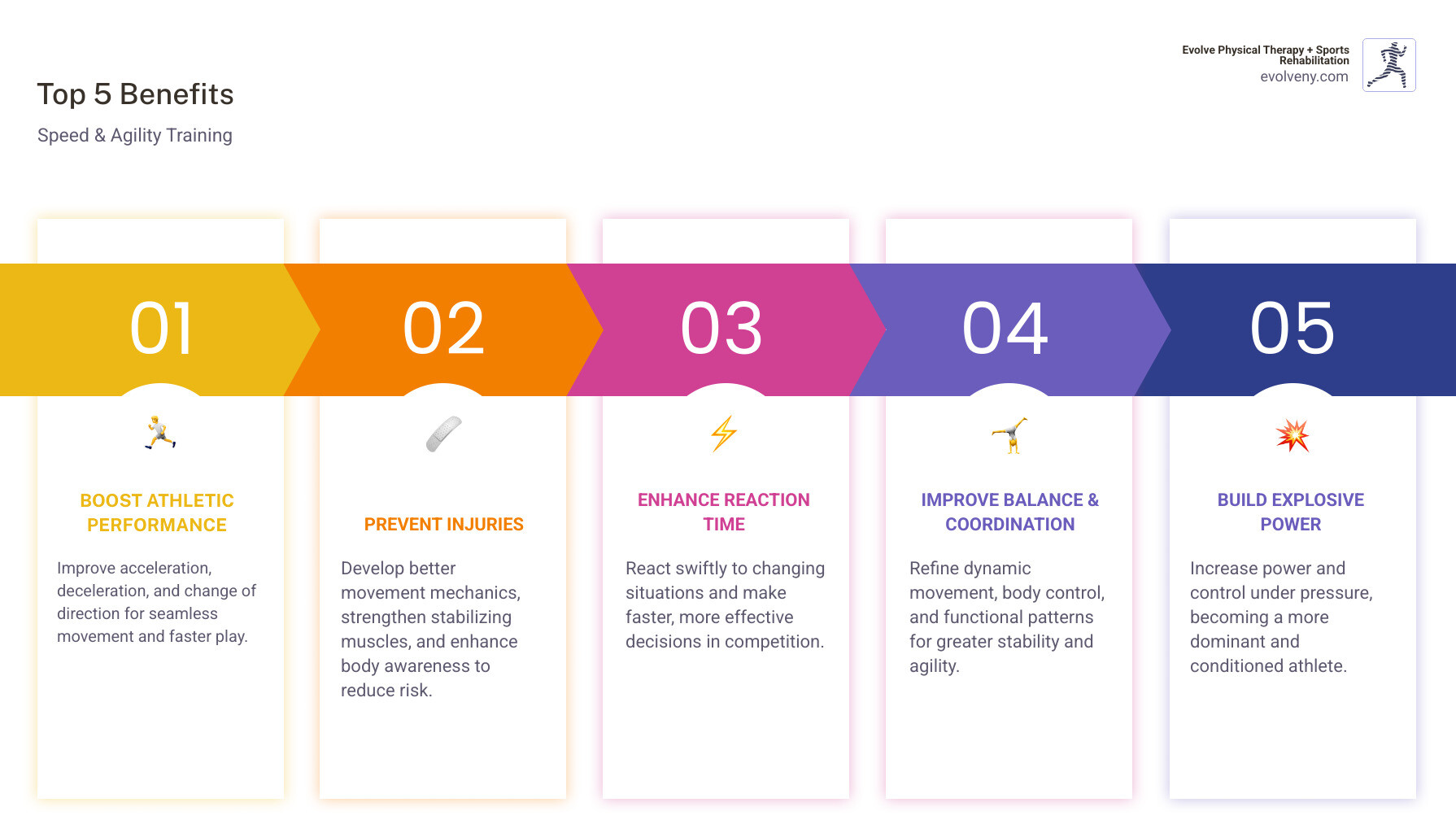
The Game-Changing Benefits of Speed and Agility Training
Speed and agility training is a holistic approach that sharpens your body's ability to move with power, react instantly, and stay in control. Whether you're an athlete or just navigating busy Brooklyn streets, this training makes you a more dynamic and resilient mover.
One of the biggest wins is improved athletic performance. Athletes see significant gains in acceleration, deceleration, and changing direction. It’s about moving smarter, not just faster, leading to more success and confidence.
Beyond performance, a crucial benefit is injury prevention. This training emphasizes proper movement mechanics, strengthens crucial stabilizing muscles, and boosts body awareness. A well-trained body is more resilient and less prone to injury.
This training also hones your improved reaction time. Targeted drills help athletes process visual cues faster and respond with immediate, precise movements—a critical cognitive skill in sports.
Finally, your balance and coordination get a major upgrade. These skills translate directly to daily life, improving stability and preventing falls. As physical therapists at Evolve Physical Therapy, we know that mastering posture, balance, and coordination is key to reaching your full potential.
Skills You'll Sharpen: From Acceleration to Footwork
Speed and agility training breaks down movement and rebuilds it with precision. Key skills you'll sharpen include:
- Linear speed: Straight-ahead sprinting, focusing on mechanics and acceleration.
- Change of direction: The ability to decelerate, stabilize, and quickly switch directions.
- Acceleration: Your initial burst of speed, crucial in most sports.
- Deceleration: The ability to slow down under control, key for injury prevention.
- Footwork: Quick, precise foot placement for efficiency and balance.
- Explosive Power: Generating maximum force in a short time, often developed with plyometrics.
- Body control: Maintaining balance and posture during dynamic movements.
More Than Just Fitness: How This Training Prevents Injuries
As physical therapists, we at Evolve Physical Therapy + Sports Rehabilitation know speed and agility training is a powerful tool for injury prevention. It's about moving smarter to handle the demands of sports and daily life.
The core of this is developing proper movement mechanics—learning to run, cut, and land correctly to minimize stress on joints. The training also strengthens stabilizing muscles around the knees, ankles, and hips, creating a more robust support system. Finally, it improves body awareness (proprioception), allowing you to instinctively adjust and avoid awkward movements that could lead to injury. Our hands-on approach complements this training, bridging the gap between rehabilitation and peak performance. To learn more, explore our physical therapy for athletes.
Tracking Your Gains: How to Measure Progress
Seeing your improvement is motivating! A speed and agility coach near me will use objective methods to track progress.
Performance testing is key, with benchmarks set at regular intervals. Common tests include:
- 40-yard dash: Measures linear speed.
- Pro-agility test (5-10-5): Measures change-of-direction ability.
- Vertical and broad jumps: Measure explosive power.
Beyond numbers, coach feedback provides qualitative insights on your technique. Many also use video analysis to break down movements frame by frame, helping you visualize corrections. This combination of quantitative and qualitative data clearly shows your progress and helps adjust your training plan.
What to Look for When Searching for a "Speed and Agility Coach Near Me"
Finding the right speed and agility coach near me in Brooklyn requires looking at their qualifications, coaching approach, experience, and reputation. You want someone who understands how to get the best out of you.
Look for coaches who are certified professionals. This means they have credentials from respected organizations like the National Strength and Conditioning Association (NSCA) or USA Track & Field (USATF). Beyond certifications, consider their coaching philosophy. Do they develop the whole athlete, focusing on mental toughness and safety? Experience with athletes at your skill level and positive testimonials are also crucial indicators of a great coach.
Evaluating a Local Coach: Credentials, Philosophy, and Fit
When evaluating coaches, start with credentials. Look for certifications like NSCA's Certified Strength and Conditioning Specialist (CSCS) or those from USATF, which show a professional standard. Also, ask about background checks for safety.
Next, assess their philosophy to ensure a good fit. A great coach offers personalized instruction, not a one-size-fits-all program. Ask how they motivate athletes and if they explain the why behind drills. A positive, holistic approach that builds character alongside athletic skill is ideal.
Finally, prioritize trust and safety. A good coach emphasizes proper movement over intensity and creates a safe training environment. Look for someone who shows accountability and genuinely cares about boosting your confidence through personalized guidance.
Program Options and Costs When You Find a speed and agility coach near me
You'll find various options to fit different needs and budgets.
- Private Coaching: The most personalized option, with programs custom to your goals. Rates typically range from $75 to $120 per hour.
- Group Sessions: A more affordable option that creates a fun, competitive atmosphere. Drop-in classes might be around $30, with multi-week programs costing more.
- Team Training: A cost-effective way to train an entire team, with the price per player decreasing with more participants.
Many coaches offer package deals that lower the per-session rate. Some also provide flexible memberships. Always ask about expiration policies on purchased sessions.
The Role of a speed and agility coach near me in Your Development
A speed and agility coach near me is a mentor and strategic partner. They help with goal setting, creating clear targets for your athletic journey. They provide customized plans, designing training around your unique needs to maximize results. A great coach knows how to push limits safely, challenging you while ensuring correct form to prevent injuries. Most importantly, they are crucial for building confidence and providing accountability, celebrating your wins and keeping you committed. This helps you develop a winner's mindset and grow as both an athlete and a person.
Common Training Methods and Drills Explained
When you team up with a speed and agility coach near me, you'll encounter a toolkit of smart training methods designed to boost your speed, quickness, and power. The goal is always to help you move more efficiently and with better control.
Sessions typically begin with a dynamic warm-up to prepare your body for action. You'll then dive into plyometrics—explosive exercises like box jumps and broad jumps that build power. Agility ladders and cone drills are used to sharpen footwork, coordination, and your ability to change direction. Resistance training builds functional strength, while advanced methods like overspeed training can reprogram your nervous system to move even faster. A good coach will always incorporate sport-specific movement patterns to ensure your training translates directly to your game.
Building Blocks: Foundational Drills for Speed and Agility
Mastering the basics is essential. A top speed and agility coach near me will ensure you perfect these foundational drills:
- A-Skips and B-Skips: Teach proper running form, rhythm, and coordination.
- High Knees: Build leg drive and strengthen hip flexors for powerful strides.
- Ladder Drills: Drills like the Ickey Shuffle improve footwork, coordination, and quickness.
- Box Jumps: A plyometric exercise to build vertical power and teach safe landing mechanics.
- Dot Drills: Improve foot speed, agility, and balance by moving between dots in set patterns.
These drills build the fundamental mechanics needed for advanced speed and agility work.
Advanced Techniques for a Competitive Edge
Once you've mastered the basics, your coach can introduce advanced techniques for a competitive edge.
- Resisted Sprints: Running against resistance, like pulling a weighted sled or parachute, builds strength and acceleration.
- Assisted Sprints (Overspeed): Running faster than your natural top speed (e.g., downhill) trains your nervous system to fire more rapidly.
- Reaction Ball Drills: Using an unpredictable bouncing ball improves reflexes and hand-eye coordination.
- Sport-Specific Movement Patterns: Drills are customized to mimic the exact movements of your sport, ensuring training directly translates to in-game performance.
These advanced methods, combined with smart recovery techniques available at places like Evolve Physical Therapy, create a holistic approach to your athletic development.
Frequently Asked Questions about Speed and Agility Training
It's natural to have questions when exploring how to optimize your body's performance. Here are some of the most common inquiries we address at Evolve Physical Therapy + Sports Rehabilitation:
How often should I do speed and agility training?
The ideal frequency depends on your fitness level, sport, and whether you're in-season or off-season. Generally, 1-3 times per week is a good target. During the off-season, you might train more (2-3 sessions) to build your foundation. During the in-season, the focus shifts to maintenance, so 1-2 shorter sessions per week is often enough to stay sharp without causing burnout. Quality over quantity is the golden rule. It's better to have two focused sessions than five fatigued ones. Rest and recovery are also critical, as your muscles and nervous system need time to adapt and grow stronger.
At what age can an athlete start speed and agility training?
Age-appropriate training can start much earlier than most people think, laying a foundation for lifelong movement skills.
- Ages 4-8: The focus is on fun and fundamental motor skills through play—running, jumping, and balancing.
- Ages 7-12: More structured training can be introduced, focusing on proper running mechanics and basic agility drills with an emphasis on technique over intensity.
- Ages 12 and up: Athletes are typically ready for more specialized and intense training. A skilled speed and agility coach near me will always tailor the program to the athlete's developmental stage, prioritizing safety and proper mechanics.
Can speed and agility training help non-athletes?
Absolutely! The benefits extend far beyond sports. For non-athletes, this training improves overall fitness, coordination, and balance, which are crucial for daily life. Think of reacting quickly to avoid a trip on a sidewalk or moving efficiently while carrying groceries. It's also a powerful tool for injury prevention in daily life, as it builds robust movement patterns that protect your joints from unexpected stresses. The core principles—improved reaction time, balance, and body control—improve your functional movement and overall quality of life, helping you move with greater freedom and confidence.
Conclusion: Take the Next Step in Your Athletic Journey
We've seen how speed and agility training is a powerful investment in yourself. It's not just about running faster; it's about moving smarter, reacting quicker, and building a more resilient body. Finding the right speed and agility coach near me is key—they are a mentor and motivator who will help you build confidence and safely push your limits.
Here at Evolve Physical Therapy + Sports Rehabilitation in Brooklyn, we understand the connection between moving well, performing your best, and staying healthy. Our hands-on physical therapy services are designed to complement your training. We help you heal from setbacks and strengthen your body to prevent future issues, ensuring you can sustain peak performance.
If you're ready to open up your full potential, take the next step with a qualified coach. And remember, we're here to support your athletic journey. To learn how our specialized sports rehabilitation can help you get the most out of your training, visit us here: Take your performance to the next level with sports rehabilitation.
